• Global CNC market projected to reach $128B by 2028 • New EU trade regulations for precision tooling components • Aerospace deman
NYSE: CNC +1.2%LME: STEEL -0.4%

What breaks first in automated production under mixed-part runs?
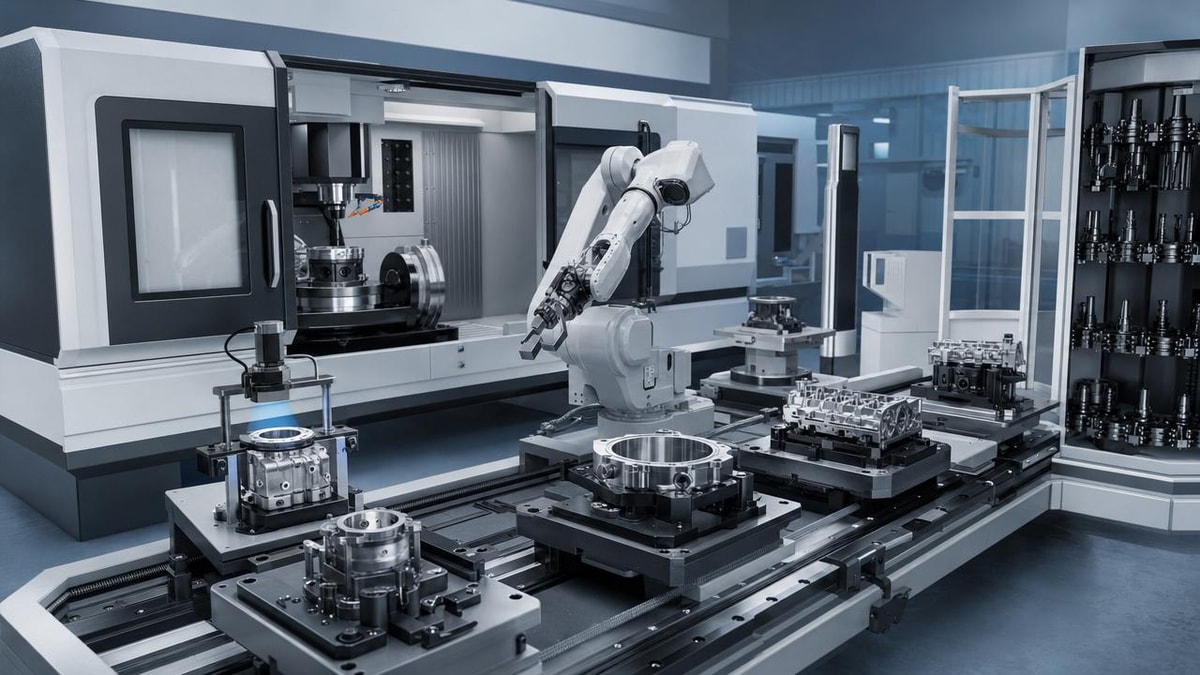
In automated production, mixed-part runs rarely fail because of a single machine. What breaks first is usually the coordination between tooling, fixturing, programming, and scheduling under changing part requirements. For project managers and engineering leaders, understanding these early weak points is essential to reducing downtime, protecting quality, and keeping complex CNC operations stable, efficient, and scalable.
Why mixed-part runs create different risks than single-part automated production
In high-volume single-part manufacturing, automated production is often optimized around repeatability. Once the cutting tools, offsets, fixture locations, robot motion, and inspection logic are proven, the line can run with relatively low variation. Mixed-part runs are different. Every change in geometry, material, clamping orientation, tolerance stack-up, or cycle priority introduces friction into the system.
For project leaders in CNC machining, the real challenge is not whether one lathe, machining center, or robot can make one part well. The challenge is whether the full production system can switch between multiple parts without creating hidden losses. Those losses usually appear first in setup consistency, tool-life predictability, program management, changeover discipline, and production scheduling. In other words, the first thing to break in automated production under mixed-part demand is often the interface between processes, not the machine itself.
This matters across automotive components, aerospace structures, energy equipment parts, electronics housings, and precision subcontract manufacturing. In each of these application scenarios, project teams need to judge mixed-part feasibility differently. The same cell design may perform well for grouped families of parts but become unstable when part variation expands beyond the original assumptions.
Where problems usually appear first in real shop-floor scenarios
In practice, automated production under mixed-part runs tends to fail in predictable places. The exact weak point depends on the production scenario, but most issues can be traced to coordination failure rather than raw machine capability.
- Tooling systems become unstable when different parts require conflicting cutter reach, wear limits, or spindle load behavior.
- Fixtures lose repeatability when one clamping concept is stretched across too many geometries.
- Program libraries become risky when revisions, offsets, probing logic, and post-processor assumptions are not tightly controlled.
- Scheduling breaks down when urgent jobs interrupt tool preparation, presetting, and part sequencing.
- Inspection loops slow the line when different parts require different measurement strategies but the system is designed for only one quality path.
For engineering managers, this means the first diagnostic question should not be “Which machine is failing?” but “Which connection point between process elements is overloaded by variation?” That shift in thinking is critical for more resilient automated production planning.
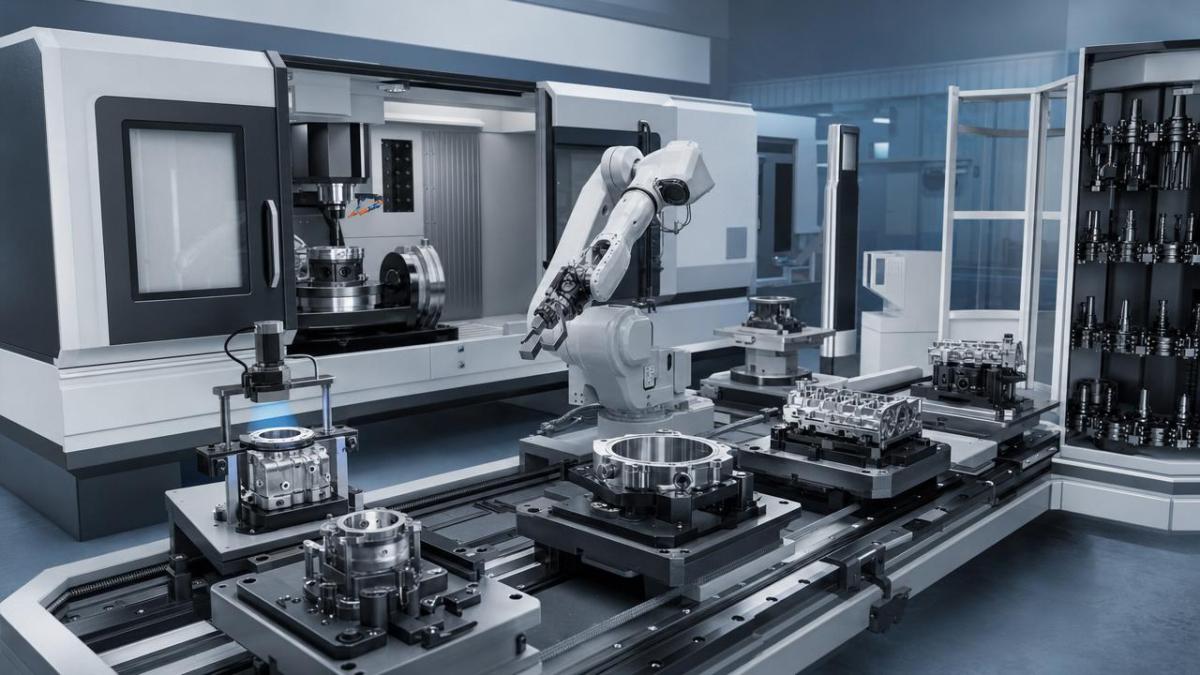
Typical application scenarios and what breaks first in each one
Mixed-part automated production is not one scenario. It is a family of operating models. Project decisions should be based on which scenario most closely matches the business reality.
Scenario 1: Automotive supplier with model variants but stable families
This is one of the more suitable environments for automated production. Part families are usually structured, annual volumes are visible, and process capability targets are well defined. Here, what breaks first is often tooling optimization. Teams try to share too many tools across variants, which increases wear uncertainty and makes offset management more complex. The line still runs, but performance drifts through scrap, tool alarms, and micro-stoppages.
Scenario 2: Aerospace or energy components with low volume and high complexity
In these applications, the biggest risk is usually fixturing and process verification. Parts may share machines but not share enough geometric logic for a truly common setup strategy. Automated production becomes vulnerable when teams assume that flexible fixtures can replace rigorous validation. What breaks first is changeover confidence: operators hesitate, programs require manual intervention, and unattended operation becomes difficult to trust.
Scenario 3: Job shop or contract manufacturer serving many customers
This is the hardest mixed-part environment. The commercial pressure to accept diverse work often exceeds the technical discipline needed for stable automation. Here, scheduling is usually the first thing to break. Rush orders, engineering changes, small batches, and nonstandard tooling requests quickly destroy the assumptions behind balanced automated production. Even strong equipment can become reactive if planning rules are weak.
Scenario 4: Electronics and precision components with tight takt expectations
In compact, high-precision applications, the first weak point is often handling and inspection integration. Small changes in part geometry may require different gripping force, orientation logic, or vision references. If robots, feeders, and in-process gauging are not designed for variation, automated production suffers from nuisance stops, orientation errors, and false rejects.
Scenario comparison table for project decision-making
The table below helps project managers compare where automated production is most vulnerable under different mixed-part run conditions.
How different business needs change the right automated production strategy
Not every manufacturer should pursue the same level of flexibility. A project manager responsible for ROI, delivery, and capacity planning should separate “desirable flexibility” from “expensive over-flexibility.” The right automated production strategy depends on business need.
If customer demand is stable and parts can be grouped into true machining families, then investment in common fixtures, shared tool maps, and centralized program control usually makes sense. If demand is volatile and engineering changes are frequent, the safer approach may be semi-automated cells with clear part qualification rules rather than full lights-out ambitions.
For global suppliers serving automotive, aerospace, and industrial equipment markets, another difference is traceability. In some scenarios, the first thing to break is not cycle time but data continuity. If part identification, revision control, tool traceability, and inspection records are not synchronized, automated production may appear efficient while creating downstream compliance risk.
What project leaders should confirm before approving a mixed-part automation plan
Before expanding automated production across mixed-part runs, engineering and project teams should validate a few high-impact conditions. These checkpoints are more valuable than broad claims about flexibility.
- Can parts be grouped by real process similarity, not just by machine compatibility?
- Do fixture concepts maintain repeatability across the full variation range, including material and tolerance changes?
- Is there a controlled system for tool presetting, tool life tracking, and replacement logic?
- Can NC programs, probing cycles, and revision status be managed without operator guesswork?
- Does scheduling protect qualified automation batches from constant interruption?
- Is in-process inspection matched to part variation, or is one inspection routine being forced onto many parts?
If several of these answers are unclear, automated production is likely to suffer from hidden instability long before any major equipment fault appears.
Common misjudgments that make mixed-part runs fail early
A common mistake is to define success only by machine utilization. High spindle uptime can hide rising setup effort, increasing rework, and fragile scheduling. Another misjudgment is assuming that a programmable robot automatically creates flexibility. In reality, robot reach and sequence logic are only one layer. The surrounding process architecture determines whether automated production remains stable.
Teams also underestimate master data quality. In mixed-part CNC environments, poor naming conventions, uncontrolled program copies, and inconsistent tool records create more trouble than many hardware issues. What breaks first may look like an operator problem, but the root cause is often weak digital discipline.
Finally, some organizations try to automate parts that should not be combined. If one part family needs aggressive cutting, another needs delicate surface protection, and a third needs extensive probing, forcing all three into one automated production cell can increase complexity faster than productivity.
FAQ: scenario-based questions about automated production under mixed-part demand
Is automated production still worthwhile for small batches?
Yes, but only when small batches belong to repeatable part families with controlled tooling, fixtures, and program data. If every batch behaves like a new job, the automation burden may outweigh the gain.
Which should be standardized first: tools, fixtures, or software?
For most CNC-based automated production environments, tool data and program control should be standardized first, because they affect every setup and every revision. Fixture standardization should then follow based on real family commonality.
When should a company avoid combining parts in one automated cell?
Avoid it when parts have conflicting clamping logic, major inspection differences, unstable demand priority, or large variation in cycle time. Those conditions usually damage scheduling and unattended reliability first.
A practical path forward for more reliable mixed-part automated production
For project managers and engineering leaders, the key lesson is simple: in mixed-part automated production, the first thing that breaks is usually system coordination under variation. The best response is not broader automation claims, but tighter scenario-based design. Start by separating parts into real process families, define qualification rules for what enters the cell, build strong tool and program governance, and protect scheduling discipline from constant disruption.
If your business operates across automotive, aerospace, industrial equipment, electronics, or precision subcontract machining, evaluate automated production by application scenario rather than by equipment brochure promises. The right next step is to map your current parts, changeover patterns, tooling logic, and inspection flow against the weak points described above. That analysis will reveal whether your operation is ready for broader mixed-part automation or whether targeted standardization should come first.
PREVIOUS ARTICLE
Recommended for You
![]() Beijing’s New E-Bike Lock Regulation Spurs CNC Housing DemandGlobal Machine Tool Trade Research Center
Beijing’s New E-Bike Lock Regulation Spurs CNC Housing DemandGlobal Machine Tool Trade Research Center![]() New Drone Standard GB/T 44723–2026 Takes Effect May 2026Manufacturing Policy Research Center
New Drone Standard GB/T 44723–2026 Takes Effect May 2026Manufacturing Policy Research Center![]() New Maritime Code Takes Effect May 1, 2026: CNC Equipment Shipping Rules UpdatedManufacturing Market Research Center
New Maritime Code Takes Effect May 1, 2026: CNC Equipment Shipping Rules UpdatedManufacturing Market Research Center![]() 2026 China Cycle Shanghai: CNC E-Bike Frame Capacity Draws ODM FocusManufacturing Market Research Center
2026 China Cycle Shanghai: CNC E-Bike Frame Capacity Draws ODM FocusManufacturing Market Research Center![]() 2026 Foshan Tanzhou Auto Expo: EV Parts Sourcing FocusGlobal Machine Tool Trade Research Center
2026 Foshan Tanzhou Auto Expo: EV Parts Sourcing FocusGlobal Machine Tool Trade Research Center![]() New Hazardous Chemicals Safety Law Takes Effect May 2026Manufacturing Policy Research Center
New Hazardous Chemicals Safety Law Takes Effect May 2026Manufacturing Policy Research Center


Aris Katos
Future of Carbide Coatings
15+ years in precision manufacturing systems. Specialized in high-speed milling and aerospace grade alloy processing.
▶
Automated Production Line gaps that appear between design and launchMachine Tool Industry Editorial Team▶
What breaks first in automated production under mixed-part runs?Machine Tool Industry Editorial Team▶
When an Automated Production Line needs a redesignMachine Tool Industry Editorial Team▶
Space-saving CNC manufacturing without losing throughputMachine Tool Industry Editorial Team▶
Automated production lines fail when data flow is ignoredMachine Tool Industry Editorial Team
Mastering 5-Axis Workholding Strategies
Join our technical panel on Nov 15th to learn about reducing vibrations in thin-wall components.

Providing you with integrated sanding solutions
Before-sales and after-sales services
Comprehensive technical support