• Global CNC market projected to reach $128B by 2028 • New EU trade regulations for precision tooling components • Aerospace deman
NYSE: CNC +1.2%LME: STEEL -0.4%

Space-saving CNC manufacturing without losing throughput
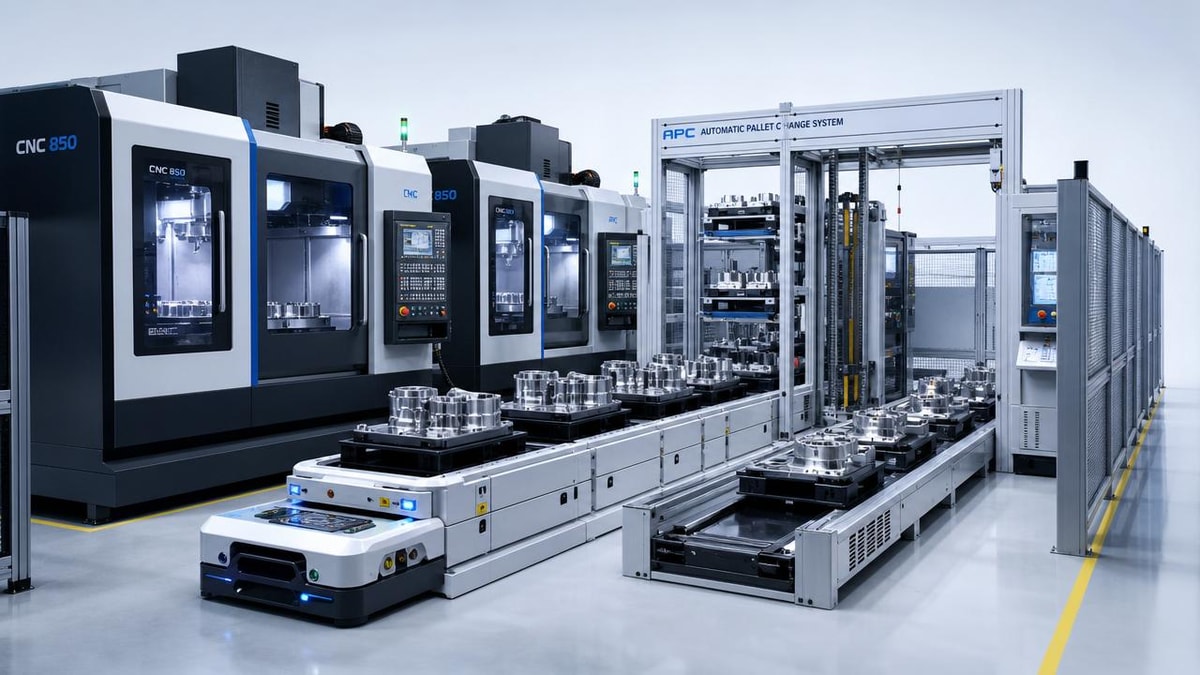
As factory space becomes more expensive and production targets keep rising, space-saving CNC manufacturing is emerging as a strategic priority for modern manufacturers. For business decision-makers, the challenge is clear: how to optimize floor layout, improve automation, and maintain throughput without sacrificing precision, flexibility, or long-term scalability in increasingly competitive global markets.
The core search intent behind space-saving CNC manufacturing is not simply to make machines smaller. Decision-makers are looking for practical ways to increase output per square meter, reduce expansion pressure, and improve operational efficiency without creating hidden bottlenecks. In most cases, they want to know whether compact manufacturing layouts can support business growth while preserving quality, uptime, and delivery performance.
For this audience, the biggest concerns are usually straightforward. Will a smaller-footprint CNC setup actually maintain throughput? What types of machine configurations make the most sense? How should automation, material flow, and staffing be redesigned? What is the investment logic, and where are the risks? These are business questions first, and technical questions second.
The most useful content, therefore, is practical and evaluative. Leaders need a framework for deciding when space-saving CNC manufacturing is the right strategy, which technologies create real gains, how to avoid layout mistakes, and how to measure return on investment. General discussion about Industry 4.0 or compact equipment alone is not enough unless it directly supports better capital and operational decisions.
This article focuses on the areas that matter most: throughput preservation, layout strategy, automation choices, investment priorities, risk control, and the operating conditions under which space-saving CNC manufacturing delivers real value. Broader background on CNC development is kept light so the discussion stays aligned with executive decision-making.
Why space-saving CNC manufacturing has become a board-level issue
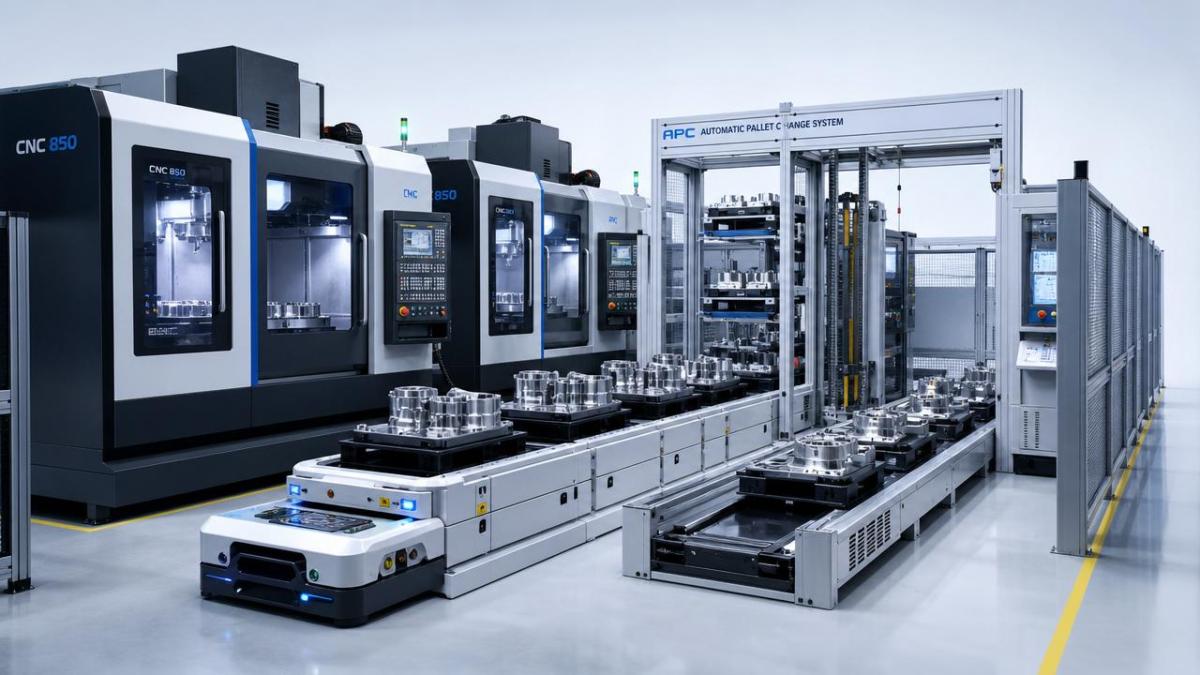
For many manufacturers, floor space is no longer a passive facility cost. It has become a strategic production constraint. Expansion projects are expensive, industrial land is harder to secure, and many factories are under pressure to increase output without adding new buildings. In that context, space-saving CNC manufacturing is not just an engineering optimization. It is a capacity strategy.
What makes this issue more urgent is the combination of product complexity, labor pressure, and shorter lead-time expectations. A traditional approach to higher output often meant adding more standalone machines and more buffer space. That model now creates inefficiencies: longer travel distances, more work-in-progress, fragmented supervision, and higher handling costs.
Business leaders are increasingly asking a different question: instead of expanding the plant, can the existing footprint produce more value? When the answer is yes, the gains often go beyond space itself. Better density can improve material flow, simplify automation, reduce operator movement, and make capacity planning more predictable.
However, compact does not automatically mean productive. If manufacturers compress equipment without redesigning workflow, they may create congestion, maintenance access problems, chip evacuation issues, or loading delays. That is why successful space-saving CNC manufacturing depends on system design, not just machine dimensions.
Can you reduce footprint without losing throughput? The short answer is yes, but only under specific conditions
The central concern for decision-makers is throughput. In most production environments, saving space is attractive only if it does not undermine output targets, quality consistency, or delivery reliability. The good news is that throughput can often be maintained or even improved in a smaller footprint, but this happens when several operational factors are aligned.
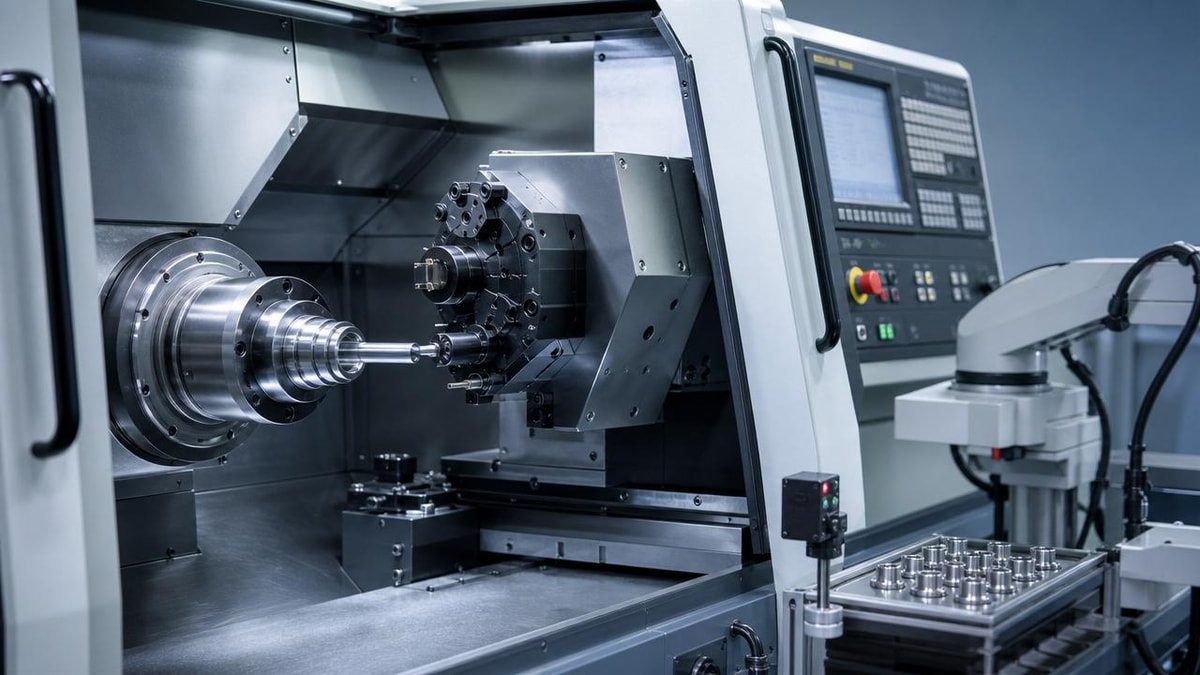
First, machine utilization must rise. A compact layout works when manufacturers replace low-utilization standalone assets with more integrated, higher-availability systems. Examples include multi-tasking lathes, twin-spindle platforms, vertical machining centers with pallet changers, and flexible cells that reduce idle time between operations.
Second, handling time must fall. In many factories, actual cutting time is only one part of the production cycle. Loading, unloading, staging, inspection movement, and part transfer consume valuable minutes. A space-saving CNC manufacturing strategy becomes powerful when it shortens those non-cutting activities through tighter cell design and better automation.
Third, process consolidation matters. If one machine can perform multiple operations that previously required two or three setups, the factory saves not only floor space but also transfer time, queue time, fixture duplication, and error risk. Throughput is preserved because the overall process becomes shorter and more stable, even if the physical line becomes denser.
Finally, production mix must be considered. High-volume, repeatable production benefits differently from high-mix, low-volume manufacturing. In repeatable environments, compact automated cells can dramatically improve output per square meter. In variable environments, gains depend more on flexible fixturing, fast changeovers, and digital scheduling than on machine density alone.
What technologies create the strongest space savings in CNC production
Not all equipment investments deliver the same space efficiency. For executive teams evaluating capital allocation, it is important to distinguish between technology that simply fits into a smaller area and technology that changes the economics of production density.
One of the most effective options is process-integrated equipment. Multi-axis machining centers, mill-turn machines, and multi-function CNC lathes can replace several single-purpose machines. This reduces inter-process transport and cuts the amount of floor space devoted to buffers, carts, and intermediate staging.
Automated pallet systems are another major lever. A machine with integrated pallet change capability may occupy slightly more local space than a basic unit, but across the entire process it often increases output density by reducing setup-related downtime. The key metric is not machine footprint alone, but productive throughput relative to total required floor area.
Vertical machine configurations are often attractive for space-constrained facilities because they can simplify material presentation and improve aisle efficiency. In some product categories, vertical turning or vertical machining solutions also support better chip control and a more compact production layout.
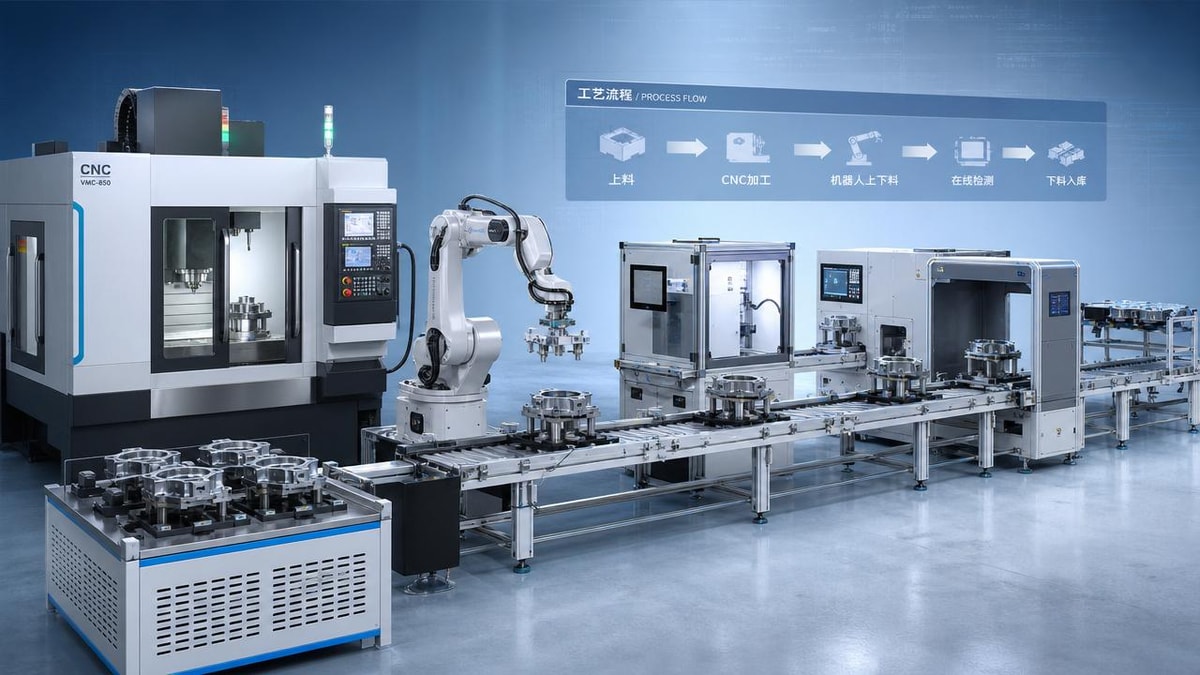
Robotic tending, gantry loading, and compact conveyor integration can further improve space-saving CNC manufacturing. These systems reduce the need for wide operator circulation zones and can support lights-out or low-attendance production. For decision-makers, the value is especially strong where labor availability is limited or shift extension is difficult.
Digital production management should not be overlooked. Machine monitoring, scheduling software, and tool life management systems help compact factories run with less disruption. In a dense environment, even minor interruptions can ripple quickly across output. Digital visibility reduces that risk by making response faster and more coordinated.
How to redesign layout so compact production remains efficient
A common mistake is to treat floor-space reduction as a simple rearrangement exercise. In reality, the layout must be rebuilt around flow. The question is not how many machines can fit, but how material, people, tools, maintenance activity, and information move through the system.
The first principle is to minimize unnecessary travel. Machines that serve consecutive operations should be grouped according to process sequence, not department tradition. This reduces forklift dependency, waiting time, and work-in-progress accumulation. In many successful implementations, cell-based planning replaces scattered departmental layouts.
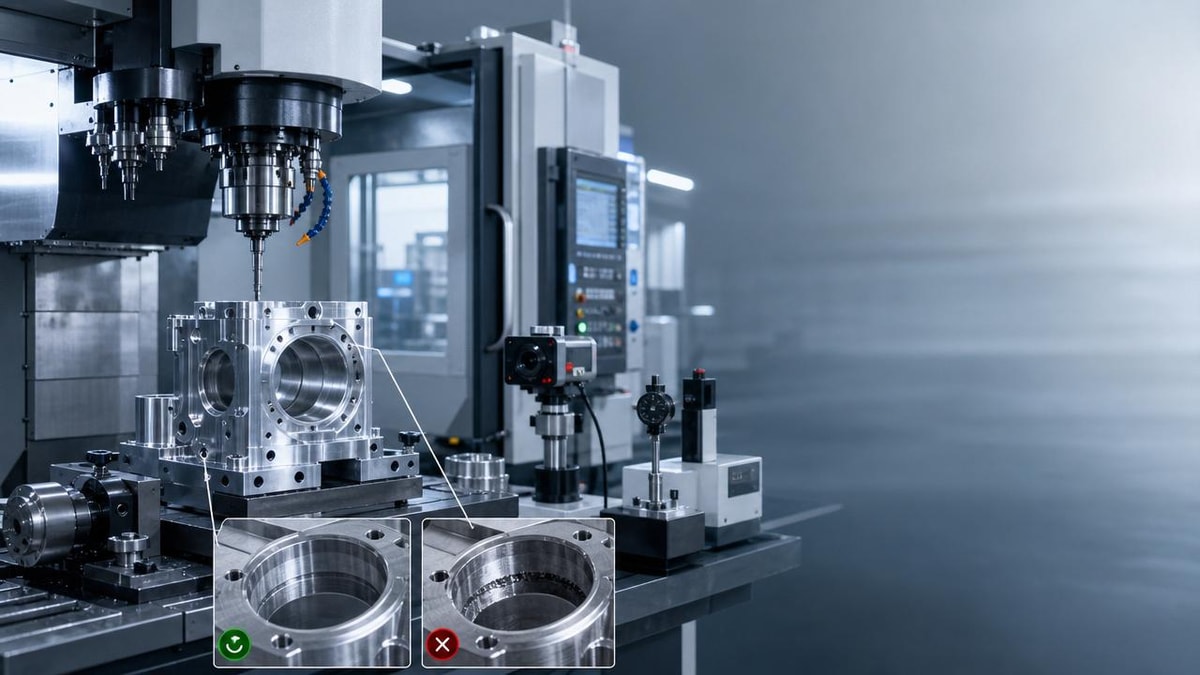
The second principle is protected accessibility. A dense CNC layout still needs safe maintenance access, tool change access, chip removal pathways, and quality inspection points. If these are compromised, downtime and safety risk rise quickly. Space-saving CNC manufacturing only works when compactness and serviceability are balanced.
The third principle is buffer discipline. Leaner layouts should not eliminate all staging blindly. Some intermediate capacity is necessary to absorb variation, especially in mixed production. The goal is controlled buffering, not zero buffering at any cost. Too little buffer can make a compact system fragile during minor disruptions.
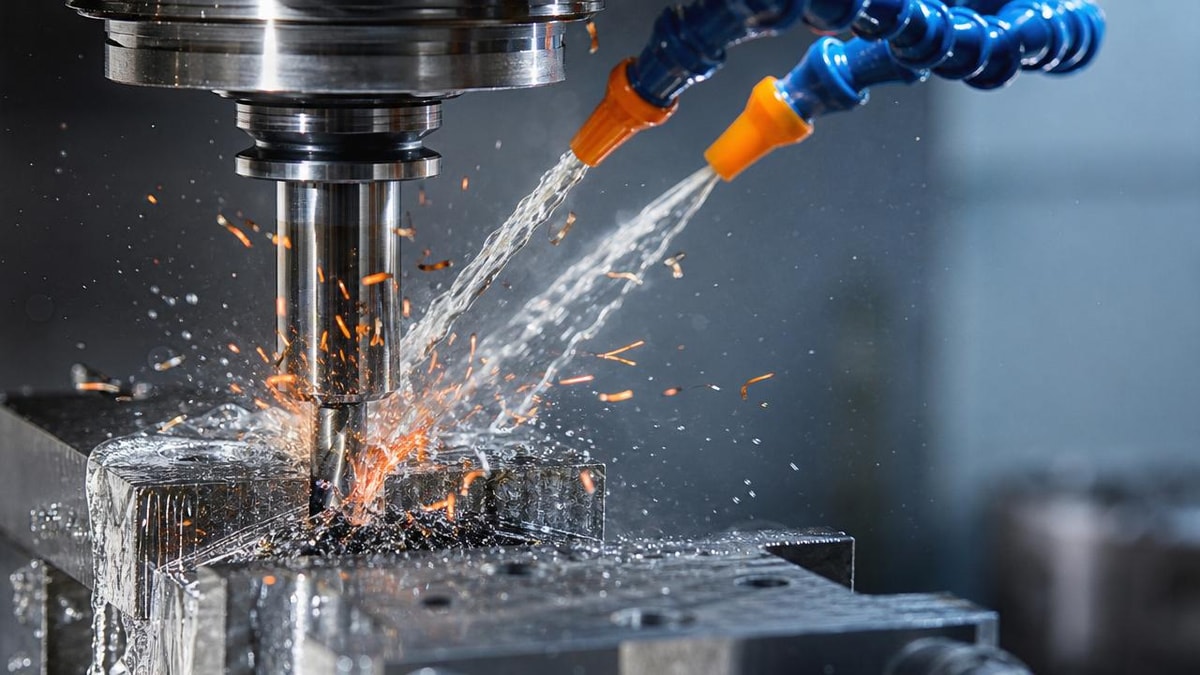
Utilities also deserve early attention. Air, coolant, electrical distribution, mist extraction, and chip handling become more complex in high-density layouts. If these systems are added late, the factory may lose much of the expected space gain. Good planning treats infrastructure as part of the production architecture, not an afterthought.
Finally, teams should simulate future state flow before committing to installation. Even a relatively simple digital twin or layout simulation can reveal hidden congestion points, forklift conflicts, or access bottlenecks. For decision-makers, simulation is often one of the cheapest ways to avoid expensive layout errors.
How to evaluate the business case: the metrics leaders should actually use
Many investment reviews still focus too narrowly on machine purchase price. For space-saving CNC manufacturing, the right business case is broader. The key issue is whether the new production model creates more profitable capacity from the same or smaller footprint.
A useful starting metric is output per square meter. This should be measured not only in parts produced, but ideally in contribution margin or value-added output generated from the production area. A compact layout that increases this metric meaningfully can delay or eliminate facility expansion, which has major capital implications.
The second metric is overall equipment effectiveness, especially utilization and availability. If compact systems increase spindle uptime and reduce waiting between operations, throughput may improve even without faster cutting. This is often where the strongest gains appear in mature factories with fragmented layouts.
The third metric is labor productivity. In a well-designed compact cell, one operator may supervise more machines or more completed process steps. However, this should be evaluated carefully. Over-compression that increases operator stress or response delay can erase the expected benefit.
Inventory and lead time should also be included. Process consolidation and tighter flow often reduce work-in-progress, shorten cycle time, and improve schedule visibility. These effects can strengthen customer delivery performance and free working capital, creating value beyond direct production efficiency.
Leaders should also calculate the avoided cost of expansion. In many markets, the financial case for space-saving CNC manufacturing becomes compelling not because equipment is cheap, but because new building construction, site acquisition, utilities extension, and production disruption are extremely expensive alternatives.
What risks can undermine a space-saving CNC strategy
Although the upside is real, compact manufacturing is not automatically a better manufacturing model. One major risk is over-integration. If too much capacity is concentrated into too few machines, a single equipment failure can create a large production interruption. Redundancy strategy still matters.
Another risk is underestimating changeover complexity. A compact cell may perform many operations efficiently, but if setup time is long or fixturing is inflexible, actual throughput may decline in mixed production. Decision-makers should test realistic product variation, not just ideal production scenarios.
Maintenance planning is another frequent blind spot. Dense equipment placement can make service slower and more disruptive if access routes are poor. In executive reviews, maintainability should be treated as a throughput issue, not merely a technical issue.
There is also an organizational risk. A compact automated CNC environment changes operator roles, maintenance routines, planning logic, and sometimes quality procedures. If training and process ownership are weak, the promised capacity gains may never materialize.
Finally, some companies pursue compactness before stabilizing process capability. If scrap, tool inconsistency, programming variation, or scheduling instability are already high, simply shrinking the footprint may compress existing problems into a smaller space. Process discipline should precede aggressive density targets.
Where space-saving CNC manufacturing makes the most strategic sense
This approach is especially attractive in factories facing one or more of the following conditions: limited expansion options, rising facility costs, labor constraints, strong demand growth, or a need to increase output from existing assets. It is also highly relevant for suppliers in automotive, aerospace, energy equipment, and precision electronics, where quality and throughput must coexist.
Manufacturers producing medium-to-high complexity parts often benefit the most because process consolidation can remove multiple transfer steps. Facilities with older layouts may also see significant improvement because their current space use is often shaped by historical equipment additions rather than optimized flow logic.
On the other hand, companies with highly unstable demand, extreme product variation, or very low current machine utilization may need to solve planning and process issues before investing heavily in compact systems. Space-saving CNC manufacturing creates the best returns when linked to a clear operational strategy rather than used as a standalone modernization slogan.
A practical decision framework for executives
For leaders considering this path, a disciplined evaluation process works better than a technology-first purchase decision. Start by identifying whether space is truly the constraint or simply the visible symptom of deeper inefficiency. If throughput losses come mainly from planning instability or poor maintenance, layout compression alone will not solve them.
Next, map current production flow and quantify non-cutting time. In many facilities, this exercise reveals that transportation, queuing, and setup delays are the real opportunity. That insight helps determine whether machine consolidation, automation, or cell redesign should be the primary investment focus.
Then compare multiple future-state scenarios. One may prioritize compact multi-function machines, another may center on automated pallet systems, and another may redesign the layout while retaining much of the current equipment. The strongest choice is usually the one that best balances output density, resilience, flexibility, and payback period.
Finally, implement with measurable milestones. Pilot one area, validate throughput, monitor downtime behavior, and refine support processes before scaling across the plant. A phased approach often produces better long-term results than a full-floor transformation executed too quickly.
Conclusion: compact manufacturing should be judged by capacity quality, not by footprint alone
Space-saving CNC manufacturing is valuable because it can turn limited floor area into higher-performing production capacity. But the real objective is not to pack in more machines. It is to create more output, better flow, lower handling waste, and stronger scalability from the same physical environment.
For business decision-makers, the right question is not whether compact production is possible. It is whether a redesigned CNC system can improve output per square meter without introducing fragility. When process consolidation, automation, layout planning, and digital visibility are aligned, the answer is often yes.
In a market where precision, speed, and cost discipline increasingly determine competitiveness, space-saving CNC manufacturing can become a strategic advantage. The companies that benefit most will be those that treat space efficiency as part of a broader operational design, not just a facility constraint to be managed.
PREVIOUS ARTICLE
NEXT ARTICLE
Recommended for You
 Industrial Robotics payback depends on one hidden variableManufacturing Market Research Center
 Shaft Parts machining problems linked to concentricity lossCNC Machining Technology Center
 Production Process changes that quietly raise defect ratesCNC Machining Technology Center
 Industrial Automation projects stall without process mappingCNC Machining Technology Center
 CNC metal cutting heat issues behind poor surface finishCNC Machining Technology Center
 High precision lathe claims that deserve a closer lookMachine Tool Industry Editorial Team

Aris Katos
Future of Carbide Coatings
15+ years in precision manufacturing systems. Specialized in high-speed milling and aerospace grade alloy processing.
▶
When an Automated Production Line needs a redesignMachine Tool Industry Editorial Team▶
Space-saving CNC manufacturing without losing throughputMachine Tool Industry Editorial Team▶
Automated production lines fail when data flow is ignoredMachine Tool Industry Editorial Team▶
When an Automated Production Line Becomes Hard to ScaleMachine Tool Industry Editorial Team▶
Automated Production Mistakes That Raise Unit Cost Over TimeMachine Tool Industry Editorial Team
Mastering 5-Axis Workholding Strategies
Join our technical panel on Nov 15th to learn about reducing vibrations in thin-wall components.

Providing you with integrated sanding solutions
Before-sales and after-sales services
Comprehensive technical support