• Global CNC market projected to reach $128B by 2028 • New EU trade regulations for precision tooling components • Aerospace deman
NYSE: CNC +1.2%LME: STEEL -0.4%

Automated production lines fail when data flow is ignored
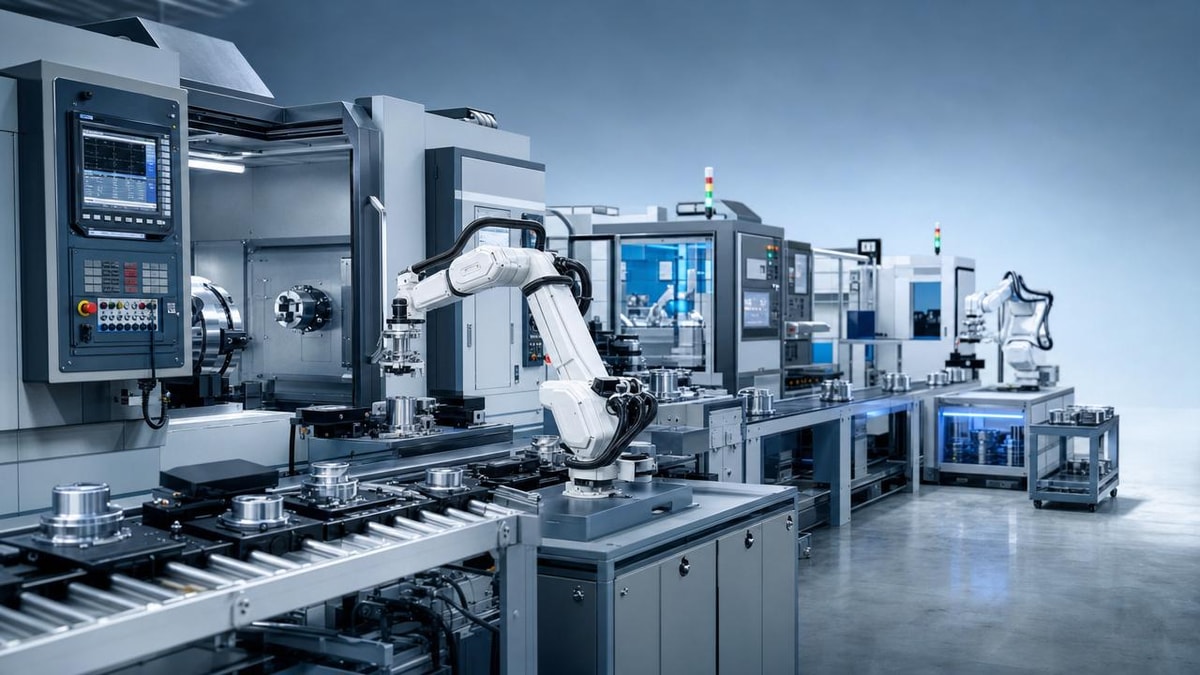
Automated production lines promise speed, precision, and scale, but many fail to deliver when data flow is treated as an afterthought. For business decision-makers, the real risk is not only equipment downtime, but also disconnected systems, poor visibility, and costly inefficiencies across operations. Understanding how data connects machines, processes, and decisions is now essential to building resilient, high-performing manufacturing systems.
In CNC machining, precision machine tools, and flexible manufacturing cells, physical automation alone is no longer enough. A line may include 10 to 50 machines, robots, gauges, conveyors, and MES terminals, yet still underperform if production data arrives late, is stored in silos, or cannot be trusted at the point of decision.
For executives responsible for capital investment, throughput, delivery performance, and quality stability, the issue is strategic rather than technical. When automated production depends on incomplete machine status, delayed inspection feedback, or manual spreadsheet consolidation, capacity planning and cost control quickly become reactive instead of predictable.
Why data flow determines whether automated production performs as planned
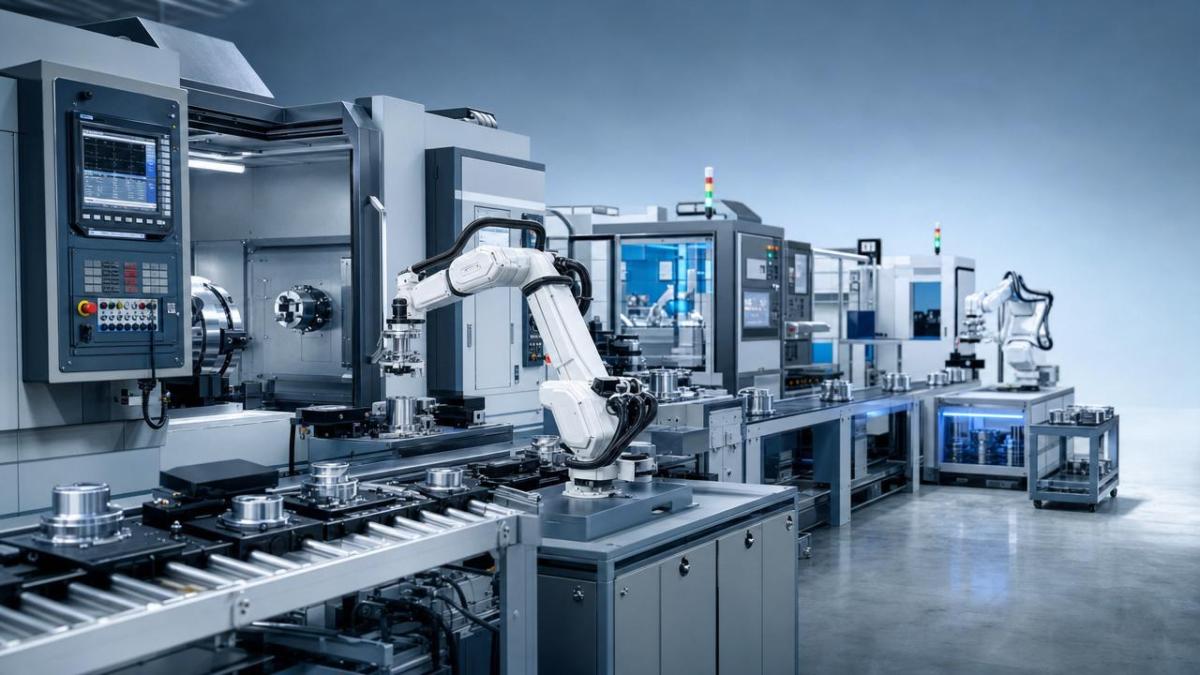
An automated production line is often judged by spindle speed, robot cycle time, pallet capacity, or loading accuracy. These metrics matter, but they only describe isolated equipment performance. What determines business performance is the speed and quality of data moving between machines, operators, quality systems, planning tools, and management dashboards.
In a modern CNC environment, useful data typically includes machine utilization, tool life, offset changes, alarm history, in-process inspection results, batch traceability, material status, and order priority. If any of these signals are delayed by even 15 to 30 minutes, supervisors may make the wrong scheduling decision, release the wrong job, or miss a developing quality issue.
The hidden costs of disconnected systems
Many factories invest heavily in automation hardware but still rely on manual updates between ERP, MES, CNC controllers, and quality systems. The result is not always a dramatic shutdown. More often, it appears as smaller daily losses: 3% to 8% capacity waste, repeated setup verification, excess WIP, avoidable tool replacement, and delayed root-cause analysis.
These losses compound quickly in sectors such as automotive components, aerospace parts, energy equipment, and electronics housings, where tolerances may range from ±0.005 mm to ±0.05 mm and delivery windows are often measured in days rather than weeks. A line that appears “automated” can still behave like a fragmented workshop if information does not move with the same discipline as parts.
Typical failure signals leaders should watch
- OEE reports are available only at end of shift rather than in real time.
- Operators re-enter the same production data into 2 or 3 different systems.
- Tool breakage is detected after scrap appears, not before process drift starts.
- Quality alerts do not automatically block downstream operations.
- Production meetings rely on spreadsheets exported from separate platforms.
The table below outlines how data flow problems usually appear in automated production and what they mean for management decisions.
The key takeaway is that line failure rarely starts with one catastrophic event. It starts with poor signal quality, delayed visibility, and disconnected decision loops. In automated production, information latency can be as damaging as mechanical failure.
Why CNC and precision manufacturing are especially sensitive
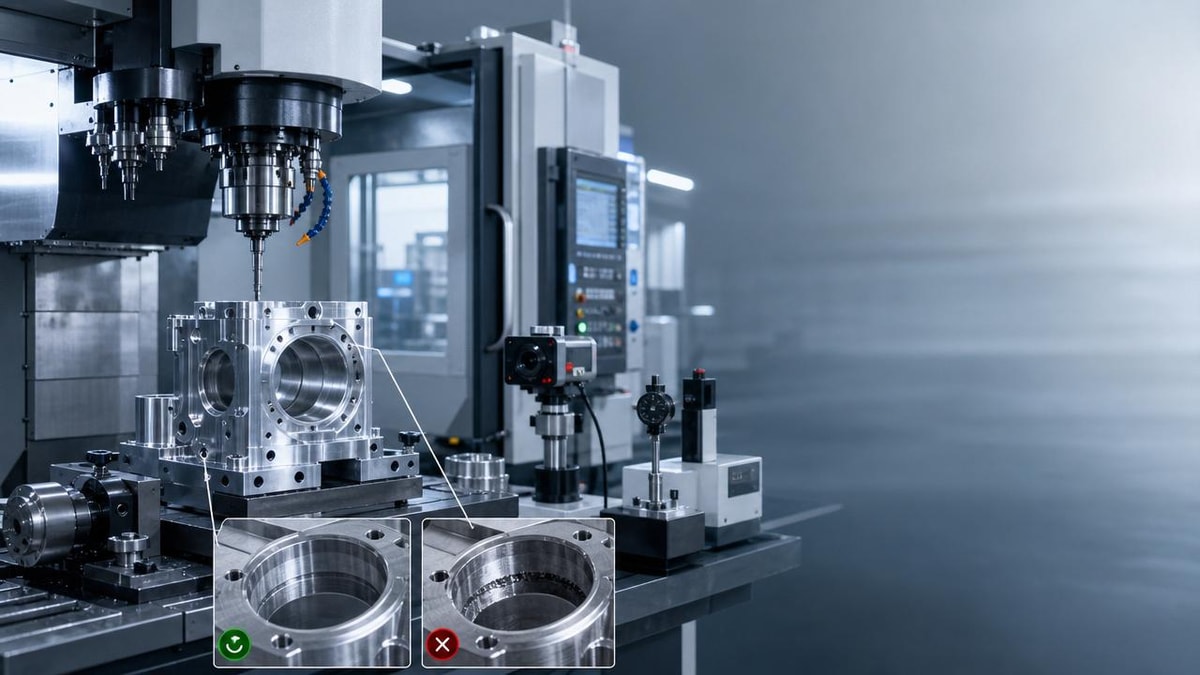
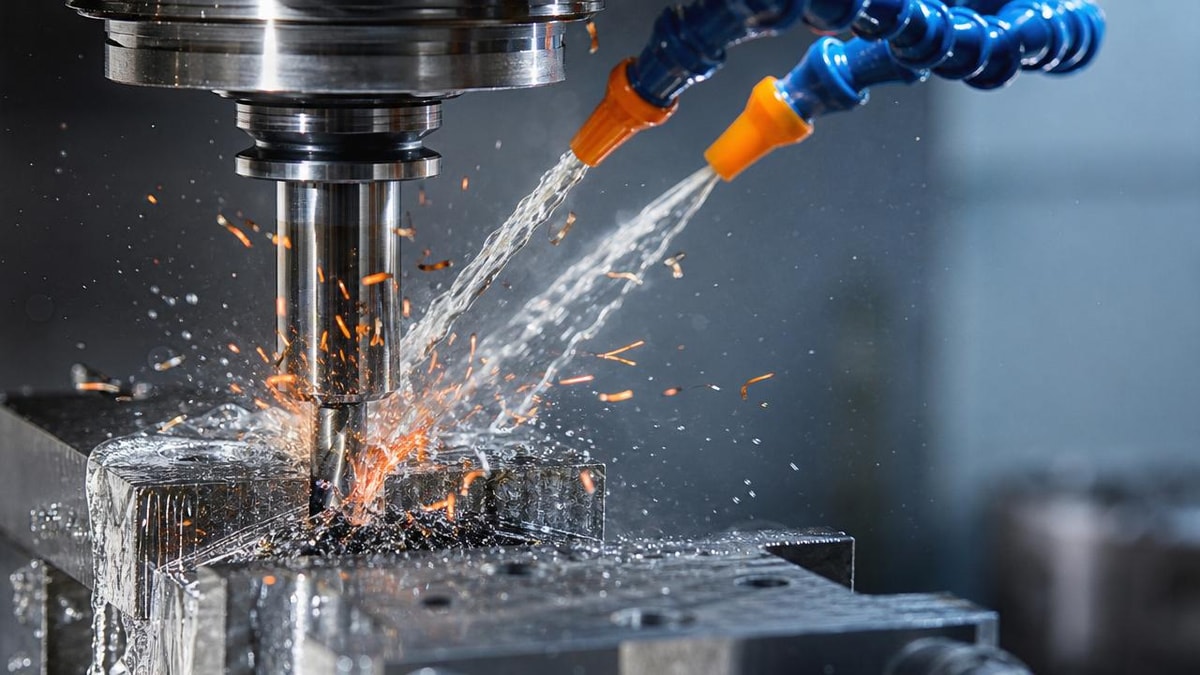
CNC machining environments generate dense, high-value data because the process is both precise and variable. Tool wear, thermal stability, fixture integrity, spindle load, coolant condition, and in-process measurement all affect part quality. On a multi-axis machining system or automated cell running 24/7, even a small deviation can cascade across dozens or hundreds of parts before manual review catches it.
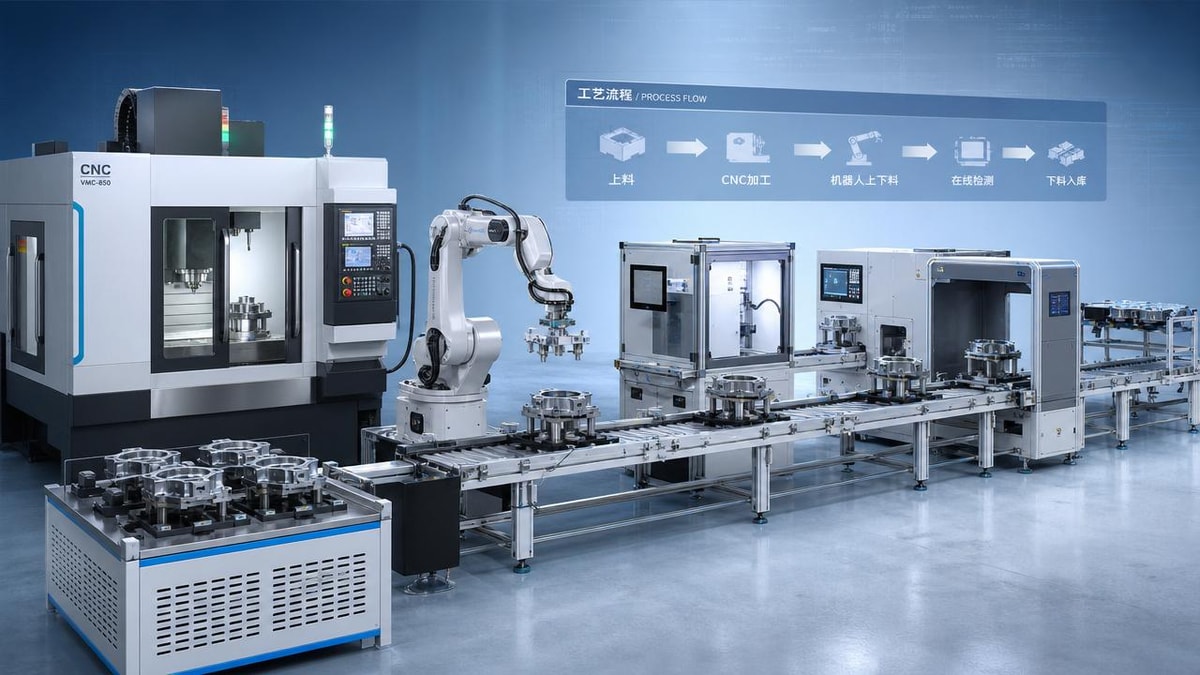
This is why advanced machine tool operations increasingly connect CNC controllers, probing systems, tool presetters, AGVs, industrial robots, and quality stations into one operational framework. Data flow must support not only reporting, but also intervention within seconds or minutes. If response times stretch to 1 or 2 hours, the value of automation drops sharply.
What decision-makers should evaluate before expanding automated production
Before approving a new automated production investment, leaders should evaluate digital readiness with the same rigor used for machine accuracy, takt time, and layout design. A line with strong mechanics but weak data architecture may still require 6 to 12 months of corrective integration work after installation.
This evaluation is particularly important for companies scaling from standalone CNC machines to palletized cells, flexible production lines, or mixed-model manufacturing. The larger the equipment footprint, the greater the cost of poor synchronization across planning, execution, and quality control.
Five decision criteria that matter most
- System interoperability across CNC, robot, MES, ERP, and inspection platforms.
- Data refresh frequency, ideally measured in seconds or under 5 minutes for critical signals.
- Traceability depth from raw material lot to final inspection and shipment record.
- Alarm routing and escalation logic for maintenance, quality, and planning teams.
- Scalability for adding 5, 10, or 20 more assets without rebuilding the architecture.
Questions procurement and operations should ask together
A common mistake is letting automation procurement focus on hardware while IT or operations reviews the data layer later. In practice, these teams should align from day 1. During supplier evaluation, ask how machine data is captured, how exceptions are handled, what protocols are supported, and how production, quality, and maintenance records are linked.
Suppliers should be able to explain implementation steps, expected interfaces, validation methods, and realistic commissioning timelines. For example, connecting 8 CNC machines and 2 robot stations may take 2 to 4 weeks in a standardized environment, but 8 to 12 weeks in a legacy mixed-brand workshop with older controllers and custom reporting needs.
The following comparison helps decision-makers distinguish between automation projects that are likely to scale well and those that may create long-term operational friction.
A high-maturity setup does not always mean higher initial equipment cost. Often, it means better design discipline, clearer interface ownership, and fewer manual workarounds. Over a 3- to 5-year operating horizon, that difference can be more valuable than a small reduction in purchase price.
Common investment mistakes in automated production
One common mistake is assuming machine brand consistency automatically solves data issues. Even within one brand family, interfaces between CNC controls, tool management, probing software, and plant systems may still require careful mapping. Another mistake is measuring success only by nominal cycle time instead of end-to-end lead time, first-pass yield, and schedule adherence.
A third mistake is delaying governance. If no one owns data definitions, exception rules, and dashboard logic, teams may spend months debating which number is correct. In high-mix precision manufacturing, that confusion affects quoting, planning, and customer commitments as much as it affects the shop floor.
How to build a reliable data foundation for automated production lines
The best approach is not to digitize everything at once. Strong automation programs usually begin with a defined data architecture tied to specific business goals such as reducing downtime by 10%, cutting setup scrap by 20%, or improving on-time delivery over the next 2 quarters.
For CNC and precision manufacturing operations, data foundation work should cover asset connectivity, process visibility, quality linkage, and decision workflows. Each layer needs an owner, a validation method, and a measurable review cycle.
A practical 4-step implementation path
Step 1: Map the critical signals
Identify 15 to 25 data points that directly affect throughput, quality, and maintenance. These may include machine status, program ID, spindle load, tool count, setup confirmation, inspection results, and alarm category. Avoid collecting hundreds of tags before deciding what actions they should trigger.
Step 2: Standardize timestamps and naming
When different systems label the same job, machine, or part family differently, reporting becomes unreliable. Standard naming and synchronized timestamps are basic requirements. Without them, automated production dashboards may look impressive while still masking root causes.
Step 3: Connect data to response rules
If a probe detects drift outside tolerance, what happens in the next 60 seconds? If a robot queue exceeds 20 parts, who is alerted? If a spindle alarm repeats 3 times in one shift, is maintenance notified automatically? Data only creates value when it shortens the decision cycle.
Step 4: Review results by business outcome
Measure improvements in lead time, scrap rate, labor utilization, and schedule adherence. For executive teams, a useful review cadence is weekly for implementation issues, monthly for performance trends, and quarterly for ROI validation. This keeps automated production tied to operational outcomes rather than software activity alone.
Governance, service, and long-term scalability
Data flow also needs service discipline. Sensors drift, network segments change, machines are relocated, and software updates affect integration behavior. A practical support model should define who checks signal integrity, how often interface health is reviewed, and what escalation path applies when a production system loses visibility.
For many manufacturers, a quarterly audit of interfaces, alarm logic, and traceability records is enough to catch most structural issues before they become major failures. Plants operating 24/7 or supplying high-regulation sectors may require monthly reviews, especially where part genealogy and process evidence are essential.
Frequently overlooked but high-value improvements
- Linking tool life records to scrap events to identify wear-related quality loss.
- Using in-process gauging data to adjust offsets before a full batch goes out of tolerance.
- Connecting maintenance history to recurring alarms to prioritize weak assets.
- Integrating queue status with planning to prevent bottlenecks at washing, deburring, or inspection stations.
- Creating role-specific dashboards for plant managers, production supervisors, and quality engineers.
In global machine tool operations, these improvements matter because production networks are becoming more distributed. Facilities in China, Germany, Japan, South Korea, and other manufacturing hubs increasingly need comparable performance visibility across sites, suppliers, and product families. Without stable data flow, benchmarking and expansion decisions become slower and less reliable.
Automated production succeeds when machines, people, and systems share timely, trustworthy information. In CNC machining and precision manufacturing, the companies that scale best are not simply those with the most equipment, but those that turn operational data into faster decisions, better process control, and more predictable delivery. If you are planning a new line, upgrading a flexible cell, or reviewing smart factory readiness, now is the right time to assess your data architecture, define integration priorities, and align automation investment with measurable business goals. Contact us to discuss your production scenario, request a tailored solution, or learn more about practical strategies for high-performance automated production.
PREVIOUS ARTICLE
Recommended for You
 Industrial Robotics payback depends on one hidden variableManufacturing Market Research Center
 Shaft Parts machining problems linked to concentricity lossCNC Machining Technology Center
 Production Process changes that quietly raise defect ratesCNC Machining Technology Center
 Industrial Automation projects stall without process mappingCNC Machining Technology Center
 CNC metal cutting heat issues behind poor surface finishCNC Machining Technology Center
 High precision lathe claims that deserve a closer lookMachine Tool Industry Editorial Team

Aris Katos
Future of Carbide Coatings
15+ years in precision manufacturing systems. Specialized in high-speed milling and aerospace grade alloy processing.
▶
When an Automated Production Line needs a redesignMachine Tool Industry Editorial Team▶
Space-saving CNC manufacturing without losing throughputMachine Tool Industry Editorial Team▶
Automated production lines fail when data flow is ignoredMachine Tool Industry Editorial Team▶
When an Automated Production Line Becomes Hard to ScaleMachine Tool Industry Editorial Team▶
Automated Production Mistakes That Raise Unit Cost Over TimeMachine Tool Industry Editorial Team
Mastering 5-Axis Workholding Strategies
Join our technical panel on Nov 15th to learn about reducing vibrations in thin-wall components.

Providing you with integrated sanding solutions
Before-sales and after-sales services
Comprehensive technical support