• Global CNC market projected to reach $128B by 2028 • New EU trade regulations for precision tooling components • Aerospace deman
NYSE: CNC +1.2%LME: STEEL -0.4%

How an Automated Production Line cuts errors and labor
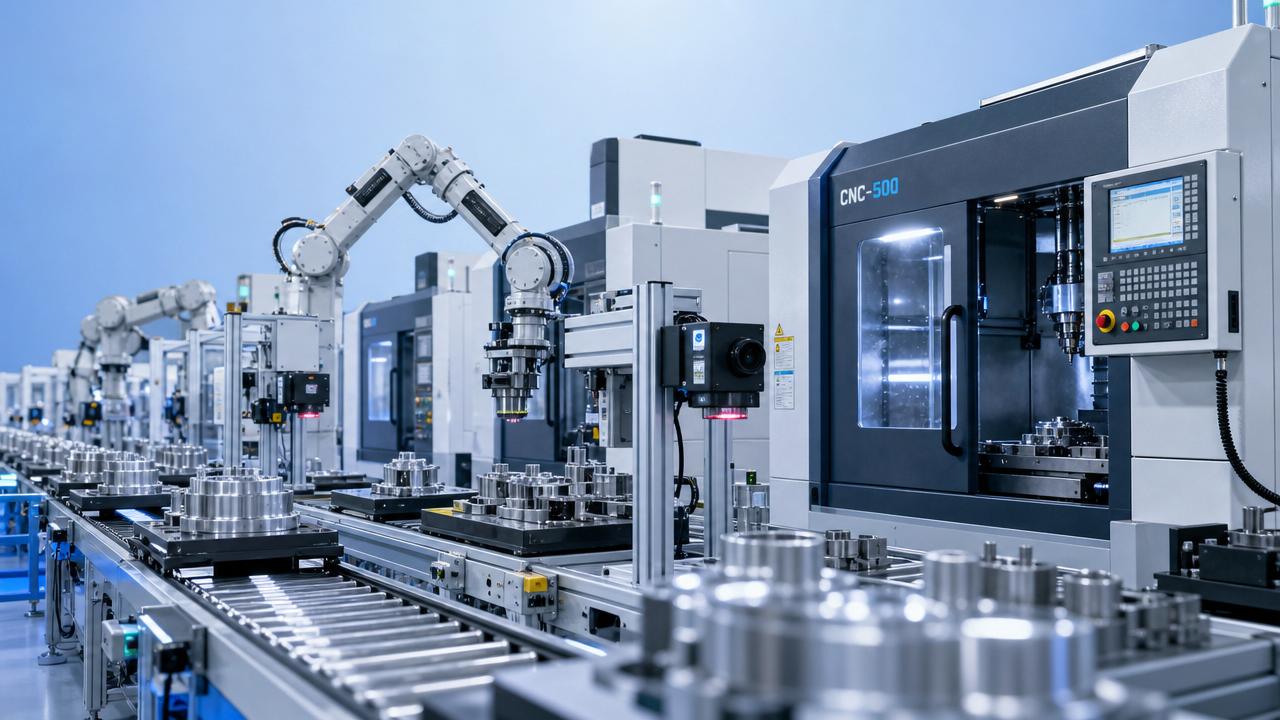
Why an Automated Production Line matters in error-prone, labor-intensive operations
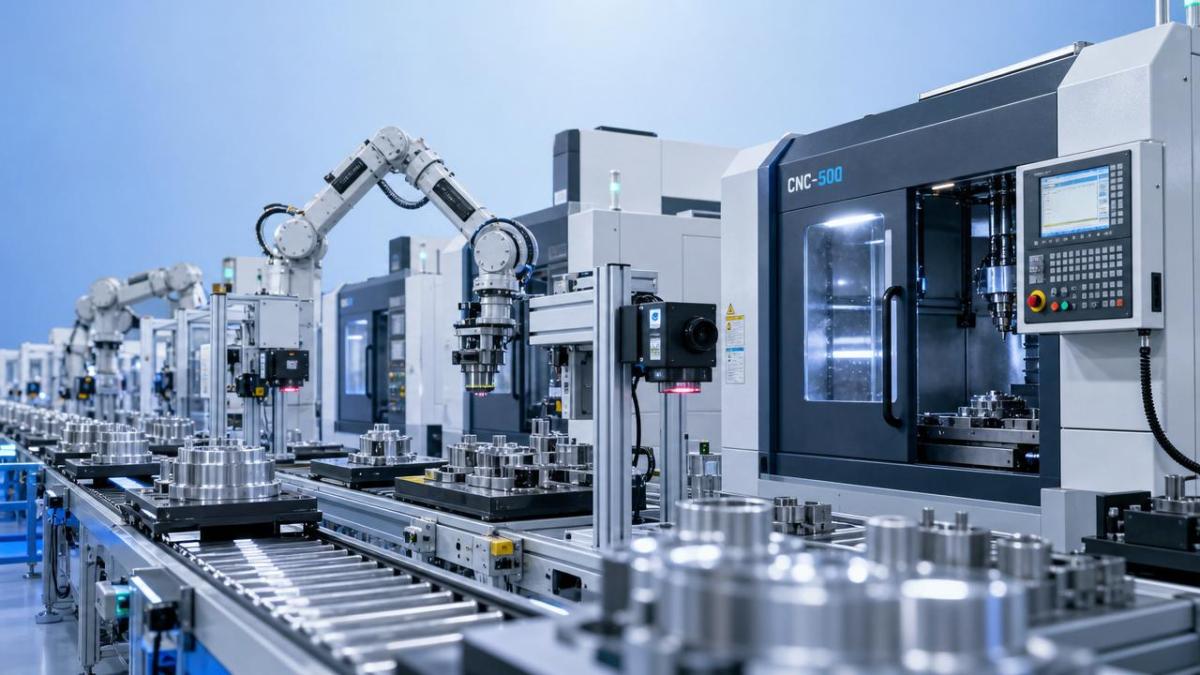
For project managers and engineering leaders, an Automated Production Line is more than a productivity upgrade.
It is a practical system for reducing manual mistakes, stabilizing output, and limiting dependence on variable labor conditions.
In CNC machining, precision assembly, and mixed manufacturing environments, small human errors often create large downstream costs.
A missed offset, wrong fixture loading, or inconsistent inspection routine can trigger scrap, rework, delays, and customer complaints.
An Automated Production Line addresses these issues by standardizing motion, sequencing, handling, and process control across connected equipment.
This matters across automotive parts, aerospace components, energy equipment, and electronics, where precision and repeatability define profitability.
As smart manufacturing expands, the value of an Automated Production Line grows beyond speed and into quality assurance and operational resilience.
How to judge whether your production scenario truly needs automation
Not every workshop needs the same level of automation.
The right Automated Production Line depends on product mix, takt time, labor stability, process complexity, and traceability requirements.
High-volume, repeatable parts usually benefit first because standardized cycles deliver faster payback and cleaner process control.
Low-volume, high-mix operations can also benefit, but they need flexible automation, quick changeovers, and strong digital scheduling.
The most important question is not whether automation looks advanced.
The real question is where manual steps still create avoidable variation, delays, or hidden labor costs.
Key signals that the current process is under strain
- Frequent rework caused by loading, positioning, or sequencing mistakes.
- High overtime levels used to maintain delivery commitments.
- Quality variation between shifts or operators.
- Difficulty hiring or retaining skilled machine operators.
- Production data is incomplete, delayed, or manually recorded.
Scenario 1: Repetitive CNC machining lines with stable part families
This is one of the strongest fits for an Automated Production Line.
When parts share similar geometry, fixtures, and cycle times, automation can stabilize loading, machining transfer, inspection, and unloading.
In these settings, robots, pallet systems, and in-line gauging reduce touchpoints where people normally introduce variation.
The result is fewer setup mistakes, lower idle time, and more predictable output per shift.
An Automated Production Line also helps balance multiple CNC machines around a common takt.
That balance prevents bottlenecks, especially when one machine traditionally depends on a highly experienced operator.
Core judgment points in this scenario
- Part design remains stable for long production runs.
- Machine utilization is limited by handling time, not cutting time.
- Dimensional consistency is more important than operator flexibility.
Scenario 2: Precision assembly and inspection where quality escapes are costly
Some operations lose more money from defects than from direct labor.
This is common in electronics modules, energy components, and safety-critical mechanical assemblies.
Here, an Automated Production Line should focus on process verification, torque control, vision checks, and digital traceability.
Automation reduces reliance on memory-based work and makes every step measurable.
If an input is wrong, the line can stop automatically before the defect moves downstream.
That single capability often saves more than labor reduction alone.
Core judgment points in this scenario
- A defect escape has serious warranty, safety, or compliance impact.
- Manual inspection results differ between people or shifts.
- Traceability is required for audits, customers, or regulated industries.
Scenario 3: Mixed-model production that needs flexible automation, not rigid transfer lines
Many factories assume an Automated Production Line only works for mass production.
That assumption is outdated.
Modern flexible lines combine CNC cells, industrial robots, machine vision, and software scheduling to handle product variation.
The benefit is not maximum speed alone.
It is the ability to switch models with less setup risk and less dependency on individual operator skill.
This scenario is common in contract manufacturing, industrial components, and customized equipment production.
The right Automated Production Line here needs modular fixtures, recipe control, and digital work instructions.
Where scenario needs differ most across industries
The same Automated Production Line strategy does not fit every industry equally.
Different sectors prioritize speed, precision, changeover, compliance, or labor savings in different ways.
Practical fit criteria for choosing the right Automated Production Line
A good decision starts with process fit, not equipment enthusiasm.
Before investing, map where labor time and error cost are highest.
Then define the automation level that solves the real constraint.
- Measure manual touchpoints per part and identify recurring mistakes.
- Separate value-added machining time from waiting, transfer, and checking time.
- Review changeover frequency and product family similarity.
- Check whether current quality data supports closed-loop improvement.
- Estimate payback using scrap reduction, labor savings, and capacity gain together.
What a strong solution often includes
- CNC machines linked by robotic or palletized transfer.
- Fixtures designed for repeatable loading and quick change.
- Sensors or vision systems for presence, orientation, and quality checks.
- Software integration for scheduling, alarms, and production records.
Common misjudgments that weaken automation results
A poorly matched Automated Production Line can shift problems instead of solving them.
One common mistake is automating an unstable process before fixing tooling, program variation, or material flow.
Another mistake is focusing only on labor replacement while ignoring quality losses, downtime, and maintenance readiness.
Some lines also fail because they are too rigid for future product changes.
Others underperform because operators were not trained to manage exceptions, alarms, and recovery procedures.
The best Automated Production Line is not the most complex one.
It is the one aligned with actual production scenarios, process maturity, and expansion plans.
Next steps for building a lower-error, lower-labor production system
Start with one line, one part family, or one quality-critical process.
Use that pilot to verify cycle stability, defect reduction, and data visibility.
Then expand the Automated Production Line approach across similar operations with shared tooling and control logic.
In modern manufacturing, cutting errors and labor dependence is no longer only a scale advantage.
It is a competitiveness requirement.
A well-planned Automated Production Line creates more consistent quality, stronger delivery performance, and a more resilient production model.
That makes it one of the most practical investments for precision manufacturing and broader industrial operations today.
PREVIOUS ARTICLE
Recommended for You
![]() China's CSF Harmonic Drives Pass ISO 9409-1:2023, Open Import-Substitution Window
China's CSF Harmonic Drives Pass ISO 9409-1:2023, Open Import-Substitution Window![]() Weimait CNC Achieves IATF 16949:2024 Certification
Weimait CNC Achieves IATF 16949:2024 Certification![]() New MIIT Rule: CNC Export Equipment Must Include Multilingual Remote Diagnostics from May 2026
New MIIT Rule: CNC Export Equipment Must Include Multilingual Remote Diagnostics from May 2026![]() CCMT 2026 Concludes in Shanghai: Surge in Five-Axis CNC Export Orders, Lead Times Extend to 14 Weeks
CCMT 2026 Concludes in Shanghai: Surge in Five-Axis CNC Export Orders, Lead Times Extend to 14 Weeks![]() CIMES 2026 Opens in Beijing: Global Buyers Prioritize Smart Production Lines and Export Compliance
CIMES 2026 Opens in Beijing: Global Buyers Prioritize Smart Production Lines and Export Compliance A weak Production Process can raise costs without warningCNC Machining Technology Center


Aris Katos
Future of Carbide Coatings
15+ years in precision manufacturing systems. Specialized in high-speed milling and aerospace grade alloy processing.
▶
How can an Automated Production Line reduce changeover delays?Machine Tool Industry Editorial Team▶
How an Automated Production Line cuts errors and laborMachine Tool Industry Editorial Team▶
What problems can an Automated Production Line really solve?Machine Tool Industry Editorial Team▶
How an Automated Production Line cuts labor and delaysMachine Tool Industry Editorial Team▶
What makes an Automated Production Line fail early?Machine Tool Industry Editorial Team
Mastering 5-Axis Workholding Strategies
Join our technical panel on Nov 15th to learn about reducing vibrations in thin-wall components.

Providing you with integrated sanding solutions
Before-sales and after-sales services
Comprehensive technical support