• Global CNC market projected to reach $128B by 2028 • New EU trade regulations for precision tooling components • Aerospace deman
NYSE: CNC +1.2%LME: STEEL -0.4%

What problems can an Automated Production Line really solve?
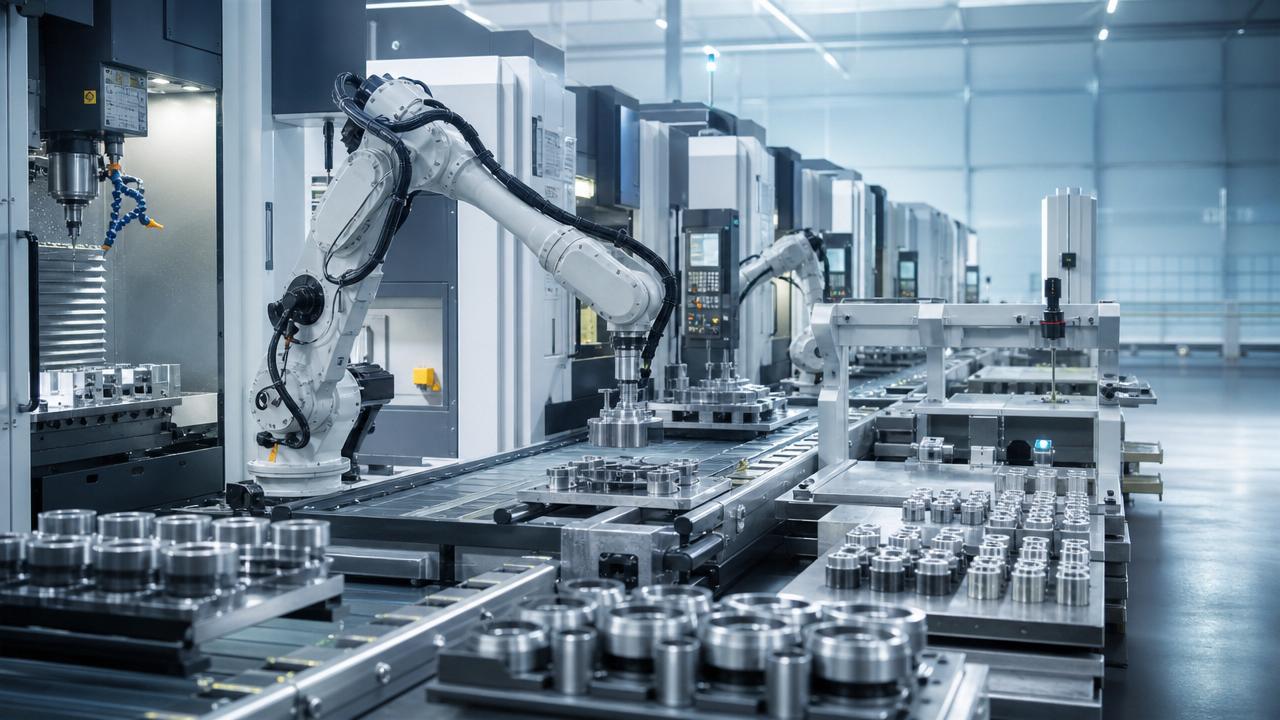
An Automated Production Line can do far more than speed up manufacturing. For business decision-makers, it helps solve rising labor costs, inconsistent product quality, production bottlenecks, and limited scalability. In industries that rely on CNC machining and precision manufacturing, it also improves process stability, supports data-driven management, and strengthens competitiveness in an increasingly automated global market.
For manufacturers working with CNC lathes, machining centers, multi-axis systems, automated assembly, and precision inspection, the real question is not whether automation matters. The real question is which business problems an Automated Production Line can solve first, how quickly it can deliver measurable results, and what risks must be managed during implementation.
This matters across automotive, aerospace, electronics, energy equipment, and contract machining. In these sectors, a delay of 4 to 8 hours, a scrap rate above 2%, or a repeated setup error can affect delivery reliability, gross margin, and customer confidence. A well-designed line addresses those issues at the process level, not just at the machine level.
The Core Problems an Automated Production Line Solves
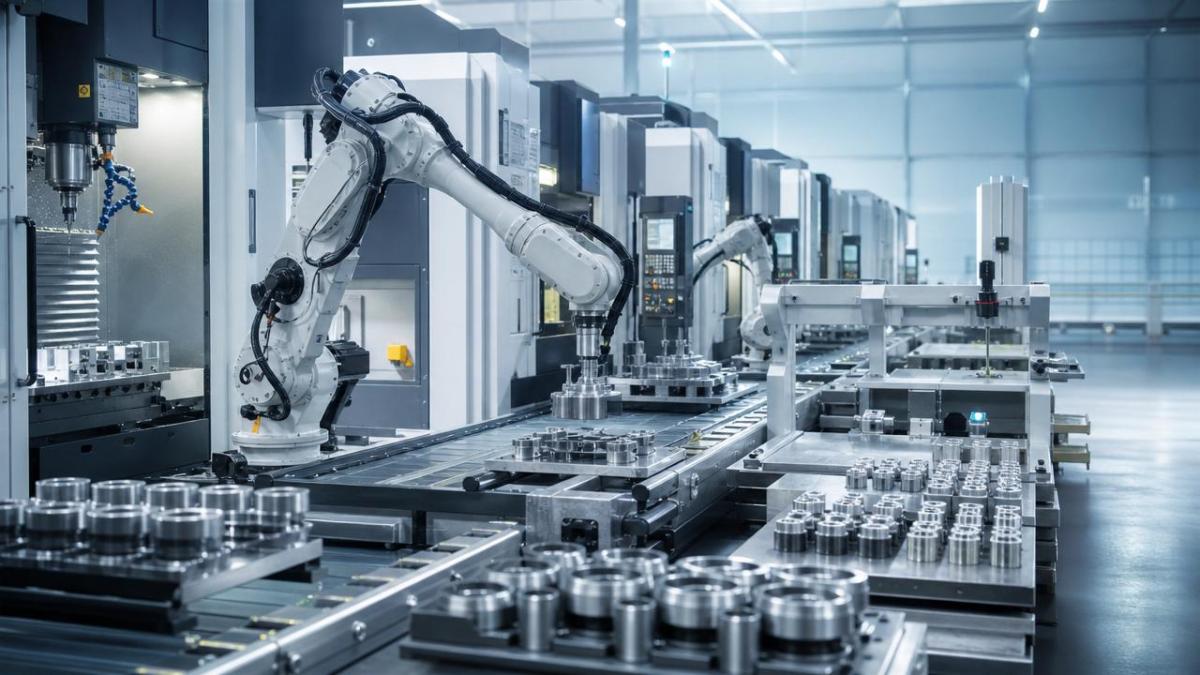
An Automated Production Line is often associated with labor reduction, but its value is broader. In CNC machining and precision manufacturing, it connects machines, tooling, fixtures, handling devices, inspection stations, software, and production logic into one repeatable system. That system reduces variability across every shift.
1. Rising labor costs and operator dependency
Many factories still rely on experienced operators for loading, unloading, in-process checks, tool offset correction, and part transfer. That model becomes expensive when wages rise 8% to 15% over a 2 to 3 year period or when night shifts require premium staffing. It also creates production risk when key workers leave.
An Automated Production Line reduces direct manual handling steps, often from 5 or 6 touches per part down to 1 or 2. In high-volume shaft, disc, and structural part production, robotic loading and pallet transfer can stabilize output across 16 to 24 operating hours per day, even when labor availability is limited.
What decision-makers should measure
- Direct labor per machine or per cell
- Operator-to-machine ratio, such as 1:1 versus 1:3
- Shift coverage gaps during nights, weekends, and holidays
- Training time for new operators, often 4 to 12 weeks
2. Inconsistent quality and unstable process control
In precision manufacturing, quality issues do not always come from machine capability. They often come from inconsistent part positioning, incorrect fixture loading, mixed batches, delayed tool replacement, coolant fluctuation, or poor transfer between operations. These issues create dimensional drift, surface defects, and traceability gaps.
A properly designed Automated Production Line improves repeatability by standardizing handling force, clamping sequence, cycle timing, and inspection logic. For many parts, keeping positioning repeatability within ±0.02 mm to ±0.05 mm during transfer and loading can significantly reduce downstream rework and customer complaints.
3. Production bottlenecks between isolated machines
A common factory problem is that individual machines are productive, but the overall process is not. One machine waits for material, another waits for inspection, and a third sits idle because finished parts are not removed in time. The result is hidden capacity loss that can reach 10% to 25% in mixed-part workshops.
An Automated Production Line solves this by balancing takt time, defining buffer capacity, and automating part flow between turning, milling, deburring, washing, marking, and inspection. Instead of optimizing one machine at a time, management gains a production rhythm that is easier to schedule and scale.
The table below shows how typical operating problems map to line-level automation solutions in CNC and precision manufacturing environments.
The key takeaway is that automation should not be viewed as a single machine purchase. Its strongest effect comes from linking labor, process discipline, material movement, and quality control into one operating model. That is where an Automated Production Line creates durable business value.
How Automation Improves Cost, Quality, and Delivery Performance
For enterprise decision-makers, investment logic depends on measurable results. In most precision manufacturing environments, automation projects are approved when they improve at least 3 of 5 critical indicators: output per hour, first-pass yield, labor efficiency, delivery reliability, and management visibility.
Cost control beyond headcount reduction
A common mistake is to calculate return on investment using labor savings only. In reality, an Automated Production Line also lowers hidden costs such as fixture mishandling, overtime caused by unstable planning, urgent rework, small-batch changeover delays, and machine idle time between processes.
For example, if a production cell runs 2 shifts and loses 12 minutes per hour to part transfer, manual checks, and waiting, the annual capacity loss can become substantial. Reducing those non-cutting losses by even 20% to 30% may release enough capacity to delay new machine purchases.
Quality stability in high-precision parts
In sectors such as aerospace, automotive powertrain, and electronics hardware, tolerance control is often tighter than ±0.01 mm to ±0.03 mm for key dimensions. Under those conditions, manual variation in clamping, sequencing, and inspection response can become a serious risk, even with premium CNC equipment.
Automation supports stable quality through fixed motion paths, repeatable loading pressure, part identification, and rule-based tool replacement. When connected to in-process gauging or post-process measurement, the line can trigger correction actions faster than a manual reporting workflow.
Delivery performance and scaling capacity
Customers increasingly expect shorter lead times, smaller batch flexibility, and consistent global quality. An Automated Production Line helps manufacturers move from reactive scheduling to planned throughput. This is especially important when monthly order volume swings by 15% to 40% or when export orders require stricter on-time performance.
When line architecture includes buffer zones, quick-change fixtures, and digital production tracking, factories can handle both stable volume and moderate mix changes more effectively. That makes expansion less dependent on adding supervisors and operators at the same pace as machine count.
Typical improvement areas after implementation
- Lower cycle interruption frequency during each 8 to 12 hour shift
- Better first-pass yield through repeatable loading and inspection logic
- Improved OEE visibility from machine-level to line-level performance
- Reduced WIP accumulation between turning, milling, and assembly stages
- Stronger delivery planning based on actual takt and buffer data
Where an Automated Production Line Delivers the Most Value
Not every production environment needs the same level of automation. The business case is strongest when parts have repeatable routing, stable annual demand, strict quality requirements, or difficult labor conditions. In CNC machining, the decision should be based on part family logic rather than on a single product alone.
High-volume and medium-volume precision parts
Shaft parts, disc parts, housings, brackets, and rotational components are common candidates. If annual output exceeds several thousand units per part family, and process steps remain stable for 12 months or more, an Automated Production Line can often justify its integration cost more clearly.
Multi-process production with repeatable routing
The strongest application is usually not one stand-alone machine. It is a route that combines 3 to 6 linked operations, such as turning, milling, cleaning, marking, inspection, and packing. The more repeatable the routing, the easier it is to standardize buffers, transfer logic, and quality checkpoints.
The following table outlines where an Automated Production Line tends to create the highest value based on production characteristics.
This comparison shows that the best automation targets are not always the highest-volume parts alone. The better target is the combination of stable process logic, quality sensitivity, and recurring delivery pressure. That is where line-level automation becomes a strategic asset rather than a simple equipment upgrade.
How to Evaluate and Implement the Right Line
Choosing an Automated Production Line requires more than comparing machine specifications. Decision-makers should evaluate process compatibility, part family strategy, expected utilization, software integration, and after-sales support. A low-price line that does not fit the process can create more downtime than manual production.
Four evaluation dimensions before purchase
1. Process fit
Check whether the line matches your actual route: number of operations, spindle time, fixture type, workpiece weight, orientation needs, and inspection points. A part weighing 2 kg behaves very differently from one weighing 25 kg, especially during robotic transfer and clamping.
2. Flexibility level
If your product mix changes every 2 to 4 weeks, flexibility matters as much as speed. Review fixture change time, program management, part identification, pallet compatibility, and whether the line can support at least 2 to 5 related part variants without major rebuild.
3. Data and control integration
A modern Automated Production Line should provide machine status, alarm history, cycle data, and quality-related records. Even basic dashboards can help managers see stoppages, takt deviation, and output trends by shift, which is far more useful than isolated machine counters.
4. Service and ramp-up support
Implementation quality often determines project success. Review commissioning plans, spare parts readiness, operator training hours, remote support availability, and expected stabilization period. For many projects, it takes 2 to 6 weeks after installation to reach reliable output.
A practical 5-step implementation path
- Define target parts, annual volume, takt time, and quality thresholds
- Map the full process from raw material input to final inspection
- Validate line architecture, buffer design, tooling, and automation interfaces
- Run trial production, train teams, and tune cycle balance for 1 to 3 pilot batches
- Track output, scrap, downtime, and response speed during the first 30 to 90 days
Common mistakes to avoid
- Buying for peak speed without validating upstream and downstream flow
- Ignoring fixture standardization and tool management rules
- Automating unstable processes before solving basic machining variation
- Underestimating training, spare parts, and software parameter management
- Expecting full ROI from labor savings while ignoring quality and delivery gains
Why the Strategic Value Goes Beyond the Factory Floor
For global manufacturing organizations, an Automated Production Line is not only a productivity tool. It also supports customer trust, export competitiveness, and multi-site management. Standardized automation makes it easier to replicate processes across plants in different countries or regions.
This matters in international supply chains where customers compare suppliers on delivery stability, traceability, responsiveness, and long-term capacity planning. In that context, automation becomes part of commercial credibility. It shows that the manufacturer can scale output while controlling quality and process discipline.
For companies in CNC machining, precision machine tools, and integrated manufacturing systems, the strongest advantage is often operational resilience. When market demand changes, labor becomes scarce, or quality expectations tighten, a structured Automated Production Line gives management more control over cost, throughput, and decision speed.
The real problems an Automated Production Line solves are practical and measurable: labor dependence, unstable quality, bottlenecks between machines, weak traceability, and limited production scalability. For business leaders in CNC and precision manufacturing, the right system creates stronger process control, better planning confidence, and a more competitive delivery model.
If you are assessing automation for turning, milling, multi-axis machining, automated assembly, or precision inspection, now is the time to review your process flow, part family strategy, and line integration priorities. Contact us to get a tailored solution, discuss technical details, and explore more automation options for your manufacturing goals.
PREVIOUS ARTICLE
NEXT ARTICLE
Recommended for You
![]() CCMT2026签约汇总:桂林鸿程精机斩获四川振中机电2800万元立车订单
CCMT2026签约汇总:桂林鸿程精机斩获四川振中机电2800万元立车订单![]() 申威数控双主轴对接机床通过德国莱茵TÜV产线集成认证
申威数控双主轴对接机床通过德国莱茵TÜV产线集成认证![]() China's CNC System Export Prices Rise 8.3% in Q1; High-Value Share Hits 42%
China's CNC System Export Prices Rise 8.3% in Q1; High-Value Share Hits 42%![]() First ISO Carbon Footprint Guide for CNC Machine Tools Launched, Accepted Equivalently by China, EU and US
First ISO Carbon Footprint Guide for CNC Machine Tools Launched, Accepted Equivalently by China, EU and US![]() Brazil’s INMETRO IoT Requirement Takes Effect: 37 CNC Lathes Rejected at Santos Port
Brazil’s INMETRO IoT Requirement Takes Effect: 37 CNC Lathes Rejected at Santos Port![]() 红海危机升级致亚欧线舱位冻结:马士基暂停CNC设备订舱,中东买家转向本地化组装
红海危机升级致亚欧线舱位冻结:马士基暂停CNC设备订舱,中东买家转向本地化组装


Aris Katos
Future of Carbide Coatings
15+ years in precision manufacturing systems. Specialized in high-speed milling and aerospace grade alloy processing.
▶
What problems can an Automated Production Line really solve?Machine Tool Industry Editorial Team▶
How an Automated Production Line cuts labor and delaysMachine Tool Industry Editorial Team▶
What makes an Automated Production Line fail early?Machine Tool Industry Editorial Team▶
When an Automated Production Line becomes hard to maintainMachine Tool Industry Editorial Team▶
Why Industrial Robotics payback is shorter than many expectMachine Tool Industry Editorial Team
Mastering 5-Axis Workholding Strategies
Join our technical panel on Nov 15th to learn about reducing vibrations in thin-wall components.

Providing you with integrated sanding solutions
Before-sales and after-sales services
Comprehensive technical support