• Global CNC market projected to reach $128B by 2028 • New EU trade regulations for precision tooling components • Aerospace deman
NYSE: CNC +1.2%LME: STEEL -0.4%

How can an Automated Production Line reduce changeover delays?
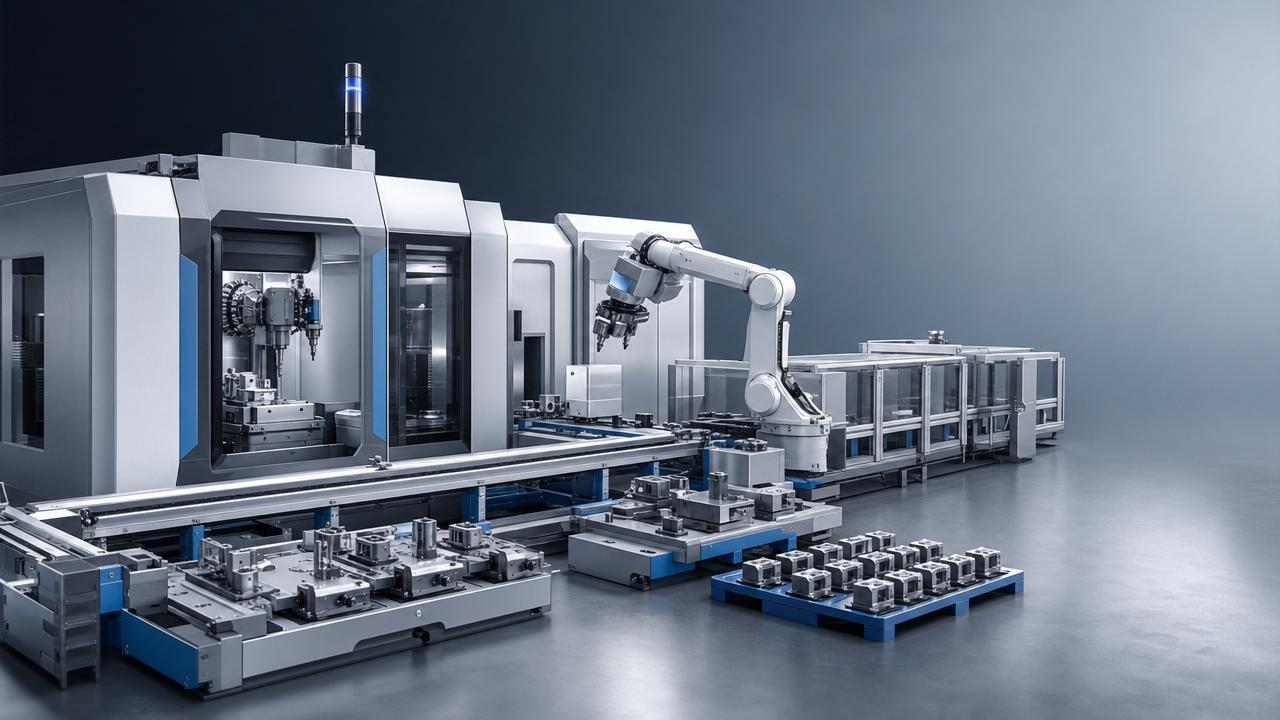
For project managers and engineering leads, changeover delays can quickly erode capacity, increase costs, and disrupt delivery schedules. An Automated Production Line reduces these losses by standardizing workflow steps, shortening setup time, and improving coordination across machines, tooling, material handling, and data systems. In CNC machining, precision manufacturing, and mixed-model production, faster transitions are no longer a convenience. They are a direct source of competitiveness.
Why changeover control matters in an Automated Production Line
Changeover delays often appear between jobs, but their real impact spreads across the whole factory. Idle spindles, waiting operators, tool searching, program verification, fixture adjustment, and material mismatch all consume productive time.
An Automated Production Line addresses these losses by turning changeover into a managed process instead of a manual interruption. This is especially valuable in CNC environments where part complexity, tolerance requirements, and traceability standards demand consistent execution.
The biggest gains usually come from reducing variation. When setup methods, tooling locations, robot motions, and machine recipes are predefined, transitions become repeatable, measurable, and easier to improve.
Checklist: how an Automated Production Line reduces changeover delays
Use the following checklist to evaluate whether an Automated Production Line is actually removing delay sources or simply shifting them to another step.
- Standardize setup sequences so each machine, robot, and operator follows the same order for part loading, fixture exchange, tool checks, and program confirmation.
- Pre-stage tools and fixtures offline to avoid searching, measuring, and adjusting during machine stoppage, especially for CNC lathes, machining centers, and multi-axis cells.
- Store verified machining programs and robot recipes in a central control system to eliminate version confusion and reduce manual parameter entry errors.
- Use quick-change fixturing and modular clamping to shorten mechanical exchange time while maintaining repeatable positioning and dimensional stability.
- Automate material transfer with conveyors, robots, pallets, or AGVs so the next job can be staged before the current batch finishes.
- Apply tool life monitoring to predict replacements before alarms stop the line, preventing unplanned pauses during part family transitions.
- Integrate MES, ERP, and machine data so schedule changes automatically trigger the right routing, tooling list, inspection plan, and work instructions.
- Separate internal and external setup tasks by moving measurement, presetting, labeling, and kitting outside machine downtime whenever possible.
- Use digital work instructions and interlocks to ensure each changeover step is completed correctly before the Automated Production Line releases the next cycle.
- Track changeover time by machine, product family, and shift so recurring bottlenecks can be targeted with engineering improvements instead of assumptions.
What changes most when automation is applied
Setup becomes parallel, not sequential
In manual lines, many setup tasks happen only after the machine stops. In an Automated Production Line, the next program, fixture, and material lot can be prepared while the current cycle is still running.
This parallel preparation is one of the fastest ways to cut lost time. It reduces waiting between the final good part of one order and the first good part of the next.
Process variation becomes visible
Automation does not automatically remove weak processes. It exposes them. If one fixture needs repeated adjustment or one tool offset changes every batch, the data from the Automated Production Line makes that pattern visible.
That visibility supports better root cause work. Teams can compare changeover time by station, identify unstable interfaces, and redesign the exact step causing delay.
Application examples across manufacturing settings
High-mix CNC machining
In shops producing shafts, housings, discs, and structural parts, changeovers happen frequently. An Automated Production Line helps by using preset tool assemblies, barcode-driven job calls, and palletized fixture libraries.
When the next part family is digitally linked to the correct setup package, first-piece verification becomes faster and scrap risk drops during transition.
Automotive and component volume production
In repetitive production, delays usually come from unbalanced stations, tooling wear, or late material staging. Here, an Automated Production Line reduces changeover time through synchronized station timing and automatic replenishment signals.
Even when product variants are limited, sequence discipline matters. Small reductions at each station can recover significant annual capacity.
Aerospace and precision manufacturing
Complex parts often require strict traceability, in-process inspection, and validated programs. An Automated Production Line supports shorter changeovers by linking setup approval, offset control, and quality checkpoints in one workflow.
This approach is slower to design initially, but it greatly reduces the risk of rework caused by uncontrolled setup changes.
Common gaps that still cause delays
One frequent mistake is automating motion without standardizing data. A fast robot cannot compensate for incorrect tooling lists, outdated CNC programs, or missing setup sheets.
Another gap is ignoring fixture strategy. If fixturing requires manual shimming, repeated alignment, or excessive torque checks, the Automated Production Line will inherit that inefficiency.
Tool management is also underestimated. Changeovers slow down when sister tools are unavailable, offsets are not preloaded, or tool wear thresholds are set too late for stable transition.
Software integration can become another hidden bottleneck. If scheduling changes do not flow cleanly into machine control, operators may still rely on manual confirmation and spreadsheet-based updates.
Finally, some lines fail because first-piece approval remains disconnected from automation. Without a defined release logic, the line pauses while waiting for inspection decisions.
Practical steps to improve changeover performance
- Map the full changeover from last good part to next good part, including waiting, walking, verification, and adjustment time.
- Classify every step as internal or external, then move as many tasks as possible outside machine downtime.
- Create standardized kits for tools, fixtures, gauges, and documents for each recurring product family.
- Link machine controls, robot programs, and production software so one job call launches the correct setup package.
- Measure first-pass yield after each changeover, not only setup minutes, because fast transitions without stability create hidden cost.
- Review exceptions weekly and redesign recurring delay points with fixture upgrades, presetting improvements, or control logic changes.
Conclusion: use the Automated Production Line as a changeover system
An Automated Production Line reduces changeover delays when it combines mechanical automation with standardized setup methods, digital control, reliable tooling, and disciplined execution. The real advantage is not only faster switching. It is more predictable production.
Start with one line, one product family, and one measurable target. Reduce manual steps, pre-stage more tasks, connect data systems, and track time from last good part to next good part. That practical sequence turns the Automated Production Line into a durable source of capacity, flexibility, and delivery reliability.
PREVIOUS ARTICLE
NEXT ARTICLE
Recommended for You
![]() China's CSF Harmonic Drives Pass ISO 9409-1:2023, Open Import-Substitution Window
China's CSF Harmonic Drives Pass ISO 9409-1:2023, Open Import-Substitution Window![]() Weimait CNC Achieves IATF 16949:2024 Certification
Weimait CNC Achieves IATF 16949:2024 Certification![]() New MIIT Rule: CNC Export Equipment Must Include Multilingual Remote Diagnostics from May 2026
New MIIT Rule: CNC Export Equipment Must Include Multilingual Remote Diagnostics from May 2026![]() CCMT 2026 Concludes in Shanghai: Surge in Five-Axis CNC Export Orders, Lead Times Extend to 14 Weeks
CCMT 2026 Concludes in Shanghai: Surge in Five-Axis CNC Export Orders, Lead Times Extend to 14 Weeks![]() CIMES 2026 Opens in Beijing: Global Buyers Prioritize Smart Production Lines and Export Compliance
CIMES 2026 Opens in Beijing: Global Buyers Prioritize Smart Production Lines and Export Compliance A weak Production Process can raise costs without warningCNC Machining Technology Center


Aris Katos
Future of Carbide Coatings
15+ years in precision manufacturing systems. Specialized in high-speed milling and aerospace grade alloy processing.
▶
How can an Automated Production Line reduce changeover delays?Machine Tool Industry Editorial Team▶
How an Automated Production Line cuts errors and laborMachine Tool Industry Editorial Team▶
What problems can an Automated Production Line really solve?Machine Tool Industry Editorial Team▶
How an Automated Production Line cuts labor and delaysMachine Tool Industry Editorial Team▶
What makes an Automated Production Line fail early?Machine Tool Industry Editorial Team
Mastering 5-Axis Workholding Strategies
Join our technical panel on Nov 15th to learn about reducing vibrations in thin-wall components.

Providing you with integrated sanding solutions
Before-sales and after-sales services
Comprehensive technical support