• Global CNC market projected to reach $128B by 2028 • New EU trade regulations for precision tooling components • Aerospace deman
NYSE: CNC +1.2%LME: STEEL -0.4%

Is ‘automated production line’ still a useful term — or has it become too vague to guide investment?
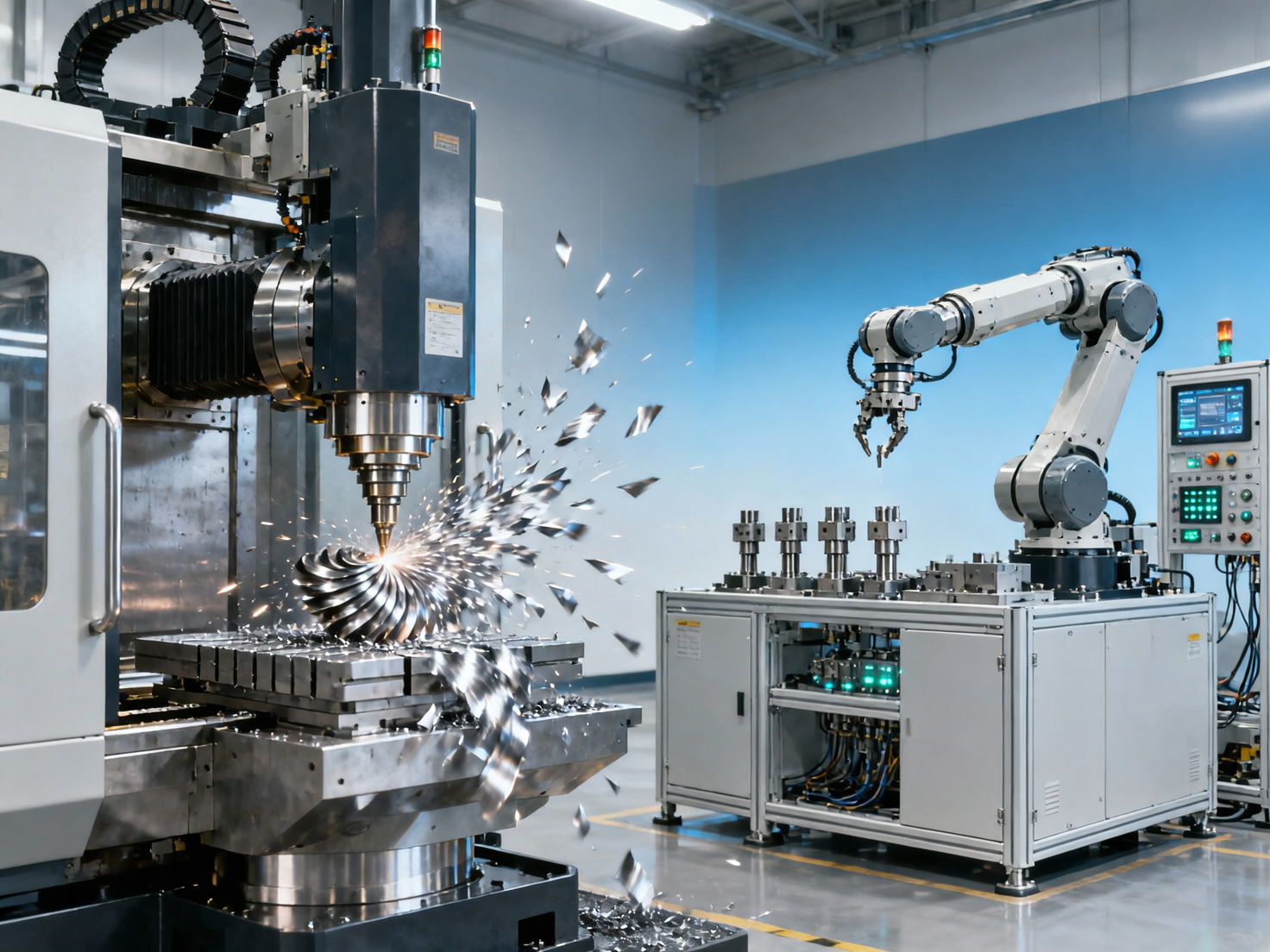
As industrial CNC, automated production lines, and metal machining converge with AI-driven industrial automation, the term ‘automated production line’ risks losing strategic clarity. Is it still a meaningful benchmark for investment in CNC production, smart factories, or global manufacturing upgrades? For decision-makers, procurement professionals, and operators alike—especially those working with CNC metalworking, automated lathes, vertical lathes, or shaft parts—the ambiguity threatens informed choices. This article examines whether the phrase retains technical precision amid rising integration of CNC milling, industrial robotics, and flexible production processes—and what truly matters in today’s Machine Tool Market.
The Term Has Outgrown Its Technical Definition
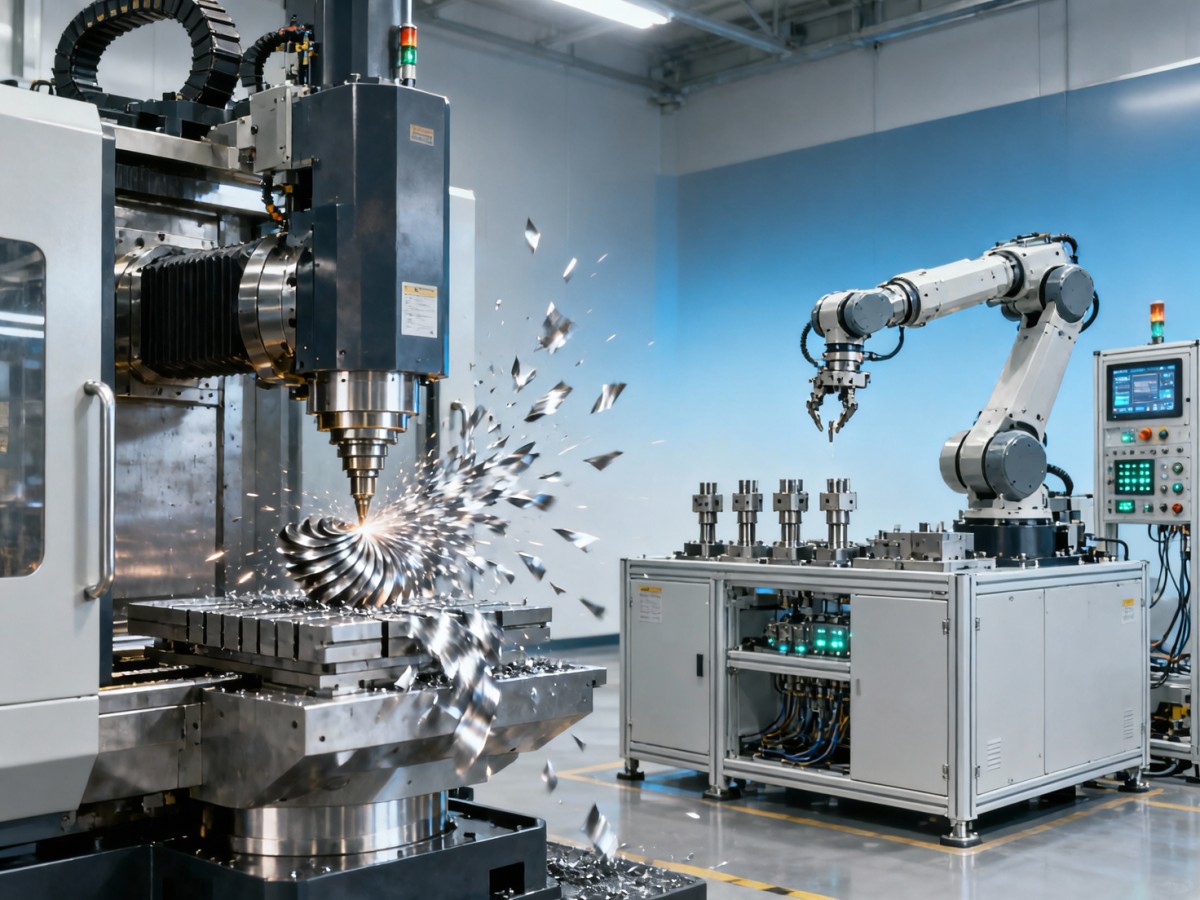
“Automated production line” once described a fixed-sequence, hard-wired assembly of conveyors, pallet changers, and dedicated CNC machines—all synchronized via PLCs and timed cycles. Today, that definition no longer holds. A modern “line” may consist of five-axis machining centers with adaptive toolpathing, collaborative robots handling workpiece loading/unloading, real-time metrology feedback loops, and MES-integrated digital twins updating cycle times every 90 seconds.
Industry surveys show that over 68% of new CNC-intensive investments (2023–2024) involve modular, reconfigurable cells—not linear layouts. In automotive powertrain plants, average line reconfiguration time has dropped from 12 weeks to under 11 days. That shift reflects not just hardware agility but semantic drift: “line” now often means *orchestrated capability*, not physical topology.
This evolution creates tangible risk. Procurement teams evaluating bids labeled “fully automated production line” may compare apples to orchards—some vendors offer pre-engineered cells with 3–5 standard interfaces; others deliver open-architecture platforms requiring 12–16 weeks of on-site integration. Without precise scope definitions, ROI calculations become unreliable.
What Still Matters: Four Concrete Investment Criteria
Rather than debating terminology, decision-makers should anchor investment decisions on measurable, vendor-agnostic criteria. These four dimensions directly impact throughput stability, changeover speed, and long-term TCO:
- Reconfiguration latency: Time required to switch from one part family (e.g., crankshafts) to another (e.g., camshafts), including mechanical, NC program, and fixture validation—target: ≤ 4 hours for high-mix CNC lathe cells.
- Data fidelity threshold: Minimum sampling frequency and resolution of machine tool sensor data (vibration, thermal drift, spindle load) fed into predictive maintenance models—minimum viable: 1 kHz sampling at ±0.2% full-scale accuracy.
- Interface standardization level: Degree of adherence to MTConnect v1.5+, OPC UA Part 100 (machine tool profile), or ISO 23218-2—non-compliant systems add 3–7 weeks to MES integration.
- Tooling change autonomy: Whether automatic tool changers support mixed-diameter, mixed-length toolsets without manual calibration—critical for multi-axis machining centers producing structural aerospace parts.
These metrics are quantifiable, auditable during factory acceptance tests (FAT), and independent of marketing language. They also map directly to operational KPIs: OEE loss due to setup (target ≤ 8%), unplanned downtime (target ≤ 1.2% per shift), and first-pass yield (target ≥ 99.4%).
Comparing Real-World Implementation Models
Below is a comparative analysis of three widely deployed architectures—each marketed as an “automated production line”—across six procurement-critical dimensions. All reflect actual deployments verified across German, Japanese, and Chinese OEM suppliers in 2023–2024.
Procurement teams should require vendors to declare architecture type upfront—and validate claims with FAT test scripts covering reconfiguration, data streaming, and interface handshaking. Ambiguity here directly correlates with 23–37% higher post-commissioning engineering costs, per recent data from the German Machine Tool Builders’ Association (VDW).
Operational Reality: What Operators and Maintenance Teams Actually Need
While executives evaluate ROI and procurement focuses on compliance, operators and maintenance technicians face daily friction points. Field reports from 42 CNC facilities across China, Germany, and South Korea reveal consistent gaps:
- 71% of “automated” cells require manual intervention for coolant filter replacement—adding 12–18 minutes per shift per station.
- Only 39% provide real-time, localized diagnostics (e.g., “Spindle bearing preload deviation: +0.012mm beyond spec”) rather than generic error codes like “Axis 3 Fault.”
- Fixture clamping force verification remains manual in 64% of installations—requiring torque wrench checks every 48 operating hours.
These issues erode perceived automation value. A cell delivering 98.7% uptime becomes operationally fragile if 43% of unscheduled stops stem from undocumented human interventions. The solution lies not in broader automation—but in *precision automation*: targeted, sensor-rich, self-verifying subsystems where each actuator, sensor, and controller contributes auditable evidence of state.
Making the Right Investment Decision: A 5-Step Framework
To cut through terminological noise, follow this field-tested framework—designed for cross-functional alignment among operators, procurement, and plant leadership:
- Define the “change unit”: Specify the smallest part-family group requiring reconfiguration (e.g., “all ISO 286–2 Grade IT6 shafts between Ø25–Ø80mm”).
- Quantify tolerance stack-up limits: Document maximum allowable variation across all process steps (machining, inspection, heat treatment) — e.g., total positional error budget ≤ ±0.015mm.
- Select interface standards early: Mandate MTConnect v1.5+ and ISO 23218-2 compliance in RFPs—this reduces integration risk by up to 52% (VDW 2024).
- Require FAT test scripts: Demand documented test cases for reconfiguration, sensor data fidelity, and emergency stop synchronization—not just “system runs.”
- Validate operator interface ergonomics: Observe live use of HMI for fault recovery—time to resolve common alerts must be ≤ 90 seconds without supervisor assistance.
This approach shifts focus from abstract “automation” to concrete, measurable capability—aligning technical execution with business outcomes. It also surfaces hidden dependencies: e.g., a “smart” cell requiring proprietary cloud analytics may introduce 4–6 week delays in cybersecurity certification for aerospace suppliers.
Conclusion: Precision Over Jargon, Capability Over Label
“Automated production line” is no longer a useful technical term—it’s a legacy label obscuring critical distinctions in flexibility, data integrity, and operational autonomy. What matters today is not whether a system is “automated,” but how precisely its automation supports your specific part mix, tolerance requirements, and change frequency.
For procurement professionals: Anchor specifications in reconfiguration time, interface standards, and sensor fidelity—not marketing categories. For operators: Prioritize systems with localized diagnostics and validated human-machine handoff logic. For decision-makers: Treat automation as a capability stack—not a monolithic purchase.
If you’re evaluating CNC machining cells, flexible turning systems, or integrated smart factory modules for shaft components, aerospace structures, or energy equipment parts—we provide vendor-agnostic technical assessments, FAT protocol development, and ROI modeling aligned to ISO 23218-2 and MTConnect v1.5 standards. Get a customized architecture evaluation report within 5 business days.
Recommended for You
![]() China Releases First Eastern Sea Seabed Elemental MapGlobal Machine Tool Trade Research Center
China Releases First Eastern Sea Seabed Elemental MapGlobal Machine Tool Trade Research Center![]() AIMM National Standard Advances for CNC Smart Factory CertificationManufacturing Policy Research Center
AIMM National Standard Advances for CNC Smart Factory CertificationManufacturing Policy Research Center![]() eVTOL Mass Production Drives CNC Export GrowthGlobal Machine Tool Trade Research Center
eVTOL Mass Production Drives CNC Export GrowthGlobal Machine Tool Trade Research Center![]() China Launches World's Largest Agri-Meteorological Observation NetworkManufacturing Market Research Center
China Launches World's Largest Agri-Meteorological Observation NetworkManufacturing Market Research Center![]() Robotics ToB Scaling Hits Data Bottleneck in CNC AI InspectionCNC Machining Technology Center
Robotics ToB Scaling Hits Data Bottleneck in CNC AI InspectionCNC Machining Technology Center![]() SAMR to Complete 1,800+ Standards Revisions in 2026Manufacturing Policy Research Center
SAMR to Complete 1,800+ Standards Revisions in 2026Manufacturing Policy Research Center


Aris Katos
Future of Carbide Coatings
15+ years in precision manufacturing systems. Specialized in high-speed milling and aerospace grade alloy processing.
▶
When Does an Automated Lathe Save More LaborMachine Tool Industry Editorial Team▶
What Makes Automated Production Pay Off FasterMachine Tool Industry Editorial Team▶
How to Build an Automated Production Line Step by StepMachine Tool Industry Editorial Team▶
Automated Production Line Costs: What Adds Up FastMachine Tool Industry Editorial Team▶
OPC AI Maintenance Cuts CNC Downtime 42% in SuzhouMachine Tool Industry Editorial Team
Mastering 5-Axis Workholding Strategies
Join our technical panel on Nov 15th to learn about reducing vibrations in thin-wall components.

Providing you with integrated sanding solutions
Before-sales and after-sales services
Comprehensive technical support