• Global CNC market projected to reach $128B by 2028 • New EU trade regulations for precision tooling components • Aerospace deman
NYSE: CNC +1.2%LME: STEEL -0.4%

When Does an Automated Production Line Need Preventive Maintenance?
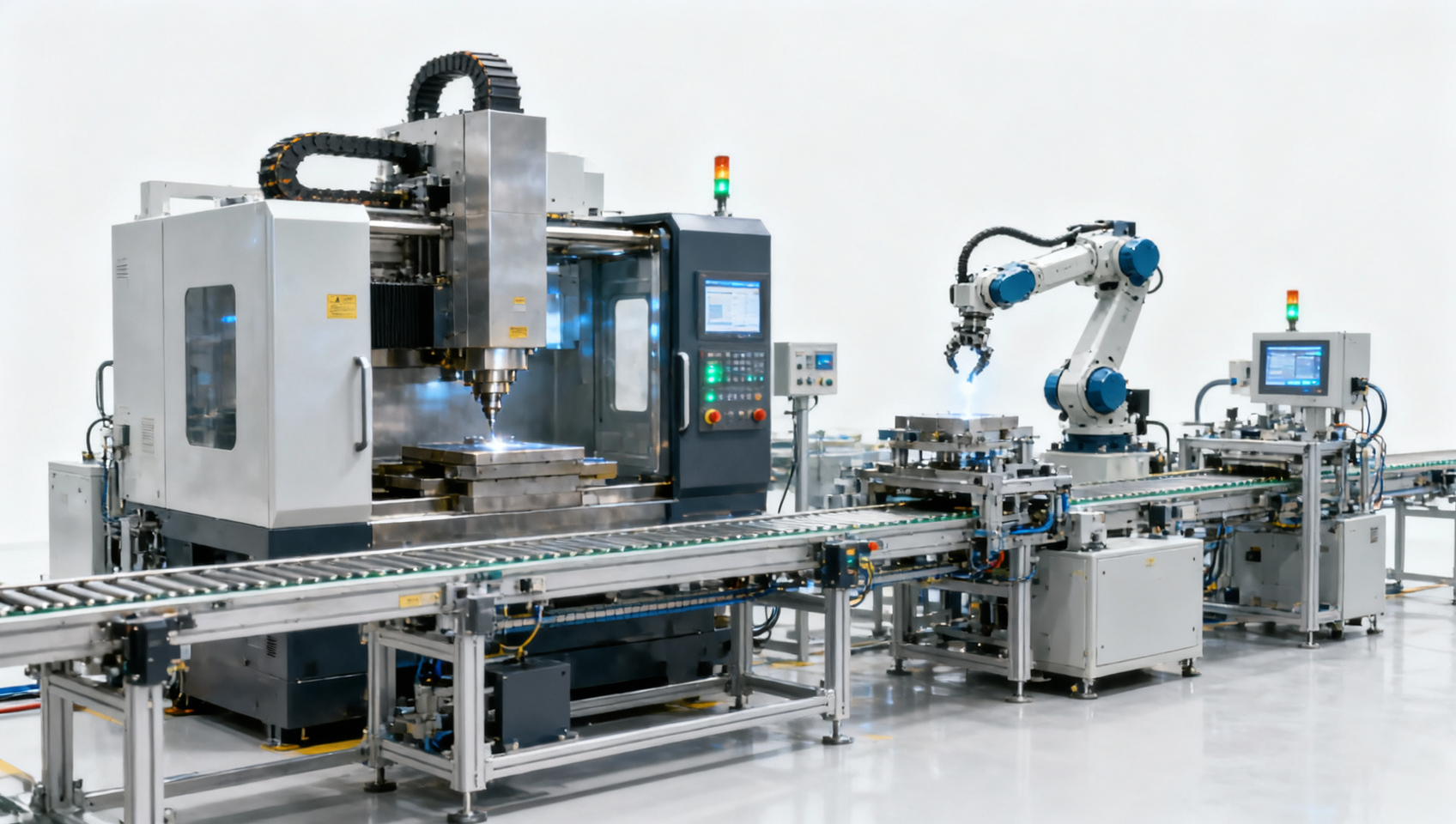
Knowing when an Automated Production Line needs preventive maintenance is critical to avoiding downtime, protecting quality, and controlling long-term costs. For manufacturers exploring an Automated Production Line maintenance guide, this article explains key warning signs, maintenance intervals, and how Industrial Automation integration for production line environments can improve reliability, efficiency, and production planning across modern manufacturing operations.
In CNC machining, precision assembly, and flexible manufacturing cells, preventive maintenance is not just a service task. It is a production strategy that directly affects spindle utilization, cycle time stability, product tolerance control, and delivery reliability. For operators, it reduces unplanned stoppages. For procurement teams, it protects equipment life-cycle value. For plant managers and executives, it supports output planning and cost predictability.
Modern automated lines combine CNC machine tools, robotic handling, conveyors, fixtures, sensors, control cabinets, lubrication systems, and industrial software. Because these systems are interconnected, a minor issue in one module can interrupt the performance of the entire line within 5–30 minutes. That is why preventive maintenance should be scheduled based on risk, operating hours, load conditions, and process criticality rather than on reactive repair alone.
Why Preventive Maintenance Matters in Automated Production Lines
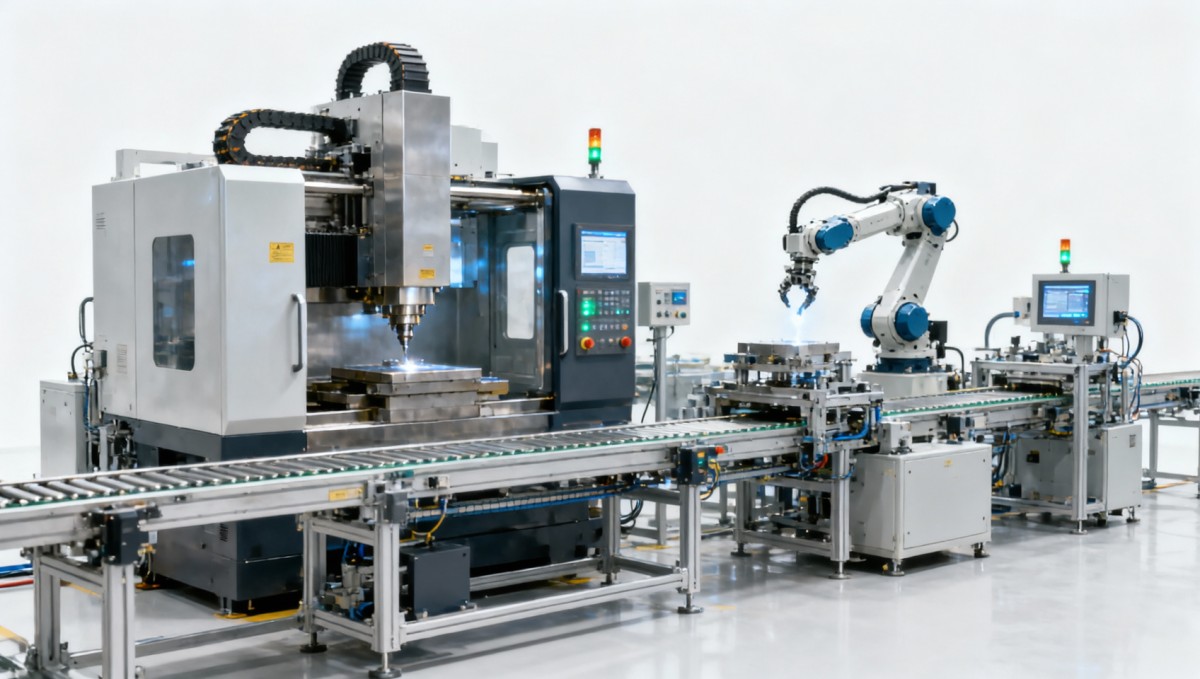
An automated production line often runs for 16–24 hours per day, especially in automotive parts, electronics housings, energy equipment, and aerospace components. In these environments, even a 1-hour shutdown can disrupt upstream machining and downstream assembly, resulting in missed takt targets, delayed shipments, and increased overtime. Preventive maintenance helps control this risk by identifying wear before failure reaches the line-stopping stage.
The cost of waiting for breakdowns is usually higher than the cost of planned service. A worn linear guide, unstable air pressure line, or contaminated coolant filter may seem minor, but such issues can lead to dimensional drift, tool breakage, and poor surface finish. For manufacturers producing precision parts with tolerances such as ±0.01 mm to ±0.05 mm, these changes can quickly increase scrap rates and rework hours.
Preventive maintenance also supports more stable resource planning. Spare parts can be ordered with 2–6 week lead times, service labor can be scheduled outside peak shifts, and software updates can be tested before deployment. This is especially important in smart factory settings where line availability, OEE tracking, and machine connectivity are tied to broader production KPIs.
Core business impacts of preventive maintenance
- Reduces the probability of sudden stoppages in high-utilization lines running 2 or 3 shifts.
- Protects product consistency in CNC turning, milling, drilling, deburring, and automated assembly processes.
- Extends service life of bearings, spindles, servo drives, pneumatic units, and robotic joints.
- Improves planning accuracy for maintenance teams, spare parts buyers, and production supervisors.
Different stakeholders value preventive maintenance differently, and this affects maintenance policy design. The table below shows how maintenance timing connects to operational priorities in manufacturing environments.
The key takeaway is simple: preventive maintenance is not only a technical routine. It is a cross-functional control method that protects production quality, purchasing efficiency, and strategic manufacturing performance.
Signs Your Automated Production Line Needs Preventive Maintenance
A line rarely fails without warning. In most CNC and industrial automation environments, there are early indicators 1–8 weeks before a significant breakdown. The challenge is that teams often normalize these symptoms because output continues for a period of time. By the time maintenance becomes urgent, collateral damage may already affect tooling, parts, or control systems.
The first category of warning signs is performance instability. This may include longer cycle times, repeated alarm resets, slower robot positioning, inconsistent clamping force, coolant pressure drops, or axis vibration at higher feed rates. Even a 3%–5% increase in cycle time can signal hidden friction, misalignment, or servo tuning drift.
The second category is quality-related symptoms. If surface roughness worsens, dimensions begin trending toward upper or lower tolerance limits, or tool life becomes unpredictable, maintenance should inspect the mechanical and support systems immediately. In automated machining lines, product quality deterioration is often linked to spindle load changes, lubrication problems, fixture wear, or thermal instability.
The third category is utility and environment behavior. Leaks, unusual odor, electrical cabinet dust buildup, compressed air instability below normal operating pressure, or coolant contamination can reduce reliability across multiple stations. These issues are easy to overlook but often create chain reactions across sensors, valves, and motion systems.
Warning signs that should trigger maintenance review
- Recurring alarms more than 2–3 times per shift, even if they can be reset quickly.
- Cycle time drift greater than 5% compared with the validated standard process.
- Lubrication consumption, coolant clarity, or filter pressure behaving outside normal range for 7 consecutive days.
- Part rejection or rework rising beyond the plant’s usual control threshold.
- Abnormal heat, noise, or vibration at spindles, conveyors, robotic axes, or servo motors.
Common symptoms by subsystem
Because an automated production line includes multiple machine and control layers, maintenance teams should isolate symptoms by subsystem instead of using a single checklist for the entire line. This reduces diagnostic time and supports faster root-cause analysis.
These signs do not always mean immediate failure, but they do indicate that the line has entered a higher-risk phase. Acting during this window usually costs less than waiting for a production stop, especially when spare parts and technical support require advance scheduling.
Recommended Preventive Maintenance Intervals and Planning Logic
There is no single maintenance interval that fits every automated production line. A transfer line machining aluminum housings at high volume behaves differently from a flexible CNC cell producing mixed steel components in small batches. Good planning combines calendar intervals, operating hours, cycle count, and component criticality. In many plants, the most effective model uses daily, weekly, monthly, quarterly, and annual tasks together.
Daily preventive maintenance is usually operator-led and takes 10–30 minutes per station. It includes visual inspection, coolant level check, chip removal, air pressure verification, lubrication confirmation, and alarm log review. Weekly tasks often involve deeper cleaning, filter checks, sensor cleaning, and mechanical looseness inspection. Monthly and quarterly work should be handled by maintenance technicians with a documented checklist.
For higher-value assets such as multi-axis machining centers, automatic tool changers, pallet systems, and robotic cells, hour-based triggers are essential. For example, inspection at every 500–1,000 operating hours is common for wear-prone assemblies, while deeper preventive work may be scheduled at 2,000–4,000 hours depending on load conditions. Heavy-duty operations, aggressive coolants, or dusty environments may shorten these cycles.
Typical maintenance schedule framework
The table below shows a practical framework used by many manufacturers as a starting point. Actual intervals should always be adjusted according to utilization, part material, machine age, and supplier recommendations.
A schedule becomes more useful when linked to production planning. Many plants assign short maintenance windows every 7 days, extended service every 30 days, and coordinated line-wide inspections every 90 or 180 days. This helps avoid conflict with urgent delivery periods and improves labor allocation across the maintenance team.
Factors that justify shorter intervals
- Machine utilization above 80% for several months.
- Frequent material changes between aluminum, cast iron, and hardened steel.
- High-speed spindles, multi-axis motion, or complex robotic synchronization.
- Humid, dusty, or coolant-intensive workshops where contamination risk is elevated.
If any of these conditions apply, preventive maintenance intervals should be reviewed more aggressively. In practice, a line running near full capacity often benefits from shorter but more frequent inspections rather than infrequent major interventions.
How Industrial Automation Integration Improves Maintenance Reliability
Industrial Automation integration for production line maintenance goes beyond connecting machines to a dashboard. When properly deployed, it allows maintenance teams to collect alarm history, spindle load trends, temperature readings, cycle count data, and downtime codes in one system. This creates better visibility into the difference between random events and recurring failure patterns.
For example, if one robotic loading station experiences position correction alarms every 200–300 cycles while adjacent stations remain stable, the issue may point to gripper wear, fixture shift, or calibration drift rather than operator error. Without integrated monitoring, these patterns are harder to identify. With connected systems, maintenance planners can schedule inspection before the deviation causes a line stop.
Digital maintenance records also improve spare parts decisions. Instead of buying large emergency stock for every line, procurement teams can rank critical parts by failure frequency, lead time, and production impact. A component with a 4-week delivery time and high line-criticality should be treated differently from a low-cost consumable available locally within 24 hours.
What connected maintenance systems should track
- Operating hours by machine, spindle, robot, conveyor, and auxiliary system.
- Alarm frequency by code, station, and shift over 30-day and 90-day windows.
- Quality correlation, such as scrap trends tied to tool wear, vibration, or fixture stability.
- MTBF and intervention history for components with repeat service events.
When automation data and maintenance routines are integrated, companies can move from calendar-only service toward condition-informed maintenance. This does not eliminate manual inspection, but it makes maintenance timing more precise, especially for critical assets in CNC machining and precision manufacturing lines.
For decision-makers, the value is measurable in planning stability. For users and operators, the benefit is fewer surprises. For buyers, it provides a stronger basis for service contracts, sensor selection, software investment, and long-term equipment support requirements.
Common Mistakes, Purchasing Considerations, and Practical Implementation Steps
A common mistake is treating preventive maintenance as a checklist completed only to satisfy internal policy. If tasks are not linked to real failure modes, the line remains vulnerable. Another frequent error is assigning all responsibility to the maintenance department while operators are excluded from daily inspection. In most efficient plants, operators handle first-level checks, technicians perform second-level diagnostics, and engineers review recurring root causes.
Procurement teams should also evaluate maintenance readiness when purchasing a new automated production line or upgrading existing cells. Price alone is not enough. Buyers should ask about spare part availability, recommended service intervals, remote diagnostics support, consumable compatibility, training scope, and documentation depth. A lower purchase price can become more expensive if service response takes 5–10 days and critical parts require overseas sourcing.
Implementation works best when companies start with a small but disciplined structure. In many factories, the first 30 days focus on asset mapping and basic inspection standards. The next 60–90 days refine intervals using actual machine behavior, alarm history, and quality data. Over time, this develops into a preventive maintenance program that supports both daily production and longer-term automation strategy.
Practical selection checklist for maintenance-ready production lines
This checklist helps buyers compare systems on life-cycle support rather than on capital price alone. It also gives plant managers a more realistic basis for forecasting maintenance labor, consumable usage, and service dependency.
Implementation steps for a workable maintenance program
- Define 3 maintenance levels: operator daily care, technician scheduled service, engineer root-cause review.
- Set interval triggers by calendar and by operating hours, not by calendar alone.
- Rank assets by criticality so the most production-sensitive stations receive the earliest attention.
- Review results every 30 days using downtime records, quality trends, and intervention history.
When this structure is applied consistently, preventive maintenance becomes easier to manage, easier to justify financially, and more valuable across the full manufacturing organization.
FAQ: Questions manufacturers often ask
How often should a CNC-based automated line be serviced?
A practical baseline is daily visual checks, weekly cleaning and inspection, monthly technician review, and deeper quarterly or annual maintenance. High-utilization lines running above 20 hours per day may need some tasks every 500–1,000 operating hours instead of monthly only.
Who should be responsible for preventive maintenance?
The most effective model is shared responsibility. Operators handle first-line checks, maintenance technicians complete scheduled interventions, and engineering or management teams review trends, asset criticality, and process improvement decisions.
What is the biggest mistake in maintenance planning?
The biggest mistake is relying only on reactive repair or using a generic checklist without considering machine load, product mix, and process criticality. A line making precision components at tight tolerance requires more targeted maintenance than a lower-precision operation.
Knowing when an Automated Production Line needs preventive maintenance depends on more than a date on a calendar. It requires attention to warning signs, operating conditions, maintenance intervals, spare parts planning, and the level of Industrial Automation integration across the line. For manufacturers in CNC machining, precision manufacturing, robotics, and flexible production, a disciplined preventive maintenance strategy protects uptime, product quality, and long-term asset value.
If you are evaluating an Automated Production Line maintenance guide, planning a new automation investment, or improving the serviceability of existing CNC and smart manufacturing equipment, now is the right time to review your maintenance structure. Contact us to discuss your production scenario, get a tailored solution, and learn more about maintenance-focused automation strategies for modern manufacturing operations.
Recommended for You
![]() Iranian LNG Vessels Breach U.S. Strait Blockade; Shanghai Crude Surges 4%Manufacturing Market Research Center
Iranian LNG Vessels Breach U.S. Strait Blockade; Shanghai Crude Surges 4%Manufacturing Market Research Center![]() Pakistan Launches CNC Localization Tender for CPEC II Smart Manufacturing ParkGlobal Machine Tool Trade Research Center
Pakistan Launches CNC Localization Tender for CPEC II Smart Manufacturing ParkGlobal Machine Tool Trade Research Center![]() NVIDIA Joins $1T Club; AI-Driven CNC Digital Twin Gains Global TractionCNC Machining Technology Center
NVIDIA Joins $1T Club; AI-Driven CNC Digital Twin Gains Global TractionCNC Machining Technology Center![]() World's First 5-Axis Middle-Grade Wire EDM Machine Enters Mass ProductionMachine Tool Industry Editorial Team
World's First 5-Axis Middle-Grade Wire EDM Machine Enters Mass ProductionMachine Tool Industry Editorial Team![]() China’s CNC Machine Tool Export Prices Up 11.3% in Q1 2026Global Machine Tool Trade Research Center
China’s CNC Machine Tool Export Prices Up 11.3% in Q1 2026Global Machine Tool Trade Research Center![]() Saudi Energy Security Boosts CNC Import Efficiency in Middle EastGlobal Machine Tool Trade Research Center
Saudi Energy Security Boosts CNC Import Efficiency in Middle EastGlobal Machine Tool Trade Research Center


Aris Katos
Future of Carbide Coatings
15+ years in precision manufacturing systems. Specialized in high-speed milling and aerospace grade alloy processing.
▶
OPC AI Maintenance Cuts CNC Downtime 42% in SuzhouMachine Tool Industry Editorial Team▶
Industrial Painting Robots: Where Finish Quality Usually DropsMachine Tool Industry Editorial Team▶
What Slows Down an Automation Line in Textile Production?Machine Tool Industry Editorial Team▶
Automated Production Lines in Auto Manufacturing: Key BottlenecksMachine Tool Industry Editorial Team▶
When Does an Automated Production Line Need Preventive Maintenance?Machine Tool Industry Editorial Team
Mastering 5-Axis Workholding Strategies
Join our technical panel on Nov 15th to learn about reducing vibrations in thin-wall components.

Providing you with integrated sanding solutions
Before-sales and after-sales services
Comprehensive technical support