• Global CNC market projected to reach $128B by 2028 • New EU trade regulations for precision tooling components • Aerospace deman
NYSE: CNC +1.2%LME: STEEL -0.4%

When an Automated Production Line becomes hard to maintain
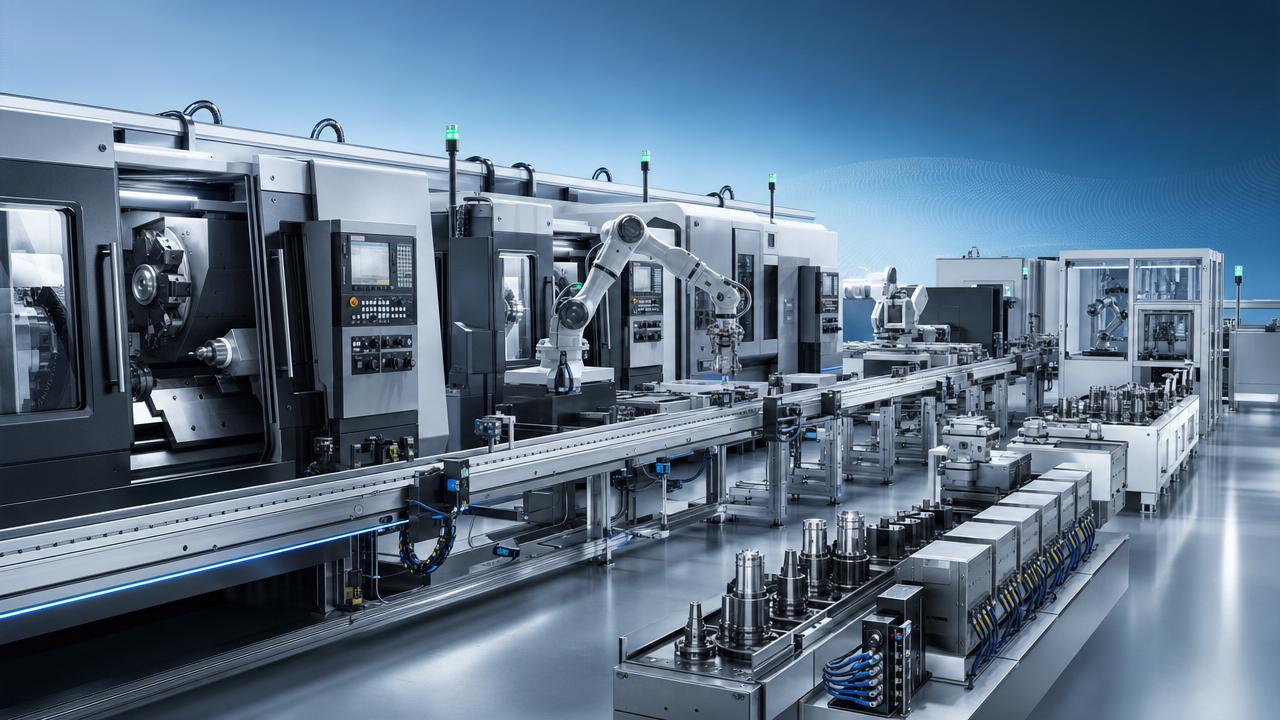
An Automated Production Line can transform manufacturing through speed, repeatability, and stable quality. Yet maintenance often becomes harder as equipment, software, and process links increase across the line.
In CNC machining, this challenge is especially visible. A line may connect lathes, machining centers, robots, conveyors, sensors, tooling systems, and inspection stations into one synchronized flow.
When one node fails, the entire Automated Production Line may slow down or stop. Small hidden issues can spread quickly, raising downtime, service costs, and delivery risk.
Understanding why maintenance becomes difficult helps improve reliability. It also supports better spare parts planning, stronger service response, and longer equipment life in modern manufacturing environments.
Basic definition of an Automated Production Line
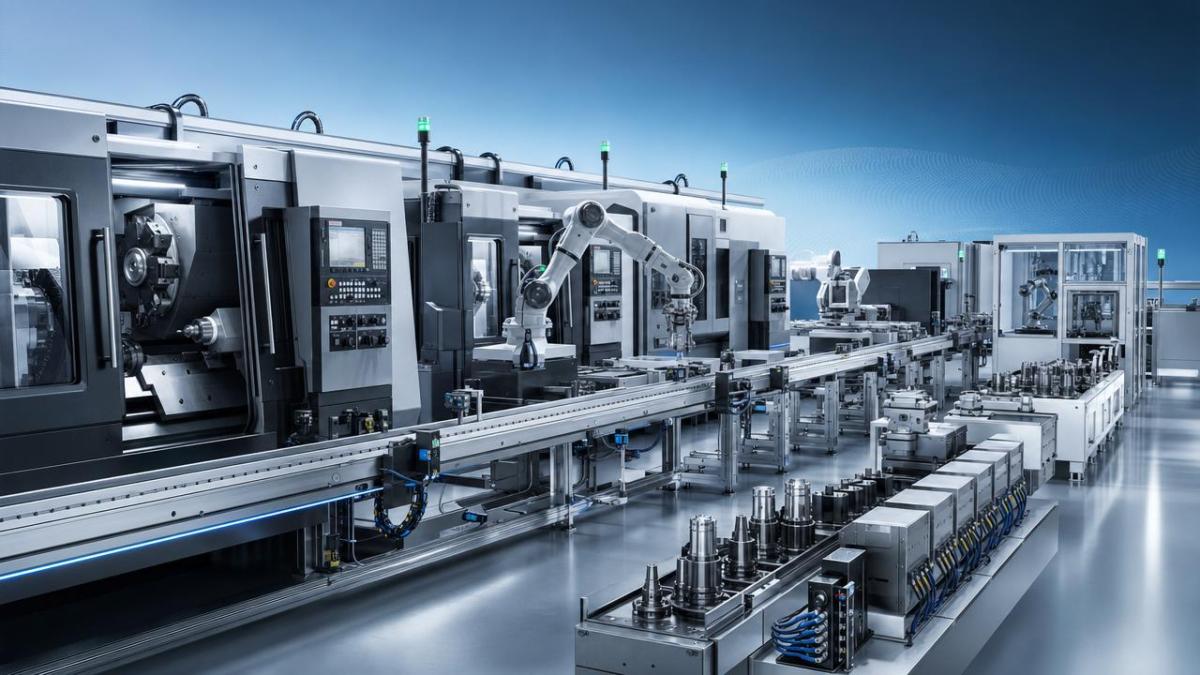
An Automated Production Line is a connected manufacturing system. It moves parts through multiple process steps with limited manual intervention and coordinated control logic.
In the CNC machine tool industry, a typical line may include loading units, CNC lathes, machining centers, robotic transfer, washing, inspection, and pallet management.
The line works best when mechanical, electrical, pneumatic, hydraulic, and digital systems remain aligned. Once this alignment weakens, maintenance complexity rises sharply.
Unlike a standalone machine, an Automated Production Line depends on interfaces. These include communication protocols, timing sequences, safety circuits, and production recipes across several devices.
Why complexity grows over time
Many lines start with clear architecture. Later, cycle time upgrades, model changes, temporary fixes, and software patches create layered complexity that is harder to trace and document.
As a result, the Automated Production Line may still run, but maintenance teams face unclear fault history, inconsistent settings, and limited visibility into root causes.
Current industry signals behind maintenance difficulty
Global precision manufacturing is moving toward higher automation, tighter tolerances, and digital integration. These trends improve output, yet they also increase service pressure after installation.
CNC systems now operate within broader production ecosystems. Machine tools must interact with MES platforms, tool monitoring, automated storage, energy systems, and data collection software.
- More brands and subsystems inside one Automated Production Line
- Shorter product cycles and frequent process adjustments
- Rising dependency on PLC, CNC, servo, and industrial network stability
- Stronger demand for remote diagnostics and fast service recovery
- Growing spare parts pressure from global sourcing and longer lead times
Why an Automated Production Line becomes hard to maintain
Hidden faults across connected systems
A line failure rarely comes from one obvious source. Mechanical wear, sensor drift, unstable voltage, software timing, or lubrication issues may combine into one recurring shutdown.
This makes the Automated Production Line difficult to diagnose. The visible alarm may appear at one station, while the actual cause begins upstream or inside communication logic.
Documentation loses accuracy
During years of operation, settings are changed, components are replaced, and cable routes are modified. If records are incomplete, service work becomes slower and riskier.
An Automated Production Line with outdated schematics often forces technicians to verify signals manually, increasing downtime and the chance of secondary mistakes.
Spare parts coordination becomes difficult
One line may use drives, sensors, valves, controllers, bearings, tool holders, and robot components from different suppliers. Each item has its own lead time and version risks.
If the correct spare is unavailable, the Automated Production Line may wait for a small component while high-value machines remain idle.
Software and interface issues increase
Modern lines depend on PLC logic, CNC parameters, robot programs, HMI screens, and network communication. A simple software mismatch can interrupt interlock sequences or data exchange.
When backups are incomplete, restoring the Automated Production Line after failure becomes much harder than replacing a mechanical part.
Maintenance skills must cover multiple disciplines
Support now requires knowledge of machining processes, servo systems, hydraulics, industrial networks, safety standards, and automation logic. Few teams hold all skills equally well.
This gap causes longer troubleshooting cycles, especially when the Automated Production Line includes customized tooling or nonstandard transfer mechanisms.
Business value of solving maintenance problems
Improving maintainability is not only a service issue. It directly affects output stability, equipment utilization, process quality, and the financial performance of precision manufacturing operations.
A stable Automated Production Line reduces emergency stoppages. It also improves confidence in planning, delivery, and continuous production for high-volume or high-precision parts.
- Lower unplanned downtime and repair cost
- Better consistency in part quality and cycle time
- Longer service life for CNC machines and automation assets
- Stronger return on investment from the Automated Production Line
- Reduced pressure on after-sales support resources
Typical maintenance scenarios in precision manufacturing
Maintenance difficulty appears differently across industries. However, several patterns are common where CNC machining and automated handling must operate without interruption.
Practical steps to improve Automated Production Line maintainability
Build a clear maintenance architecture
Map every subsystem, interface, and critical dependency. Separate core production equipment from auxiliary systems, then define alarm paths, backup points, and ownership clearly.
Standardize records and backups
Keep updated electrical drawings, PLC versions, CNC parameters, robot programs, and spare parts codes. A maintainable Automated Production Line depends on accurate technical records.
Prioritize critical spares
Rank parts by failure impact and lead time. Drives, controllers, sensors, safety modules, and key tooling interfaces often deserve stronger stock planning than low-risk items.
Use condition-based monitoring
Track spindle load, vibration, temperature, lubrication status, and communication errors. Early signals can reveal weaknesses before the Automated Production Line reaches a forced stop.
Strengthen cross-disciplinary troubleshooting
Combine process, electrical, software, and mechanical analysis during fault review. This reduces repeated trial-and-error and improves root cause accuracy.
- Create fault trees for recurring alarms
- Review temporary fixes monthly
- Validate software backups after every change
- Link spare parts lists to exact equipment versions
- Test recovery procedures during planned downtime
Operational focus for the next step
When an Automated Production Line becomes hard to maintain, the problem is usually structural rather than accidental. Complexity, weak documentation, and fragmented support build risk gradually.
A practical next step is to audit the line by subsystem, interface, spare parts readiness, and software backup status. This creates a realistic baseline for improvement.
In CNC machining and precision manufacturing, maintainability should be treated as part of production capability. A well-supported Automated Production Line protects uptime, quality, and long-term competitiveness.
PREVIOUS ARTICLE
Recommended for You
![]() Vietnam Suspends CNC Equipment Import Licenses Amid New Tech RulesManufacturing Policy Research Center
Vietnam Suspends CNC Equipment Import Licenses Amid New Tech RulesManufacturing Policy Research Center![]() First Global CNC Machine Carbon Footprint Guide ReleasedManufacturing Policy Research Center
First Global CNC Machine Carbon Footprint Guide ReleasedManufacturing Policy Research Center![]() Japan METI Launches CNC Green Upgrade SubsidyManufacturing Market Research Center
Japan METI Launches CNC Green Upgrade SubsidyManufacturing Market Research Center![]() Brazil INMETRO Mandates IoT Modules for CNC Lathes from July 2026Manufacturing Policy Research Center
Brazil INMETRO Mandates IoT Modules for CNC Lathes from July 2026Manufacturing Policy Research Center![]() EU Launches Anti-Subsidy Investigation on Chinese Laser Cutting Heads and High-Power Fiber LasersManufacturing Policy Research Center
EU Launches Anti-Subsidy Investigation on Chinese Laser Cutting Heads and High-Power Fiber LasersManufacturing Policy Research Center![]() Red Sea Crisis Deepens: Suez Canal CNC Ship Delays Hit 11.4 DaysGlobal Machine Tool Trade Research Center
Red Sea Crisis Deepens: Suez Canal CNC Ship Delays Hit 11.4 DaysGlobal Machine Tool Trade Research Center


Aris Katos
Future of Carbide Coatings
15+ years in precision manufacturing systems. Specialized in high-speed milling and aerospace grade alloy processing.
▶
How to judge if an Automated Production Line fits your plantMachine Tool Industry Editorial Team▶
Industrial Robotics can raise output, but where is the risk?Machine Tool Industry Editorial Team▶
How to judge if an Automated Production Line will pay offMachine Tool Industry Editorial Team▶
How Industrial Robotics is changing factory ROI in 2026Machine Tool Industry Editorial Team▶
Hainan Sanya AI Tech Conference Launches, Embodied AI Production Lines Accelerate Global DeploymentMachine Tool Industry Editorial Team
Mastering 5-Axis Workholding Strategies
Join our technical panel on Nov 15th to learn about reducing vibrations in thin-wall components.

Providing you with integrated sanding solutions
Before-sales and after-sales services
Comprehensive technical support