• Global CNC market projected to reach $128B by 2028 • New EU trade regulations for precision tooling components • Aerospace deman
NYSE: CNC +1.2%LME: STEEL -0.4%

Vertical lathe vs horizontal options for large diameter parts
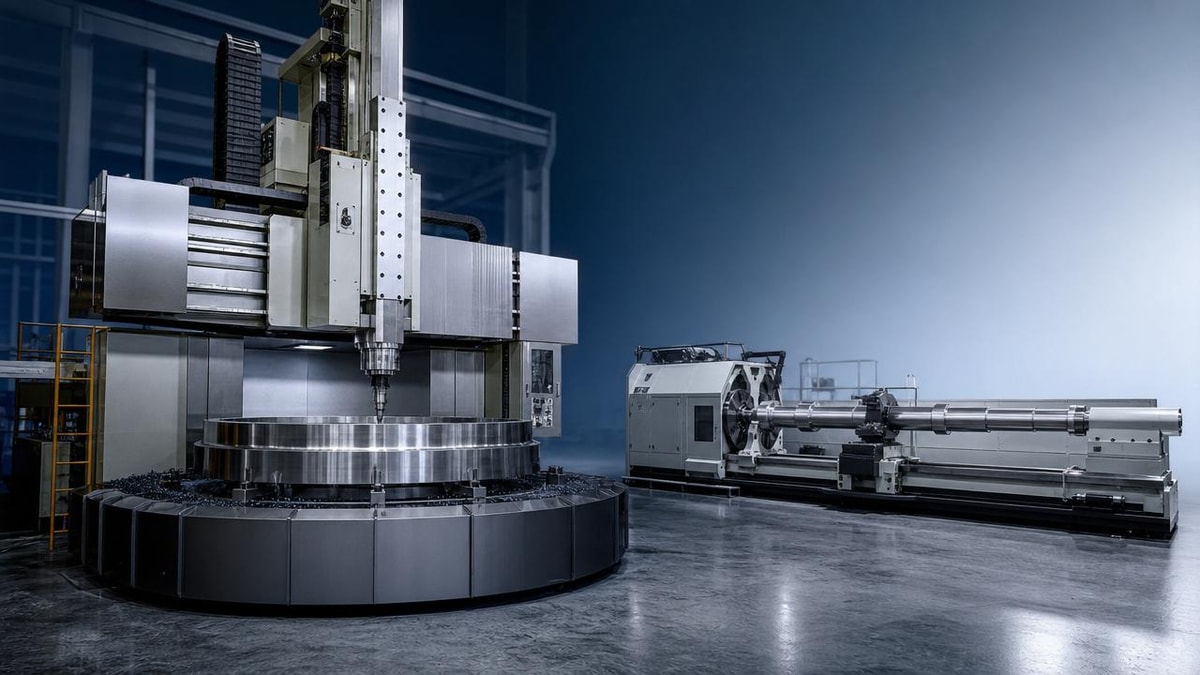
Choosing between a vertical lathe and horizontal turning solutions can directly affect stability, accuracy, floor space, and overall machining efficiency for large diameter parts. For technical evaluators comparing equipment for heavy-duty applications, understanding how each configuration handles load distribution, workpiece size, and process demands is essential to making a reliable investment decision.
Why scenario differences matter in large-diameter turning decisions
In the CNC machine tool industry, equipment selection is rarely about choosing the “better” machine in absolute terms. It is about choosing the machine that fits the actual production scenario. When the evaluation topic is a vertical lathe versus a horizontal turning option, the answer changes depending on whether the workpieces are thin rings, heavy flanges, valve bodies, turbine components, bearing races, or large mold bases.
For technical assessment teams, large diameter parts introduce unique risks: deformation during clamping, imbalance at higher rotation speeds, difficult chip evacuation, heavy loading requirements, and strict concentricity or flatness targets. In some factories, the vertical lathe becomes the preferred solution because gravity helps seat the part on the table. In other cases, horizontal machines remain more efficient because the workpiece length, shaft geometry, or process flow favors a traditional spindle arrangement.
That is why scenario-based evaluation is critical. Instead of starting from machine style, evaluators should begin with part family, batch pattern, loading method, tolerance priorities, and plant constraints. This practical lens reduces investment mistakes and improves long-term utilization.
Where a vertical lathe is commonly considered
A vertical lathe is most often evaluated for large diameter components where weight and face geometry dominate the machining challenge. Typical sectors include energy equipment, general industrial machinery, heavy vehicle systems, pump and valve manufacturing, aerospace structures, and large bearing production. In these environments, workpieces may be wide and heavy but not especially long, making vertical loading more stable and safer.
By contrast, horizontal turning options are usually considered when part length increases, when shafts or tubular parts are involved, or when shops already have process chains built around horizontal spindle systems. The question is not simply “vertical or horizontal,” but which setup gives the best support, accessibility, and cycle reliability for the part family being quoted and produced.
Scenario comparison table for technical evaluators
The table below helps map common application scenarios to the more suitable turning configuration.
For many large diameter parts, the vertical lathe stands out because the workpiece sits directly on the machine table. This reduces radial overhang concerns and can simplify alignment for bulky components. However, the final choice still depends on process sequence, tooling access, and production volume.
Scenario 1: Heavy discs, rings, and flanges with high loading risk
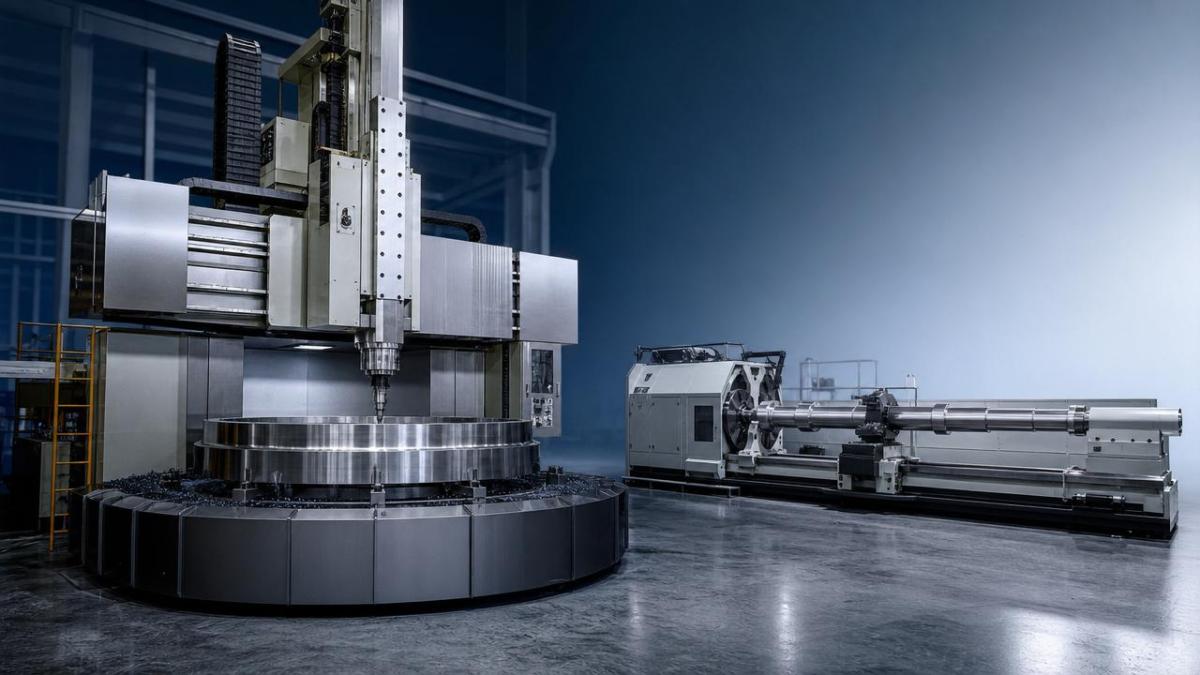
This is the classic environment where a vertical lathe often delivers the strongest value. When parts are large in diameter, heavy in weight, and relatively limited in height, vertical turning offers a practical advantage: the mass of the workpiece is directed downward onto the table rather than being cantilevered from a horizontal spindle.
In these applications, technical evaluators usually focus on four points. First is loading safety. Cranes can lower parts into position with less rotational instability. Second is clamping confidence. Third is geometric stability during roughing. Fourth is floor space use relative to part diameter. For factories handling large bearing races, wind power rings, or oversized couplings, a vertical lathe can reduce setup risk while improving operator confidence.
The caution point is throughput. If the process requires repeated secondary operations, extensive milling features, or rapid automation with standardized chucking, the evaluator should compare whether a multitasking horizontal platform could offset the basic stability advantage.
Scenario 2: Long parts where diameter is large but length drives the process
A large diameter part is not automatically a vertical lathe candidate. In oil and gas components, rollers, marine shafts, and long tubular structures, diameter may be substantial, but the process challenge is still axial support. In these cases, a horizontal turning solution is often more suitable because tailstocks, follow rests, and steady rests better control deflection over length.
Technical evaluators should examine the ratio between diameter and length rather than diameter alone. If the part requires deep boring, multiple support points, or synchronized support during turning, a horizontal machine may provide better process consistency. A vertical lathe can become awkward if the height of the part and fixture stack reduces accessibility or spindle efficiency.
This is one of the most common misjudgments in procurement: assuming that “large” means vertical. In reality, the dominant axis of machining difficulty should guide the decision.
Scenario 3: Precision face machining and deformation-sensitive parts
When the main quality requirement is face runout, flatness, circularity, or concentricity on a broad diameter, a vertical lathe often deserves priority review. This is especially true for turbine discs, sealing faces, large brake components, and precision mounting flanges. Because the part is supported from below, the risk of gravitational sag affecting the face condition can be easier to manage than on some horizontal arrangements.
That said, evaluators should not stop at machine orientation. They should also review table rigidity, thermal behavior, spindle bearing capacity, achievable low-speed torque, and the metrology method used after roughing and finishing. In high-value sectors such as aerospace or advanced energy systems, the machine architecture matters less than whether the full process can repeat within tolerance under actual thermal and loading conditions.
Scenario 4: Mixed production with frequent part family changeovers
Job shops and diversified manufacturers face a different challenge. They may machine large rings this week, pump housings next week, and short shafts after that. In this mixed scenario, the best answer depends on which part family drives machine occupancy and gross margin. A vertical lathe may be excellent for heavy round parts but underused if the shop frequently shifts to long or support-sensitive components.
For these businesses, flexibility indicators become essential: tooling change time, fixture modularity, loading logistics, crane dependence, and programming compatibility with the rest of the CNC fleet. If large diameter parts account for only a limited share of annual hours, technical evaluators should compare a dedicated vertical lathe with a broader horizontal or multitasking alternative that offers lower specialization risk.
What different evaluators should prioritize
Not every decision-maker reviews the same criteria. A sound machine tool assessment should reflect the evaluator’s role and the business scenario.
Common mistakes when comparing vertical and horizontal options
The first mistake is evaluating only maximum swing or table diameter. Machine capacity on paper does not guarantee stable production. The second mistake is ignoring loading workflow. A vertical lathe may appear ideal for heavy parts, but if crane access, fixture exchange, or upstream transfer is poorly planned, real productivity can suffer. The third mistake is overlooking future part mix. A machine that perfectly fits one current contract may become underutilized if the business shifts.
Another frequent oversight is chip and coolant behavior. Large cast iron or alloy steel roughing can generate heavy chips that affect accessibility and cleanup. Evaluators should review actual chip evacuation design, not just catalog claims. Finally, many teams underestimate installation factors such as foundation requirements, power availability, operator visibility, and maintenance access around the machine.
Practical selection checklist for a vertical lathe project
Before approving a vertical lathe, technical evaluators should confirm the following scenario-based questions:
- Are most target parts diameter-dominant rather than length-dominant?
- Will gravity-assisted seating improve safety and clamping repeatability?
- Do face accuracy and concentricity matter more than long-axis support?
- Can the shop handle crane loading, fixture storage, and table access efficiently?
- Does the expected part mix justify a specialized large-diameter solution?
- Has the supplier demonstrated process capability on similar parts and materials?
FAQ for technical assessment teams
Is a vertical lathe always better for large diameter parts?
No. A vertical lathe is often better for heavy, wide, and relatively short parts, but long parts or support-sensitive geometries may still favor horizontal turning.
What is the biggest advantage of a vertical lathe in heavy-duty applications?
The main advantage is stable workpiece support. For many large diameter components, vertical loading reduces sagging and improves clamping confidence.
What should be checked beyond machine size?
Review part family, loading method, tolerance priorities, chip evacuation, foundation needs, and supplier experience with comparable applications.
Final recommendation for scenario-based equipment selection
For technical evaluators, the best comparison between a vertical lathe and horizontal turning options begins with application reality, not machine preference. If your business focuses on large rings, flanges, discs, housings, or other heavy diameter-driven parts, a vertical lathe often provides better support, safer loading, and more reliable geometry control. If your production centers on long rotating parts or mixed turning workflows, horizontal solutions may offer better versatility.
The most reliable next step is to group your actual parts by geometry, weight, tolerance, and annual volume, then validate candidate machines against those scenarios. A supplier that can review drawings, process routes, loading plans, and target tolerances in detail will help turn a basic machine comparison into a sound manufacturing investment.
PREVIOUS ARTICLE
NEXT ARTICLE
Recommended for You
![]() ANVISA New Rule: Portuguese Biocompatibility Labels for Medical CNC Machines in BrazilManufacturing Policy Research Center
ANVISA New Rule: Portuguese Biocompatibility Labels for Medical CNC Machines in BrazilManufacturing Policy Research Center![]() EMO Hannover 2027 Booth Booking Opens: China AI-Machining Pavilion LaunchesGlobal Machine Tool Trade Research Center
EMO Hannover 2027 Booth Booking Opens: China AI-Machining Pavilion LaunchesGlobal Machine Tool Trade Research Center![]() KATS Updates KC Rules: CNC Cybersecurity Modules Must Meet IEC 62443-4-2Manufacturing Policy Research Center
KATS Updates KC Rules: CNC Cybersecurity Modules Must Meet IEC 62443-4-2Manufacturing Policy Research Center![]() Shanghai Port Launches Green Clearance Channel for CNC EquipmentManufacturing Market Research Center
Shanghai Port Launches Green Clearance Channel for CNC EquipmentManufacturing Market Research Center![]() ISO 23218-3:2026 Published: CNC Digital Twin Interoperability StandardCNC Machining Technology Center
ISO 23218-3:2026 Published: CNC Digital Twin Interoperability StandardCNC Machining Technology Center![]() Vietnam Cuts CNC Equipment Import Tariff to 3.8% from June 2026Global Machine Tool Trade Research Center
Vietnam Cuts CNC Equipment Import Tariff to 3.8% from June 2026Global Machine Tool Trade Research Center


Aris Katos
Future of Carbide Coatings
15+ years in precision manufacturing systems. Specialized in high-speed milling and aerospace grade alloy processing.
▶
Vertical lathe vs horizontal options for large diameter partsMachine Tool Industry Editorial Team▶
When does an automated lathe save more than manual turningMachine Tool Industry Editorial Team▶
CNC Metal Lathe Choices That Affect Delivery SpeedMachine Tool Industry Editorial Team▶
Vertical Lathe Limits to Check Before Large-Part OrdersMachine Tool Industry Editorial Team▶
Metal Lathe vs CNC Upgrade: When Retrofitting Still WorksMachine Tool Industry Editorial Team
Mastering 5-Axis Workholding Strategies
Join our technical panel on Nov 15th to learn about reducing vibrations in thin-wall components.

Providing you with integrated sanding solutions
Before-sales and after-sales services
Comprehensive technical support