• Global CNC market projected to reach $128B by 2028 • New EU trade regulations for precision tooling components • Aerospace deman
NYSE: CNC +1.2%LME: STEEL -0.4%

CNC Metal Lathe Choices That Affect Delivery Speed
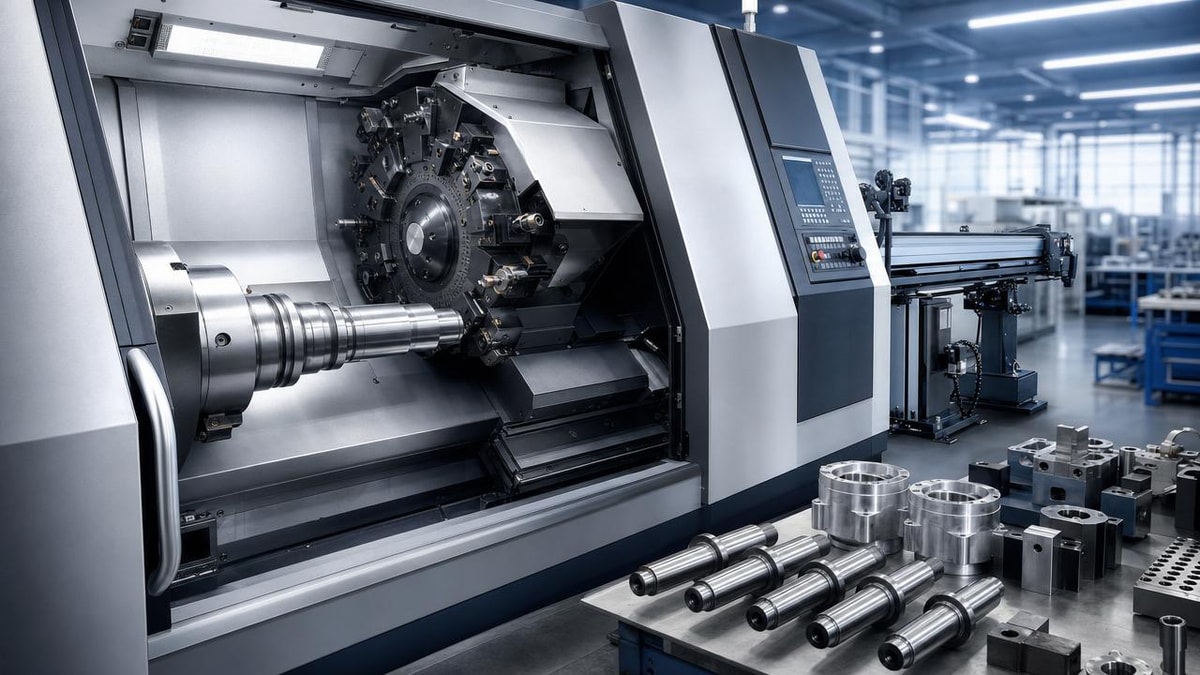
Choosing the right CNC metal lathe can directly influence lead times, production flexibility, and supplier reliability. For procurement teams, understanding how machine configuration, automation level, precision requirements, and material compatibility affect delivery speed is essential to making faster, lower-risk sourcing decisions. This article explores the key lathe choices that shape production timelines and overall purchasing efficiency.
Why does CNC metal lathe selection affect delivery speed so much?
For buyers, delivery speed is not only about how fast a supplier ships. It starts much earlier, at the production planning stage. A CNC metal lathe determines how quickly raw material can be converted into finished parts, how often setups must be changed, and how easily quality can be maintained across a batch. When a supplier uses a lathe that matches the part geometry, material, and tolerance level, production moves smoothly. When the machine is undersized, lacks the right spindle power, or requires repeated manual intervention, lead times stretch.
This matters across modern manufacturing sectors such as automotive components, energy equipment, electronics housings, and aerospace support parts. In these industries, procurement teams often compare multiple suppliers that appear similar on price. However, their CNC metal lathe capacity can differ greatly. One shop may complete turning, drilling, threading, and light milling in one cycle, while another may need to transfer parts between machines. Every transfer adds waiting time, inspection time, and risk of dimensional variation.
In other words, the CNC metal lathe is not just a machine specification. It is a delivery variable. It affects queue time, machining time, rework probability, operator dependency, and production scheduling flexibility. That is why procurement professionals should treat lathe configuration as a core sourcing factor rather than a technical detail left only to engineering teams.
Which CNC metal lathe features have the strongest impact on production lead time?
The most important features are usually not the most expensive ones. They are the ones that remove bottlenecks. A procurement team evaluating supplier capability should focus on whether the CNC metal lathe can reduce setups, stabilize quality, and support continuous production.
First, turret capacity matters. A machine with more tool stations can complete more operations in a single setup. This reduces tool changes, handling time, and scheduling complexity. Second, spindle power and speed range matter because different materials require different cutting conditions. Stainless steel, alloy steel, brass, and aluminum each behave differently. If the spindle cannot maintain efficient cutting, cycle time increases.
Third, bar feeder compatibility or automatic loading capability has a major effect on batch delivery. For long-run production, automation allows the CNC metal lathe to run with less interruption, especially during night shifts or lower-labor periods. Fourth, live tooling and Y-axis capability can eliminate secondary operations. Instead of turning a part and then moving it to a machining center, the supplier may finish multiple features on one platform.
Fifth, machine rigidity and thermal stability directly affect scrap rate. A fast machine that produces unstable dimensions does not shorten delivery in reality. It creates delays through inspection failures and rework. Finally, control system quality influences programming efficiency, setup repeatability, and troubleshooting speed. In a competitive manufacturing environment, stable digital controls support faster job changeovers and more predictable schedules.
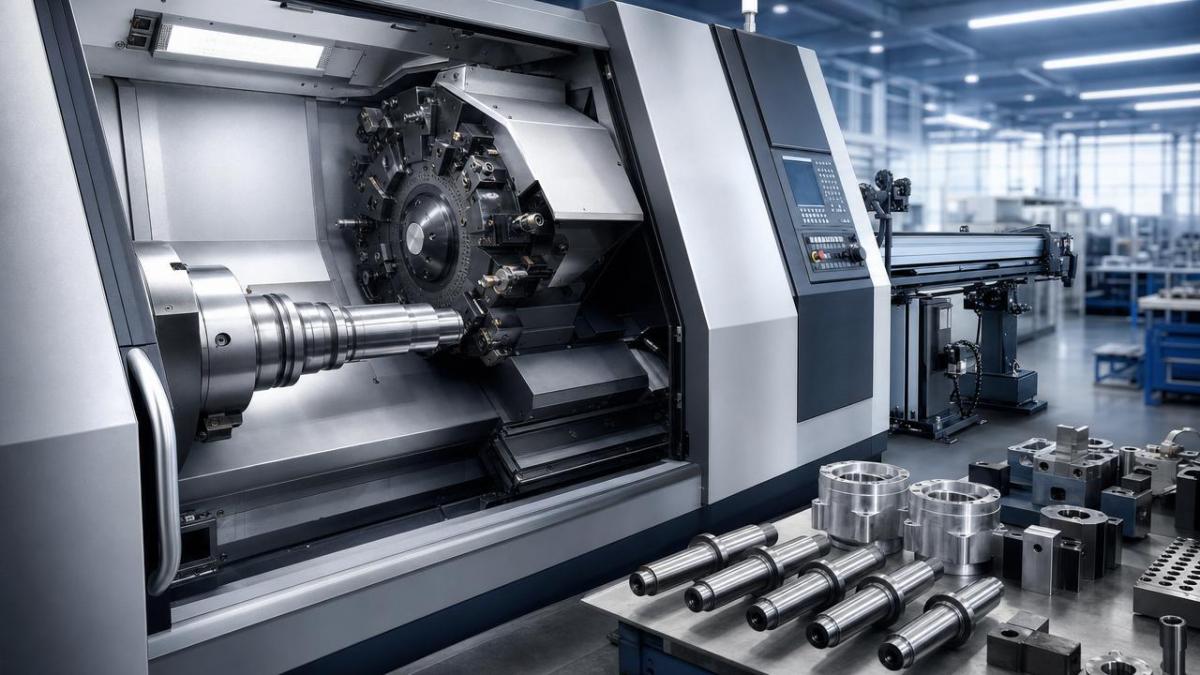
How do machine configuration choices change setup time and scheduling flexibility?
Setup time is one of the most overlooked parts of lead time. Many buyers ask about unit price and daily output but do not ask how long the supplier needs before the first acceptable piece is ready. A well-configured CNC metal lathe can sharply reduce this preparation window.
For example, a standard two-axis lathe may be suitable for simple shafts, bushings, and sleeves. But if the part also needs cross holes, flats, slots, or off-center features, the supplier may need additional equipment. That means extra fixtures, separate programming, and inter-process inspection. By contrast, a turning center with live tooling can finish those features without moving the workpiece. The result is fewer queues and a shorter path from raw stock to final inspection.
Sub-spindle machines offer another delivery advantage for parts requiring back-side operations. Instead of manually flipping each part, the machine transfers it internally. This saves handling time and improves consistency. For procurement teams sourcing medium or high-volume orders, that difference can be meaningful, especially when delivery commitments are tight.
Scheduling flexibility also improves when the CNC metal lathe supports quick tool presetting, common chuck systems, and repeatable workholding. Suppliers can switch between jobs faster, fit urgent orders into the production plan, and recover more easily from disruptions. In short, configuration affects not only machining speed, but also how agile the supplier can be when priorities change.
What should procurement teams compare when reviewing CNC metal lathe options from suppliers?
Buyers need a practical comparison framework. Looking only at machine brand or quantity is not enough. Two suppliers may each own several CNC lathes, yet one may be much faster for your specific part family. The table below highlights the questions that help connect CNC metal lathe capability to delivery speed.
These questions help procurement teams move beyond general claims like “high precision” or “fast delivery.” They reveal whether the supplier’s CNC metal lathe resources actually match the order profile, especially for custom turned parts, recurring production programs, or urgent replenishment needs.
How do part complexity and material choice influence the best CNC metal lathe for fast delivery?
Not every part needs an advanced machine, and over-specifying can raise costs without improving lead time. The key is matching the CNC metal lathe to the workpiece. Simple cylindrical parts made from free-cutting materials may be delivered quickly on conventional CNC turning equipment. But once part geometry becomes more complex, machine choice starts to determine schedule performance.
Parts with multiple diameters, threads, grooves, face features, eccentric details, or tight concentricity requirements often benefit from a turning center with live tools or multi-axis capability. Without that, each added feature may create a new operation. More operations mean more waiting, more fixtures, and more quality checks. The delivery impact becomes especially clear on medium-volume procurement programs where consistency matters as much as speed.
Material adds another layer. Aluminum generally allows high cutting speeds, while stainless steel, titanium alloys, and heat-resistant materials can slow machining and increase tool wear. If the supplier’s CNC metal lathe lacks rigidity, coolant performance, or suitable tooling support, throughput falls. Buyers should therefore ask not only “Can you machine this material?” but also “What cycle time and tool life do you typically achieve with this material grade?”
For procurement teams serving diverse sectors, this is critical. Automotive and electronics buyers may prioritize speed in stable materials and repeatability across lots. Energy and aerospace buyers may face tougher alloys and stricter tolerances, where the correct CNC metal lathe is essential for realistic delivery commitments.
What common sourcing mistakes slow down CNC metal lathe production?
One frequent mistake is treating all CNC turning capacity as interchangeable. In reality, a supplier with available machine hours may still be a poor fit if the CNC metal lathe cannot complete the job efficiently. Buyers sometimes shift orders to chase a lower quote, only to discover that the supplier relies on multiple subcontracted operations or manual secondary work.
Another mistake is overlooking setup economics. A low piece price can hide long preparation time, which hurts small and urgent orders. This is common in custom manufacturing where part changes are frequent. If the supplier needs extensive fixture adjustment or offline tool preparation for every new drawing revision, the schedule becomes fragile.
A third mistake is setting precision requirements without considering process reality. Extremely tight tolerances on non-critical dimensions may force slower feeds, additional inspections, and higher rejection risk. Procurement should align with engineering teams to identify which tolerances are function-critical and which can be relaxed to support faster delivery from the CNC metal lathe process.
Finally, some buyers fail to confirm maintenance and backup capacity. Even a strong supplier can face delays if a key machine goes down and there is no alternative CNC metal lathe with comparable capability. Delivery resilience depends not just on one machine, but on the supplier’s broader production system.
How can buyers reduce risk before placing an order for CNC metal lathe work?
The best approach is to qualify process fit before negotiating only on price. Buyers should review sample parts similar in size, material, and tolerance. Ask whether the CNC metal lathe process is proven for these specifications or if the supplier is still developing the method. This helps separate established capacity from trial production.
It is also wise to confirm whether first article inspection, in-process measurement, deburring, cleaning, and packaging are integrated into the workflow. These steps often influence actual shipment timing more than quoted machining hours. A supplier with a capable CNC metal lathe but weak post-process discipline may still miss delivery windows.
For repeat programs, request information on capacity planning. How many similar machines are available? Is there a night shift? Can the supplier scale if demand rises suddenly? Can they hold safety stock of raw material? These questions matter because procurement success depends on repeatable fulfillment, not a single good sample run.
Documentation is equally important. Clear drawings, tolerance notes, material standards, surface finish requirements, and batch volumes allow the supplier to match the right CNC metal lathe from the beginning. Better technical clarity reduces quoting errors and prevents schedule changes after production starts.
What should you clarify first if you need a faster and safer purchasing decision?
If delivery speed is a priority, start with a small set of focused questions. Ask which CNC metal lathe platform will be used, whether the part can be completed in one setup, what materials are routinely processed on that machine, and how automation supports batch continuity. Then confirm realistic setup time, expected cycle time, inspection method, and backup capacity if demand changes.
For procurement teams in global manufacturing, the goal is not simply to buy machining time. It is to secure a stable process that supports cost control, quality consistency, and dependable lead times. The right CNC metal lathe choice improves all three by reducing unnecessary handling, avoiding secondary operations, and making production more predictable.
If you need to move forward with supplier evaluation, prioritize discussion around part geometry, material grade, annual volume, tolerance priorities, inspection expectations, and target delivery windows. Those points will quickly reveal whether a supplier’s CNC metal lathe resources are truly aligned with your project and whether a quotation can be trusted as an operational commitment rather than a sales estimate.
PREVIOUS ARTICLE
NEXT ARTICLE
Recommended for You
 CNC Milling Capacity Gaps Can Hurt Small Batch ProfitabilityManufacturing Market Research Center
 Industrial Robotics Payback Is Changing in Mid-Size PlantsManufacturing Market Research Center
 Shaft Parts Machining Problems That Show Up at Final InspectionCNC Machining Technology Center
 Production Process Delays Usually Start Before Machining BeginsCNC Machining Technology Center
 Industrial Automation Projects Often Miss This Integration StepCNC Machining Technology Center
 CNC Metal Cutting Tool Wear Is Costing More Than You ThinkCNC Machining Technology Center

Aris Katos
Future of Carbide Coatings
15+ years in precision manufacturing systems. Specialized in high-speed milling and aerospace grade alloy processing.
▶
CNC Metal Lathe Choices That Affect Delivery SpeedMachine Tool Industry Editorial Team▶
Vertical Lathe Limits to Check Before Large-Part OrdersMachine Tool Industry Editorial Team▶
Metal Lathe vs CNC Upgrade: When Retrofitting Still WorksMachine Tool Industry Editorial Team▶
How much rigidity does a CNC metal lathe really need?Machine Tool Industry Editorial Team▶
When does an automated lathe start saving real labor time?Machine Tool Industry Editorial Team
Mastering 5-Axis Workholding Strategies
Join our technical panel on Nov 15th to learn about reducing vibrations in thin-wall components.

Providing you with integrated sanding solutions
Before-sales and after-sales services
Comprehensive technical support