• Global CNC market projected to reach $128B by 2028 • New EU trade regulations for precision tooling components • Aerospace deman
NYSE: CNC +1.2%LME: STEEL -0.4%

When does an automated lathe save more than manual turning
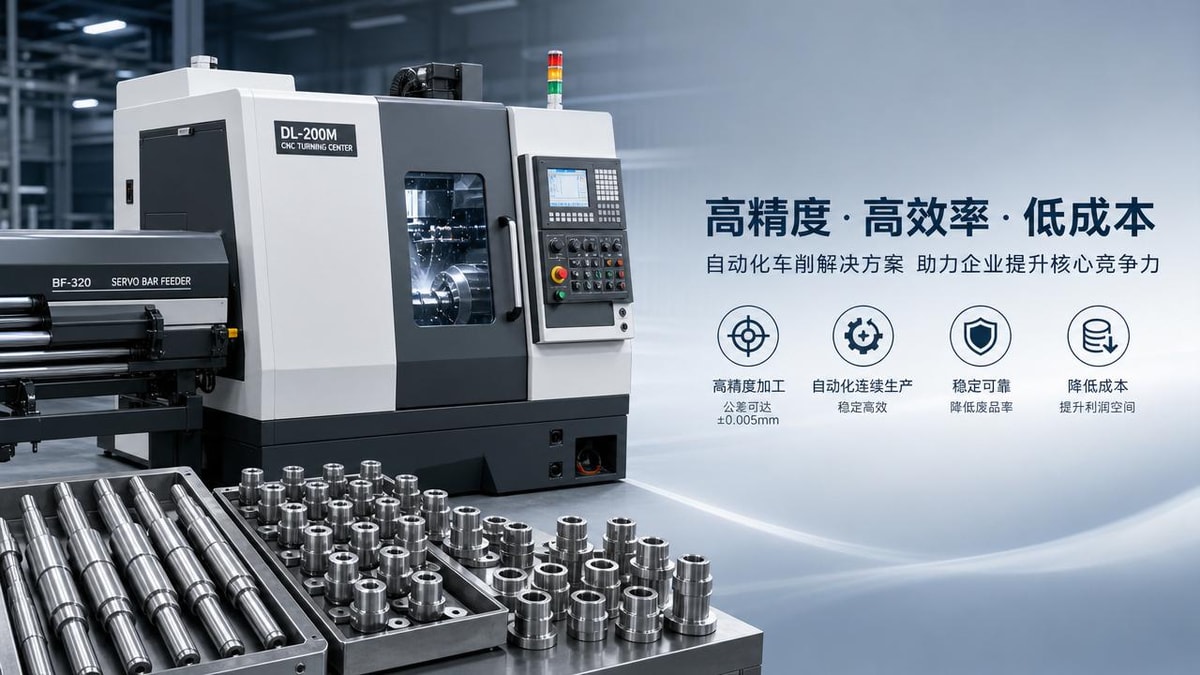
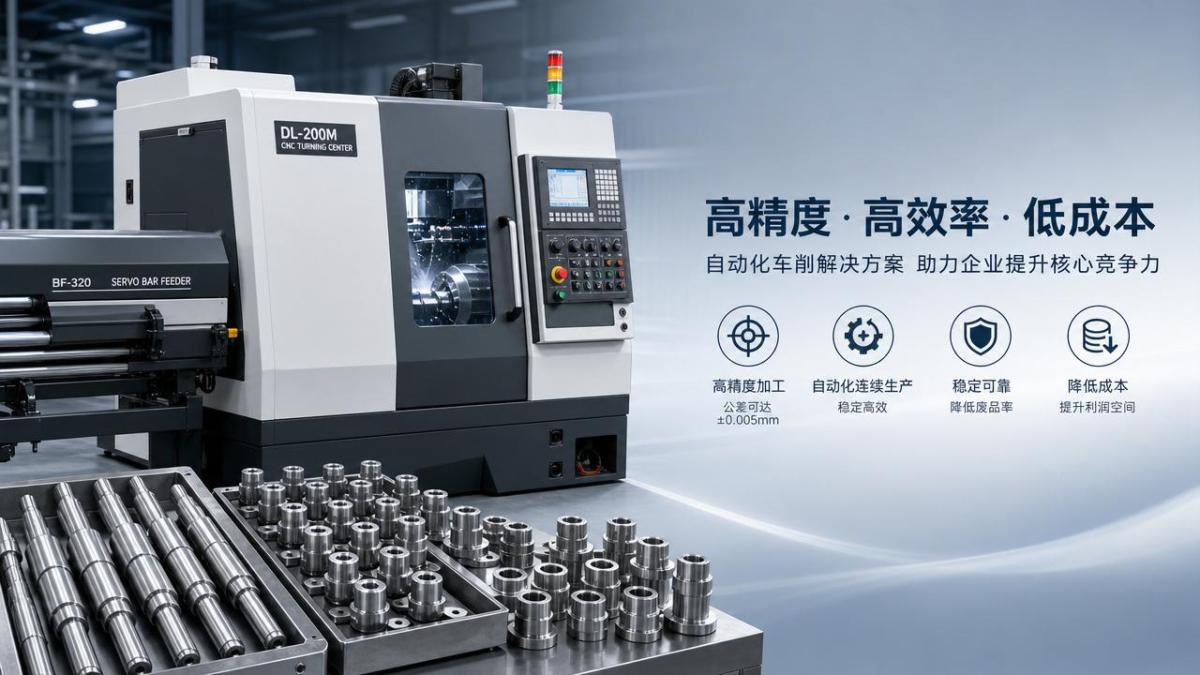
For manufacturers weighing labor costs, consistency, and production speed, the question is not whether automation matters, but when an automated lathe delivers a clear financial advantage over manual turning. This article examines the cost drivers, production volumes, part complexity, and long-term efficiency factors that help business decision-makers determine the right time to invest.
What an automated lathe means in practical manufacturing terms
In modern machining, an automated lathe is not simply a faster version of a conventional turning machine. It is a production asset designed to reduce operator dependency, improve repeatability, and support continuous output through programmed cycles, automatic feeding, integrated tooling, and in many cases unattended or lightly attended operation. Depending on the production environment, the term may refer to CNC lathes with bar feeders, turning centers with robotic loading, or multi-axis systems connected to broader automated production lines.
Manual turning remains valuable for repair work, prototypes, very short runs, and jobs that require direct operator judgment on each part. However, once manufacturers face tighter tolerance requirements, rising wage pressure, and delivery schedules that punish inconsistency, the economics begin to shift. That is where the automated lathe becomes more than a technical upgrade; it becomes a management decision tied to cost control, output stability, and scalable growth.
Why this question matters more across the machine tool industry
Across the global CNC machine tool sector, manufacturers are moving toward higher precision, better digital integration, and more resilient production models. Automotive suppliers need stable cycle times. Aerospace firms require traceable accuracy. Energy equipment makers depend on dependable machining of shafts, discs, and structural components. Electronics and industrial hardware producers increasingly compete on lead time as much as on quality.
This shift explains why the automated lathe is gaining attention beyond large factories. Even medium-sized workshops now evaluate automation because labor availability is uncertain, customer tolerances are stricter, and production planning is more data-driven. In this environment, the true comparison is not machine price versus machine price. It is total operating performance over time: labor per part, scrap rate, spindle utilization, setup frequency, and the ability to keep production flowing without adding proportional headcount.
For business decision-makers, the answer rarely depends on a single factor. An automated lathe saves more than manual turning when several operational conditions align and when management measures savings across the full production system rather than only at the machine purchase stage.
The main cost drivers that determine the break-even point
The financial case for an automated lathe starts with understanding where manual turning absorbs hidden cost. Direct labor is the most obvious element, but it is only one part of the equation. In many shops, the larger impact comes from variation in cycle time, frequent operator intervention, longer setups, inconsistent quality, and machine idle periods between part changes.
A practical break-even analysis should include at least five categories. First is labor: how many operator hours are needed per batch, per shift, and per part family. Second is throughput: how many good parts the process can produce in a defined period. Third is quality loss: scrap, rework, and inspection burden caused by dimensional drift or inconsistent handling. Fourth is capacity utilization: whether the machine can continue producing during breaks, shift changes, or lower-supervision hours. Fifth is strategic flexibility: whether automation allows the plant to take on more orders without immediately hiring and training additional machinists.
In many cases, an automated lathe does not need to eliminate all labor to create savings. It only needs to reduce labor intensity enough while lifting output and consistency. If one skilled operator can oversee multiple automated cells instead of standing at one manual machine, the cost structure begins to change quickly.
A practical industry overview of decision factors
The table below summarizes the most common conditions that influence whether an automated lathe will outperform manual turning from a business perspective.
When production volume makes the automated lathe clearly favorable
Production volume is usually the first threshold executives examine, and for good reason. If a part is made once a month in quantities of ten, manual turning may remain economically reasonable. Programming, fixturing, and automation setup may not recover their cost quickly enough. But once the same component is repeated weekly, daily, or across multiple customer programs, the automated lathe begins to spread setup and programming cost over a larger number of parts.
The stronger case appears when demand is not just high, but repeatable. Repeated production allows a shop to standardize tooling, optimize cutting parameters, stabilize cycle time, and reduce operator intervention. In that environment, every additional batch lowers the effective cost per part. This is particularly relevant in industries producing shafts, bushings, threaded fittings, hydraulic components, connectors, and rotational parts with recurring dimensions.
A useful management rule is this: the more often a part comes back, the more likely an automated lathe will save more than manual turning. Repetition is what turns automation from a technical capability into a financial asset.
How part complexity changes the economics
Not all simple-looking parts are simple to produce, and not all complex parts require full automation. The important issue is whether the turning process depends on repeated precision steps that are difficult to maintain manually over long runs. Parts with multiple diameters, grooves, threads, tapers, close concentricity requirements, or frequent secondary operations often benefit from an automated lathe because the machine can execute programmed motion with stable repeatability.
Complexity also affects inspection and rework. A manual process may produce acceptable first articles but struggle with variation over hundreds of parts or across operators and shifts. If dimensional drift leads to more in-process checks, adjustments, and re-machining, the apparent savings of manual turning can disappear. By contrast, an automated lathe can reduce those losses when process control, tool compensation, and standardized setups are properly managed.
That said, very unstable prototype work, frequent design changes, or low-volume developmental components may still favor manual methods. The best decision comes from matching the machine to the production pattern, not from assuming automation wins in every complex scenario.
Where labor economics become decisive
For many enterprises, the tipping point is labor structure rather than pure machine performance. Manual turning ties output closely to individual operator time. This becomes a strategic constraint when wages rise, overtime expands, or recruiting experienced machinists becomes difficult. In such cases, an automated lathe saves more than manual turning because it changes the labor model from direct attendance to supervision, setup, and process control.
This matters especially in regions where manufacturing growth has increased competition for skilled technical workers. A company may still need highly capable people, but their role shifts toward programming, tooling strategy, quality monitoring, and cell oversight. That often produces stronger organizational leverage. Instead of adding one operator for each additional machine, the business can increase production with fewer incremental labor hours.
Decision-makers should therefore compare not only wage rates, but also hiring risk, training time, absentee impact, and productivity variation between operators. These hidden labor variables frequently justify the move to an automated lathe sooner than expected.
Typical business scenarios where an automated lathe creates the most value
The strongest returns usually appear in a limited set of recurring manufacturing situations. The table below helps classify where an automated lathe is most likely to outperform manual turning in a measurable way.
Beyond machine cost: the long-term value of process stability
An automated lathe is often evaluated through capital expenditure alone, but long-term value comes from process stability. Stable turning reduces planning uncertainty. It supports more reliable quotations because cycle times are known. It makes scheduling easier because output is less dependent on individual work style. It can also strengthen customer trust, especially in sectors where repeat quality and delivery consistency influence future contract awards.
There are also digital benefits. Automated equipment is easier to connect with production monitoring, tool life management, and smart factory systems. As more manufacturers adopt integrated planning and traceability tools, the automated lathe becomes part of a broader efficiency architecture. That matters for decision-makers pursuing not only immediate savings, but also stronger operational visibility across machining cells, assembly stages, and quality records.
Practical evaluation steps before making the investment
Before investing, companies should avoid two common errors: buying automation based on trend pressure alone, or rejecting it because of a narrow focus on upfront price. A disciplined assessment usually produces better outcomes. Start by identifying repeat part families and measuring actual annual demand. Then compare current labor hours, scrap, setup time, and delivery performance against a realistic automated lathe scenario.
Next, review supporting conditions. Automation works best when tooling, fixturing, programming capability, and maintenance discipline are also in place. A shop that lacks process standardization may still benefit from an automated lathe, but the return will be delayed if basic operational control is weak. Management should also examine whether existing customers can provide demand stability or whether future business development depends on higher precision and faster response.
Finally, build the investment case around business outcomes rather than equipment features. Ask whether the automated lathe will reduce cost per good part, improve capacity without proportional hiring, and strengthen the company’s position in precision manufacturing markets. Those are the metrics that matter most to enterprise leadership.
A clear decision framework for business leaders
An automated lathe saves more than manual turning when production is repeatable, labor is costly or constrained, quality consistency is commercially important, and throughput gains can be converted into real business value. It is less about replacing craftsmanship and more about assigning human skill where it creates the greatest return: process planning, optimization, and quality control rather than repetitive hand-dependent execution.
For decision-makers in the CNC machine tool and precision manufacturing space, the best time to invest is usually before labor pressure, delivery failures, or customer quality demands become chronic problems. Companies that evaluate the automated lathe through the full lens of cost, capacity, and strategic growth are better positioned to scale with confidence. If your operation already sees recurring turned parts, bottlenecks around skilled labor, or increasing tolerance requirements, now is the right time to model the numbers in detail and define where automation can produce the strongest return.
PREVIOUS ARTICLE
Recommended for You
![]() ANVISA New Rule: Portuguese Biocompatibility Labels for Medical CNC Machines in BrazilManufacturing Policy Research Center
ANVISA New Rule: Portuguese Biocompatibility Labels for Medical CNC Machines in BrazilManufacturing Policy Research Center![]() EMO Hannover 2027 Booth Booking Opens: China AI-Machining Pavilion LaunchesGlobal Machine Tool Trade Research Center
EMO Hannover 2027 Booth Booking Opens: China AI-Machining Pavilion LaunchesGlobal Machine Tool Trade Research Center![]() KATS Updates KC Rules: CNC Cybersecurity Modules Must Meet IEC 62443-4-2Manufacturing Policy Research Center
KATS Updates KC Rules: CNC Cybersecurity Modules Must Meet IEC 62443-4-2Manufacturing Policy Research Center![]() Shanghai Port Launches Green Clearance Channel for CNC EquipmentManufacturing Market Research Center
Shanghai Port Launches Green Clearance Channel for CNC EquipmentManufacturing Market Research Center![]() ISO 23218-3:2026 Published: CNC Digital Twin Interoperability StandardCNC Machining Technology Center
ISO 23218-3:2026 Published: CNC Digital Twin Interoperability StandardCNC Machining Technology Center![]() Vietnam Cuts CNC Equipment Import Tariff to 3.8% from June 2026Global Machine Tool Trade Research Center
Vietnam Cuts CNC Equipment Import Tariff to 3.8% from June 2026Global Machine Tool Trade Research Center


Aris Katos
Future of Carbide Coatings
15+ years in precision manufacturing systems. Specialized in high-speed milling and aerospace grade alloy processing.
▶
Vertical lathe vs horizontal options for large diameter partsMachine Tool Industry Editorial Team▶
When does an automated lathe save more than manual turningMachine Tool Industry Editorial Team▶
CNC Metal Lathe Choices That Affect Delivery SpeedMachine Tool Industry Editorial Team▶
Vertical Lathe Limits to Check Before Large-Part OrdersMachine Tool Industry Editorial Team▶
Metal Lathe vs CNC Upgrade: When Retrofitting Still WorksMachine Tool Industry Editorial Team
Mastering 5-Axis Workholding Strategies
Join our technical panel on Nov 15th to learn about reducing vibrations in thin-wall components.

Providing you with integrated sanding solutions
Before-sales and after-sales services
Comprehensive technical support