• Global CNC market projected to reach $128B by 2028 • New EU trade regulations for precision tooling components • Aerospace deman
NYSE: CNC +1.2%LME: STEEL -0.4%

When a Vertical Lathe Is the Better Choice
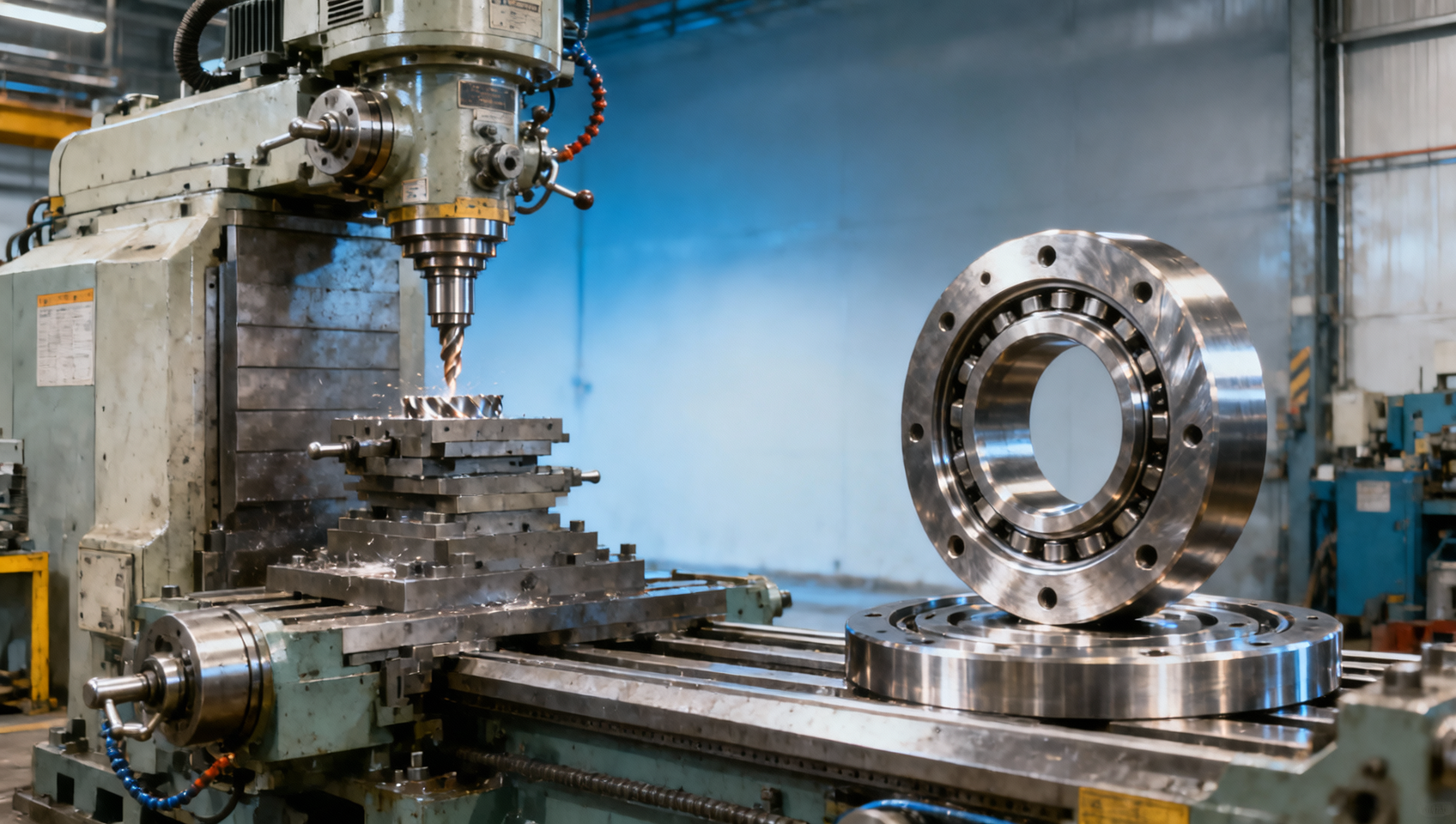
In metal machining, choosing between a horizontal machine and a vertical lathe can directly affect accuracy, loading efficiency, and the overall production process. For buyers, operators, and manufacturing decision-makers, understanding where a vertical lathe fits within industrial CNC, CNC metalworking, and automated production helps improve part quality and cost control. This article explains when a vertical lathe becomes the smarter choice in today’s Manufacturing Industry.
When does a vertical lathe make more sense than a horizontal machine?
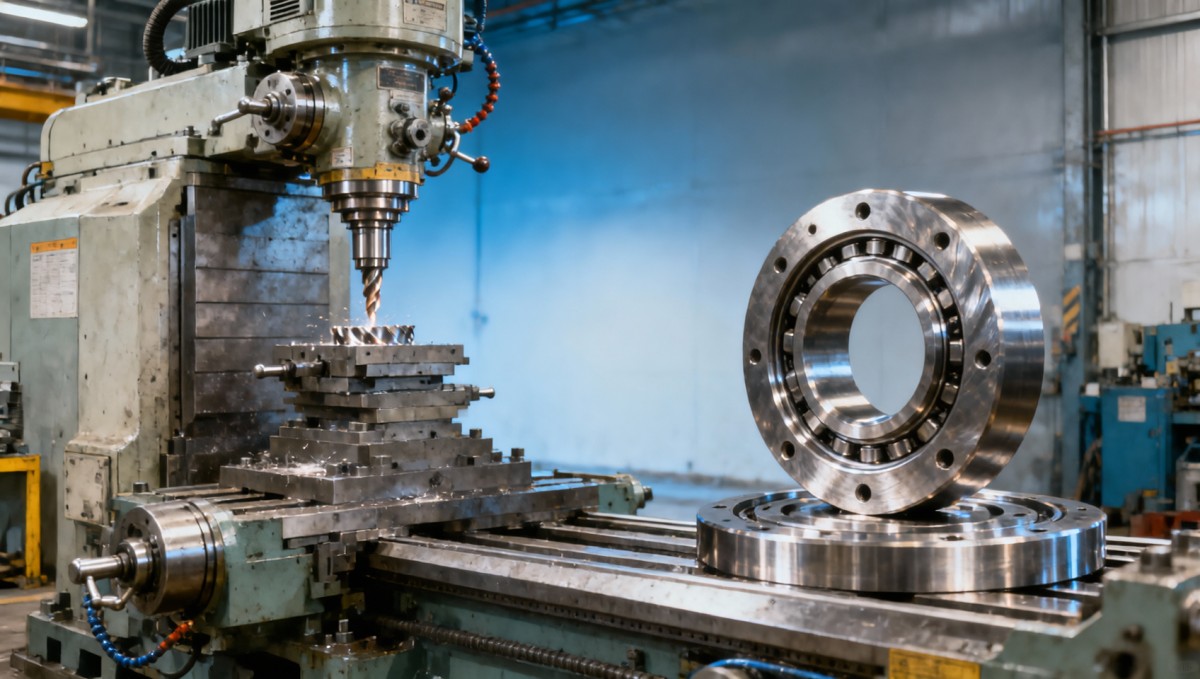
A vertical lathe is usually the better choice when the workpiece is large in diameter, heavy in weight, or difficult to clamp safely on a horizontal spindle. In many CNC machining environments, gravity becomes an advantage rather than a problem. The part sits on the table, reducing deflection risk and helping operators manage stable positioning during setup.
This matters most for components such as bearing rings, valve bodies, turbine casings, wheel hubs, flanges, large discs, and short heavy cylindrical parts. In these cases, a vertical turning machine often supports more reliable part loading, especially when workpiece diameter ranges from 500 mm to over 2,000 mm and part weight moves from a few hundred kilograms into multi-ton production handling.
For operators, the benefit is not only machine capacity. A vertical lathe can simplify loading with cranes, improve chip fall, and reduce awkward fixture orientation. For procurement teams, this often translates into lower handling complexity, fewer setup errors, and a better match for production lines that process medium-batch to large-batch rotational parts.
In the broader CNC machine tool industry, vertical turning is especially relevant as manufacturers pursue higher automation, tighter tolerance control, and more predictable cycle stability. Where smart manufacturing requires repeatability over 2 shifts or 3 shifts per day, machine architecture becomes a strategic decision, not just an equipment preference.
Typical signs that point toward vertical turning
- The component has a large face diameter but relatively short axial length, making vertical support more stable than horizontal suspension.
- The workpiece is heavy enough that clamping, unloading, or repositioning on a horizontal lathe increases safety and alignment concerns.
- Production requires consistent facing, boring, grooving, and internal turning on discs, rings, housings, or flange-type parts.
- The plant already uses overhead lifting equipment and wants a 3-step loading workflow with less manual repositioning.
These conditions are common in energy equipment, automotive parts, aerospace support components, heavy equipment repair, and general precision manufacturing. The more the job involves large rotating masses, the more often a vertical lathe becomes a practical and economic solution.
How does a vertical lathe compare with a horizontal lathe in real production?
Many buyers ask the same question: if both machines can turn metal, why invest in a vertical lathe? The answer depends on part geometry, handling method, tolerance target, and floor-level workflow. Horizontal lathes remain highly effective for shaft parts and long cylindrical workpieces, but they are not always the most efficient option for large-diameter components.
The comparison below focuses on operational factors that matter in CNC metalworking, especially for businesses evaluating machine tools for mixed production, automated loading, or future smart factory integration. It is not about declaring one machine universally better. It is about matching machine structure to manufacturing reality.
The table below highlights the most important differences between vertical and horizontal turning when evaluating application fit, loading logic, and purchasing value.
For a procurement or business evaluation team, the key lesson is simple: if more than 50% of target parts are disc-type or ring-type components, a vertical lathe should be part of the shortlist. If the part mix is dominated by long shafts, a horizontal machine may still provide better overall utilization.
What operators notice on the shop floor
Operators often judge machine suitability by setup time, access, chip control, and repeat clamping quality. On many heavy parts, a vertical lathe reduces the number of corrective adjustments needed after initial loading. That can save 10–20 minutes per setup on recurring jobs, depending on fixture design and crane access.
In automated production planning, the difference becomes more visible over a weekly schedule. If a line runs 20 to 40 similar large parts per week, even a modest reduction in loading and alignment time can influence labor allocation, spindle utilization, and delivery reliability.
This is why vertical turning is not only a machine choice. It is a workflow choice across CNC machining, fixture planning, material movement, and inspection strategy.
Which applications benefit most from vertical lathe capacity?
The strongest applications are those where part weight, diameter, and face geometry create real limits for horizontal turning. In industrial CNC production, that often includes components used in pumps, valves, gear systems, wind energy assemblies, rail equipment, mining systems, and large transmission housings. Many of these parts demand concentricity, flatness, and stable clamping over multiple operations.
A vertical lathe also performs well when manufacturers combine turning with boring, drilling, or milling in a single platform. For shops trying to reduce transfers between 2 or 3 separate machines, a vertical turning center with live tooling can improve process consolidation and reduce intermediate handling risk.
The application decision should consider not just the current drawing but the likely part family over the next 12–36 months. A machine that fits one urgent order but not the broader production roadmap can create low utilization and weak return on capital.
Application scenarios by part profile
The following table helps buyers and planners connect part characteristics to machine suitability. It is especially useful when comparing new equipment options for metalworking workshops serving multiple industries.
This type of application mapping helps reduce a common procurement mistake: buying based on spindle power alone. In real CNC machining, table size, load rating, tooling access, and fixture strategy are often just as important as nominal motor figures.
Three common production situations where vertical turning stands out
- Medium-batch machining of heavy castings, where each part needs repeatable setup and crane-assisted loading in under 15 minutes.
- Large-diameter precision parts requiring facing, internal turning, and boring with fewer re-clamping stages.
- Factories upgrading to digital production cells, where machine access, automation interface, and process consistency matter over a 24-hour operating window.
For industrial buyers, the most important question is not whether vertical lathes are advanced. It is whether they fit the actual part family, handling routine, and quality plan better than the alternatives.
What should buyers evaluate before selecting a vertical lathe?
Selecting a vertical lathe requires more than matching one drawing to one machine. Purchasing teams should assess at least 5 core dimensions: maximum workpiece diameter, maximum workpiece weight, tolerance range, planned batch size, and future process integration. Missing any one of these can lead to undercapacity, overspending, or unstable cycle performance.
A sound procurement review usually includes engineering, operations, maintenance, and finance. In many manufacturing organizations, the best results come from a 4-step evaluation process: define the target part family, compare machine envelope and tooling, review installation conditions, and confirm delivery plus after-sales capability. This avoids choosing purely on price or headline specifications.
Delivery planning is equally important. For standard machine configurations, lead times in the machine tool market may fall in the range of 8–16 weeks, while customized vertical turning centers can require longer depending on tool magazine options, automation interface, and measurement requirements. Buyers under urgent project schedules should confirm timeline risks early.
A practical selection checklist
- Confirm maximum swing, table diameter, and allowable workpiece height against the largest current and planned parts, not only today’s most common component.
- Check table load range and fixture weight together, because total live load can exceed the raw part weight by a significant margin.
- Review accuracy targets such as runout, flatness, concentricity, and surface finish to ensure the machine structure supports the inspection plan.
- Verify whether the process needs live tooling, C-axis capability, automatic tool changing, probing, or compatibility with robotic handling.
- Assess installation requirements such as floor foundation, crane height, power supply, coolant system, and chip conveyor planning.
For business evaluators, total value should include operating efficiency over 3–5 years, not only the purchase invoice. Machine downtime, fixture complexity, tool access, and operator learning time can significantly affect the actual cost per part.
Common mistakes during procurement
One frequent mistake is choosing a machine based on the largest possible diameter while ignoring average batch mix. Another is underestimating part loading logistics. A vertical lathe may fit the machining need, but if the factory lacks proper lifting access or fixture planning, the expected productivity gain may not appear.
Another issue is comparing quotes without normalizing scope. Buyers should clarify whether the offer includes standard chucks, tool holders, coolant units, training hours, acceptance testing, and commissioning support. A lower headline price can become more expensive if essential items are missing from the package.
Where international projects are involved, it is also wise to confirm documentation language, electrical standards, and common compliance expectations such as CE-related market requirements where applicable. These details influence installation speed and cross-border purchasing confidence.
How do cost, alternatives, and implementation risk affect the final decision?
A vertical lathe is not automatically the lowest-cost option, but it can be the lower-cost process choice when heavy parts, difficult loading, or multiple setups are driving labor and quality losses. The right comparison is not machine price versus machine price. It is total process cost versus total process cost across setup time, scrap exposure, handling effort, and throughput stability.
Alternative options may include a heavy-duty horizontal lathe, a horizontal machining center with rotary table, or subcontract machining for oversized parts. Each alternative can be valid depending on part mix and plant utilization. However, when the production profile repeatedly involves large discs or rings, the vertical lathe often reduces compromise across clamping, safety, and precision control.
Implementation risk usually appears in 3 areas: installation planning, process development, and operator adaptation. Most factories can reduce these risks through pre-acceptance review, fixture simulation, and staged training during the first 2–4 weeks after commissioning. A machine that is technically capable but poorly introduced can still miss production targets.
Cost and alternative logic at a glance
The table below helps decision-makers compare typical paths when evaluating whether a vertical lathe is justified for current and future CNC production needs.
If the business case includes reduced setup labor, lower re-clamping risk, and better repeatability across medium-volume production, the vertical lathe often becomes easier to justify. If demand is highly irregular or part size varies too widely, a mixed strategy may be more practical.
FAQ for buyers, operators, and evaluation teams
Is a vertical lathe only for very large parts?
No. It is commonly associated with large workpieces, but many shops use vertical turning for medium-size parts when loading safety, batch repeatability, or face-machining efficiency is important. The decision should be based on geometry and process flow, not only on size class.
What should be checked first during machine selection?
Start with 3 basics: maximum part diameter, total loaded weight including fixtures, and the main operation sequence. Then review tolerance targets and whether the process needs live tooling, probing, or automation connection. These factors shape the real machine requirement more than generic brochure language.
How long does implementation usually take?
For a standard project, installation, alignment, trial cutting, and operator familiarization may take several days to a few weeks, depending on machine size and plant readiness. If fixtures, part programs, and inspection routines are prepared in advance, ramp-up can be much smoother.
Can a vertical lathe support smart manufacturing goals?
Yes, especially when equipped for digital monitoring, automatic tool management, and stable repeat processing. In smart factory environments, machine predictability matters as much as raw cutting power. A vertical lathe can fit well into connected production when part family and material flow are properly planned.
Why contact us when evaluating a vertical lathe project?
If you are comparing a vertical lathe with other CNC machine tools, a faster decision starts with better application matching. We focus on the global CNC machining and precision manufacturing sector, helping industry professionals review machine selection logic, production scenarios, and trade considerations across industrial automation and precision metalworking.
You can contact us to discuss practical details such as part diameter and weight range, turning process sequence, fixture concerns, estimated delivery window, automation compatibility, and documentation expectations for international projects. If you are still in the research stage, we can also help organize the 5 key comparison points needed for internal technical and commercial review.
For procurement teams, we can support quote comparison, requirement clarification, and supplier communication around machine configuration, optional functions, lead time, and after-sales scope. For operators and production engineers, we can help frame questions on chip control, setup workflow, tool access, and process stability before purchase decisions are finalized.
If you need support with parameter confirmation, vertical lathe selection, customized solution discussion, sample part assessment, expected delivery planning, or quotation communication, reach out with your drawing type, part dimensions, material, and annual volume. A clearer technical brief leads to a more accurate equipment recommendation and a more efficient purchasing process.
PREVIOUS ARTICLE
NEXT ARTICLE
Recommended for You
![]() China Releases First Eastern Sea Seabed Elemental MapGlobal Machine Tool Trade Research Center
China Releases First Eastern Sea Seabed Elemental MapGlobal Machine Tool Trade Research Center![]() AIMM National Standard Advances for CNC Smart Factory CertificationManufacturing Policy Research Center
AIMM National Standard Advances for CNC Smart Factory CertificationManufacturing Policy Research Center![]() eVTOL Mass Production Drives CNC Export GrowthGlobal Machine Tool Trade Research Center
eVTOL Mass Production Drives CNC Export GrowthGlobal Machine Tool Trade Research Center![]() China Launches World's Largest Agri-Meteorological Observation NetworkManufacturing Market Research Center
China Launches World's Largest Agri-Meteorological Observation NetworkManufacturing Market Research Center![]() Robotics ToB Scaling Hits Data Bottleneck in CNC AI InspectionCNC Machining Technology Center
Robotics ToB Scaling Hits Data Bottleneck in CNC AI InspectionCNC Machining Technology Center![]() SAMR to Complete 1,800+ Standards Revisions in 2026Manufacturing Policy Research Center
SAMR to Complete 1,800+ Standards Revisions in 2026Manufacturing Policy Research Center


Aris Katos
Future of Carbide Coatings
15+ years in precision manufacturing systems. Specialized in high-speed milling and aerospace grade alloy processing.
▶
Automated Lathe or Manual Lathe: Which Fits BetterMachine Tool Industry Editorial Team▶
Metal Lathe Buying Guide: What to Check FirstMachine Tool Industry Editorial Team▶
When a Vertical Lathe Is the Better ChoiceMachine Tool Industry Editorial Team▶
Can a CNC Lathe Really Improve Mass Production Consistency?Machine Tool Industry Editorial Team▶
Metal Lathe Accuracy Drifts After Warm Up for a ReasonMachine Tool Industry Editorial Team
Mastering 5-Axis Workholding Strategies
Join our technical panel on Nov 15th to learn about reducing vibrations in thin-wall components.

Providing you with integrated sanding solutions
Before-sales and after-sales services
Comprehensive technical support