• Global CNC market projected to reach $128B by 2028 • New EU trade regulations for precision tooling components • Aerospace deman
NYSE: CNC +1.2%LME: STEEL -0.4%

High precision lathe claims that deserve a closer look
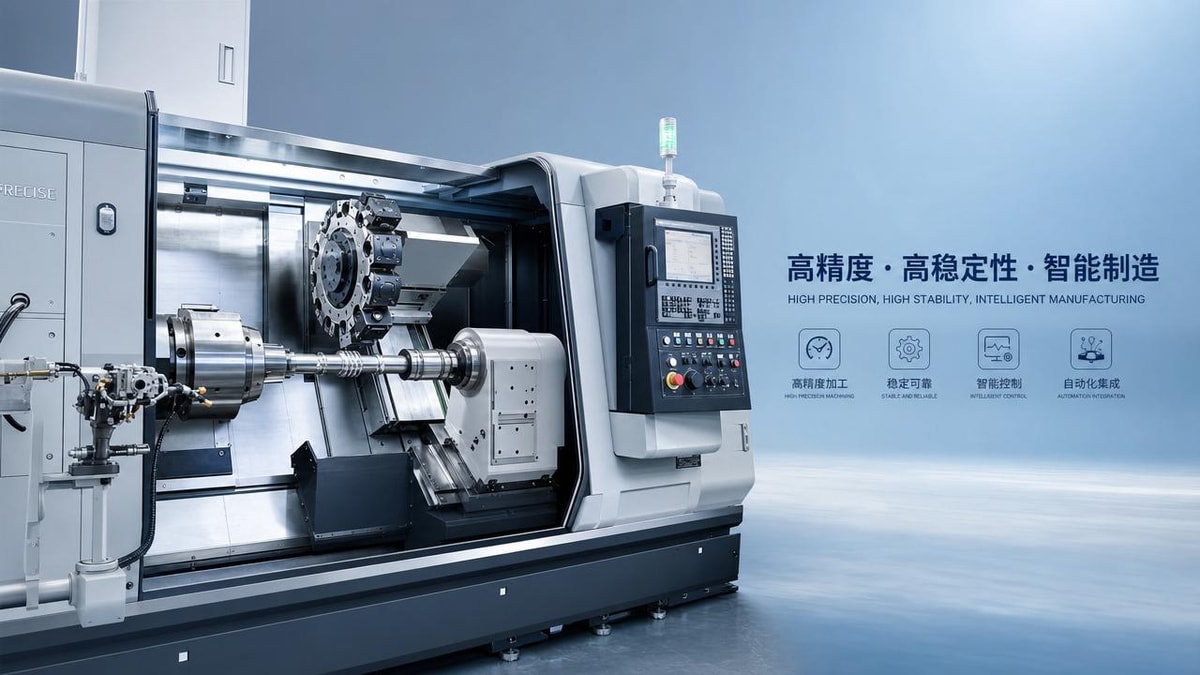
A high precision lathe can look impressive on paper, but procurement teams need to examine whether its claimed accuracy, stability, automation, and lifecycle value truly match production demands. In a market driven by smart manufacturing and tighter tolerances, understanding which specifications matter most is essential to making a cost-effective and reliable equipment investment.
Why application differences matter before you compare any high precision lathe
For buyers in modern manufacturing, the real question is not whether a high precision lathe is advanced, but whether it is appropriate for the production scenario in front of you. A machine designed for micron-level repeatability in aerospace parts may be excessive for medium-volume industrial shafts. By contrast, a lower-cost model that performs well in sample cutting may fail under continuous shifts, thermal variation, and demanding concentricity requirements.
This is especially relevant across the CNC machine tool industry, where automotive, electronics, energy equipment, and subcontract machining all use turning systems differently. Procurement decisions are shaped by batch size, material type, shift pattern, tolerance stack-up, inspection standards, and downstream assembly risk. That is why claims around spindle accuracy, bed rigidity, automation readiness, and digital monitoring deserve closer review in context, not in isolation.
A high precision lathe may support better dimensional control, lower scrap rates, and more stable throughput, but only if the machine’s structure, control system, and support package align with the actual application. Buyers who evaluate by scenario usually make stronger long-term investments than those who compare only the initial quotation.
Typical production scenarios where a high precision lathe is evaluated differently
Different industries use the term high precision lathe for different outcomes. Some care most about ultra-tight diameter consistency, while others care more about cycle-time stability over long runs. The following comparison helps procurement teams map machine claims to actual use cases.
Scenario 1: When high-volume manufacturers need consistency more than headline precision
In automotive and large-scale industrial production, procurement teams often see strong marketing around micron-level positioning accuracy. Yet in serial manufacturing, the more practical measure is whether the high precision lathe can hold stable dimensions over hundreds or thousands of cycles, across multiple shifts, with different operators and ambient temperatures.
For this scenario, buyers should prioritize thermal displacement control, chip management, coolant design, tool monitoring, bar feeder or robot compatibility, and maintenance intervals. A machine that keeps a stable process window may outperform one with a better brochure specification but weaker real-world endurance. Repeatability under production rhythm is usually a stronger predictor of return on investment than one-time test cuts.
Another key issue is line integration. If the high precision lathe will operate inside an automated cell or flexible production line, communication protocols, loading interfaces, alarm logic, and data connectivity should be reviewed early. The machine is not being purchased as a standalone asset; it is part of a throughput system.
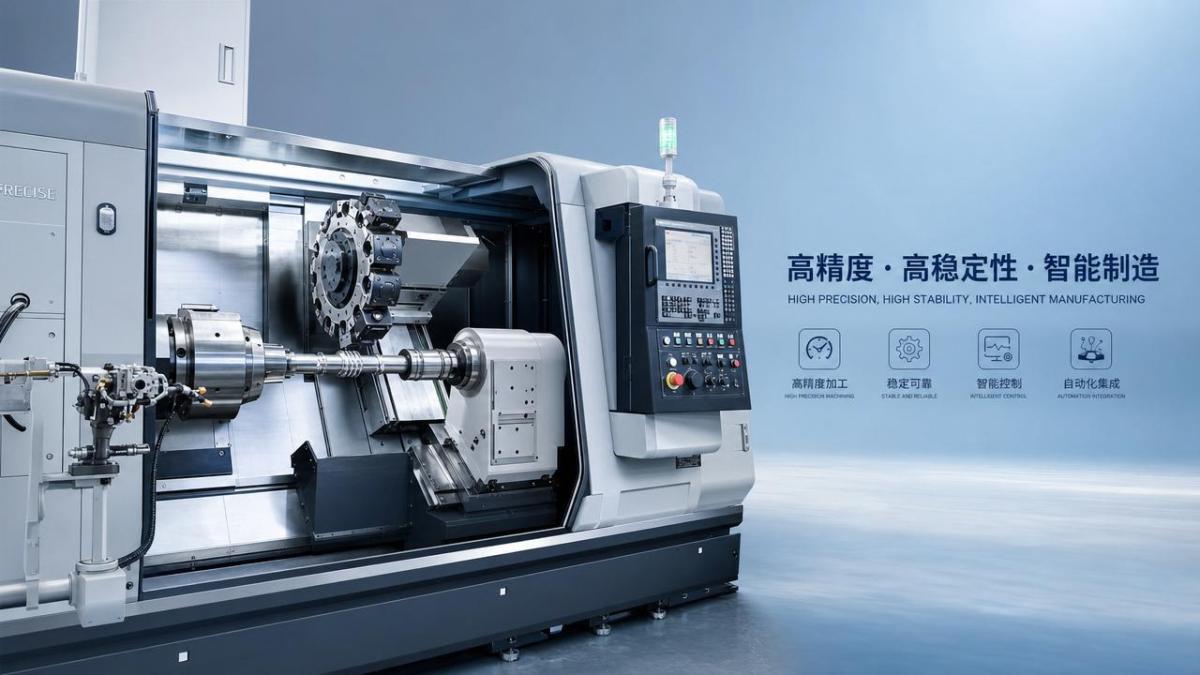
Scenario 2: When aerospace and critical parts production requires process confidence
Aerospace, defense-related subcontracting, and high-spec industrial components usually evaluate a high precision lathe through a different lens. Here, process security matters as much as dimensional accuracy. Parts may involve difficult alloys, strict surface integrity requirements, and complete inspection traceability. A machine that performs well with standard steel may not be ideal for titanium, Inconel, or thin-wall precision components.
In these environments, buyers should ask for evidence beyond catalog claims. Request sample-part history, geometric tolerance capability, compensation features, spindle growth control methods, and examples of unattended stability. Review whether the machine builder can support process optimization, not just installation. A high precision lathe becomes more valuable when the supplier can help reduce qualification risk and shorten production ramp-up.
It is also wise to evaluate metrology compatibility. If the plant relies on in-process probing, offline CMM validation, or statistical process control, the lathe should fit the inspection workflow. For critical parts, machine performance is inseparable from documentation quality and repeatable verification methods.
Scenario 3: When small precision parts demand control of vibration, clamping, and finish
Electronics, instrumentation, medical-related subcontract parts, and miniature precision hardware often create a different procurement challenge. Here, a high precision lathe may be selected not for heavy cutting power but for smooth spindle behavior, fine feed response, and secure handling of small diameters. Tiny workpieces can magnify issues that remain hidden in larger-part machining.
For these applications, the procurement checklist should include spindle vibration performance, collet or chuck quality, turret repeatability, tool offset stability, and the ability to achieve surface finish without excessive polishing or secondary correction. If burr control and edge quality are critical, ask how the machine behaves with short-cycle precision turning and frequent tool changes.
In this scenario, a high precision lathe with well-matched tooling, compact automation, and reliable thermal behavior may deliver stronger total value than a larger or more powerful machine. Fit matters more than machine size.
Scenario 4: When heavy parts and energy equipment need precision under load
Energy equipment, pump and valve parts, large shafts, and heavy industrial components raise another common misunderstanding. Some machines show excellent unloaded precision, but buyers later discover that rigidity, torque delivery, and support stability change the result when real part weight and cutting force are introduced.
In this context, procurement teams should confirm bed construction, guideway type, spindle torque curve, tailstock strength, damping behavior, and chip evacuation during long cuts. A high precision lathe for heavier applications must protect accuracy while managing deformation risk, heat generation, and long-cycle process stability. Ask suppliers to define the conditions under which precision figures were measured. Without load context, performance comparisons are incomplete.
How different buyer types should judge the same high precision lathe
The same machine can be suitable for one buyer and inefficient for another. This is why procurement strategy should reflect business model, not only technical ambition.
Common misjudgments when comparing high precision lathe claims
One common mistake is treating advertised accuracy as the final decision point. Static positioning values do matter, but they do not fully describe long-run behavior, cutting stability, or process drift. Another mistake is underestimating service capability. A high precision lathe with weak local support can create expensive downtime even if its technical design is strong.
Buyers also sometimes overbuy. If part requirements do not justify advanced features, the machine may carry unnecessary cost, training burden, and maintenance complexity. The opposite problem also occurs: selecting a cheaper lathe that cannot support future automation, new material requirements, or export-grade quality expectations. Good procurement balances today’s order book with a realistic three- to five-year production roadmap.
Finally, avoid judging the machine without the process package. Tooling, fixtures, coolant management, operator training, and digital diagnostics all influence whether a high precision lathe reaches its promised value in daily production.
Practical questions to ask suppliers before making a final decision
To make the right equipment investment, procurement teams should connect every claim to a usage scenario. Ask suppliers what part families the machine is best suited for, how precision is maintained over time, and what options are required for your target output. Request proof related to similar industries, materials, and batch sizes. If possible, evaluate a sample run based on your actual drawing rather than a generic demonstration part.
Also confirm delivery scope clearly: controller brand, spindle specification, guideway configuration, standard accessories, automation interface, software functions, acceptance criteria, and after-sales response commitments. A high precision lathe should be evaluated as a production solution, not just a machine body with a quoted price.
FAQ for scenario-based evaluation
Is the most accurate high precision lathe always the best choice?
No. The best choice is the one that matches your tolerance needs, output target, material range, and automation plan with reliable lifecycle performance.
Which scenario benefits most from investing in a high precision lathe?
Applications with tight tolerances, high scrap cost, critical assembly fit, or strong quality audit pressure usually benefit most, especially when consistency across batches is essential.
What should procurement verify first?
Start with part type, tolerance band, production volume, material difficulty, and required automation level. Then match those needs to machine rigidity, repeatability, service support, and total operating cost.
Final takeaway for procurement teams
A high precision lathe deserves a closer look because its value depends heavily on where and how it will be used. In one scenario, the winning factor is stable high-volume output. In another, it is process traceability for critical parts. Elsewhere, it may be fine-finish control for miniature components or rigidity under heavy load. When procurement teams evaluate by application scenario instead of headline claims alone, they reduce technical risk and improve long-term production performance.
Before moving forward, define your real operating conditions, shortlist machines by fit rather than prestige, and ask suppliers to prove capability against your production reality. That is the most reliable way to turn a high precision lathe from a specification sheet into a profitable manufacturing asset.
PREVIOUS ARTICLE
NEXT ARTICLE
Recommended for You
![]() ANVISA New Rule: Portuguese Biocompatibility Labels for Medical CNC Machines in BrazilManufacturing Policy Research Center
ANVISA New Rule: Portuguese Biocompatibility Labels for Medical CNC Machines in BrazilManufacturing Policy Research Center![]() EMO Hannover 2027 Booth Booking Opens: China AI-Machining Pavilion LaunchesGlobal Machine Tool Trade Research Center
EMO Hannover 2027 Booth Booking Opens: China AI-Machining Pavilion LaunchesGlobal Machine Tool Trade Research Center![]() KATS Updates KC Rules: CNC Cybersecurity Modules Must Meet IEC 62443-4-2Manufacturing Policy Research Center
KATS Updates KC Rules: CNC Cybersecurity Modules Must Meet IEC 62443-4-2Manufacturing Policy Research Center![]() Shanghai Port Launches Green Clearance Channel for CNC EquipmentManufacturing Market Research Center
Shanghai Port Launches Green Clearance Channel for CNC EquipmentManufacturing Market Research Center![]() ISO 23218-3:2026 Published: CNC Digital Twin Interoperability StandardCNC Machining Technology Center
ISO 23218-3:2026 Published: CNC Digital Twin Interoperability StandardCNC Machining Technology Center![]() Vietnam Cuts CNC Equipment Import Tariff to 3.8% from June 2026Global Machine Tool Trade Research Center
Vietnam Cuts CNC Equipment Import Tariff to 3.8% from June 2026Global Machine Tool Trade Research Center


Aris Katos
Future of Carbide Coatings
15+ years in precision manufacturing systems. Specialized in high-speed milling and aerospace grade alloy processing.
▶
High precision lathe claims that deserve a closer lookMachine Tool Industry Editorial Team▶
How precision equipment affects scrap rates over timeMachine Tool Industry Editorial Team▶
Precision Equipment Failures Often Start with Small VibrationsMachine Tool Industry Editorial Team▶
Are CNC Industrial Machines Getting Easier to Maintain?Machine Tool Industry Editorial Team▶
How Industrial CNC Affects Tolerance Stability Over TimeMachine Tool Industry Editorial Team
Mastering 5-Axis Workholding Strategies
Join our technical panel on Nov 15th to learn about reducing vibrations in thin-wall components.

Providing you with integrated sanding solutions
Before-sales and after-sales services
Comprehensive technical support