• Global CNC market projected to reach $128B by 2028 • New EU trade regulations for precision tooling components • Aerospace deman
NYSE: CNC +1.2%LME: STEEL -0.4%

Precision Equipment Failures Often Start with Small Vibrations

In precision equipment, major failures rarely appear without warning—they often begin with small vibrations that go unnoticed during daily operation. For after-sales maintenance teams, identifying these early signals can prevent costly downtime, protect machining accuracy, and extend machine life. Understanding how vibration affects CNC systems is essential to keeping modern production lines stable, efficient, and competitive.
Why Small Vibrations Matter in Precision Equipment
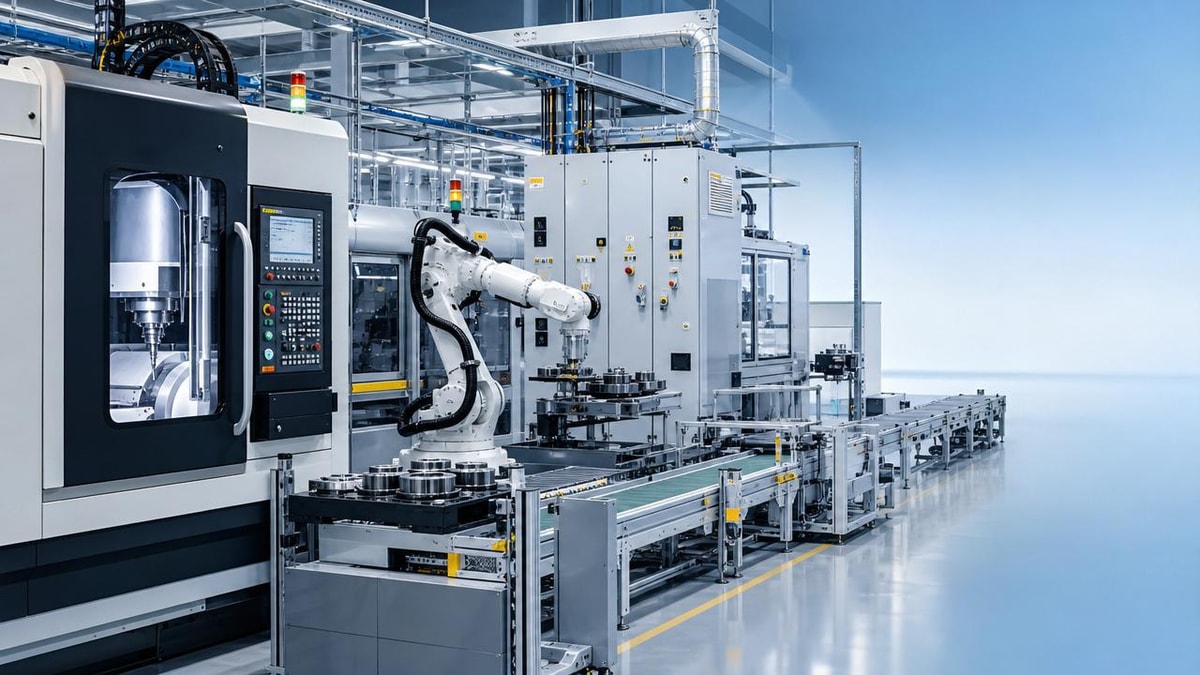
In modern manufacturing, precision equipment is expected to deliver repeatable accuracy under demanding production schedules. CNC lathes, machining centers, multi-axis systems, and automated lines operate with tight tolerances, high spindle speeds, and continuous thermal and mechanical loads. Under these conditions, even a minor vibration can become the first visible symptom of a deeper problem. What looks like a harmless buzz may actually signal spindle imbalance, bearing wear, misalignment, looseness, tool degradation, foundation instability, or control-related issues.
For after-sales maintenance personnel, vibration is not simply a noise issue. It is a measurable operating condition that can reveal how machine structure, rotating parts, cutting process, servo motion, and installation environment interact. When vibration is ignored, the result is often a chain reaction: surface finish deteriorates, dimensional stability drifts, tool life drops, rejects increase, and unplanned stoppages become more frequent. In precision equipment, the cost of late intervention is usually far higher than the cost of early diagnosis.
This is why vibration monitoring has become an important part of maintenance strategy across automotive, aerospace, electronics, and energy equipment production. As factories move toward smart manufacturing and higher automation, machine health can no longer depend only on operator experience. After-sales teams need a structured understanding of what vibration means, where it comes from, and how to act before it evolves into a major failure.
A Practical Definition for Maintenance Teams
In simple terms, vibration in precision equipment is repeated mechanical motion around a normal operating position. Some vibration is inevitable because every machine has moving masses, cutting forces, and structural response. The maintenance challenge is not to eliminate all vibration, but to distinguish normal behavior from abnormal patterns that indicate risk.
Abnormal vibration usually shows up in one or more ways: higher amplitude than normal, changes in frequency pattern, growing instability during acceleration, vibration tied to a certain axis movement, or process-dependent vibration during cutting. These patterns matter because they help isolate root causes. A spindle issue behaves differently from a guideway issue, and a fixture problem does not look the same as resonance caused by machine structure or floor conditions.
For precision equipment used in high-accuracy manufacturing, the acceptable vibration range is much narrower than in conventional machinery. A machine may continue running while already producing degraded results. That is why maintenance teams must connect vibration not only to machine survival, but also to machining quality, repeatability, and production efficiency.
Why the Industry Is Paying Closer Attention
The global machine tool sector is evolving toward higher precision, faster cycle times, digital connectivity, and unattended operation. This transformation increases the value of vibration-based maintenance in several ways. First, more automated production means downtime has wider impact across upstream and downstream processes. A single unstable spindle can disrupt an entire flexible line. Second, tighter tolerances leave less room for hidden mechanical deterioration. Third, connected factories increasingly expect data-based maintenance decisions rather than reactive repair.
In industries such as aerospace and electronics, where component complexity and quality requirements are extremely high, a small vibration problem can compromise expensive workpieces and create traceability concerns. In automotive manufacturing, frequent cycling and high throughput make early fault detection essential to avoid bottlenecks. In energy equipment production, large or difficult-to-machine components place heavy load on machine structure and spindle systems, making vibration control even more critical.
As a result, precision equipment maintenance is no longer focused only on breakdown response. It is moving toward condition awareness, trend tracking, and preventive action. For after-sales teams, that shift creates both a responsibility and an opportunity: better vibration analysis improves service value, customer trust, and equipment lifecycle performance.
Common Sources of Vibration in CNC and Precision Manufacturing Systems
Small vibrations can originate from many parts of a machine or production environment. Understanding these categories helps maintenance teams avoid guesswork and shorten troubleshooting time.
The table shows an important reality: not every vibration problem starts inside the spindle. Precision equipment behaves as a system. Mechanical condition, machine setup, cutting strategy, and installation quality all contribute to stability. Effective diagnosis depends on viewing the machine in context rather than replacing parts based on assumption.

How Early Vibration Affects Production and Service Outcomes
The business impact of small vibration in precision equipment is broader than many teams expect. The first effect is usually subtle quality decline. A customer may report slight waviness, increasing adjustment frequency, or tool marks that appear only on certain materials or at certain speeds. If the machine continues operating in that state, the next stage often includes offset drift, more frequent tool replacement, and unstable cycle times. Eventually the problem reaches a point where alarms, overheating, bearing damage, or spindle failure force immediate intervention.
For after-sales maintenance teams, early vibration detection improves service efficiency in several ways. It reduces emergency calls, supports more accurate spare parts planning, and allows repairs to be scheduled before catastrophic damage spreads to adjacent components. It also helps teams communicate more clearly with customers. Instead of describing a machine as “not running smoothly,” technicians can discuss measured changes, likely causes, and maintenance priorities based on evidence.
In high-value precision equipment, protecting accuracy is often more important than restoring motion alone. A machine can be operational but still unable to meet production requirements. Vibration awareness helps bridge that gap between mechanical availability and true manufacturing performance.
Typical Scenarios Where Small Vibrations Should Not Be Ignored
Not every machine behaves the same way, but some field situations deserve immediate attention from maintenance personnel because they frequently precede larger faults.
- A spindle sounds normal at low speed but becomes unstable in a narrow speed band, suggesting imbalance, resonance, or bearing deterioration.
- Surface finish worsens only during roughing or only with long tool extension, indicating cutting-induced chatter rather than general machine failure.
- An axis shows intermittent vibration during reversal or high acceleration, which may point to screw preload issues, guideway wear, or servo tuning drift.
- Multiple machines on the same line show similar instability after relocation or facility changes, suggesting floor or environmental influence.
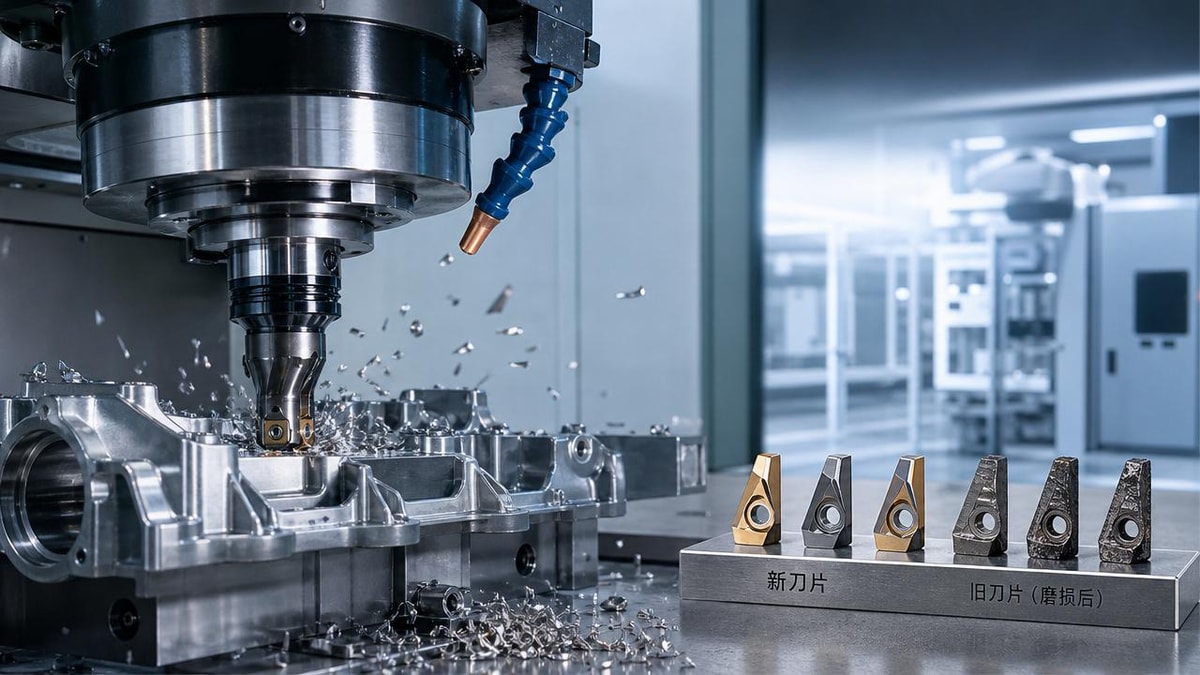
- Tool life drops across several jobs without an obvious material or program change, often indicating hidden vibration in precision equipment rather than a tooling-only problem.
These scenarios illustrate why experience alone is not enough. A symptom that appears in one process may originate somewhere else in the machine system. Maintenance teams that document operating conditions, speed ranges, tooling setup, and recurrence patterns can identify root causes much faster.
Practical Maintenance Priorities for After-Sales Teams
A useful maintenance approach begins with baseline understanding. Each type of precision equipment should have a reference for normal vibration behavior under known operating conditions. Without that baseline, technicians may struggle to tell whether a reading is truly abnormal or simply characteristic of the machine model.
The next priority is trend observation. A single vibration reading has limited value unless it is linked to spindle speed, axis movement, thermal state, tool setup, and production load. Trend data helps separate one-time disturbance from progressive deterioration. In many cases, a slow upward trend gives maintenance teams enough warning to plan bearing replacement, spindle balancing, alignment correction, or fixture improvement before quality loss becomes severe.
Inspection discipline also matters. After-sales teams should verify mechanical fastening, spindle taper condition, lubrication health, backlash behavior, coupling condition, and foundation integrity before concluding that a major component has failed. Precision equipment often develops compounded issues, where a loose mount and a worn bearing amplify each other. Correct diagnosis depends on checking the whole chain.
Finally, communication with production users is essential. Operators and process engineers often notice the earliest changes in sound, finish, or cycle stability. When maintenance teams encourage structured feedback, small vibration symptoms are reported sooner and addressed with less disruption.
What to Evaluate Before the Problem Escalates
When vibration appears in precision equipment, the goal is not simply to stop the symptom. Teams should evaluate severity, repeatability, operating context, and production risk. Key questions include: Does the vibration increase with speed or load? Is it tied to one axis or one tool? Does it affect only one product family? Has the machine been moved, leveled, or repaired recently? Are there changes in coolant, lubrication, or ambient conditions? These questions turn scattered symptoms into actionable maintenance logic.
It is also wise to consider hidden cost. A machine still producing parts may seem lower priority than a machine that has stopped, but if vibration is gradually eroding tolerance capability, the true cost may include scrap, customer complaints, and shortened component life. In precision manufacturing, delayed action often creates quality losses that exceed the direct repair expense.
Building a More Stable Future for Precision Equipment
As CNC technology and smart manufacturing continue to advance, maintenance strategy must evolve with them. Precision equipment will become more connected, more automated, and more sensitive to small deviations in mechanical health. For after-sales professionals, vibration knowledge is not a narrow specialty; it is a core capability that supports reliability, accuracy, and customer confidence across the equipment lifecycle.
The most effective teams treat small vibrations as valuable information rather than background noise. By recognizing early warning signs, documenting trends, and responding with system-level analysis, they can prevent avoidable failures and help customers maintain stable production. In a market defined by tight tolerances and high expectations, protecting precision equipment starts with paying attention to the smallest movements before they become the biggest problems.
PREVIOUS ARTICLE
NEXT ARTICLE
Recommended for You
 CNC Milling Capacity Gaps Can Hurt Small Batch ProfitabilityManufacturing Market Research Center
 Industrial Robotics Payback Is Changing in Mid-Size PlantsManufacturing Market Research Center
 Shaft Parts Machining Problems That Show Up at Final InspectionCNC Machining Technology Center
 Production Process Delays Usually Start Before Machining BeginsCNC Machining Technology Center
 Industrial Automation Projects Often Miss This Integration StepCNC Machining Technology Center
 CNC Metal Cutting Tool Wear Is Costing More Than You ThinkCNC Machining Technology Center

Aris Katos
Future of Carbide Coatings
15+ years in precision manufacturing systems. Specialized in high-speed milling and aerospace grade alloy processing.
▶
Precision Equipment Failures Often Start with Small VibrationsMachine Tool Industry Editorial Team▶
Are CNC Industrial Machines Getting Easier to Maintain?Machine Tool Industry Editorial Team▶
How Industrial CNC Affects Tolerance Stability Over TimeMachine Tool Industry Editorial Team▶
High precision lathe claims to verify before accepting deliveryMachine Tool Industry Editorial Team▶
Precision equipment calibration issues that quietly raise scrap ratesMachine Tool Industry Editorial Team
Mastering 5-Axis Workholding Strategies
Join our technical panel on Nov 15th to learn about reducing vibrations in thin-wall components.

Providing you with integrated sanding solutions
Before-sales and after-sales services
Comprehensive technical support