• Global CNC market projected to reach $128B by 2028 • New EU trade regulations for precision tooling components • Aerospace deman
NYSE: CNC +1.2%LME: STEEL -0.4%

How Industrial CNC Affects Tolerance Stability Over Time
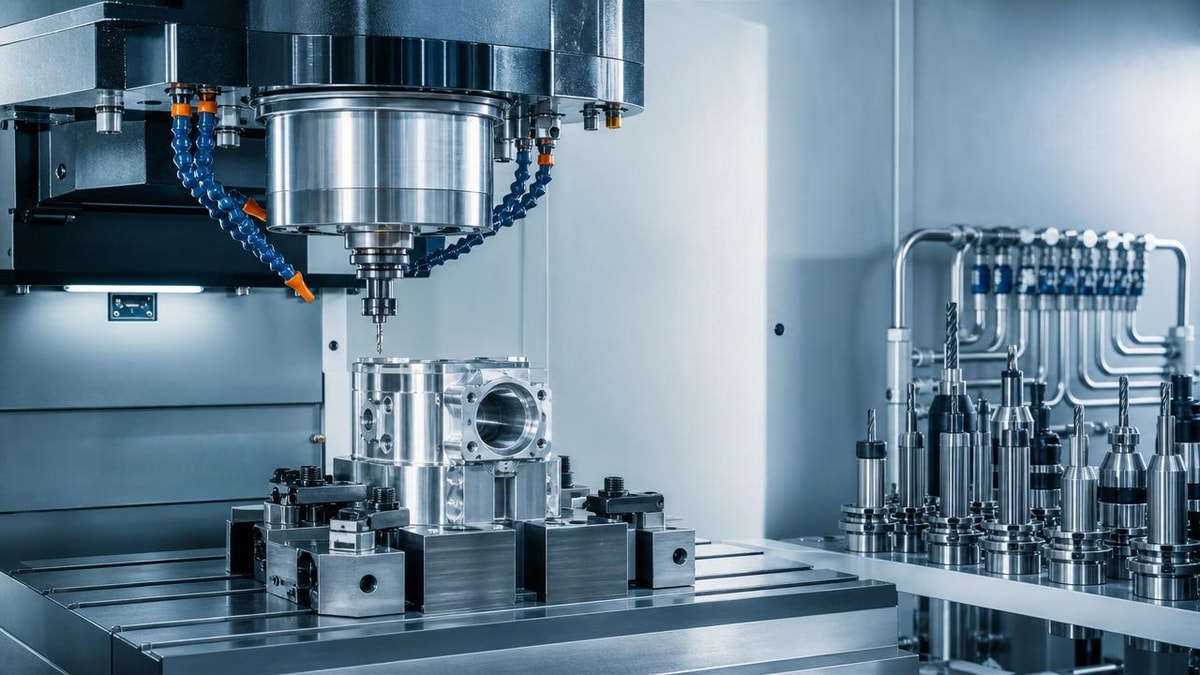
In modern manufacturing, industrial CNC systems are expected to hold tight tolerances not just at startup, but consistently over long production cycles. For quality control and safety managers, understanding how machine wear, thermal variation, maintenance practices, and operating conditions affect tolerance stability over time is essential to reducing defects, preventing process drift, and maintaining reliable, compliant output.
Why a checklist approach works better for tolerance stability
When an industrial CNC process begins to miss dimensions, the cause is rarely a single failure. More often, tolerance instability develops slowly through spindle wear, axis backlash, thermal growth, tool condition changes, fixture deformation, lubrication issues, or programming habits that were acceptable at launch but become risky over time. For quality control teams, that means dimensional variation should be reviewed as a system condition, not as an isolated inspection event.
A checklist-based review helps teams prioritize what to verify first, what to trend continuously, and what to escalate before scrap, rework, or safety exposure increases. In practical terms, the right checklist allows a plant to distinguish between a machine capability problem, a process capability problem, and a control discipline problem. That distinction matters because each requires a different response time, budget, and risk control strategy.
First checks: what quality and safety managers should confirm before deeper analysis
Before investigating long-term industrial CNC tolerance drift, start with a short verification sequence. This avoids wasting time on machine teardown when the instability is actually coming from measurement inconsistency or part handling variation.
- Confirm the measurement system is stable. Check gauge calibration status, repeatability, fixture seating during inspection, and operator consistency.
- Compare current results against the machine’s original acceptance data, historical Cp/Cpk, and baseline first-article records.
- Identify whether the deviation is directional. A consistent shift suggests thermal or offset issues, while random spread may point to vibration, looseness, or tool wear variability.
- Check whether all dimensions are drifting or only features tied to one axis, one tool group, one setup, or one material batch.
- Review the production window in which defects appear: cold start, peak load, shift change, long cycle run, or after maintenance intervention.
These first checks are especially useful in automotive, aerospace, electronics, and energy equipment production, where industrial CNC output often involves both narrow dimensional limits and traceability requirements.
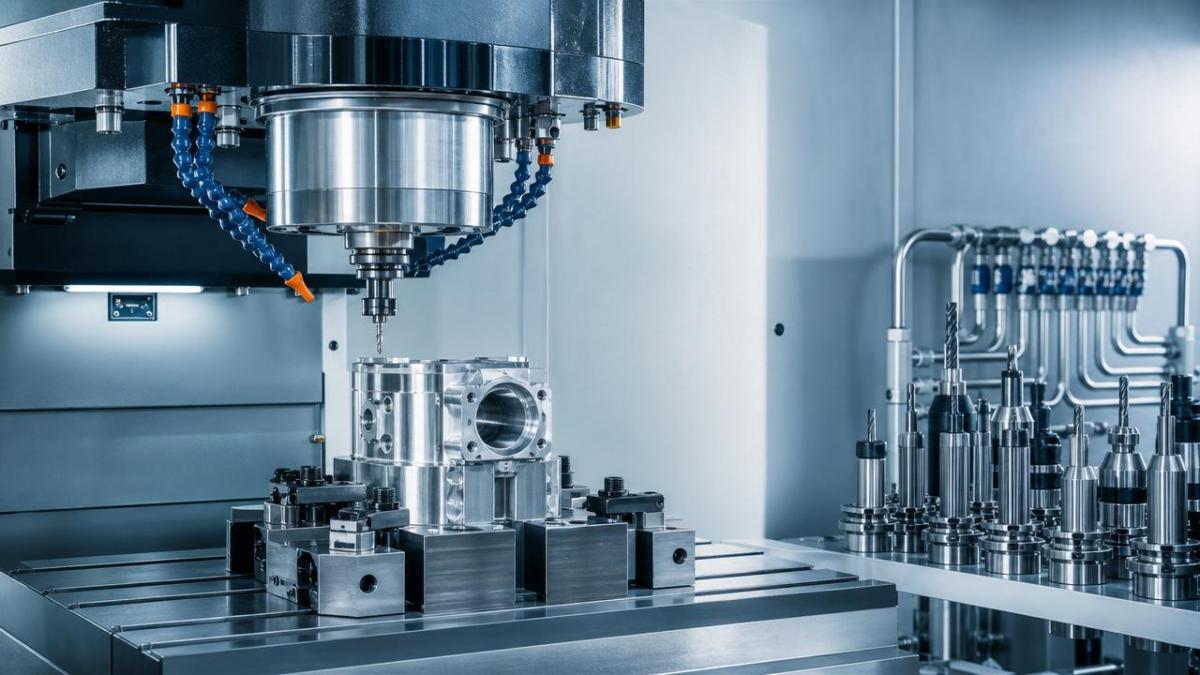
Core industrial CNC checklist for tolerance stability over time
1. Machine geometry and axis condition
Machine geometry degradation is one of the most common long-term causes of unstable tolerances. Check backlash, lost motion, ballscrew wear, linear guide condition, servo tuning stability, and squareness between axes. If a machine repeatedly needs offset correction to maintain the same feature location, the industrial CNC system may be compensating for mechanical decline rather than holding true capability.
2. Spindle health and vibration behavior
Spindle runout, bearing wear, taper contamination, and dynamic imbalance can all widen dimensional spread and damage surface finish. Quality teams should not only look at final part size but also monitor vibration patterns, spindle load history, tool pull retention, and frequency of chatter-related nonconformance. On high-speed industrial CNC platforms, small spindle issues can quickly turn into repeatability loss across multiple tools.
3. Thermal stability during real production cycles
Thermal growth is often underestimated because a machine can pass inspection when idle or shortly after startup. In production, however, spindle heat, servo heat, coolant temperature variation, and ambient plant changes alter machine dimensions. A useful check is to compare first-hour, mid-shift, and end-of-shift measurements. If deviation follows runtime rather than batch or operator, thermal behavior is likely a primary factor in the industrial CNC process.
4. Tool wear progression and tool life discipline
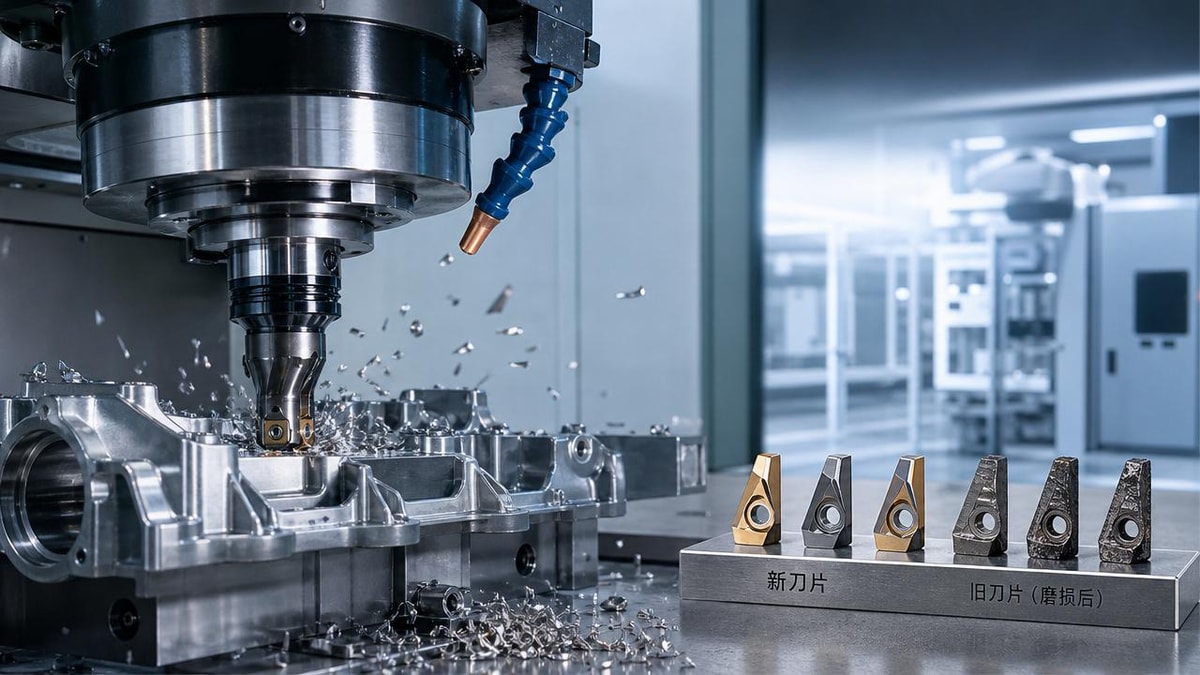
Tolerance stability depends heavily on predictable tool wear. Check whether tool change intervals are based on measured wear data, estimated cycle counts, or operator judgment alone. Progressive wear can cause slow drift, while edge chipping can create sudden outliers. Review insert grade selection, coolant delivery, chip evacuation, and offset update rules. A well-maintained industrial CNC cell can still produce unstable output if tool life controls are inconsistent.
5. Workholding, fixturing, and clamping repeatability
If parts are not seated or clamped consistently, the machine may appear inaccurate when the true issue is setup repeatability. Inspect fixture wear points, locating pin condition, hydraulic or pneumatic clamping pressure consistency, jaw distortion, and contamination under contact surfaces. For thin-wall or heat-sensitive parts, clamping force itself may distort geometry and create false conclusions about industrial CNC accuracy.
6. Lubrication, coolant, and contamination control
Poor lubrication accelerates wear in ways that may not be obvious until dimensional capability drops. Coolant concentration, cleanliness, nozzle alignment, sump condition, and filtration also influence tool life and thermal consistency. Chip buildup in guarding, way covers, or fixture nests can create intermittent tolerance failure that is difficult to trace. For many plants, contamination control is one of the most overlooked industrial CNC stability factors.
Quick judgment table: what the drift pattern may be telling you
Different production scenarios require different checks
High-volume automated lines
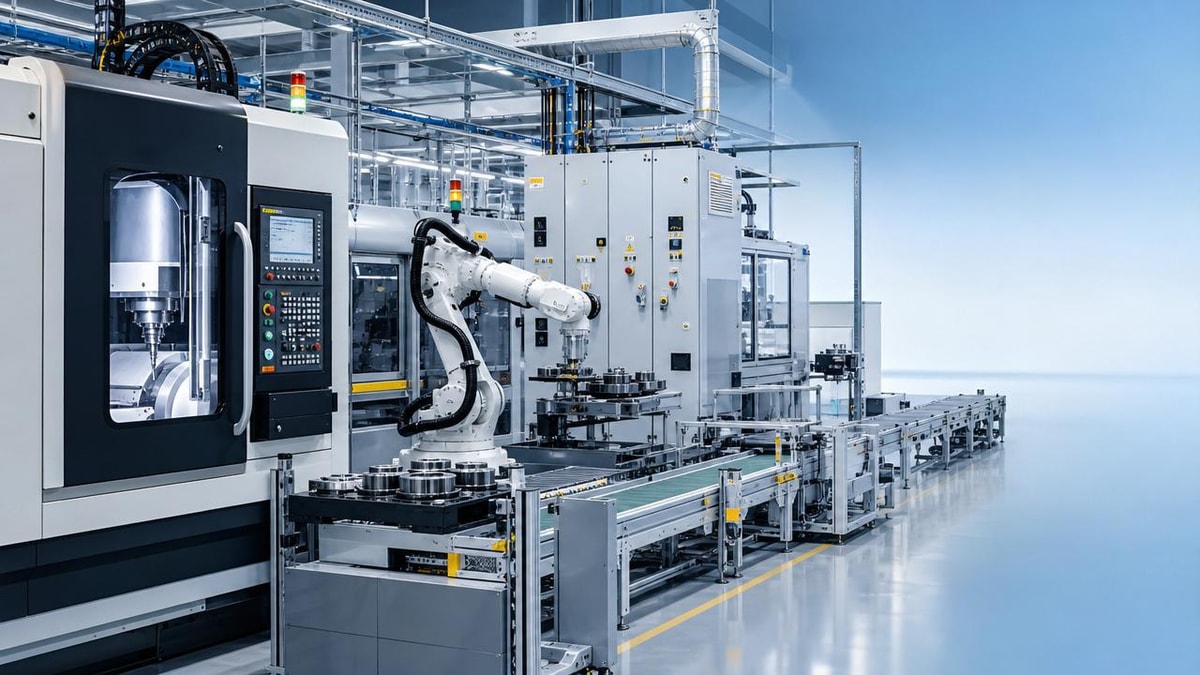
In high-output industrial CNC environments, the biggest risk is assuming stable automation equals stable precision. Here, trend data matters more than occasional manual inspection. Focus on cycle-count-based tool replacement, automatic compensation rules, SPC alarm thresholds, probe repeatability, and maintenance intervals aligned to actual machine utilization rather than calendar frequency.
Low-volume, high-mix manufacturing
Where setups change frequently, tolerance instability often comes from programming variation, inconsistent fixturing, and rushed changeovers. Quality managers should review setup sheets, datum strategy, work offset discipline, first-off approval criteria, and whether operators are reusing assumptions from similar but not identical jobs. In this scenario, industrial CNC capability may be sound while process control is weak.
Critical safety or compliance parts
For aerospace structures, automotive safety components, pressure-related parts, and precision energy equipment, tolerance stability should be linked to formal risk assessment. That means documented reaction plans, layered audits, traceability of tooling and offsets, and escalation triggers when process drift approaches warning limits rather than waiting for actual nonconformance.
Commonly missed factors that weaken industrial CNC tolerance performance
- Skipping machine warm-up or using inconsistent warm-up routines across shifts.
- Relying on pass/fail inspection instead of tracking trend direction and rate of drift.
- Ignoring ambient temperature swings near doors, furnaces, or seasonal HVAC changes.
- Treating repeated offset changes as normal instead of investigating root cause.
- Using preventive maintenance checklists that focus on uptime but not geometric accuracy.
- Failing to separate machine capability loss from variation introduced by raw material, operator handling, or post-machining processes.
Practical execution plan for quality and safety teams
If tolerance stability has become a recurring issue, use a phased response instead of isolated corrections. Start by identifying the highest-risk machines based on scrap cost, safety relevance, customer complaints, or process capability history. Then build a review package for each industrial CNC asset that includes recent dimensional trends, maintenance records, thermal behavior notes, tool life controls, fixture condition, and known recurring alarms.
Next, define decision thresholds. For example, determine when trend drift requires increased sampling, when offset changes require engineering review, and when machine downtime is justified for alignment or spindle inspection. Without agreed thresholds, teams often normalize gradual deterioration until quality escapes occur.
It is also useful to align quality and safety reviews. A machine that needs constant manual intervention, repeated in-cycle adjustment, or frequent guard opening to clear chips may present both precision risk and operator exposure risk. Industrial CNC stability should therefore be assessed not only as a dimensional issue, but as part of a controlled and safe manufacturing system.
FAQ: fast answers for on-site decision making
How often should industrial CNC accuracy be revalidated?
The interval should depend on machine criticality, production hours, tolerance demands, and defect history. High-precision or safety-related applications usually need more frequent capability checks than general-purpose machining.
What is the clearest early warning sign of long-term drift?
A growing need for offset correction to keep the same feature in tolerance is often the most visible early signal. It suggests the industrial CNC process is compensating for a change that should be investigated.
Can maintenance records alone predict tolerance stability?
No. Maintenance history is important, but it must be linked with dimensional trend data, thermal behavior, tool management, and process conditions. Uptime does not automatically mean stable precision.
What to prepare before discussing improvement actions with suppliers or internal teams
If your organization needs to improve industrial CNC tolerance stability, gather the information that supports a fast technical review: target tolerances, material types, cycle times, current Cp/Cpk, drift patterns, maintenance history, environmental conditions, tooling strategy, fixture details, and the point in the run where instability begins. This makes it easier to judge whether the best next step is machine rebuilding, thermal compensation, tooling optimization, fixture redesign, software adjustment, or revised inspection frequency.
For quality control and safety managers, the main goal is simple: move from reactive correction to controlled prediction. When industrial CNC systems are reviewed through a disciplined checklist, tolerance stability becomes easier to protect, audit, and improve over time. If further evaluation is needed, the most useful first discussion points are process parameters, machine condition, application fit, verification methods, implementation timeline, budget range, and responsibility for ongoing control.
PREVIOUS ARTICLE
Recommended for You
 CNC Milling Capacity Gaps Can Hurt Small Batch ProfitabilityManufacturing Market Research Center
 Industrial Robotics Payback Is Changing in Mid-Size PlantsManufacturing Market Research Center
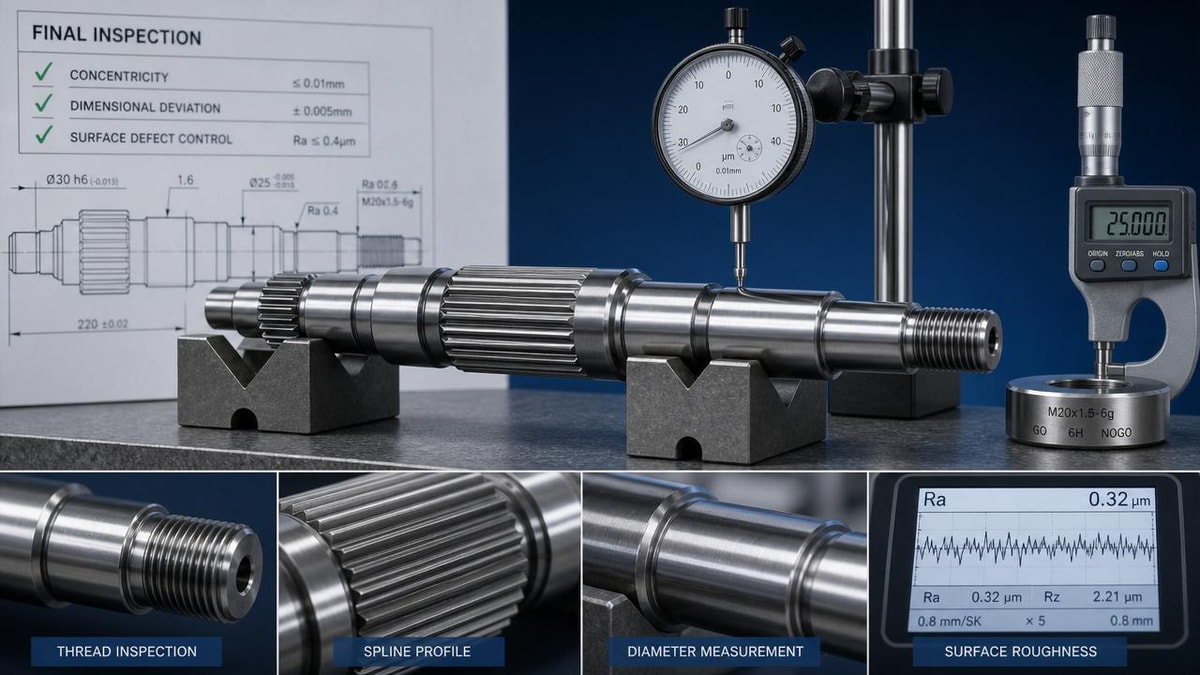
 Shaft Parts Machining Problems That Show Up at Final InspectionCNC Machining Technology Center
 Production Process Delays Usually Start Before Machining BeginsCNC Machining Technology Center
 Industrial Automation Projects Often Miss This Integration StepCNC Machining Technology Center
 CNC Metal Cutting Tool Wear Is Costing More Than You ThinkCNC Machining Technology Center

Aris Katos
Future of Carbide Coatings
15+ years in precision manufacturing systems. Specialized in high-speed milling and aerospace grade alloy processing.
▶
Precision Equipment Failures Often Start with Small VibrationsMachine Tool Industry Editorial Team▶
Are CNC Industrial Machines Getting Easier to Maintain?Machine Tool Industry Editorial Team▶
How Industrial CNC Affects Tolerance Stability Over TimeMachine Tool Industry Editorial Team▶
High precision lathe claims to verify before accepting deliveryMachine Tool Industry Editorial Team▶
Precision equipment calibration issues that quietly raise scrap ratesMachine Tool Industry Editorial Team
Mastering 5-Axis Workholding Strategies
Join our technical panel on Nov 15th to learn about reducing vibrations in thin-wall components.

Providing you with integrated sanding solutions
Before-sales and after-sales services
Comprehensive technical support