• Global CNC market projected to reach $128B by 2028 • New EU trade regulations for precision tooling components • Aerospace deman
NYSE: CNC +1.2%LME: STEEL -0.4%

How precision equipment affects scrap rates over time
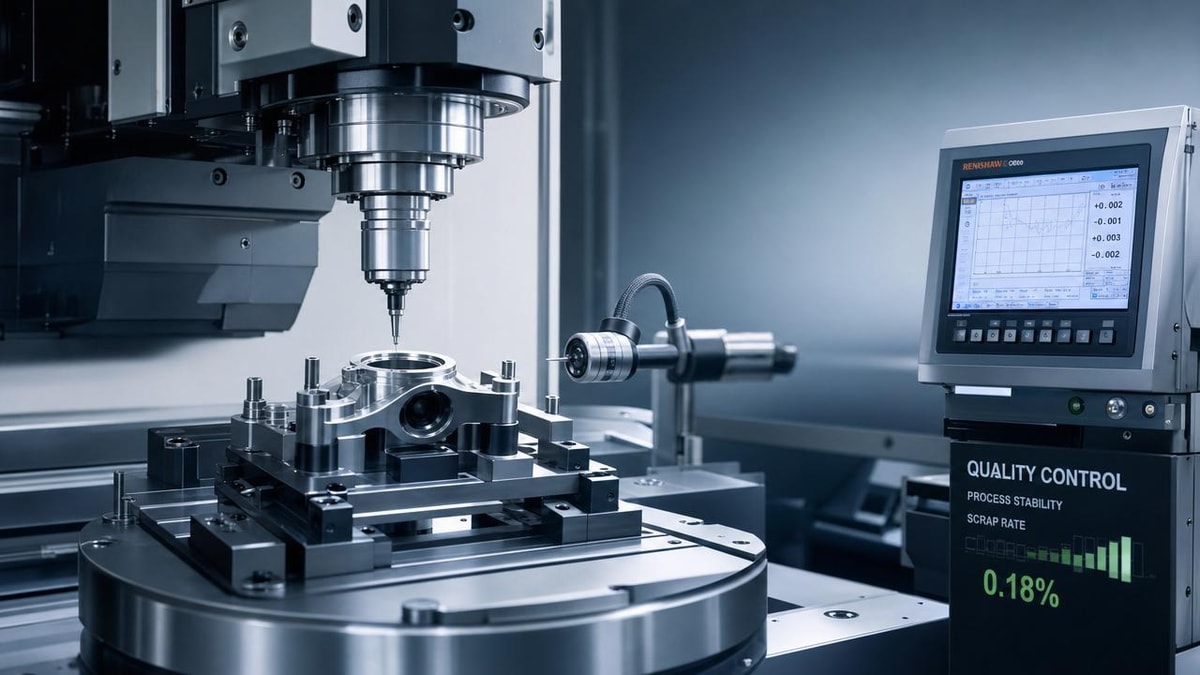
In precision manufacturing, small deviations can turn into costly scrap over time. For quality control and safety managers, understanding how precision equipment influences dimensional stability, repeatability, and process consistency is essential to reducing waste and protecting production standards. This article explores how equipment accuracy, maintenance, and automation directly affect scrap rates across long-term manufacturing operations.
For most factories, the short answer is clear: precision equipment lowers scrap rates over time only when its accuracy is stable, verified, and supported by maintenance, process control, and operator discipline. Buying a high-end machine alone does not guarantee lower waste. What matters is whether the equipment can hold tolerance day after day, shift after shift, and under real production conditions.
For quality control personnel, scrap is rarely caused by a single event. It usually builds slowly through tool wear, thermal drift, fixture variation, spindle runout, misalignment, vibration, or inconsistent handling. For safety managers, the same instability that creates scrap can also increase risk by causing unexpected machine behavior, poor part clamping, tool breakage, and rushed corrective actions on the shop floor.
That is why the relationship between precision equipment and scrap rates should be evaluated as a long-term system issue, not a one-time purchasing decision. The most useful question is not “Is this machine precise?” but “Can this production system maintain precision over time at the volume, speed, and complexity we actually run?”
Why scrap rates change over time even when a process starts well
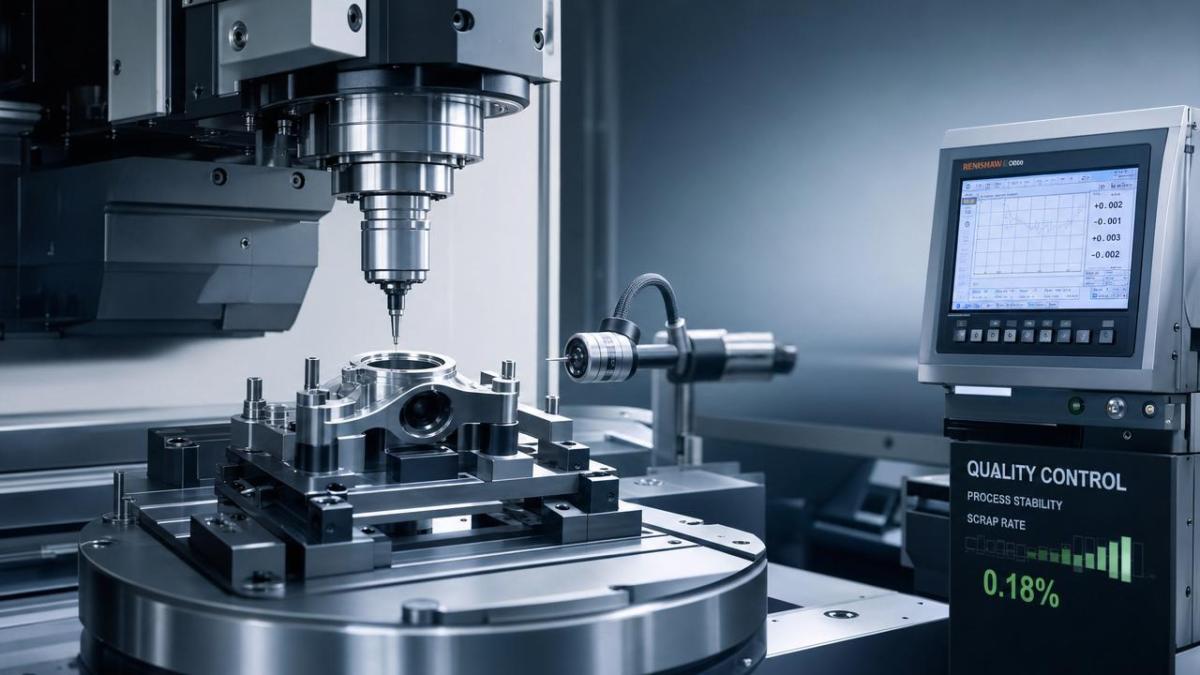
Many production lines begin with acceptable first-article inspection results and still see scrap increase months later. This happens because process capability at launch is not the same as process stability in continuous operation. A machine may meet tolerance in a controlled test, yet drift in real use because of heat, wear, contamination, lubrication issues, or repeated setup variation.
Precision equipment affects scrap rates over time by reducing the size and frequency of these shifts. Machines with better structural rigidity, more accurate motion systems, stable spindle performance, and reliable control systems tend to produce less variation. Less variation means fewer parts crossing tolerance limits, fewer borderline parts requiring sorting, and fewer hidden quality escapes.
However, the benefit is not linear forever. A factory can own very precise equipment and still generate high scrap if upstream material variation, weak fixturing, unstable tooling, or poor program management remain unaddressed. For quality teams, this means machine precision should be linked to the broader variation chain, not treated as an isolated variable.
Over time, scrap often follows a pattern. Early on, the process looks capable. Then cycle counts rise, preventive maintenance is delayed, operators compensate manually, and deviations become normalized. Eventually, more parts need rework, inspection frequency increases, and unexpected scrap spikes appear. Precision equipment can slow or prevent this pattern, but only if performance is monitored and sustained.
Which equipment characteristics have the biggest impact on scrap reduction
Not every technical specification affects scrap equally. For quality control and safety managers, the most practical factors are repeatability, thermal stability, rigidity, axis positioning accuracy, spindle condition, and fixture consistency. These directly influence whether dimensions remain centered and predictable over long production runs.
Repeatability is often more valuable than peak accuracy in daily production. A machine that consistently produces a small, known offset is easier to control than a machine that shifts unpredictably. If results are repeatable, offsets can be corrected, control limits can be set intelligently, and process capability can be maintained. If repeatability is poor, scrap risk rises quickly because the process becomes difficult to predict.
Thermal stability is another major factor. As machines warm up, dimensions can drift due to expansion of spindles, ballscrews, structures, and fixtures. High-quality precision equipment typically includes design features or compensation systems that reduce thermal effects. This is especially important for close-tolerance components, long cycle times, and multi-shift operations where machine temperature changes throughout the day.
Rigidity matters because vibration and deflection create dimensional variation, surface defects, and premature tool wear. In machining centers, lathes, and multi-axis systems, insufficient rigidity may not show up immediately on every part, but it often appears as gradual instability under load. As cutting conditions vary, the process window narrows and scrap becomes more likely.
Fixtures and workholding should be treated as part of precision equipment, not an accessory. In many plants, the machine is capable, but the clamping system introduces variation through inconsistent seating, wear, contamination, or deformation. From a quality perspective, poor fixturing can erase much of the value of a high-precision machine.
How precision equipment supports quality control beyond simple tolerance holding
Reducing scrap is not only about keeping dimensions within specification. Precision equipment also improves detectability, traceability, and control response. Stable machines produce cleaner data, which helps quality teams distinguish normal variation from special causes. When process noise is lower, statistical process control becomes more meaningful and corrective action becomes faster.
For example, if a process shows erratic measurement results, the problem may come from the machine, the tool, the fixture, the gage, or the material. On unstable equipment, these causes are harder to separate because the machine itself adds noise to the system. On stable precision equipment, root cause analysis becomes more reliable, allowing teams to correct actual problems instead of reacting to false signals.
Precision equipment also supports in-process monitoring. Modern CNC machines often integrate probing, tool measurement, load monitoring, and compensation functions. Used correctly, these features can detect drift before scrap accumulates. A worn tool, changing part zero, or thermal shift can be identified earlier, reducing both the number of nonconforming parts and the time needed for containment.
This is where quality managers should think in terms of scrap prevention rather than scrap sorting. A process that requires heavy final inspection to catch problems is already absorbing unnecessary cost. Precision equipment creates value when it enables earlier control and lowers dependence on end-of-line detection.
What quality and safety managers should watch for in long-term equipment performance
From an operational standpoint, the key issue is degradation. Precision equipment affects scrap rates over time because all machines change with use. The question is how quickly they degrade, how visible that degradation is, and whether the organization responds before the output becomes unstable.
Quality managers should track indicators such as Cp and Cpk trends, first-pass yield, rework rates, tool life variation, offset adjustment frequency, in-process measurement drift, and scrap by machine or spindle. A stable machine usually shows predictable wear patterns and manageable compensation behavior. A deteriorating machine often shows more frequent adjustments, wider variation, and sudden scrap events.
Safety managers should pay attention to warning signs that overlap with quality loss: unusual vibration, excessive noise, hydraulic inconsistency, workholding slippage, tool breakage frequency, guard bypass behavior, and operator workarounds. When machines stop holding stable conditions, people often compensate manually, which can increase safety exposure as well as quality risk.
One practical mistake is separating quality and safety reviews too strictly. In reality, unstable machining conditions often affect both. A fixture that does not hold repeatably may increase dimensional scrap and also create ejection hazards. Tool chatter can ruin surface finish and also raise the chance of tool failure. Cross-functional review of these patterns often reveals issues earlier.
Maintenance discipline is often the deciding factor in whether precision equipment actually reduces scrap
Many factories underestimate how much scrap is linked to maintenance quality. Precision equipment delivers value over time only when alignment, lubrication, cooling, spindle health, axis backlash, filtration, and calibration are kept under control. Without this, even excellent machines will gradually lose their ability to produce consistent parts.
Preventive maintenance should be tied to production reality, not just calendar intervals. Machines running abrasive materials, heavy cuts, or high duty cycles may require more frequent checks. Quality and maintenance teams should work together to identify which machine conditions correlate most strongly with scrap increases. This allows maintenance to be prioritized based on risk to product quality, not only mechanical convenience.
Calibration and verification routines are equally important. Ball bar testing, laser alignment checks, spindle analysis, probing verification, and fixture repeatability studies help detect changes before they turn into visible scrap. For quality control teams, this is one of the highest-value uses of technical data because it creates a direct link between machine condition and process capability.
In many plants, maintenance records and scrap data are stored separately. That limits learning. A more effective approach is to compare scrap events with machine interventions, downtime causes, and component replacement history. Over time, patterns emerge. Certain axes may drift before failure. Certain spindle hours may correspond to surface defects. Certain fixture rebuild intervals may affect positional accuracy. These are actionable insights.
Automation, monitoring, and digital control can reduce scrap, but only when configured well
Automation is often presented as an automatic solution to quality problems, but that is only partly true. Automated production systems can reduce human variation, improve setup consistency, and enable real-time correction. Yet they can also spread errors faster if the control logic, sensors, or measurement strategy are weak.
Precision equipment integrated with automation tends to reduce scrap most effectively in high-volume or repeatable production where offsets, tool changes, probing cycles, and workpiece positioning can be standardized. This is especially valuable for parts with tight tolerance relationships, where small manual inconsistencies can create repeated losses.
For quality teams, the main advantage is faster detection and correction. Tool monitoring, automatic wear compensation, and in-machine inspection can prevent dozens or hundreds of bad parts from being produced before a problem is noticed. For safety managers, automation can also reduce hazardous intervention by limiting the need for manual checks inside the machine envelope during active production.
Still, digital systems must be validated. If a probe is miscalibrated, a compensation rule is too aggressive, or a sensor threshold is poorly set, automation may hide variation instead of controlling it. The best results come when automated decisions are periodically verified against independent measurement and process capability data.
How to evaluate whether investing in more precise equipment will actually lower scrap
For many managers, the practical decision is not whether precision matters, but whether the next level of precision is worth the investment. The answer depends on the current scrap drivers. If the main losses come from machine repeatability, thermal drift, or unstable workholding, better precision equipment can deliver clear returns. If most scrap comes from raw material defects, programming errors, or weak inspection systems, the impact may be smaller.
A useful evaluation starts with scrap segmentation. Break scrap down by machine, feature type, defect mode, part family, shift, and process stage. If defects cluster around dimensional drift, positional errors, bore size variation, surface inconsistency, or setup repeatability, equipment precision is likely a meaningful lever. If defects are random or external to the machine, investment priorities may lie elsewhere.
Next, compare the cost of scrap with the cost of instability. This should include not only lost material, but also rework labor, extra inspection, machine downtime, line disruptions, customer complaints, and containment actions. In regulated or safety-critical industries, the cost of one escaped defect can exceed years of maintenance savings.
Trial data is more valuable than brochure specifications. Before full investment, manufacturers should test actual parts, tolerances, cycle times, and fixturing methods on the candidate equipment. The goal is to see whether the machine can hold performance over time, not just achieve a good sample result. Long-run capability data is often the most convincing evidence for both quality and finance stakeholders.
Practical steps to keep scrap rates low after precision equipment is installed
Installing better equipment is only the beginning. To maintain low scrap rates over time, factories should create a control plan that matches the machine’s capability and risk profile. This includes warm-up procedures, first-off verification, in-process checks, tool life standards, fixture cleaning routines, offset approval rules, and escalation triggers when drift appears.
Operator training remains essential. Even advanced CNC systems can produce scrap if setup logic is inconsistent or alarms are ignored. Standardized setup sheets, validated programs, and clear response instructions help protect the value of precision equipment. For safety managers, training should also cover how to respond to unstable machine behavior without unsafe intervention or rushed troubleshooting.
It is also wise to define machine-specific control limits. Not every machine behaves the same, even within one facility. Historical data can show how each asset drifts, how tool wear presents, and what adjustment frequency is normal. That knowledge allows quality teams to set realistic preventive thresholds rather than waiting for defects to exceed final tolerance.
Finally, review scrap trends as a strategic indicator, not only a production metric. When scrap begins to rise gradually, it often signals deeper issues in machine condition, process control, or organizational discipline. Precision equipment gives manufacturers a better foundation, but sustained results come from using that foundation with rigor.
Conclusion
Precision equipment has a strong and measurable effect on scrap rates over time, but the effect depends on consistency, maintenance, fixturing, monitoring, and disciplined process control. For quality control managers, the biggest benefit is not simply tighter tolerance capability. It is the ability to run a more stable, predictable process with less hidden variation and fewer surprises.
For safety managers, stable precision equipment also supports safer operations by reducing the conditions that lead to tool failure, workholding problems, emergency adjustment, and reactive behavior on the shop floor. In this sense, lower scrap and safer production are often connected outcomes.
The most accurate conclusion is this: precision equipment reduces scrap most effectively when it is treated as part of a long-term manufacturing system. If accuracy is verified, degradation is monitored, maintenance is aligned with risk, and automation is validated, the result is not just fewer bad parts. It is stronger process control, better production confidence, and more resilient manufacturing performance over time.
PREVIOUS ARTICLE
Recommended for You
![]() ANVISA New Rule: Portuguese Biocompatibility Labels for Medical CNC Machines in BrazilManufacturing Policy Research Center
ANVISA New Rule: Portuguese Biocompatibility Labels for Medical CNC Machines in BrazilManufacturing Policy Research Center![]() EMO Hannover 2027 Booth Booking Opens: China AI-Machining Pavilion LaunchesGlobal Machine Tool Trade Research Center
EMO Hannover 2027 Booth Booking Opens: China AI-Machining Pavilion LaunchesGlobal Machine Tool Trade Research Center![]() KATS Updates KC Rules: CNC Cybersecurity Modules Must Meet IEC 62443-4-2Manufacturing Policy Research Center
KATS Updates KC Rules: CNC Cybersecurity Modules Must Meet IEC 62443-4-2Manufacturing Policy Research Center![]() Shanghai Port Launches Green Clearance Channel for CNC EquipmentManufacturing Market Research Center
Shanghai Port Launches Green Clearance Channel for CNC EquipmentManufacturing Market Research Center![]() ISO 23218-3:2026 Published: CNC Digital Twin Interoperability StandardCNC Machining Technology Center
ISO 23218-3:2026 Published: CNC Digital Twin Interoperability StandardCNC Machining Technology Center![]() Vietnam Cuts CNC Equipment Import Tariff to 3.8% from June 2026Global Machine Tool Trade Research Center
Vietnam Cuts CNC Equipment Import Tariff to 3.8% from June 2026Global Machine Tool Trade Research Center


Aris Katos
Future of Carbide Coatings
15+ years in precision manufacturing systems. Specialized in high-speed milling and aerospace grade alloy processing.
▶
High precision lathe claims that deserve a closer lookMachine Tool Industry Editorial Team▶
How precision equipment affects scrap rates over timeMachine Tool Industry Editorial Team▶
Precision Equipment Failures Often Start with Small VibrationsMachine Tool Industry Editorial Team▶
Are CNC Industrial Machines Getting Easier to Maintain?Machine Tool Industry Editorial Team▶
How Industrial CNC Affects Tolerance Stability Over TimeMachine Tool Industry Editorial Team
Mastering 5-Axis Workholding Strategies
Join our technical panel on Nov 15th to learn about reducing vibrations in thin-wall components.

Providing you with integrated sanding solutions
Before-sales and after-sales services
Comprehensive technical support