• Global CNC market projected to reach $128B by 2028 • New EU trade regulations for precision tooling components • Aerospace deman
NYSE: CNC +1.2%LME: STEEL -0.4%

How to Pick a Compact Machine Tool for Limited Floor Space
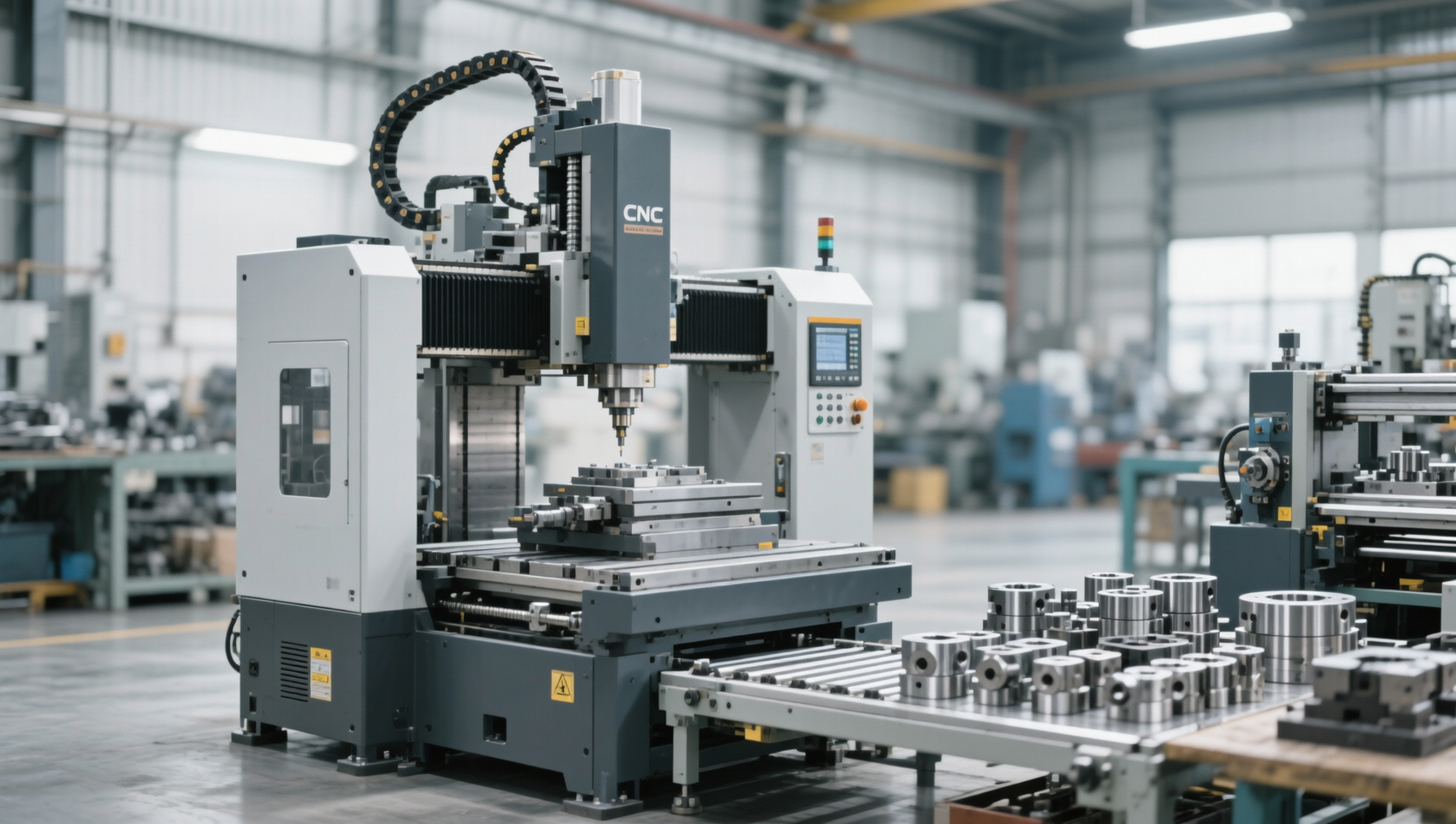
Choosing a compact machine tool for limited floor space means balancing footprint, output, and long-term value. Whether you need a space-saving CNC manufacturing solution, a high precision machine tool, or a portable machine tool for flexible production, the right choice can improve efficiency across automotive, aerospace, electronics, and energy equipment applications. This guide helps buyers and operators compare performance, layout fit, automation potential, and machine tool price with confidence.
What makes a compact machine tool the right fit for a small production floor?
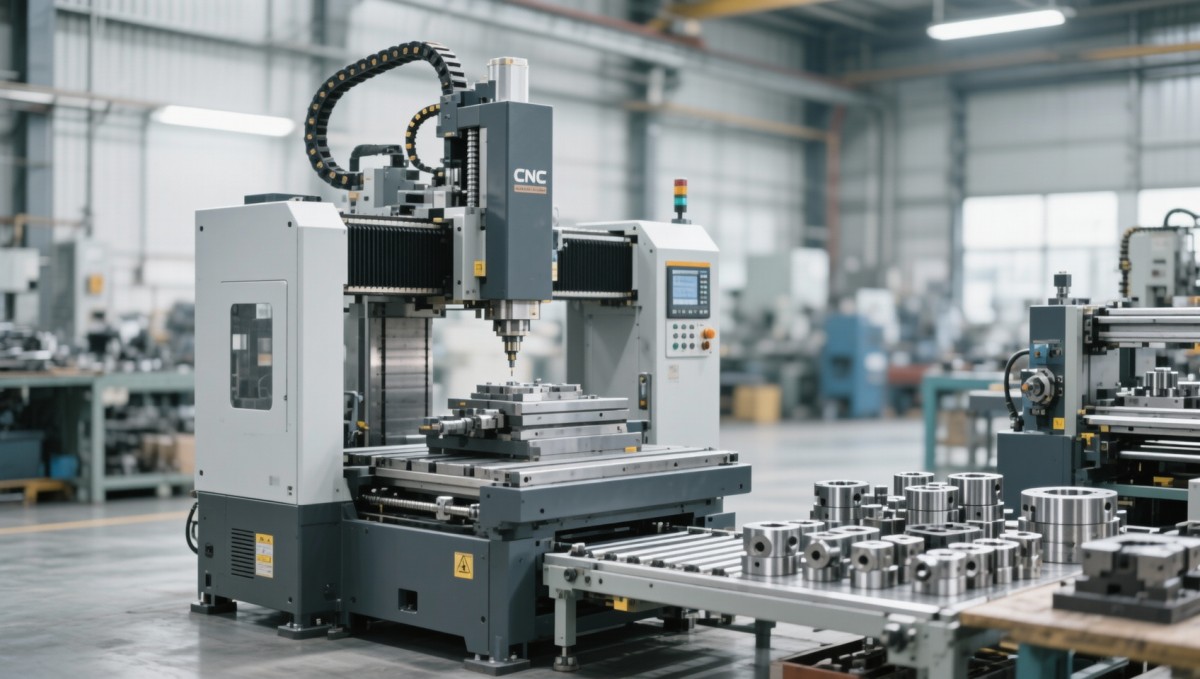
A compact machine tool is not simply a smaller version of a standard CNC system. In practice, it is a machine designed to deliver useful spindle capacity, stable accuracy, and operator access within a reduced installation envelope. For workshops, contract manufacturers, and production cells where every square meter matters, compact equipment can support output growth without forcing a facility expansion.
For information researchers and procurement teams, the first question should be about usable floor efficiency rather than external dimensions alone. A machine with a 2.0 m × 2.2 m footprint may still require another 0.8 m to 1.2 m on service and loading sides. When these clearance zones are ignored, a seemingly space-saving CNC manufacturing solution can create bottlenecks in maintenance, chip evacuation, and material flow.
For operators, compactness only adds value if setup remains practical. Tool magazine access, door opening angle, chuck height, and control placement all affect daily work. A small machine that reduces walking distance by 20% to 30% can improve cycle support, but only if loading, probing, and inspection are still comfortable during 8-hour to 12-hour shifts.
For business decision-makers, the real benefit is often the ability to add 1 more process in an existing workshop, integrate automation in a constrained cell, or shorten internal part transfer. In automotive, electronics, and energy equipment manufacturing, this can be more valuable than selecting the largest machine capacity available on paper.
Three dimensions of compact machine selection
- Footprint and clearance: Measure machine base size, front loading zone, side maintenance access, chip conveyor direction, and electrical cabinet position as 5 separate layout checks.
- Process capability: Confirm travel, spindle speed range, turret or tool capacity, and achievable tolerance band for your target parts, especially if you machine small shafts, discs, or structural components.
- Expansion readiness: Review whether the machine can accept bar feeders, robots, probing, mist extraction, or simple pallet handling in the next 12 to 36 months.
This approach helps avoid a common mistake: buying a compact machine tool only for current space limits, then discovering that output, automation, or service access becomes the next constraint. The better choice is usually the machine that fits both today’s floor plan and the next stage of production maturity.
Which machine types work best in limited space across different applications?
Different industries require different compact machine configurations. A small-footprint CNC lathe may be ideal for shaft parts and bushings, while a vertical machining center may better suit prismatic aluminum or steel parts. In electronics and precision manufacturing, compact high precision machine tool platforms often prioritize thermal stability and fine surface finish over large cutting volume.
In automotive supply chains, compact turning centers are often used for medium-batch production of connectors, sleeves, and threaded components. In aerospace subcontracting, limited floor space may favor 3-axis or 5-axis compact machining centers for complex but smaller structural parts. In energy equipment, robust compact machines are valued when shops need to process valve parts, couplings, or sensor housings without expanding utility loads.
Portable machine tool solutions also have a place, but they serve a different purpose. They are useful for on-site repair, maintenance work, or flexible field tasks rather than stable serial production. Buyers should separate portable convenience from production-grade rigidity, because these are not interchangeable priorities.
The table below compares typical compact machine categories used in modern manufacturing when available space, process stability, and future automation all matter.
This comparison shows that the best compact machine tool depends on part geometry, batch profile, and process integration. A compact CNC lathe may outperform a machining center in output density for rotational parts, while a compact vertical machine can deliver broader flexibility for mixed production in 1 shift or 2-shift environments.
Application filters that simplify selection
If your production is part-family based
Choose the machine around 70% to 80% of recurring part demand, not occasional outliers. This keeps capital spending aligned with real throughput and avoids oversizing for rare jobs.
If your production is high-mix, low-volume
Prioritize setup reduction, tool capacity, probe support, and easy program changeover. In small workshops, 15 to 30 minutes saved per setup can matter more than peak spindle power.
If your production is heading toward automation
Verify robot loading interface, signal compatibility, and guarding space before purchase. Compact automation-ready machines reduce future integration disruption and avoid expensive floor rework.
What technical performance should buyers and operators check first?
When evaluating a compact machine tool, many buyers focus on footprint and machine tool price too early. The better sequence is to confirm technical fit first. In precision manufacturing, a machine that saves 1 square meter but cannot hold target tolerance or surface finish will create hidden cost through scrap, rework, and slower cycle times.
Start with work envelope and part size range. For small and medium components, the machine should support both the finished part and the fixture, chuck, collet, or vice system without consuming most of the travel. Typical compact machining decisions become difficult when fixture height and tool length reduce usable Z-axis capacity more than expected.
Then review spindle and feed performance in relation to the material mix. Aluminum, alloy steel, stainless steel, and engineering plastics all place different demands on spindle speed, torque, coolant delivery, and chip evacuation. For multi-material workshops, a balanced machine often performs better than one optimized for only one cutting condition.
Finally, assess control usability and maintenance intervals. For operators and supervisors, a compact machine should be easy to reset, inspect, and service. Daily checks, weekly lubrication routines, and quarterly alignment verification should be realistic in a busy plant where technical staff are limited.
Core evaluation points for a high precision machine tool
- Accuracy and repeatability expectations: Match machine capability to your tolerance band, such as general machining, precision fitting, or fine surface work, rather than assuming every compact machine serves all levels equally.
- Thermal behavior over time: In production runs lasting 2 to 6 hours, thermal stability often matters more than short test cuts performed immediately after startup.
- Tool capacity and change time: Compact machines with limited tool positions may be acceptable for single-family production, but mixed work usually benefits from broader tool availability.
- Chip and coolant management: In small spaces, poor chip control can quickly reduce uptime, especially when machining stainless or gummy aluminum alloys.
The table below can be used as a practical screening tool during machine comparison, especially when your team needs to align engineering, operations, and purchasing criteria in 1 decision process.
This kind of technical checklist keeps the decision anchored in real production needs. It also helps procurement teams compare suppliers on measurable details instead of relying only on catalog language or headline dimensions.
How should procurement teams compare machine tool price, operating cost, and alternatives?
A compact machine tool can look attractive because the initial machine tool price is lower than that of a larger machining platform. However, total value depends on three layers: acquisition cost, operating cost over 3 to 5 years, and opportunity cost if the machine limits output or future automation. Buyers who compare only the purchase quote often miss the full economics.
Acquisition cost should include tooling package, workholding, chip handling, coolant system, installation, training, and any probing or automation interface. In many cases, these related items can change the usable project budget significantly. A lower base price may become less attractive if essential accessories are all optional.
Operating cost depends on energy use, consumables, maintenance intervals, spindle uptime, and labor efficiency. If one compact CNC manufacturing solution reduces setup by 10 to 20 minutes per job and supports unattended running for short cycles, it may deliver stronger long-term value than a cheaper machine with more manual intervention.
Alternatives should also be considered. Sometimes a compact multi-tasking machine can replace 2 separate operations. In other cases, 2 specialized compact machines provide better redundancy and scheduling flexibility than 1 more complex system. The right answer depends on batch profile, staffing, and risk tolerance.
A practical 4-step purchasing framework
- Define 3 categories of parts: frequent jobs, growth jobs, and exception jobs. This prevents overspecification.
- Map the actual installation cell, including operator aisle, material staging, and service path, not just machine base dimensions.
- Compare 2 to 3 machine configurations with the same tooling and support scope so price differences are meaningful.
- Request confirmation on lead time, commissioning support, training duration, and spare parts response before final approval.
This framework supports both procurement and executive review. It translates technical details into budget logic and reduces the risk of buying a machine that fits the layout but fails the production plan.
What common mistakes, standards, and implementation questions should you address early?
One common mistake is assuming that compact equipment automatically simplifies compliance and installation. In reality, buyers still need to review electrical compatibility, guarding, safety procedures, coolant handling, lifting conditions, and operator training. For international sourcing, documentation quality and standard alignment can be as important as machine configuration.
Depending on the destination market and plant policy, buyers may need to ask about electrical standards, safety guarding practices, operating manuals, and inspection protocols. It is reasonable to request clear factory acceptance and site acceptance steps, especially for CNC machine tools integrated into automated lines or smart manufacturing cells.
Implementation should be planned in stages. A typical rollout includes 3 phases: pre-installation review, commissioning and training, and production stabilization. In many plants, the first 2 to 4 weeks after startup determine whether the compact machine actually improves flow or simply adds another isolated asset.
For decision-makers, early risk control is not about slowing the purchase. It is about preventing avoidable downtime, layout changes, or operator frustration after delivery. This is especially important when floor space is already constrained and rework options are limited.
FAQ for compact machine tool buyers and users
How do I know if a compact machine tool is too small for future demand?
Review planned part mix over the next 12 to 24 months and check whether the machine can handle at least the main growth family with current tooling and workholding. If future jobs require constant fixture compromise or external secondary operations, the machine may be undersized even if it fits the shop today.
What delivery timeline is typical for a compact CNC machine?
Standard configurations often move faster than customized units. A common planning range is 4 to 12 weeks for supply and basic commissioning, though this varies by options, control system, export process, and tooling package. Buyers should confirm what is included in each milestone rather than focusing on one headline date.
Is a portable machine tool a substitute for a compact production machine?
Usually not. A portable machine tool is valuable for maintenance, repair, and field service tasks, but it typically does not replace the rigidity, repeatability, and automation readiness required for serial production. The decision depends on whether your priority is site flexibility or controlled manufacturing throughput.
What should operators ask before accepting a new compact machine?
Operators should confirm access for tool changes, daily cleaning, alarm recovery, coolant refill, and chip removal. They should also ask for training on 5 basic points: startup inspection, tooling offsets, program loading, routine maintenance, and emergency response. A compact layout must still support safe and efficient daily work.
Why contact us when comparing compact machine tools for limited floor space?
If you are evaluating a compact machine tool for a tight workshop, automated cell, or mixed-production plant, we can help you move from general research to practical selection. Our focus on global CNC machining and precision manufacturing allows us to support discussions that combine floor layout, machining process, automation potential, and sourcing realities.
You can contact us for targeted support on 6 key topics: installation footprint confirmation, part and process matching, compact CNC lathe or machining center selection, machine tool price comparison scope, delivery cycle planning, and documentation or compliance questions for international projects. This is especially useful for procurement teams balancing technical and commercial decisions.
If you already have drawings, sample parts, target materials, or batch estimates, we can help organize the selection criteria before quotation review. If you are still at the early research stage, we can help narrow the shortlist based on part size range, required precision level, shift pattern, and available floor space.
Reach out when you need clearer answers on parameter confirmation, compact machine comparison, customization options, automation readiness, lead times, or RFQ preparation. A well-matched compact machine tool should do more than fit the floor. It should support stable production, manageable operating cost, and a realistic path to future capacity.
NEXT ARTICLE
Recommended for You
 How to Choose a Heavy-Duty Machining Center for Mold MakingMachine Tool Industry Editorial Team
 How Quick-Change Fixture Design Cuts CNC Turning Setup TimeCNC Machining Technology Center
 Why 5 Axis Machining Is Ideal for Impeller ManufacturingCNC Machining Technology Center
 How to Start Lean Production Without Disrupting OutputManufacturing Market Research Center
 When a Modular Tooling System Improves Flexible ManufacturingMachine Tool Industry Editorial Team
 How CNC Machine Control Systems Improve Automation StabilityMachine Tool Industry Editorial Team


Aris Katos
Future of Carbide Coatings
15+ years in precision manufacturing systems. Specialized in high-speed milling and aerospace grade alloy processing.
▶
How to Choose a Heavy-Duty Machining Center for Mold MakingMachine Tool Industry Editorial Team▶
How High Precision Machine Tools Improve Part ConsistencyMachine Tool Industry Editorial Team▶
Why Multi-Axis Machine Tools Beat Standard Setups for Complex PartsMachine Tool Industry Editorial Team▶
What Machine Tool Features Matter Most for Aerospace PartsMachine Tool Industry Editorial Team▶
When a Portable Machine Tool Makes More Sense Than Fixed ModelsMachine Tool Industry Editorial Team
Mastering 5-Axis Workholding Strategies
Join our technical panel on Nov 15th to learn about reducing vibrations in thin-wall components.

Providing you with integrated sanding solutions
Before-sales and after-sales services
Comprehensive technical support