• Global CNC market projected to reach $128B by 2028 • New EU trade regulations for precision tooling components • Aerospace deman
NYSE: CNC +1.2%LME: STEEL -0.4%

Industrial lathe retrofits: when they pay off and when they do not
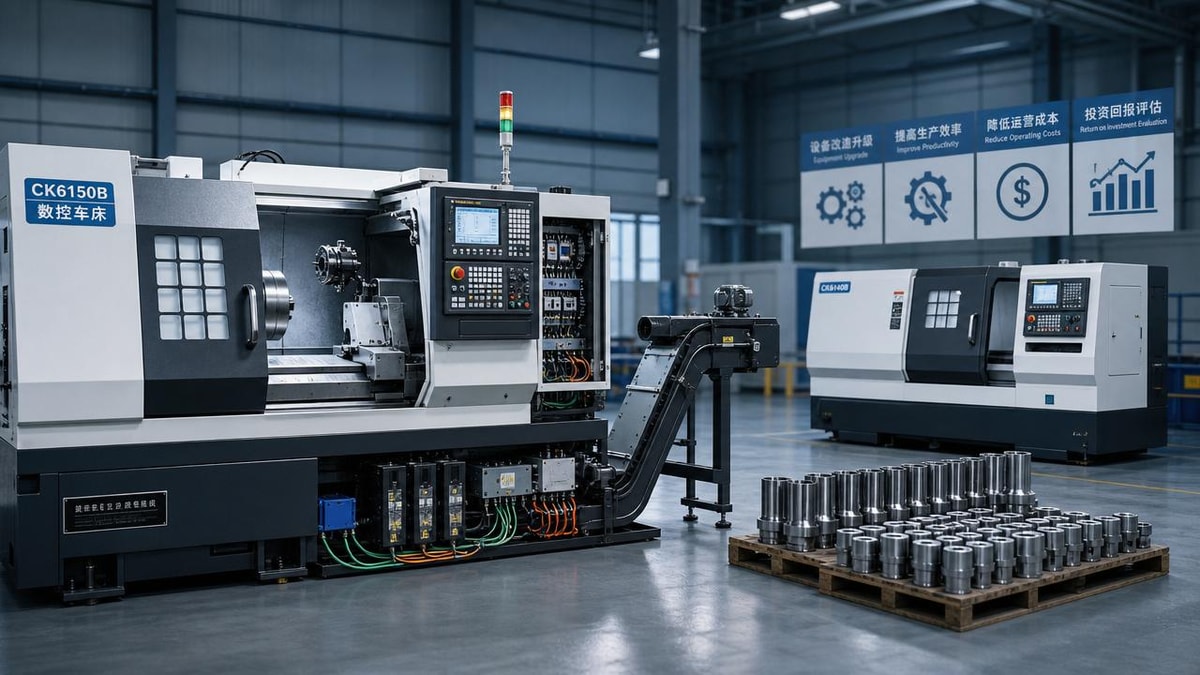
For finance decision-makers, an industrial lathe retrofit can look like a cost-saving shortcut—but the numbers only work under specific conditions. When machine rigidity, core structure, and production demand remain strong, upgrading controls, drives, or automation may extend asset life and improve ROI. But if downtime risk, precision limits, or hidden maintenance costs are too high, replacement often delivers better long-term value.
That is the core answer behind most searches about industrial lathe retrofit economics: not whether retrofitting is technically possible, but whether it is financially justified. For budget owners, the real question is simple: will this investment improve output, reliability, and margin enough to beat the alternatives?
In practice, the best retrofit cases share the same pattern. The base machine is structurally sound, the current bottleneck comes from obsolete controls or poor productivity, spare parts are getting harder to source, and a new machine would require much higher capital or a long delivery timeline. If those conditions do not exist, the retrofit case weakens quickly.
Before approving spending, financial stakeholders usually want clarity on four issues: expected payback, production risk during and after the upgrade, remaining useful life of the machine, and the opportunity cost versus buying new equipment. This article focuses on those decision points so you can judge when an industrial lathe retrofit pays off—and when it does not.
What finance decision-makers are really trying to evaluate
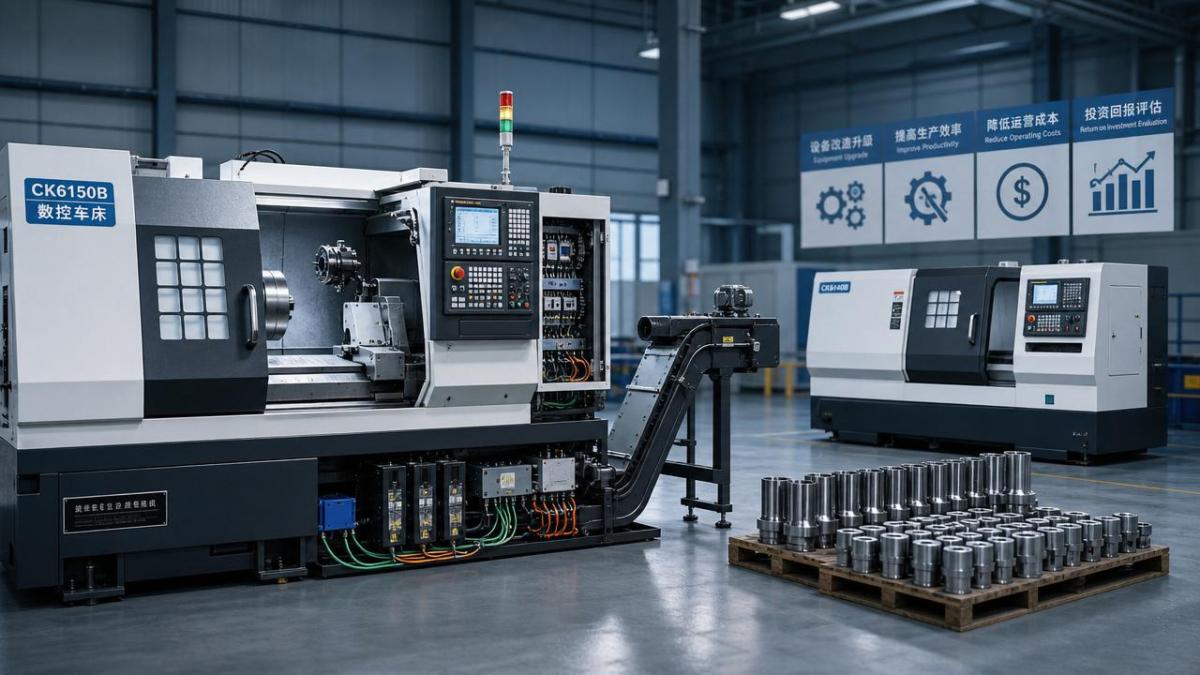
When someone searches for guidance on industrial lathe retrofits, the search intent is rarely educational in a general sense. It is usually transactional or evaluative. They are comparing options under capital constraints and trying to decide whether to approve retrofit spending, postpone it, or replace the machine entirely.
That means the decision framework should start with business value, not engineering enthusiasm. A retrofit may sound attractive because its upfront price is lower than a new industrial lathe, but finance leaders need to examine total economic effect across uptime, throughput, labor efficiency, scrap reduction, maintenance burden, and asset life extension.
The most useful way to assess the project is to treat it as a capital allocation decision with three competing scenarios: keep the machine as-is, retrofit the existing machine, or buy a new one. If the retrofit only looks favorable when compared against a very expensive new machine, but not against operating the current asset for another two years, the business case may be weaker than it first appears.
For this audience, the most important questions are not highly technical. They tend to be: How long will the upgraded machine remain productive? Will retrofit reduce unplanned downtime? Can the machine meet tolerance and cycle-time targets after the upgrade? How much hidden cost is likely during installation and commissioning? And what happens if a core mechanical issue appears six months later?
When an industrial lathe retrofit usually pays off
An industrial lathe retrofit often makes financial sense when the machine’s mechanical foundation is still strong. If the bed, ways, spindle housing, and core casting remain stable, a controls and drives upgrade can unlock meaningful productivity without paying for an entirely new machine structure.
This is especially true in plants where the machine’s geometry is acceptable, but the control system is obsolete, difficult to maintain, or incompatible with current digital workflows. In such cases, replacing CNC controls, servos, feedback systems, HMIs, or electrical cabinets can improve reliability, reduce troubleshooting time, and support newer programming or monitoring functions.
Retrofits also tend to pay off when production requirements are stable and well understood. If the machine is dedicated to repeatable parts with predictable tolerances and known volumes, it is easier to estimate gains from cycle-time reduction, uptime improvement, or lower scrap. Financially, predictability reduces the uncertainty built into ROI calculations.
Another favorable case is when new equipment lead times are long. In some markets, a new industrial lathe may involve long delivery windows, import complexity, installation delays, and operator retraining. If a retrofit can restore or improve productive capacity within a shorter timeframe, the value of avoided production disruption can materially strengthen the investment case.
Labor economics can also support retrofits. If the upgrade allows easier programming, more consistent operation, lower setup time, or partial automation such as bar feeding, probing, or loading assistance, the savings may come not only from machine performance but from better labor utilization. For a finance team, this matters because labor efficiency often compounds over time.
Finally, retrofit economics improve when the machine fills a specific operational gap that does not require the full capability of a new machine. If the plant needs dependable turning capacity for a defined family of parts, and the existing platform can meet that need after upgrading, a retrofit may deliver most of the practical value at a lower capital outlay.
The warning signs that make retrofit a poor investment
The strongest argument against retrofitting is not price. It is structural or operational weakness that no electronics upgrade can solve. If the machine has worn ways, spindle degradation, thermal instability, backlash issues linked to mechanical wear, or recurring geometry problems, upgrading controls may only modernize the interface around a declining asset.
In those cases, the business risk is significant. You may spend heavily on a retrofit and still end up with chronic maintenance events, inconsistent part quality, or throughput limitations that continue to constrain production. Finance teams should be careful not to confuse “machine turns on and runs” with “machine can support profitable output for the next five to seven years.”
Retrofits also underperform when the production requirement has fundamentally changed. If the plant now needs tighter tolerances, faster cycle times, unattended operation, better energy efficiency, or integrated data connectivity that the old platform cannot support well, then replacement may be the more rational choice. A retrofit cannot always bridge a major capability gap.
Another poor-fit scenario is when downtime cost during retrofit is underestimated. Even a well-planned project can involve disassembly, rewiring, software tuning, debugging, operator training, and process requalification. If the machine is highly utilized and production backup is limited, the temporary outage can erase much of the expected savings.
Spare parts and support risk should also be considered. Some older industrial lathe platforms have mixed vintages of mechanical and electrical systems after multiple prior repairs. That creates a fragmented maintenance environment. If a retrofit leaves too many legacy components in place, future failures may still be difficult and expensive to address.
A final red flag is when retrofit is chosen mainly because the capital budget for new equipment is hard to approve. Budget pressure is real, but a cheaper decision is not always a lower-cost decision. If the machine is near end-of-life, the retrofit may simply defer replacement while adding fresh sunk cost and reducing financial flexibility later.
How to build a realistic retrofit ROI model
For financial approval, the retrofit case should be modeled with the same discipline used for any productivity investment. The strongest models combine direct cost, avoided cost, and revenue protection. They do not rely on a single optimistic payback figure.
Start with the full project cost. That should include not only hardware and installation, but engineering hours, software integration, commissioning, production requalification, operator training, freight, taxes, and contingency. If the machine is critical, include the cost of temporary capacity support or subcontracting during downtime.
Next, estimate measurable operating gains. Typical drivers include lower maintenance spend, improved uptime, reduced scrap, faster setups, shorter cycle times, reduced operator intervention, and lower risk of obsolete control failures. These assumptions should be based on baseline production data, not vendor brochures.
Then quantify asset life extension. If the retrofit is expected to add five productive years, that value matters—but only if the machine can continue meeting actual production requirements during that period. Life extension is financially meaningful only when capability and reliability remain commercially useful.
It is also important to compare retrofit against the new-machine option using annualized economics. A new industrial lathe may cost more upfront, but it can offer higher productivity, lower maintenance, stronger precision, warranty protection, and better automation readiness. In some cases, the higher capital is offset by better total return over the evaluation horizon.
A practical ROI model should include sensitivity analysis. Test the outcome under lower-than-expected uptime gains, longer installation downtime, and higher post-upgrade maintenance. If the retrofit only works under best-case assumptions, the proposal is too fragile for confident approval.
Finance teams should also ask for a break-even threshold: what minimum uptime improvement or scrap reduction is required for the retrofit to justify itself? This creates a clearer decision rule and helps operations teams understand what performance must be achieved after implementation.
Questions to ask before approving the project
A sound approval process depends on the right questions. The first is whether the machine has been independently evaluated for structural condition. A retrofit vendor may be strong on controls but less rigorous on mechanical life assessment. Finance should insist on documented evidence covering spindle condition, guideway wear, alignment, and repeatability.
The second question is what exactly is being upgraded and what is not. The term “retrofit” can describe very different scopes, from basic control replacement to a deeper rebuild with drives, motors, sensors, lubrication, guarding, and automation additions. ROI cannot be judged unless the scope is precise.
Third, ask what business problem the retrofit is solving. Is the goal to reduce downtime from obsolete electronics? Improve throughput? Extend asset life until a larger line upgrade? Add digital connectivity? If the objective is unclear, the project risks becoming a technical refresh without measurable financial returns.
Fourth, request a downtime plan. How long will the machine be out of service, what dependencies exist, what production contingency is available, and who owns restart qualification? Many retrofit projects disappoint not because the engineering is poor, but because implementation risk was not operationally managed.
Fifth, examine vendor accountability. Will the supplier guarantee post-retrofit performance targets, parts support, response time, and commissioning success? A low retrofit quote may be less attractive if support responsibility is vague or fragmented across subcontractors.
Finally, ask whether the machine still fits the future manufacturing roadmap. If the facility is moving toward more automation, digital traceability, lights-out capability, or different part complexity, the upgraded machine should be evaluated against that direction—not only against current pain points.
Retrofit vs. replacement: a practical decision framework
If the base machine is mechanically healthy, capacity demand is stable, and the main problem is control obsolescence or reliability, retrofit is often worth serious consideration. It can preserve useful assets, reduce capital intensity, and restore dependable performance at a manageable cost.
If the machine suffers from mechanical wear, cannot consistently hit required tolerances, or no longer matches production strategy, replacement is usually the better decision. In those situations, a new industrial lathe is not merely a purchase—it is risk reduction, performance assurance, and a stronger long-term operating platform.
Between those two outcomes lies a middle zone where the answer depends on timing. Some companies retrofit as a bridge strategy: they extend life for two to four years while waiting for capacity expansion, plant consolidation, or a broader automation investment. That can be financially sound if the limited horizon is acknowledged upfront and the budget is framed accordingly.
The key is to avoid treating retrofit as an automatically prudent cost-saving move. It is only attractive when the remaining machine value is real, the upgrade solves a proven business problem, and the financial return remains robust under realistic assumptions. Otherwise, replacement often creates clearer value despite the higher initial spend.
Conclusion: approve retrofit only when the machine still deserves the investment
For finance decision-makers, the best way to judge an industrial lathe retrofit is to separate emotion from economics. A familiar machine, a lower quote, or pressure to avoid large capital spending should not drive the choice. The decision should rest on structural condition, business fit, downtime risk, and credible ROI.
Industrial lathe retrofits pay off when they modernize a mechanically sound asset, improve reliability, and support production needs at a lower total cost than replacement. They do not pay off when they mask deeper wear, preserve outdated capability, or create new risk through hidden downtime and maintenance exposure.
If your review process includes mechanical due diligence, full-scope cost modeling, realistic performance assumptions, and direct comparison with a new-machine scenario, you will make better capital decisions. In the machine tool world, the smartest investment is not the cheapest path upfront. It is the option that protects output, margin, and operational resilience over time.
PREVIOUS ARTICLE
Recommended for You
![]() Beijing’s New E-Bike Lock Regulation Spurs CNC Housing DemandGlobal Machine Tool Trade Research Center
Beijing’s New E-Bike Lock Regulation Spurs CNC Housing DemandGlobal Machine Tool Trade Research Center![]() New Drone Standard GB/T 44723–2026 Takes Effect May 2026Manufacturing Policy Research Center
New Drone Standard GB/T 44723–2026 Takes Effect May 2026Manufacturing Policy Research Center![]() New Maritime Code Takes Effect May 1, 2026: CNC Equipment Shipping Rules UpdatedManufacturing Market Research Center
New Maritime Code Takes Effect May 1, 2026: CNC Equipment Shipping Rules UpdatedManufacturing Market Research Center![]() 2026 China Cycle Shanghai: CNC E-Bike Frame Capacity Draws ODM FocusManufacturing Market Research Center
2026 China Cycle Shanghai: CNC E-Bike Frame Capacity Draws ODM FocusManufacturing Market Research Center![]() 2026 Foshan Tanzhou Auto Expo: EV Parts Sourcing FocusGlobal Machine Tool Trade Research Center
2026 Foshan Tanzhou Auto Expo: EV Parts Sourcing FocusGlobal Machine Tool Trade Research Center![]() New Hazardous Chemicals Safety Law Takes Effect May 2026Manufacturing Policy Research Center
New Hazardous Chemicals Safety Law Takes Effect May 2026Manufacturing Policy Research Center


Aris Katos
Future of Carbide Coatings
15+ years in precision manufacturing systems. Specialized in high-speed milling and aerospace grade alloy processing.
▶
High precision lathe selection gets harder when part mix keeps changingMachine Tool Industry Editorial Team▶
Precision equipment downtime is rising in older lines: why?Machine Tool Industry Editorial Team▶
Industrial lathe retrofits: when they pay off and when they do notMachine Tool Industry Editorial Team▶
High precision lathe claims that deserve a closer lookMachine Tool Industry Editorial Team▶
Why precision equipment calibration drifts over timeMachine Tool Industry Editorial Team
Mastering 5-Axis Workholding Strategies
Join our technical panel on Nov 15th to learn about reducing vibrations in thin-wall components.

Providing you with integrated sanding solutions
Before-sales and after-sales services
Comprehensive technical support