• Global CNC market projected to reach $128B by 2028 • New EU trade regulations for precision tooling components • Aerospace deman
NYSE: CNC +1.2%LME: STEEL -0.4%

Precision equipment downtime is rising in older lines: why?
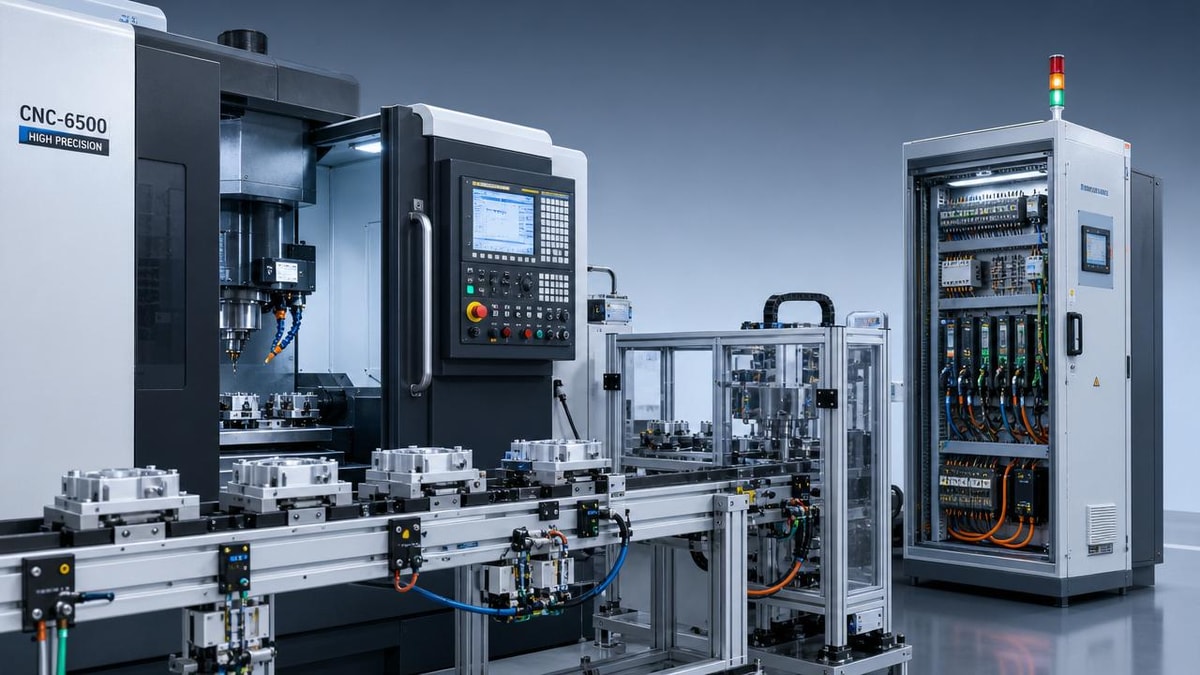
As older production lines stay in service longer, downtime in precision equipment is becoming a costly challenge for after-sales maintenance teams. Aging controls, worn mechanical parts, and poor integration with newer automation systems often turn small faults into repeated stoppages. Understanding why these failures are increasing is the first step toward faster troubleshooting, better maintenance planning, and more reliable line performance.
Why a checklist approach works better for older precision equipment
For after-sales maintenance personnel, rising downtime rarely has a single cause. On older CNC machine tools, transfer lines, machining centers, and automated cells, one stoppage may involve mechanics, controls, sensors, utilities, software logic, and operator behavior at the same time. That is why a checklist-based method is more effective than jumping directly to part replacement. It helps teams confirm what changed, what degraded, and what is only appearing as a symptom.
In the precision equipment environment, especially in automotive, aerospace, electronics, and energy component production, unplanned downtime carries a multiplier effect. A spindle alarm can stop a robot handoff. A pneumatic leak can create positioning errors. A legacy PLC communication lag can trigger false interlocks across the line. If service teams do not prioritize checks in the right order, the same machine may fail again after restart, increasing maintenance cost and reducing trust in the line.
First checks: what to confirm before deeper troubleshooting
Before opening cabinets or replacing components, confirm the basic conditions around the event. These checks often reveal whether the problem is equipment wear, process drift, or system integration weakness.
- Check whether downtime is random, cyclical, or linked to a specific product, shift, speed, or ambient temperature. Repeating timing patterns often point to thermal growth, lubrication intervals, or communication overload rather than sudden failure.
- Verify whether the alarm source is primary or secondary. On older precision equipment, the first cause may disappear quickly, leaving only downstream alarms such as servo overload, axis following error, or part misalignment.
- Confirm recent changes in tooling, fixture setup, part program, robot sequence, parameter backup, or maintenance work. Many “aging equipment” issues are actually triggered by a small change that exceeds the remaining tolerance of older hardware.
- Review the last few downtime records, not just the latest one. Repeated short stoppages often precede a major breakdown and are a strong signal of declining precision equipment reliability.
- Check utility stability first: power quality, air pressure, coolant condition, hydraulic pressure, lubrication supply, and chip evacuation. Older lines are less tolerant of utility fluctuation than newer smart systems.
Core downtime checklist: the most common failure drivers in older lines
1. Mechanical wear that no longer stays within process tolerance
Mechanical aging is one of the biggest reasons downtime rises in precision equipment. Wear does not only reduce accuracy; it also causes unstable behavior that makes faults difficult to reproduce. Key inspection points include backlash growth, ballscrew wear, guideway friction, spindle bearing condition, couplings, clamps, turret indexing repeatability, and fixture locating surfaces.
A practical judgment standard is this: if the machine can still run but needs repeated offset correction, manual intervention, or reduced feed to avoid alarms, the issue is already affecting uptime. In older CNC systems, small mechanical losses are often masked by operator compensation until a temperature change or heavier workpiece exposes the failure.
2. Control system aging and intermittent electrical faults
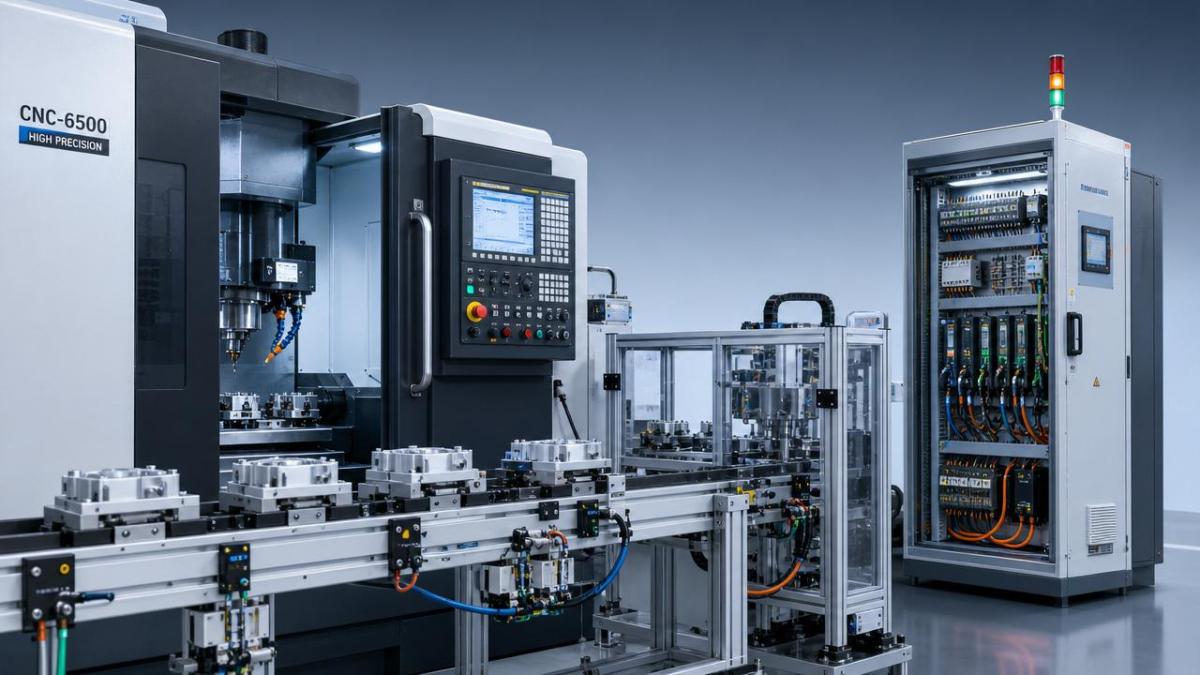
Legacy CNC controllers, PLC modules, drives, relays, contactors, I/O cards, and power supplies may still function, but their stability window becomes narrower over time. Capacitor aging, loose terminal connections, oxidized contacts, fan failure, cabinet heat buildup, and unstable grounding can all lead to random downtime in precision equipment.
After-sales teams should prioritize checks that match intermittent behavior: cabinet temperature trends, power-on self-test history, error log frequency, communication retry counts, and vibration effects on electrical connections. A machine that only faults during hot afternoons or after long continuous operation often points to thermal stress in electrical components.
3. Sensor drift, contamination, and false feedback
Older production lines rely on large numbers of limit switches, proximity sensors, pressure switches, encoders, and home position devices. As these components age, they may not fail completely. Instead, they become slow, dirty, misaligned, or sensitive to vibration. This causes nuisance stops that are hard to trace because restarting temporarily clears the condition.
For precision equipment in machining environments, contamination is a major hidden factor. Fine chips, oil mist, coolant residue, and cable damage can distort sensor performance. If the line has frequent “part present,” “door closed,” “axis home,” or “clamp confirmed” alarms, inspect sensor mounting, response timing, and signal consistency under actual cycle conditions.
4. Poor compatibility with newer automation and software layers
Many older lines were not originally designed for modern MES links, robot coordination, traceability systems, vision inspection, or networked condition monitoring. When these newer layers are added, precision equipment can become more fragile, not less. Communication delays, protocol converters, sequence mismatches, and incomplete interlock logic often create stoppages that look mechanical but are actually integration problems.
A useful check is to compare standalone machine stability with full-line operation. If downtime rises only when upstream and downstream devices are connected, focus on handshake timing, safety circuit dependencies, buffer logic, and cycle-complete signal reliability.
5. Maintenance strategies that are too reactive for aging assets
Older precision equipment cannot be maintained like new equipment. If service action starts only after failure, minor wear and hidden drift accumulate until the machine becomes unreliable. Common signs include repeated emergency spare purchases, incomplete fault documentation, no trend records for vibration or temperature, and PM checklists that cover lubrication but not motion quality or signal integrity.
The real issue is not just age. It is the gap between asset condition and maintenance method. An old machine with disciplined preventive checks can outperform a newer machine with poor follow-up.
Quick judgment table for after-sales maintenance teams
Use the table below as a fast screening tool when precision equipment downtime starts increasing but the root cause is still unclear.
What to check by equipment scenario
CNC lathes and turning cells
Prioritize spindle load trend, turret indexing repeatability, chuck clamp confirmation, hydraulic pressure stability, and bar feeder or robot synchronization. In older turning precision equipment, clamp-related micro-faults often appear as dimensional instability first and downtime later.
Machining centers and multi-axis systems
Focus on axis servo behavior, tool change reliability, encoder feedback, cooling system performance, and machine geometry drift. Multi-axis precision equipment is especially sensitive to thermal variation and calibration loss, so downtime may be linked to cumulative positioning errors instead of a single hard failure.
Automated transfer lines and flexible production lines
Check station-to-station buffering, robot handoff timing, pallet positioning, safety interlock dependencies, and central control communication. In these lines, a local fault may be less important than how quickly it spreads. Precision equipment in connected cells must be evaluated as part of the full sequence, not as isolated machines.
Commonly missed risks that keep downtime coming back
- Replacing failed parts without recording the exact trigger conditions, which prevents pattern recognition.
- Ignoring cabinet environment, especially dust, oil mist, cooling airflow, and unstable ground reference.
- Treating operator workarounds as normal practice. If a line needs manual reset steps to keep running, precision equipment reliability is already degraded.
- Assuming the machine is “old but acceptable” because output still meets plan on good days. Intermittent downtime often worsens suddenly once wear crosses a threshold.
- Failing to compare current cycle data with historical baseline. Without baseline trends, even experienced teams may misjudge whether the root cause is mechanical, electrical, or process-related.
Practical execution plan: how to reduce downtime step by step
- Build a fault map by asset, alarm type, shift, and product. This helps identify whether precision equipment failures cluster around one station or spread across the line.
- Separate chronic micro-stops from major breakdowns. Chronic events often deliver the best improvement return because they reveal weak components before catastrophic failure.
- Rank parts by downtime impact, not only by replacement cost. Low-cost sensors, fans, relays, and connectors may deserve higher spare priority than expensive but rarely failing assemblies.
- Introduce condition-based checkpoints for heat, vibration, backlash, lubrication delivery, and signal quality where possible. Even simple manual trending can improve precision equipment reliability.
- Review integration logic after any retrofit, robot adjustment, software update, or process change. Older lines often fail at interfaces rather than at core machine functions.
- Create restart standards for recurring faults so technicians can stabilize the line safely while root cause work continues.
FAQ for maintenance teams handling aging precision equipment
Should older precision equipment always be upgraded?
Not always. If the structure is still sound and failures are concentrated in controls, sensors, or interfaces, targeted retrofit can deliver strong uptime gains. Full replacement is more justified when spare availability, geometry retention, safety compliance, and integration limitations all become unacceptable.
What is the fastest way to identify the real root cause?
Start with fault pattern, operating condition, and recent change history. Then divide the problem into mechanical, electrical, sensor, utility, and integration categories. This structured approach prevents random part swapping and shortens diagnosis time.
Which data matters most if records are incomplete?
Prioritize alarm time stamps, product type, shift, machine temperature condition, restart method, and the exact station where the stop occurred. Even basic consistency in these fields can make future precision equipment troubleshooting much faster.
What to prepare before discussing service, retrofit, or support options
If downtime keeps rising and internal corrections are no longer enough, prepare the right information before contacting a service partner or equipment supplier. Share machine model, controller type, alarm history, failure frequency, cycle time impact, current spare status, recent modifications, and whether the line must remain compatible with robots, MES, or traceability systems. For precision equipment, decisions on repair, retrofit, or phased replacement are far better when based on actual failure patterns rather than general assumptions about age.
A good next step is to clarify five points early: which failure modes cause the most lost production, which stations are becoming unstable, what response time is acceptable, what budget range is realistic, and whether the priority is short-term uptime or long-term modernization. With those answers, after-sales maintenance teams can move from repeated firefighting to a more reliable and cost-controlled support strategy.
Recommended for You
![]() Beijing’s New E-Bike Lock Regulation Spurs CNC Housing DemandGlobal Machine Tool Trade Research Center
Beijing’s New E-Bike Lock Regulation Spurs CNC Housing DemandGlobal Machine Tool Trade Research Center![]() New Drone Standard GB/T 44723–2026 Takes Effect May 2026Manufacturing Policy Research Center
New Drone Standard GB/T 44723–2026 Takes Effect May 2026Manufacturing Policy Research Center![]() New Maritime Code Takes Effect May 1, 2026: CNC Equipment Shipping Rules UpdatedManufacturing Market Research Center
New Maritime Code Takes Effect May 1, 2026: CNC Equipment Shipping Rules UpdatedManufacturing Market Research Center![]() 2026 China Cycle Shanghai: CNC E-Bike Frame Capacity Draws ODM FocusManufacturing Market Research Center
2026 China Cycle Shanghai: CNC E-Bike Frame Capacity Draws ODM FocusManufacturing Market Research Center![]() 2026 Foshan Tanzhou Auto Expo: EV Parts Sourcing FocusGlobal Machine Tool Trade Research Center
2026 Foshan Tanzhou Auto Expo: EV Parts Sourcing FocusGlobal Machine Tool Trade Research Center![]() New Hazardous Chemicals Safety Law Takes Effect May 2026Manufacturing Policy Research Center
New Hazardous Chemicals Safety Law Takes Effect May 2026Manufacturing Policy Research Center


Aris Katos
Future of Carbide Coatings
15+ years in precision manufacturing systems. Specialized in high-speed milling and aerospace grade alloy processing.
▶
High precision lathe selection gets harder when part mix keeps changingMachine Tool Industry Editorial Team▶
Precision equipment downtime is rising in older lines: why?Machine Tool Industry Editorial Team▶
Industrial lathe retrofits: when they pay off and when they do notMachine Tool Industry Editorial Team▶
High precision lathe claims that deserve a closer lookMachine Tool Industry Editorial Team▶
Why precision equipment calibration drifts over timeMachine Tool Industry Editorial Team
Mastering 5-Axis Workholding Strategies
Join our technical panel on Nov 15th to learn about reducing vibrations in thin-wall components.

Providing you with integrated sanding solutions
Before-sales and after-sales services
Comprehensive technical support