• Global CNC market projected to reach $128B by 2028 • New EU trade regulations for precision tooling components • Aerospace deman
NYSE: CNC +1.2%LME: STEEL -0.4%

Industrial Robotics investments look strong, but where is ROI fastest?
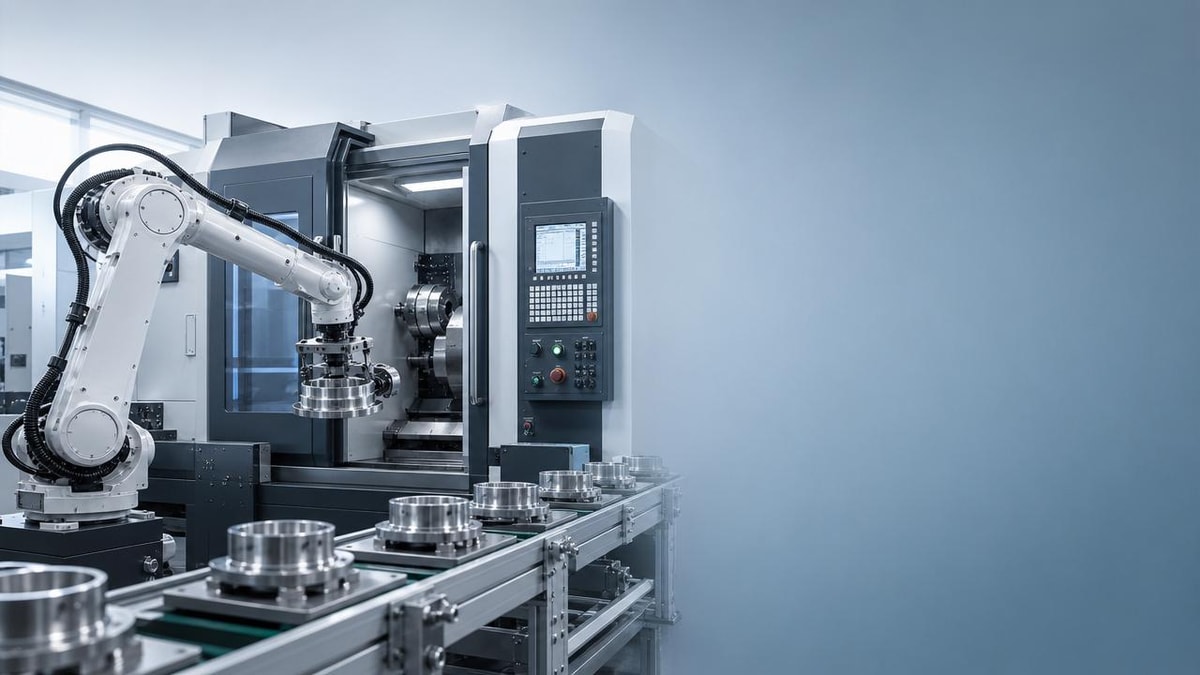
Industrial Robotics investments are gaining momentum across modern manufacturing, but financial decision-makers still need clarity on where returns appear fastest. In CNC machining, precision production, and automated lines, ROI often depends on throughput gains, labor efficiency, quality consistency, and downtime reduction. This article explores where Industrial Robotics creates the quickest measurable value for approval-focused stakeholders.
Why a checklist approach matters before approving Industrial Robotics spending
For finance approvers, the main question is rarely whether Industrial Robotics is important. The practical question is where capital turns into measurable return fastest, with the lowest execution risk. In the CNC machine tool sector and broader precision manufacturing environment, many automation proposals sound attractive, but not all deliver the same payback profile.
A checklist-based review helps separate high-ROI deployments from long-horizon experiments. It forces teams to validate line constraints, labor dependence, scrap costs, machine utilization, programming complexity, and expected ramp-up time before budgets are released. This is especially relevant in machining centers, CNC lathes, multi-axis systems, robotic loading cells, automated assembly, and flexible production lines where benefits are real but unevenly distributed.
For most approval-focused stakeholders, the fastest ROI from Industrial Robotics usually appears where one or more of these conditions already exist: repetitive part handling, unstable staffing, quality losses from manual variation, expensive machine idle time, and high-value equipment waiting for low-value manual support tasks. When these conditions are visible, the business case moves from general automation ambition to a quantifiable financial decision.
First review: the fastest-return Industrial Robotics use cases
Before comparing vendors or technical features, finance teams should identify the use cases that typically pay back first. In CNC and precision manufacturing, speed of ROI is usually tied to how directly the robot improves machine uptime and labor productivity.
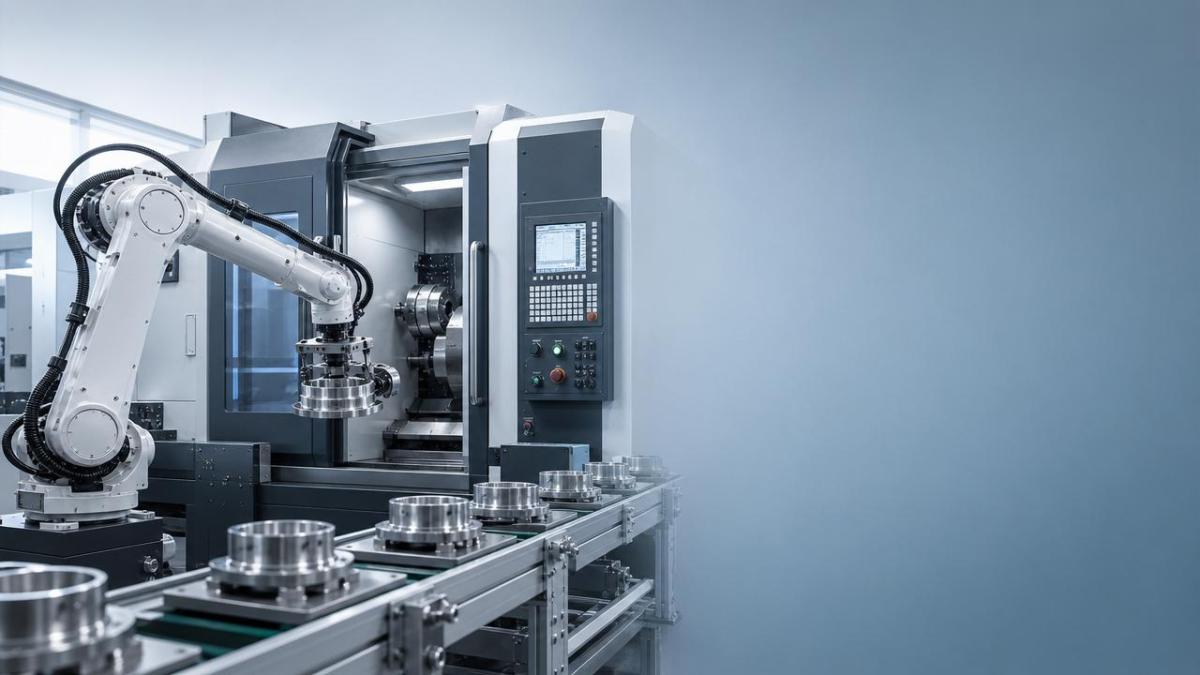
- Machine tending for CNC lathes and machining centers: often the strongest early candidate because robots reduce idle spindle time, support unattended shifts, and stabilize part loading consistency.
- Pick-and-place in repetitive transfer steps: suitable where operators spend more time moving workpieces than adding process value.
- Automated deburring, polishing, or inspection handling: effective when manual finishing creates cycle variability or quality bottlenecks.
- Palletizing and end-of-line packaging in metalworking or component production: attractive when labor intensity is high and task complexity is low.
- Robotic part loading integrated with vision or gauging: valuable where orientation errors, handling damage, or mixed-part flow currently create rework.
Among these, machine tending often delivers the fastest ROI because it directly increases output from existing CNC assets without requiring a full plant redesign. For a finance approver, that means return can come from already-installed machine tools rather than from speculative future capacity.
Core approval checklist: what financial decision-makers should verify first
If a proposal for Industrial Robotics is seeking approval, the following checks should be completed before comparing headline ROI claims.
1. Confirm the real bottleneck
If the bottleneck is programming, tooling changeover, part inspection delay, or upstream material shortage, adding a robot may not unlock fast return. Industrial Robotics pays back fastest when manual handling is the direct cause of machine waiting time, labor shortage, inconsistent cycle flow, or excessive overtime.
2. Measure current machine idle time
In many CNC environments, the hidden cost is not labor alone but expensive equipment standing still between cycles. If a robot can cut loading and unloading delays across every shift, ROI improves quickly because additional output is generated from existing capital assets.
3. Quantify labor dependency by shift
Fast ROI usually appears where second-shift and night-shift staffing is unstable, expensive, or difficult to retain. Industrial Robotics can reduce overtime, dependence on temporary labor, and production losses caused by absenteeism or turnover.
4. Check part consistency and handling complexity
The simpler and more repeatable the part family, the faster the implementation and the lower the integration risk. Mixed-part environments can still work, but they require stronger fixture strategy, vision support, and changeover planning.
5. Review scrap, rework, and damage costs
Industrial Robotics creates fast measurable value when handling errors, surface damage, incorrect loading, or variable manual finishing currently cause quality losses. In precision manufacturing, even small scrap reductions can materially improve project economics.
6. Validate integration time and startup disruption
A strong ROI model can still fail if installation interrupts production for too long. Finance teams should request realistic downtime assumptions, operator training needs, and commissioning milestones rather than relying only on annualized savings projections.
Where Industrial Robotics usually delivers the quickest ROI in CNC and precision manufacturing
Not every automation project should be treated equally. Approval speed improves when use cases are ranked by operational and financial clarity.
For many manufacturers, the ranking is clear: first automate repetitive part handling around high-value machine tools, then move toward more advanced, variable, or sensor-driven robotic tasks. That sequence typically shortens the path to visible ROI and lowers board-level approval resistance.
Scenario-based checks for different production environments
Financial outcomes from Industrial Robotics vary by operating model. Approvers should review each proposal in the context of the plant’s actual production structure.
High-volume, stable part families
This is usually the strongest case for quick ROI. Programming is simpler, utilization is high, and benefits from labor reduction and cycle stability are easier to measure. If output demand is stable, the payback case can be especially compelling.
High-mix, low-volume machining
Industrial Robotics can still work, but finance teams should check changeover frequency, fixture adaptability, and programming burden. ROI may still be attractive if labor scarcity is severe or if the robot serves multiple machines, but assumptions should be tested more carefully.
Precision aerospace, energy, or complex structural parts
Here, even modest quality improvements can justify investment because the cost of defects is high. The financial model should include avoided scrap, reduced handling damage, traceability benefits, and more predictable machine utilization.
Electronics or smaller precision components
The strongest value often comes from consistency, speed, and reduced contamination or misplacement. However, the review should include gripper suitability, vision reliability, and integration with existing line controls.
Common approval mistakes that slow or distort ROI
Many Industrial Robotics projects underperform not because the technology is weak, but because the business case was built on incomplete assumptions. These are common issues finance approvers should flag early.
- Approving based on labor savings alone while ignoring machine uptime gains or losses.
- Using theoretical cycle times instead of measured production data from actual shifts.
- Underestimating fixture redesign, tooling changes, guarding, and integration engineering.
- Assuming all parts can be automated equally without reviewing exception handling.
- Ignoring maintenance capability, spare parts strategy, and operator adoption.
- Treating every robot proposal as strategic, even when a smaller process fix would remove the bottleneck faster.
A disciplined review process should ask whether the proposal improves the economics of current production, not just whether it aligns with a broad smart factory vision. Strategic direction matters, but cash return and execution certainty matter more at approval stage.
Practical decision framework for faster approval and better ROI tracking
When reviewing Industrial Robotics proposals, finance leaders can simplify evaluation by requesting a short, structured case with the following elements:
- Current-state metrics: labor hours, cycle time, idle time, scrap rate, overtime, and output constraints.
- Future-state metrics: expected throughput increase, labor redeployment plan, quality improvement, and downtime reduction.
- Implementation scope: robot, gripper, safety system, fixtures, software, integration, and training.
- Ramp-up assumptions: commissioning period, learning curve, planned interruption, and support model.
- Sensitivity analysis: best case, expected case, and downside case if utilization remains below target.
This framework helps approval teams compare projects across plants, suppliers, and production cells. It also improves accountability after launch because the same metrics used to approve the project can be used to verify realized ROI.
FAQ for approval-focused stakeholders evaluating Industrial Robotics
Is fastest ROI always found in the most advanced robotic application?
No. The fastest ROI from Industrial Robotics is often found in simpler, repetitive applications around expensive machines. Straightforward machine tending can outperform more advanced projects because implementation is faster and benefits are easier to capture.
Should labor savings be the primary approval metric?
Not by itself. In CNC and automated production environments, machine utilization, reduced waiting time, and quality stability often create equal or greater value than direct labor reduction. A narrow labor-only model can undervalue strong projects or misread weak ones.
What if production mix changes frequently?
Then the approval case should emphasize flexibility, fixture strategy, and changeover efficiency. Industrial Robotics can still be justified, but the proposal must show how the system handles variability without eroding uptime.
What to prepare before the next Industrial Robotics investment discussion
If your organization is evaluating Industrial Robotics for CNC machining, precision manufacturing, or automated lines, the most useful next step is not a generic automation presentation. It is a fact-based review of one or two production cells where manual handling clearly limits machine output or quality performance. Start with actual cycle data, labor dependency by shift, scrap cost, unattended production potential, and integration timeline.
For financial approvers, the best discussions focus on a few concrete questions: Which process loses the most value from manual dependency today? How much additional output can be unlocked from current machine tools? What assumptions drive payback, and which ones carry the highest risk? What support, fixtures, and change management are required beyond the robot itself? Answering those questions early makes Industrial Robotics decisions faster, more confident, and more financially sound.
PREVIOUS ARTICLE
NEXT ARTICLE
Recommended for You
![]() Beijing’s New E-Bike Lock Regulation Spurs CNC Housing DemandGlobal Machine Tool Trade Research Center
Beijing’s New E-Bike Lock Regulation Spurs CNC Housing DemandGlobal Machine Tool Trade Research Center![]() New Drone Standard GB/T 44723–2026 Takes Effect May 2026Manufacturing Policy Research Center
New Drone Standard GB/T 44723–2026 Takes Effect May 2026Manufacturing Policy Research Center![]() New Maritime Code Takes Effect May 1, 2026: CNC Equipment Shipping Rules UpdatedManufacturing Market Research Center
New Maritime Code Takes Effect May 1, 2026: CNC Equipment Shipping Rules UpdatedManufacturing Market Research Center![]() 2026 China Cycle Shanghai: CNC E-Bike Frame Capacity Draws ODM FocusManufacturing Market Research Center
2026 China Cycle Shanghai: CNC E-Bike Frame Capacity Draws ODM FocusManufacturing Market Research Center![]() 2026 Foshan Tanzhou Auto Expo: EV Parts Sourcing FocusGlobal Machine Tool Trade Research Center
2026 Foshan Tanzhou Auto Expo: EV Parts Sourcing FocusGlobal Machine Tool Trade Research Center![]() New Hazardous Chemicals Safety Law Takes Effect May 2026Manufacturing Policy Research Center
New Hazardous Chemicals Safety Law Takes Effect May 2026Manufacturing Policy Research Center


Aris Katos
Future of Carbide Coatings
15+ years in precision manufacturing systems. Specialized in high-speed milling and aerospace grade alloy processing.
▶
Industrial Robotics investments look strong, but where is ROI fastest?Manufacturing Market Research Center▶
Industrial Robotics payback depends on one hidden variableManufacturing Market Research Center▶
Manufacturing Industry recovery signs worth tracking nowManufacturing Market Research Center▶
Is industrial CNC worth upgrading for short production runs?Manufacturing Market Research Center▶
Industrial Robotics Payback Looks Different After Labor ShiftsManufacturing Market Research Center
Mastering 5-Axis Workholding Strategies
Join our technical panel on Nov 15th to learn about reducing vibrations in thin-wall components.

Providing you with integrated sanding solutions
Before-sales and after-sales services
Comprehensive technical support