• Global CNC market projected to reach $128B by 2028 • New EU trade regulations for precision tooling components • Aerospace deman
NYSE: CNC +1.2%LME: STEEL -0.4%

Industrial Robotics payback depends on one hidden variable
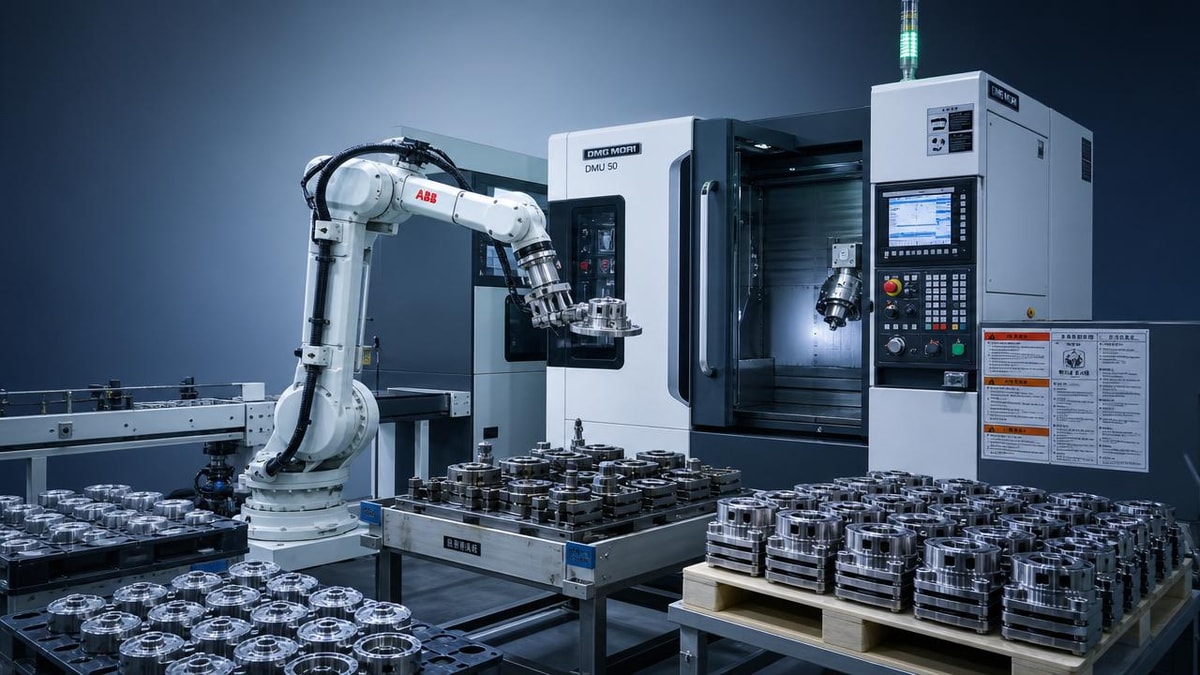
Industrial Robotics often promise fast ROI, but for financial decision-makers, the real payback depends on one hidden variable: utilization. In CNC machining, automated lines, and precision manufacturing, robot performance alone does not determine returns. The true value comes from how consistently capacity, cycle time, and labor efficiency are converted into productive output. Understanding this factor is critical before approving any automation investment.
What is the hidden variable behind Industrial Robotics payback?
The hidden variable is utilization: the percentage of available robotic capacity that is actually used to create sellable production. Many investment cases for Industrial Robotics focus on speed, accuracy, repeatability, or labor savings. Those benefits matter, but they only create financial returns when the robot is loaded with enough productive work across shifts, product mixes, and changeover cycles.
For a finance approver, utilization is more important than headline performance because it connects technical capability to cash flow. A robot that can run 24/7 has impressive theoretical capacity, but if upstream material flow is unstable, operators cannot keep fixtures ready, or demand does not justify additional output, the asset remains underused. In that case, depreciation continues, maintenance still applies, and expected labor reduction may not fully materialize.
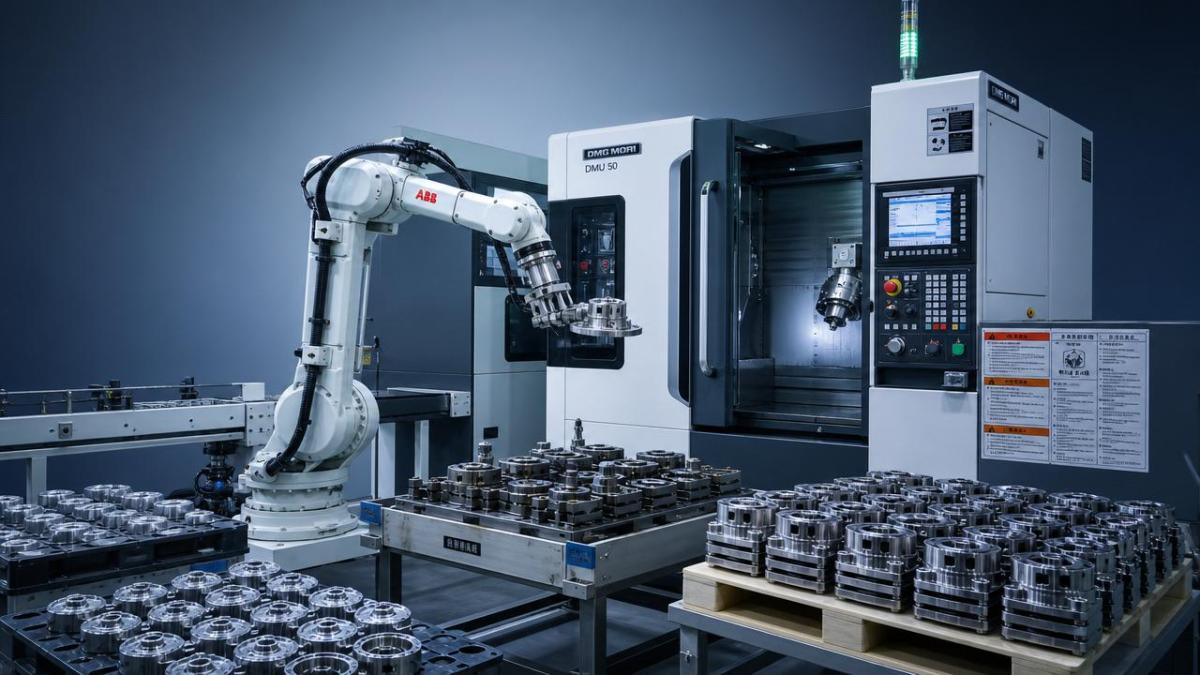
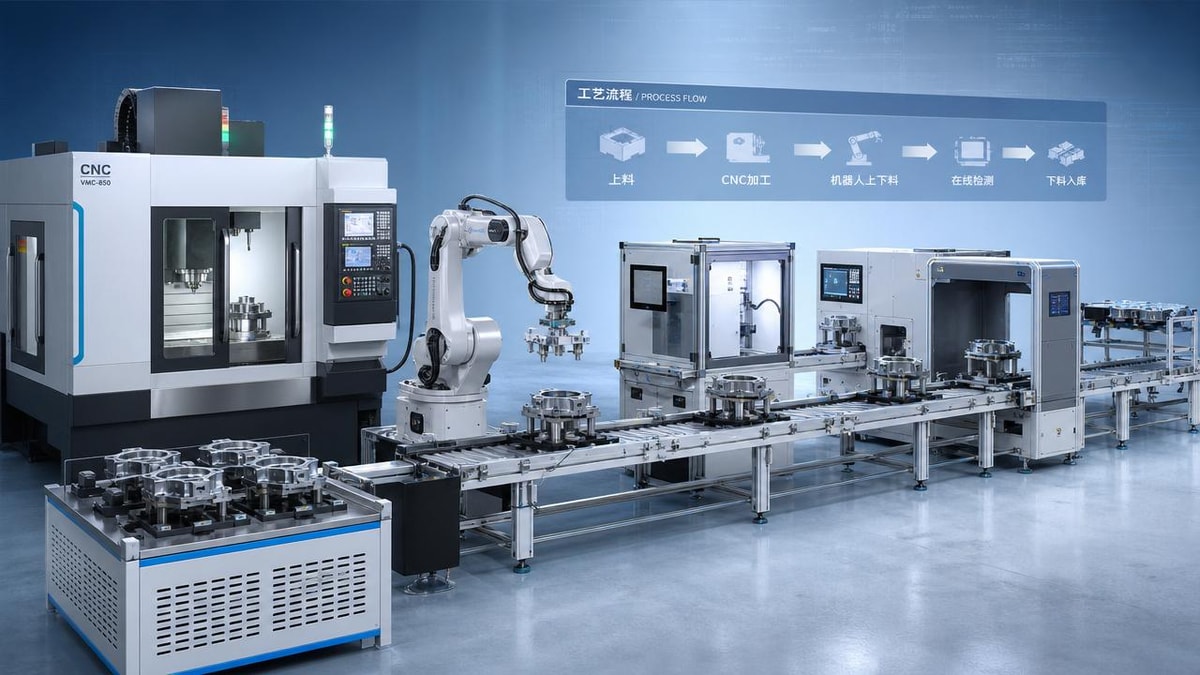
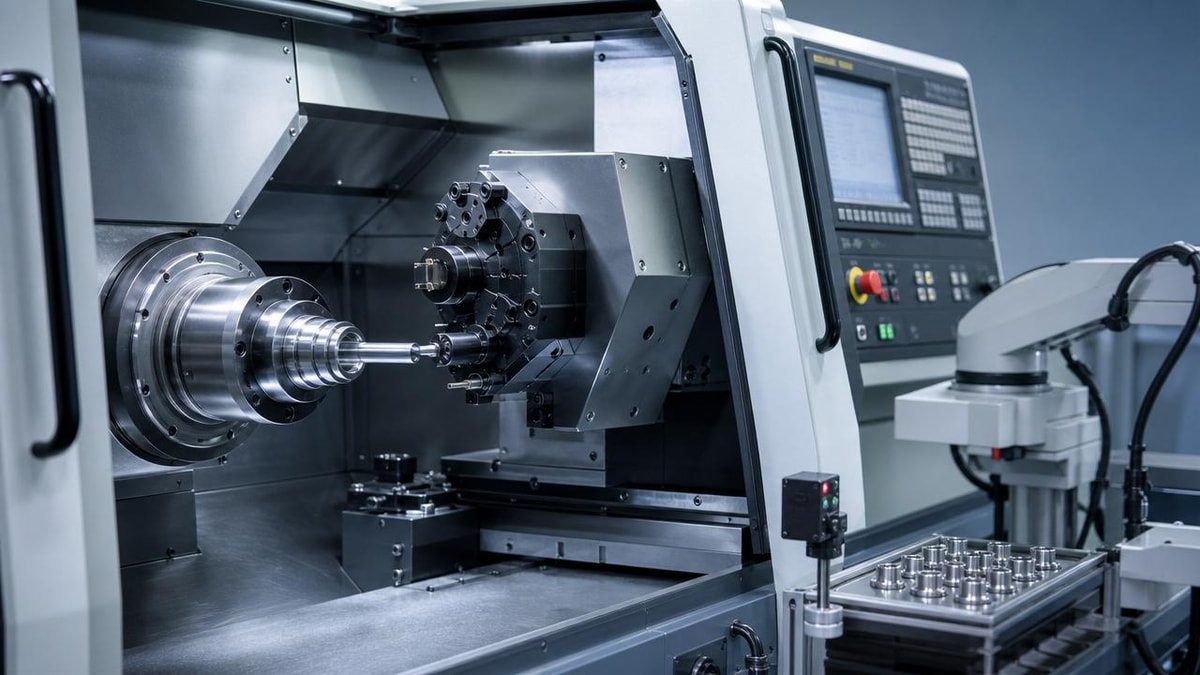
In the CNC machine tool sector, this issue is especially important. Robotic loading for CNC lathes, machining centers, deburring cells, and automated inspection stations only pays back well when machine uptime, part scheduling, tooling life, and job sequencing are aligned. Industrial Robotics do not create value in isolation; they amplify the efficiency of an already disciplined production system.
Why do ROI calculations for Industrial Robotics often look strong on paper but weaker in practice?
The most common reason is that paper ROI assumes ideal conditions. Financial models may estimate reduced direct labor, shorter cycle times, lower scrap, and more machine hours. However, real plants experience downtime, program adjustments, mixed-batch production, fixture changes, preventive maintenance, operator shortages, and order fluctuations. Each of these factors lowers actual utilization.
Another issue is confusing automation capacity with productive demand. If a plant adds Industrial Robotics to a machining cell but customer demand remains uneven, the automation system can be technically successful and financially disappointing at the same time. This is a frequent mistake in precision manufacturing, where capacity expansion gets approved before order stability, part family compatibility, and scheduling maturity are fully verified.
Finance teams should also watch for labor-savings assumptions that ignore redeployment reality. Eliminating manual loading time does not automatically remove labor cost if staff are reassigned rather than reduced, or if technicians are added to support programming, maintenance, and quality checks. A better model asks not only “How much labor can be replaced?” but also “How much profitable output can be sustained?”
Which manufacturing scenarios make Industrial Robotics utilization strong enough for fast payback?
Industrial Robotics usually deliver stronger payback in environments with repeatable workflows, stable part families, and measurable bottlenecks. In CNC machining, a robotic tending cell performs best when the same group of components runs frequently, setup procedures are standardized, and machine cycle time is long enough to justify automated loading and unloading.
Typical high-utilization scenarios include automotive components, energy equipment parts, medium-to-high volume shaft or disc production, and electronics-related precision parts with predictable tolerances. In these settings, robots can keep spindles running, reduce idle handling time, support lights-out manufacturing, and improve labor allocation across multiple machines.
By contrast, low-volume, high-mix production can still benefit from Industrial Robotics, but only if the integrator designs for flexibility. Quick-change grippers, modular fixtures, offline programming, and intelligent part identification can improve utilization in mixed environments. Without those features, the robot may spend too much time waiting during changeovers, reducing actual return.
For financial approval, the key question is not whether the robot is advanced. It is whether the production profile can keep it productively engaged. A simpler robot in a stable, repeatable cell often pays back faster than a sophisticated system installed in an unstable process.
How should financial decision-makers evaluate utilization before approving Industrial Robotics?
A practical review starts with capacity math grounded in actual factory behavior. First, define available hours by shift pattern. Then subtract planned downtime, setup time, maintenance windows, material delays, quality holds, and operator intervention. What remains is a realistic estimate of productive robotic hours, not an idealized one.
Next, compare robotic capacity with machine tool utilization. In many CNC operations, the bottleneck is not loading labor but spindle uptime, fixture availability, tool changes, or inspection throughput. If the robot is installed on a machine that already suffers frequent stoppages, the robot will inherit that instability. This is why Industrial Robotics should be evaluated as part of a cell economics model rather than as a standalone purchase.
It is also useful to examine order structure. Ask how many jobs per week are suitable for robotic handling, what percentage of sales comes from those jobs, and how often urgent schedule changes interrupt the automation sequence. Utilization improves when a high share of revenue comes from robot-compatible parts and when planning discipline is strong.
Finally, require sensitivity analysis. Instead of approving a project based on one payback number, test best-case, base-case, and conservative utilization scenarios. For example, a system projected to pay back in 18 months at 80% utilization may stretch beyond 30 months at 55% utilization. That range is often more useful to finance leaders than a single optimistic ROI figure.
A simple utilization review checklist
- Is there enough repeatable demand to keep the robotic cell loaded?
- Are machine uptime and tooling stability already under control?
- Can the system handle product mix without excessive changeover losses?
- Will savings appear in labor cost, throughput, quality, or all three?
- Has the plant budgeted for integration, training, and support?
What are the most common mistakes when estimating Industrial Robotics payback?
One common mistake is focusing on robot price instead of system economics. The financial result depends on the entire cell: machine interface, safety fencing, fixture design, conveyors, software, vision, training, and maintenance readiness. A lower-priced robot can still become a costly investment if integration is weak or if downtime increases.
Another mistake is assuming labor savings are the only value driver. In precision manufacturing, Industrial Robotics often create larger benefits through spindle utilization, consistent part handling, reduced rework, and extended unattended operation. Finance teams that only model headcount reduction may undervalue good projects or approve the wrong ones for the wrong reasons.
A third error is ignoring production maturity. If work instructions are unstable, fixture strategy is inconsistent, or CNC programs vary by operator, the robot will not fix those problems. Automation tends to expose process weakness rather than hide it. Companies sometimes automate too early, before standardization is strong enough to support reliable utilization.
Finally, some firms underestimate post-installation management. Industrial Robotics need scheduling discipline, preventive maintenance, spare parts planning, and ownership from operations. A project may be technically commissioned yet fail financially because no one is accountable for keeping the robot loaded and productive over time.
How does Industrial Robotics payback differ between high-volume and high-mix CNC environments?
In high-volume environments, payback usually depends on throughput, labor efficiency, and extended run hours. Utilization is easier to maintain because production schedules are more stable. If the plant already operates multiple CNC lathes or machining centers on repeated part families, Industrial Robotics can deliver a clear and measurable gain.
In high-mix environments, the payback logic shifts. Here, flexibility determines utilization. If changeovers are frequent, the robot must adapt quickly through modular end effectors, program libraries, standardized pallets, and fast setup verification. The return may come less from pure labor removal and more from schedule resilience, reduced operator dependency, and the ability to process varied jobs with consistent quality.
This difference matters for budget approval. A finance approver should not ask the same questions in both cases. For high volume, focus on throughput uplift and unattended hours. For high mix, focus on compatibility across part families, changeover time, engineering support, and the percentage of work that can realistically pass through the automated cell.
What should be confirmed before moving forward with an Industrial Robotics project?
Before approval, confirm five points. First, identify the real bottleneck. If machine waiting time is caused by scheduling or inspection delays, robotics alone may not solve the problem. Second, verify part suitability. Dimensions, tolerances, surface sensitivity, loading orientation, and fixturing must support repeatable automation. Third, confirm expected utilization by product family, not just total plant demand.
Fourth, review the full cost structure. In CNC and precision manufacturing, the investment often includes integration engineering, guarding, grippers, sensors, software interfaces, and commissioning support. Fifth, define operational ownership after installation. Someone must track uptime, changeover losses, scrap events, and actual output against the original business case.
For companies evaluating Industrial Robotics across global manufacturing operations, it also helps to compare regional labor cost, production consistency, maintenance capability, and future export demand. In countries with strong machine tool ecosystems such as China, Germany, Japan, and South Korea, ecosystem maturity may support better integration and service response, which can improve realized utilization.
So, what is the best way for finance leaders to think about Industrial Robotics?
The best view is simple: Industrial Robotics are not purchased for motion; they are purchased for sustained productive conversion. If utilization is high, robotics can transform CNC machining economics through better machine loading, longer unattended operation, more stable quality, and improved labor deployment. If utilization is low, even technically excellent automation may underperform financially.
That is why the hidden variable matters more than the headline specification. For financial approvers, the smartest question is not “How advanced is this robot?” but “How many profitable hours will this cell deliver every week under real operating conditions?” The answer will reveal whether the project is a fast-payback asset or an expensive underused capability.
If you need to confirm a specific Industrial Robotics plan, pricing path, integration scope, implementation cycle, or supplier fit, prioritize these discussions first: which part families will run through the cell, what utilization is realistic by shift, what bottleneck will be removed, what total installed cost is expected, and how actual ROI will be measured after launch. Those questions create a better approval decision than any generic automation promise.
PREVIOUS ARTICLE
NEXT ARTICLE
Recommended for You
 Industrial Robotics payback depends on one hidden variableManufacturing Market Research Center
 Shaft Parts machining problems linked to concentricity lossCNC Machining Technology Center
 Production Process changes that quietly raise defect ratesCNC Machining Technology Center
 Industrial Automation projects stall without process mappingCNC Machining Technology Center
 CNC metal cutting heat issues behind poor surface finishCNC Machining Technology Center
 High precision lathe claims that deserve a closer lookMachine Tool Industry Editorial Team

Aris Katos
Future of Carbide Coatings
15+ years in precision manufacturing systems. Specialized in high-speed milling and aerospace grade alloy processing.
▶
Industrial Robotics payback depends on one hidden variableManufacturing Market Research Center▶
Manufacturing Industry recovery signs worth tracking nowManufacturing Market Research Center▶
Is industrial CNC worth upgrading for short production runs?Manufacturing Market Research Center▶
Industrial Robotics Payback Looks Different After Labor ShiftsManufacturing Market Research Center▶
Industrial CNC vs Conventional Systems in 2026 Cost PlanningManufacturing Market Research Center
Mastering 5-Axis Workholding Strategies
Join our technical panel on Nov 15th to learn about reducing vibrations in thin-wall components.

Providing you with integrated sanding solutions
Before-sales and after-sales services
Comprehensive technical support