• Global CNC market projected to reach $128B by 2028 • New EU trade regulations for precision tooling components • Aerospace deman
NYSE: CNC +1.2%LME: STEEL -0.4%

Manufacturing Industry trends that may reshape equipment budgets
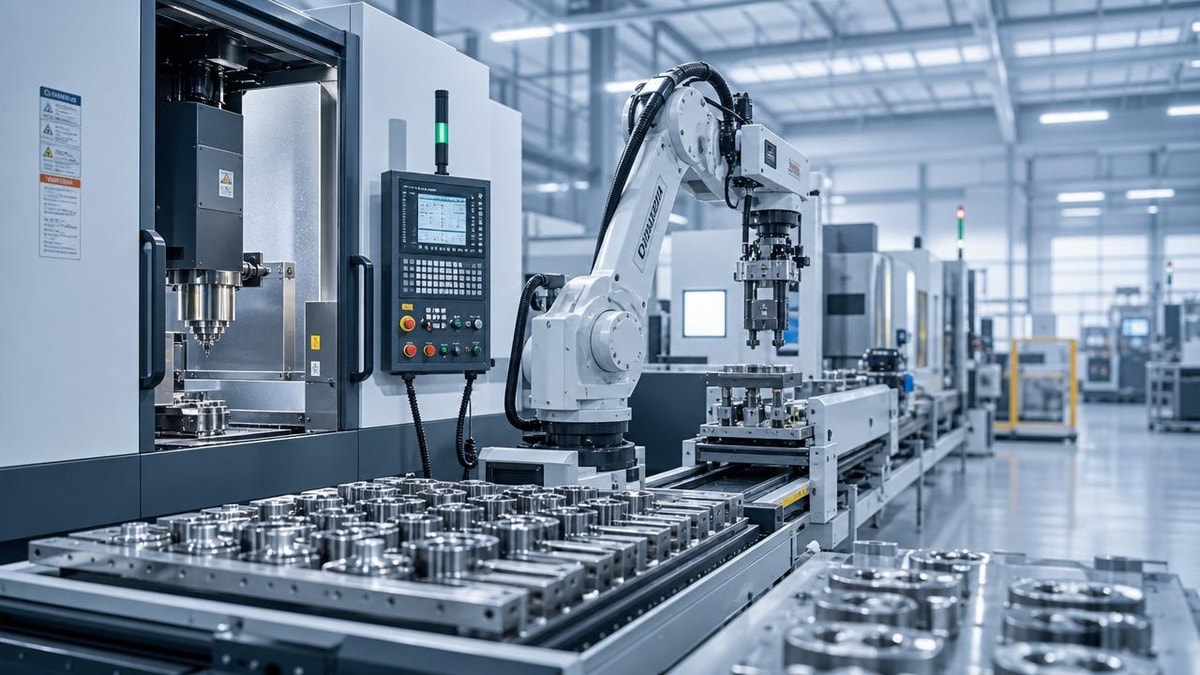
In the Manufacturing Industry, equipment budgets are being reshaped by automation, digital integration, and the push for higher precision. For financial decision-makers, understanding how CNC machine tools, smart production lines, and global supply shifts influence capital planning is essential to balancing cost control with long-term competitiveness.
For CFOs, finance directors, plant controllers, and capital approval teams, the challenge is no longer limited to comparing upfront machine prices. A modern equipment budget must weigh cycle-time improvement, labor dependency, software compatibility, maintenance exposure, power consumption, and supply-chain resilience over a 3- to 7-year planning horizon.
This is especially true in CNC machining and precision manufacturing, where a single investment decision may influence throughput, scrap rates, lead times, and customer retention across multiple production programs. As global manufacturing moves toward smart factories, equipment budgeting is becoming a strategic discipline rather than a once-a-year purchasing exercise.
Why equipment budgets are changing faster in the Manufacturing Industry
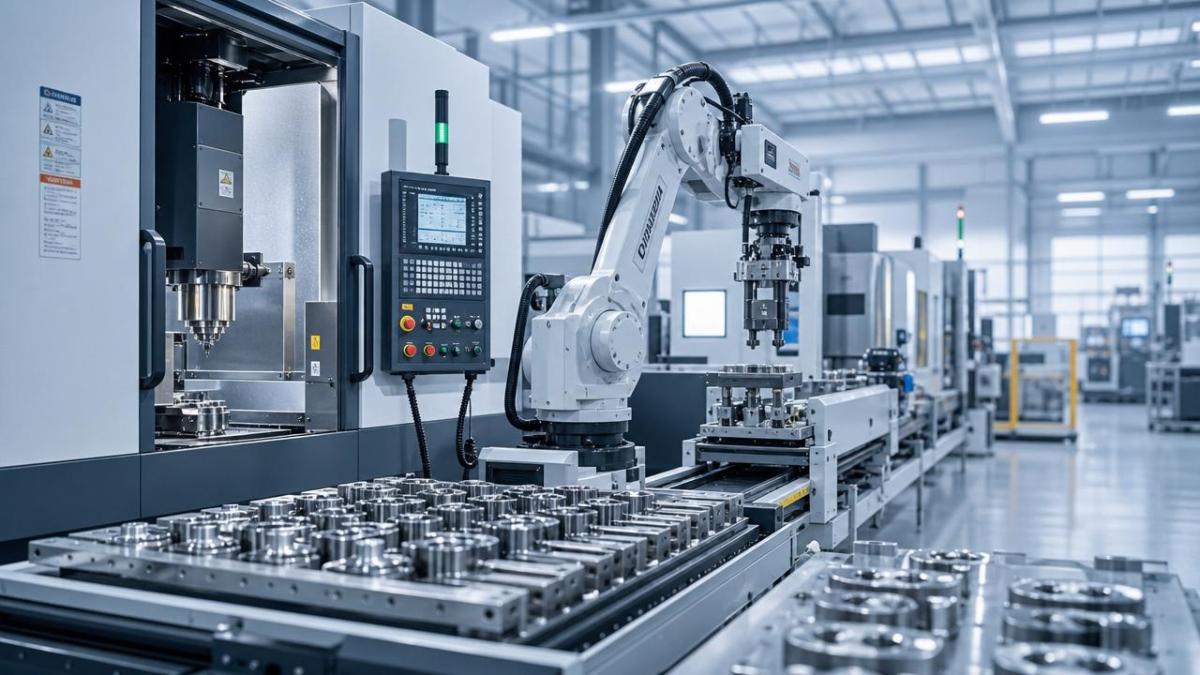
The Manufacturing Industry has entered a period in which equipment replacement cycles are being shortened by technology shifts rather than pure wear and tear. In the past, a machine tool might remain competitive for 8 to 12 years with limited upgrades. Today, digital control capabilities, automation interfaces, and data visibility can make a 5- to 7-year-old asset look operationally expensive even if it is mechanically sound.
For financial approvers, this changes the logic of capital allocation. Budget reviews now require more than depreciation schedules. They must include utilization assumptions, labor cost trends, expected setup reduction, and the probability that customers will demand tighter tolerances, faster turnaround, or more traceable production records within the next 12 to 36 months.
Automation is shifting cost from labor lines to capital lines
One of the most visible trends is the transfer of production cost from repetitive labor to automated equipment. CNC lathes, machining centers, robotic loading cells, and flexible production lines can reduce manual interventions by 20% to 60% in many batch manufacturing environments, depending on part complexity and fixture strategy.
That does not automatically mean lower annual cost in year one. In many facilities, automation increases the initial budget by 15% to 40%, especially when software integration, guarding, sensors, and training are included. However, finance teams increasingly approve these projects because the labor market remains unstable, overtime is costly, and output consistency carries direct value in customer contracts.
What finance teams should test before approval
- Expected payback period: often 18 to 36 months for high-utilization cells
- Shift coverage improvement: whether one operator can supervise 2 to 4 machines
- Setup reduction: whether changeovers can be cut by 15 to 30 minutes per batch
- Scrap-risk impact: whether automated handling reduces rework on precision parts
Precision requirements are raising the baseline specification
In automotive, aerospace, electronics, and energy equipment production, tighter tolerances are pushing buyers toward more stable machine platforms, multi-axis capability, and better thermal control. A finance team may see two machine quotes with a 20% price difference, but the lower-cost option may struggle with repeatability, spindle growth, or tool-life management during long runs.
As a result, equipment budgets are increasingly shaped by process capability, not just by nominal machine size. If a part family requires stable tolerance performance over 6 to 10 hours of continuous cutting, the total cost of inadequate precision can exceed the original savings from a cheaper machine in less than 12 months.
Digital integration is becoming a budget line of its own
Another major shift in the Manufacturing Industry is that software, connectivity, and data acquisition now account for a meaningful share of equipment planning. Machine tools are no longer evaluated only by spindle speed, axis travel, or turret position count. Buyers also ask whether the machine can connect to MES, ERP, tool monitoring systems, or maintenance dashboards.
In practical terms, digital integration can add 5% to 15% to project cost, but it can also shorten response time to downtime events, improve OEE visibility, and support more accurate production costing. For financial approval teams, this matters because poor data often hides inefficiency that appears later as unplanned overtime, low capacity utilization, or delayed deliveries.
The budget drivers finance leaders should model before buying CNC and production equipment
A reliable equipment budget in the Manufacturing Industry should be built around measurable cost drivers instead of vendor claims alone. Finance leaders need a framework that compares projects on operating effect, implementation risk, and strategic value across a full asset life cycle.
The table below outlines practical budgeting factors that matter when evaluating CNC machine tools, automated cells, and smart production line investments.
The key takeaway is that hidden costs often sit outside the machine quote itself. A low purchase price can still produce a weak business case if the equipment needs extended setup tuning, operator retraining, or frequent service intervention. Finance leaders should therefore approve budgets on total implementation economics, not catalog price alone.
Total cost of ownership is replacing simple payback as the main filter
Many manufacturers still begin with simple payback calculations, but that approach can be too narrow in capital-intensive machining environments. A CNC platform that costs more upfront may deliver lower tooling loss, better uptime, and stronger part consistency over 24 to 60 months. Those outcomes reduce the probability of margin erosion on fixed-price supply contracts.
For example, if a machining center lowers average setup time by 25 minutes across 4 changeovers per day, that creates more than 400 recovered production hours over a year of 240 operating days. For finance teams, that recovered capacity may defer the need for a second machine purchase or support more revenue without expanding floor space.
Four cost areas that are often underestimated
- Fixture redesign and validation for new automated workflows
- Electrical, air, coolant, and foundation preparation before installation
- ERP or MES interface work for production data and job tracking
- Spare parts inventory for critical components with 4- to 12-week lead times
Supply-chain volatility is changing timing and sourcing strategy
Global equipment budgets are also being affected by geopolitical shifts, freight variability, and component shortages. Even when machine tool manufacturing clusters in China, Germany, Japan, and South Korea remain strong, delivery certainty can vary significantly by control system, spindle source, automation package, or custom fixture dependency.
Lead times that once averaged 8 to 12 weeks for standard configurations may extend to 16 to 28 weeks when special options, robot interfaces, or nonstandard axis arrangements are required. For financial approval teams, this means budget timing must account for deposit schedules, staged payments, and delayed productivity benefits.
How to prioritize equipment investments without overcommitting capital
In the Manufacturing Industry, not every equipment request deserves immediate approval. The strongest capital plans separate strategic upgrades from reactive purchases and rank projects using operational and financial criteria that can be verified within a normal budget cycle.
A practical approach is to score each project across utilization, risk, margin effect, and implementation complexity. This allows finance decision-makers to compare a CNC lathe replacement, a robotic loading cell, and a digital monitoring upgrade on the same decision framework.
A simple prioritization matrix for finance approval
The following comparison model can help financial approvers rank investment proposals more consistently across multi-site or multi-line manufacturing operations.
This matrix highlights an important point: the best equipment budget is not always the biggest one. Capital should move first toward investments that solve repeatable constraints, protect customer delivery performance, or improve decision-quality data. Projects based only on general modernization narratives often fail to meet board-level scrutiny.
When to repair, retrofit, or replace
One of the most common approval questions in the Manufacturing Industry is whether an existing machine should be repaired, retrofitted, or replaced outright. A useful rule is to compare three dimensions: structural health, control obsolescence, and production fit. If the machine frame remains stable but the control system limits connectivity or parts availability, a retrofit may deliver 40% to 70% of replacement value at a lower capital requirement.
Replacement becomes more compelling when downtime events become frequent, spare-part lead times exceed 8 to 10 weeks, or the machine cannot support the tolerances and unattended run time demanded by current programs. Finance teams should request documented maintenance history for the last 12 to 24 months before deciding.
Useful approval thresholds
- Unplanned downtime rising above 3% to 5% of scheduled production time
- Annual repair spending approaching 15% to 20% of replacement value
- Quality loss linked to machine instability across repeated production lots
- Inability to integrate with automation or production data systems
Implementation risks that can distort the real budget
Even a well-justified equipment budget can miss targets if implementation risk is not priced correctly. In CNC machining and smart production projects, overruns often come from integration complexity rather than from the machine itself. This is where financial approvers can add value by asking operationally specific questions before funds are released.
Ramp-up risk is often more expensive than purchase variance
A 6% increase in machine price may be manageable if the system reaches stable output in 2 weeks. But a delayed ramp-up that extends another 6 to 8 weeks can create far greater cost through missed deliveries, expedited freight, premium labor, and underused floor space. This is why acceptance planning matters as much as sourcing.
Financial teams should ensure that purchase agreements define FAT or SAT expectations, operator training scope, spare-parts lists, and response timelines for commissioning support. Clear implementation gates reduce the risk that a capital asset becomes productive only after the original business case has already weakened.
Common budgeting mistakes in equipment approval
- Approving a machine without confirming fixture, tooling, and software compatibility
- Ignoring operator skill gaps when moving from manual handling to automated cells
- Underestimating utility upgrades such as compressed air, coolant filtration, and electrical load
- Assuming quoted lead time equals production-ready date
- Using best-case utilization instead of realistic utilization during the first 90 days
A five-step approval discipline
- Define the production constraint in measurable terms
- Model total cost of ownership over at least 3 years
- Verify implementation dependencies before PO release
- Set acceptance metrics for output, quality, and uptime
- Review actual results at 30, 90, and 180 days after startup
For capital reviewers in the Manufacturing Industry, the strongest budgets are the ones tied to a clear operational bottleneck, credible integration planning, and measurable post-installation targets. That approach creates a more disciplined link between capital spending and competitive manufacturing performance.
If your organization is evaluating CNC machine tools, automated production lines, or digital manufacturing upgrades, a structured budgeting framework can help reduce approval risk while improving long-term returns. To explore equipment priorities, total cost drivers, or rollout considerations in more detail, contact us to get a tailored solution, discuss product specifics, or learn more about practical manufacturing investment strategies.
PREVIOUS ARTICLE
NEXT ARTICLE
Recommended for You
![]() ANVISA New Rule: Portuguese Biocompatibility Labels for Medical CNC Machines in BrazilManufacturing Policy Research Center
ANVISA New Rule: Portuguese Biocompatibility Labels for Medical CNC Machines in BrazilManufacturing Policy Research Center![]() EMO Hannover 2027 Booth Booking Opens: China AI-Machining Pavilion LaunchesGlobal Machine Tool Trade Research Center
EMO Hannover 2027 Booth Booking Opens: China AI-Machining Pavilion LaunchesGlobal Machine Tool Trade Research Center![]() KATS Updates KC Rules: CNC Cybersecurity Modules Must Meet IEC 62443-4-2Manufacturing Policy Research Center
KATS Updates KC Rules: CNC Cybersecurity Modules Must Meet IEC 62443-4-2Manufacturing Policy Research Center![]() Shanghai Port Launches Green Clearance Channel for CNC EquipmentManufacturing Market Research Center
Shanghai Port Launches Green Clearance Channel for CNC EquipmentManufacturing Market Research Center![]() ISO 23218-3:2026 Published: CNC Digital Twin Interoperability StandardCNC Machining Technology Center
ISO 23218-3:2026 Published: CNC Digital Twin Interoperability StandardCNC Machining Technology Center![]() Vietnam Cuts CNC Equipment Import Tariff to 3.8% from June 2026Global Machine Tool Trade Research Center
Vietnam Cuts CNC Equipment Import Tariff to 3.8% from June 2026Global Machine Tool Trade Research Center


Aris Katos
Future of Carbide Coatings
15+ years in precision manufacturing systems. Specialized in high-speed milling and aerospace grade alloy processing.
▶
Manufacturing Industry trends that may reshape equipment budgetsManufacturing Market Research Center▶
Industrial Robotics Payback Is Changing in Mid-Size PlantsManufacturing Market Research Center▶
Manufacturing Industry Margins Are Under Pressure AgainManufacturing Market Research Center▶
Industrial Robotics payback depends on more than labor savingsManufacturing Market Research Center▶
Where the Manufacturing Industry is cutting equipment budgets firstManufacturing Market Research Center
Mastering 5-Axis Workholding Strategies
Join our technical panel on Nov 15th to learn about reducing vibrations in thin-wall components.

Providing you with integrated sanding solutions
Before-sales and after-sales services
Comprehensive technical support