• Global CNC market projected to reach $128B by 2028 • New EU trade regulations for precision tooling components • Aerospace deman
NYSE: CNC +1.2%LME: STEEL -0.4%

Manufacturing Industry Margins Are Under Pressure Again

The Manufacturing Industry is facing renewed margin pressure as rising input costs, automation investment, and global competition reshape profitability. For financial decision-makers in CNC machining and precision manufacturing, understanding where costs are increasing—and which technologies can protect returns—is now critical. This analysis explores the forces behind shrinking margins and the strategic responses that can support sustainable growth.
Why a checklist approach matters for margin decisions
For finance approvers, the biggest risk in the Manufacturing Industry is not simply lower selling prices. It is approving capital spending, supplier contracts, staffing plans, or digital upgrades without a clear view of which cost drivers are temporary and which are structural. In CNC machine tools and precision manufacturing, margins are affected by steel and alloy volatility, energy rates, labor availability, financing costs, tooling wear, machine utilization, scrap rates, and customer pricing pressure at the same time.
A checklist method helps separate noise from decision-grade signals. Instead of asking whether profitability is down in general, decision-makers should ask where contribution margin is leaking, which contracts still earn acceptable returns, and which investments can realistically reduce unit cost within a defined payback period. This is especially important in the Manufacturing Industry because margin erosion often comes from many small operational losses rather than one dramatic event.
First-pass margin pressure checklist: what to confirm before approving any response
Before launching cost cuts or approving new equipment, start with a structured review. In the Manufacturing Industry, weak action sequencing can worsen margins if companies reduce capacity in the wrong area or invest too early in low-return automation.
- Confirm whether margin decline is driven by price compression, cost inflation, or mix shift. A fall in average gross margin may come from winning more low-complexity work rather than from poor execution.
- Check machine utilization by product family, not only plant-wide averages. Underused multi-axis systems can quietly dilute returns when high-depreciation assets are not matched with high-value jobs.
- Review tooling, fixture, maintenance, and scrap costs at the job level. In precision machining, these often explain why reported revenue growth does not convert into profit.
- Measure energy, coolant, compressed air, and consumable costs as a percentage of output. These indirect costs can expand quickly during unstable production scheduling.
- Test customer contract quality. Long-term agreements without material pass-through clauses are especially risky in the current Manufacturing Industry environment.
- Recalculate capital expenditure assumptions using current interest rates, installation lead times, and labor substitution reality rather than original budgets.
- Assess supply chain concentration for castings, spindles, control systems, and electronic components. Margin pressure intensifies when premium freight or emergency sourcing becomes frequent.
Core signals showing why margins are under pressure again
1. Input costs are no longer stabilizing in a predictable way
Many companies expected metals, components, and logistics to normalize fully after earlier disruptions. Instead, the Manufacturing Industry is seeing a new pattern: lower volatility in some categories, but repeated spikes in specialized materials, electronics, and energy. For CNC and precision manufacturers, this matters because a small change in tool steel, carbide, servo systems, or imported controls can materially affect the cost of both equipment production and outsourced machining work.
2. Automation is necessary, but it raises short-term financial pressure
The Manufacturing Industry cannot easily avoid automation. Labor shortages, tighter tolerances, and customer expectations for traceability all support investment in robotics, smart inspection, flexible production lines, and digital monitoring. Yet finance teams must recognize a timing mismatch: the cash outflow is immediate, while productivity gains may take 12 to 24 months to mature. Delays in programming, training, or changeover optimization can postpone the expected return.

3. Global competition is shifting from low-cost labor to total system efficiency
Price competition remains intense, but the current Manufacturing Industry challenge is more complex than offshore wage arbitrage. Suppliers in China, Germany, Japan, South Korea, and other industrial regions are competing through cycle time reduction, process integration, software connectivity, and application engineering. A plant with strong equipment but weak planning, scheduling, or data visibility may still lose margin against a better-coordinated competitor with similar machine capacity.
4. Customer behavior is becoming less margin-friendly
Buyers increasingly demand shorter lead times, smaller batch sizes, more documentation, and stricter quality assurance without fully compensating suppliers. In the Manufacturing Industry, those service requirements create hidden costs: more setups, more engineering review, more first-article inspection, and more administrative overhead. If quoting models fail to capture these extras, high-volume work may look healthy on paper while underperforming in reality.
Decision checklist by cost category
Financial approvers should evaluate each pressure point separately. This prevents broad cost-cutting from damaging strategic capabilities such as high-precision machining, quality control, or customer responsiveness.
Scenario-based guidance for CNC machining and precision manufacturing
If the business is equipment-heavy
In a capital-intensive Manufacturing Industry operation, the key issue is not just depreciation expense. It is whether expensive machining centers, CNC lathes, and multi-axis platforms are matched to profitable work. Finance teams should compare machine-hour profitability across product categories and identify where premium assets are consumed by low-margin jobs that could be reassigned or repriced.
If the business is export-oriented
Exchange rates, freight terms, customs compliance, and customer quality claims can materially change realized margins. In the Manufacturing Industry, export growth may look attractive in sales reports while eroding net profitability after logistics and warranty exposure are included. Build scenario models around shipping delays, currency swings, and regional demand softness before expanding aggressively.
If the business depends on customized orders
Custom projects often create stronger customer relationships, but they also carry quoting risk. Engineering changes, prototype iterations, and nonstandard fixtures can reduce profitability if estimated hours are too optimistic. In this part of the Manufacturing Industry, a stronger approval rule is to require historical job-family benchmarking before accepting low-visibility custom work.
Common blind spots that financial approvers should not miss
- Treating revenue growth as proof of healthy margin structure. More volume can increase overtime, scrap, and WIP if scheduling discipline is weak.
- Assuming automation always lowers cost quickly. Integration complexity can delay savings, especially where product mix is highly variable.
- Overlooking small-batch inefficiency. Frequent setups and quality checks can destroy profitability even when machine rates appear competitive.
- Ignoring after-sales and service burden. Warranty support, remote troubleshooting, and field response costs matter in the broader Manufacturing Industry value chain.
- Using outdated standard costing. If routing times, tool life, or scrap assumptions are old, pricing decisions may be systematically wrong.
Execution priorities: what to do in the next 90 days
A disciplined response to Manufacturing Industry margin pressure should focus on practical actions with measurable financial impact. The most effective sequence is usually diagnosis, repricing, operational correction, and then selective investment.
- Rebuild margin visibility by customer, part family, and machine group.
- Identify the bottom 20% of jobs by contribution and review whether to reprice, redesign, reschedule, or exit them.
- Audit setup time, scrap, and unplanned downtime before approving new machine purchases.
- Update quoting models with current labor rates, utility costs, tooling assumptions, and financing conditions.
- Prioritize automation projects with clear labor bottlenecks, stable part families, and realistic implementation ownership.
- Strengthen supplier negotiations around lead-time guarantees, volume commitments, and price-adjustment mechanisms.
FAQ for finance-led decision making in the Manufacturing Industry
Should companies cut investment when margins are under pressure?
Not automatically. In the Manufacturing Industry, some investments are defensive and preserve competitiveness. The right question is whether the project improves throughput, quality, labor efficiency, or quote accuracy fast enough to protect returns.
What is the most reliable early warning sign of deeper margin erosion?
A widening gap between reported sales growth and operating cash generation is one of the strongest warning signals. It often indicates poor job mix, slow collections, excess inventory, or hidden process costs.
Where should finance and operations align first?
Start with quoting assumptions, machine utilization, and customer-specific profitability. These areas usually produce the fastest clarity in a pressured Manufacturing Industry environment.
Final action guide
Margins in the Manufacturing Industry are under pressure again, but not every cost increase requires the same response. For financial approvers in CNC machining, machine tools, and precision manufacturing, the practical goal is to identify which losses come from market conditions and which come from internal execution gaps. A checklist-based review makes that distinction visible and supports better capital allocation.
If your team needs to move from diagnosis to action, prepare the following information first: customer-level margin data, machine utilization by asset type, scrap and downtime trends, current quoting assumptions, automation payback scenarios, supplier dependency risks, and cash conversion metrics. With those inputs, it becomes much easier to judge budget priorities, equipment timing, cost recovery options, and partnership models that can support sustainable growth in the Manufacturing Industry.
PREVIOUS ARTICLE
Recommended for You
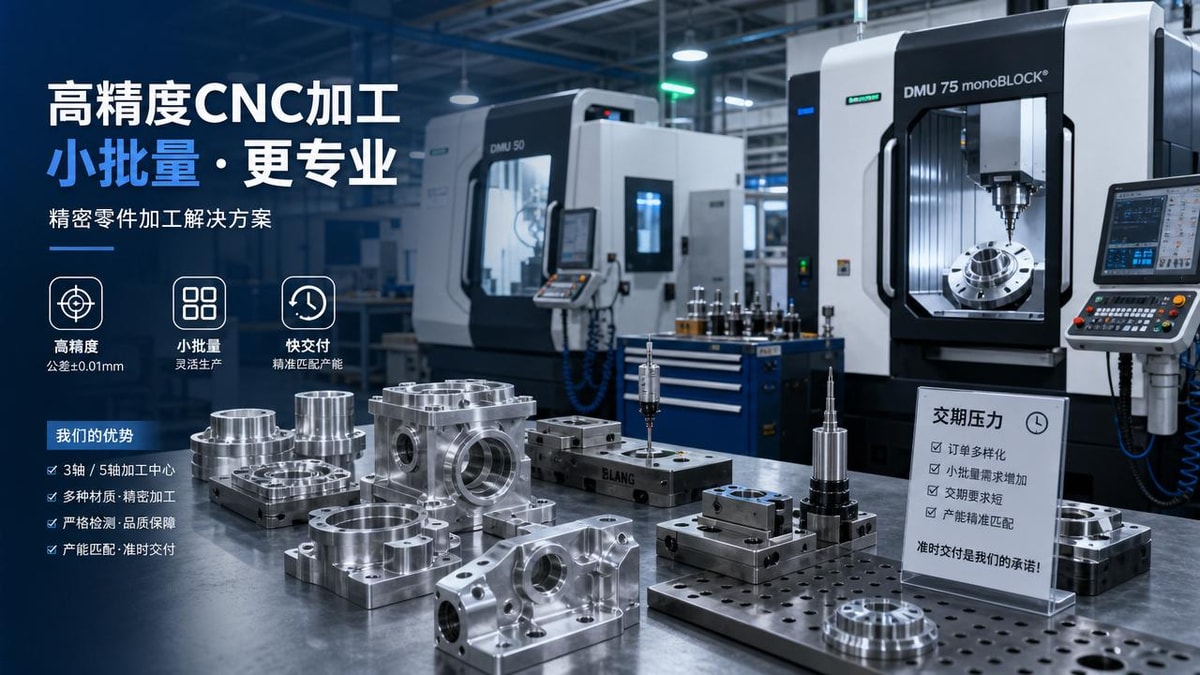
 CNC Milling Capacity Gaps Can Hurt Small Batch ProfitabilityManufacturing Market Research Center
 Industrial Robotics Payback Is Changing in Mid-Size PlantsManufacturing Market Research Center
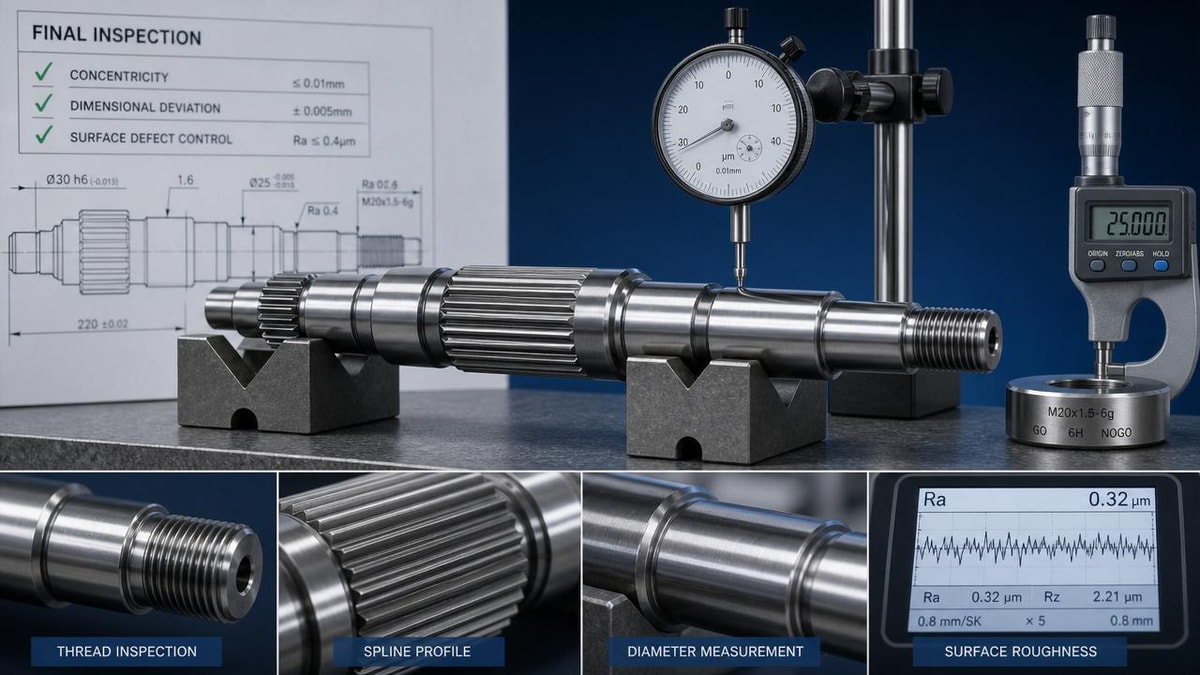
 Shaft Parts Machining Problems That Show Up at Final InspectionCNC Machining Technology Center
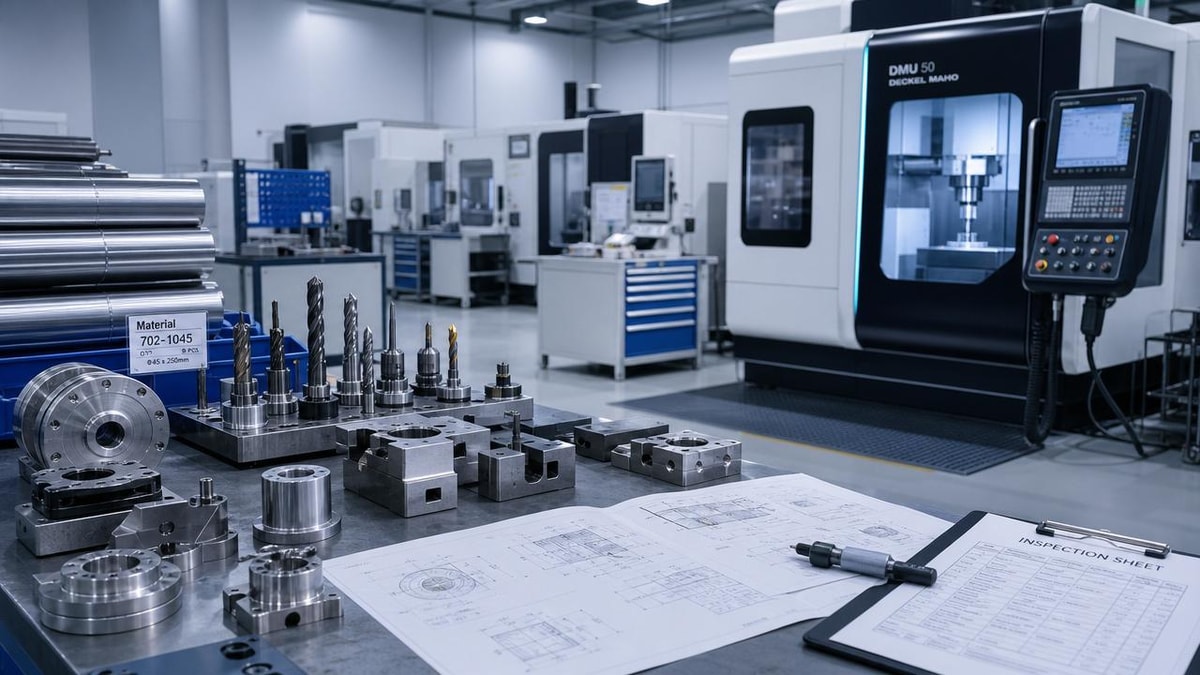
 Production Process Delays Usually Start Before Machining BeginsCNC Machining Technology Center
 Industrial Automation Projects Often Miss This Integration StepCNC Machining Technology Center
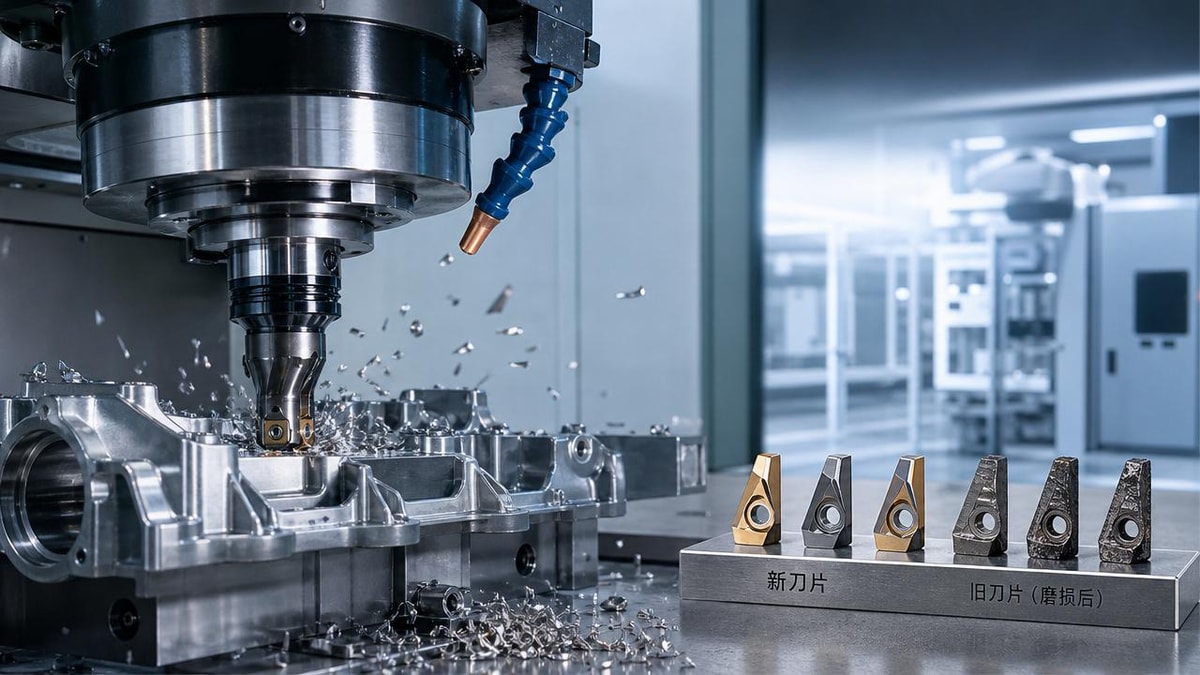
 CNC Metal Cutting Tool Wear Is Costing More Than You ThinkCNC Machining Technology Center



Aris Katos
Future of Carbide Coatings
15+ years in precision manufacturing systems. Specialized in high-speed milling and aerospace grade alloy processing.
▶
Industrial Robotics Payback Is Changing in Mid-Size PlantsManufacturing Market Research Center▶
Manufacturing Industry Margins Are Under Pressure AgainManufacturing Market Research Center▶
Industrial Robotics payback depends on more than labor savingsManufacturing Market Research Center▶
Where the Manufacturing Industry is cutting equipment budgets firstManufacturing Market Research Center▶
Is an industrial lathe upgrade worth it for aging workshops?Manufacturing Market Research Center
Mastering 5-Axis Workholding Strategies
Join our technical panel on Nov 15th to learn about reducing vibrations in thin-wall components.

Providing you with integrated sanding solutions
Before-sales and after-sales services
Comprehensive technical support