• Global CNC market projected to reach $128B by 2028 • New EU trade regulations for precision tooling components • Aerospace deman
NYSE: CNC +1.2%LME: STEEL -0.4%
Industrial Robotics Payback Is Changing in Mid-Size Plants
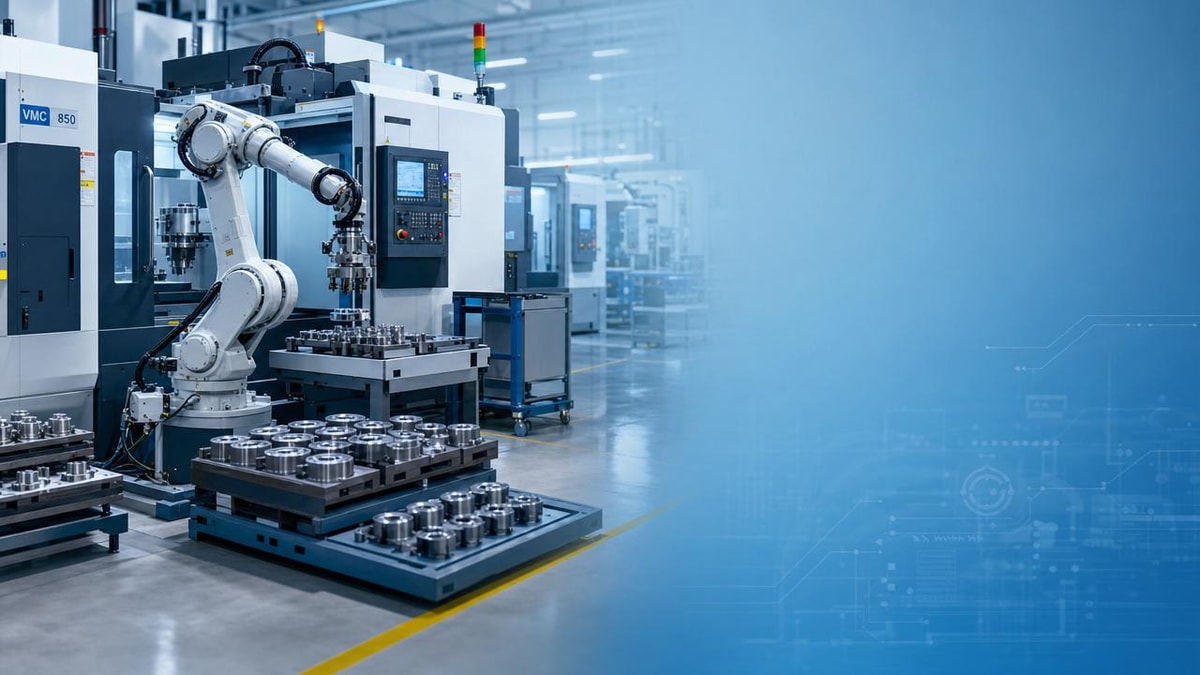
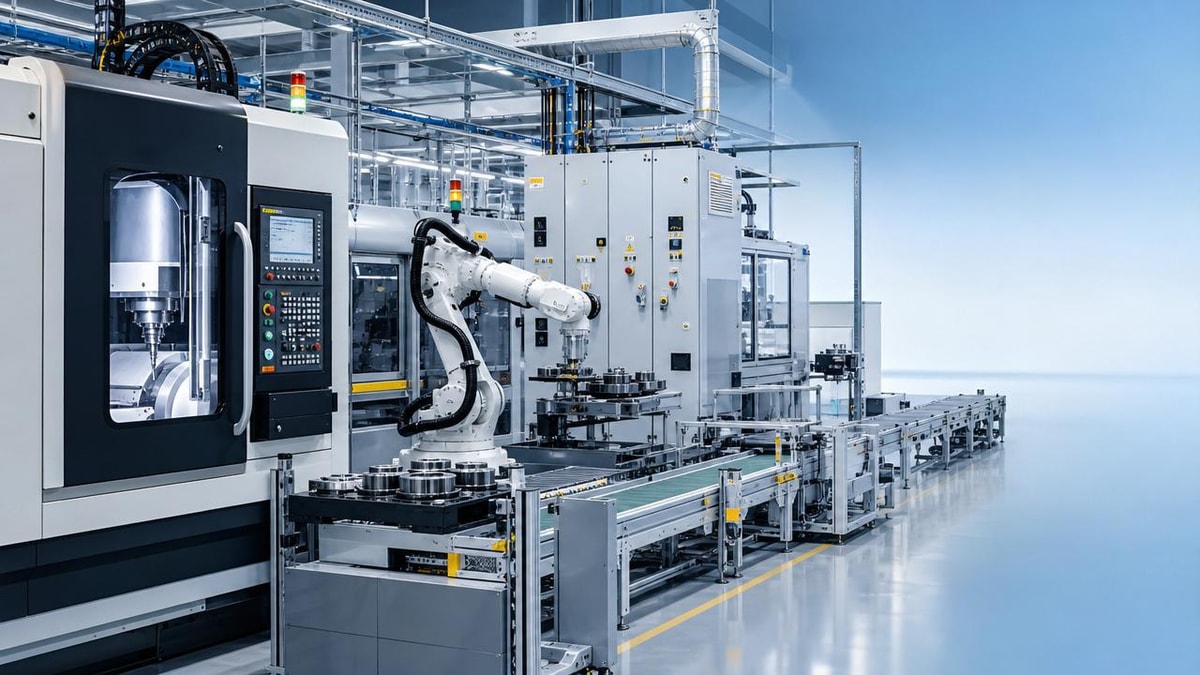
For mid-size manufacturers, the economics of Industrial Robotics are shifting faster than ever. Falling integration costs, smarter automation, and tighter labor conditions are shortening payback periods across CNC machining, precision production, and flexible manufacturing lines. What was once seen as a long-term capital bet is now becoming a practical strategy for improving output, consistency, and competitiveness.
Why Industrial Robotics ROI Looks Different in Mid-Size Plants
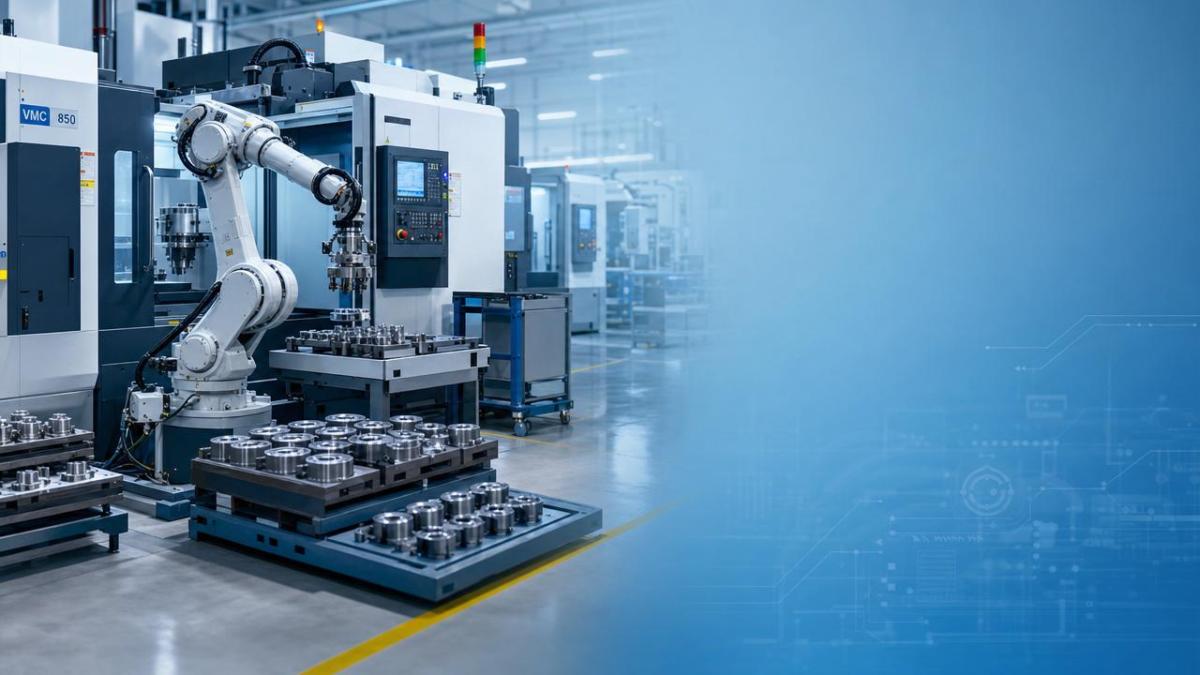
The return profile of Industrial Robotics has changed because the cost structure of manufacturing has changed. Mid-size plants are under pressure from skilled labor shortages, unstable order patterns, tighter quality expectations, and rising demand for traceability. In CNC machining and precision manufacturing, these pressures directly affect spindle utilization, scrap rates, lead times, and delivery reliability.
A few years ago, many decision-makers assumed robots only made financial sense in very high-volume automotive production. That assumption is no longer reliable. Today, smaller robot cells, easier programming, simulation tools, vision integration, and modular end-of-arm tooling allow mid-size factories to automate repeatable tasks without rebuilding the entire plant.
For companies operating CNC lathes, machining centers, multi-axis systems, deburring stations, loading lines, or inspection cells, payback is now tied less to labor replacement alone and more to throughput stability. When a robot keeps a machine running through breaks, shift transitions, or night hours, the economic impact can be larger than the wage comparison itself.
- Labor availability has become a production constraint, especially for repetitive tending, palletizing, part transfer, and secondary handling.
- Quality consistency matters more as parts become more complex and tolerance windows become tighter.
- Order volatility requires flexible automation rather than fixed, single-product systems.
- Digital manufacturing initiatives now reward connected equipment, production data capture, and reduced manual intervention.
Which Applications Deliver the Fastest Payback?
Not every robot project creates the same result. In mid-size plants, the best Industrial Robotics investments usually start with bottlenecks that are measurable, repetitive, and difficult to staff. The table below highlights where payback often appears first in CNC and precision production environments.
For many plants, CNC tending remains the strongest first step because machine downtime is visible and costly. If a machining center waits for an operator, the lost value accumulates every shift. Industrial Robotics can reduce that waiting time while also supporting unattended or lightly attended production windows.
Best-fit production conditions
- Part families with repeatable geometry, even if volume is moderate rather than massive.
- Operations with stable cycle times and predictable loading or unloading sequences.
- Cells where labor turnover or absenteeism regularly interrupts machine utilization.
- Environments where traceability, consistency, or workpiece protection is becoming more important.
What Mid-Size Decision-Makers Should Compare Before Buying
A robot quote alone does not explain project value. Decision-makers should compare the full automation package, including integration scope, guarding, grippers, programming complexity, changeover demands, and compatibility with existing CNC assets. Industrial Robotics projects succeed when evaluation focuses on plant fit, not just arm payload or brand familiarity.
The table below can be used as a selection framework during procurement discussions.
This comparison matters because two robot cells with similar headline prices can produce very different outcomes. A simpler cell with faster commissioning and easier operator adoption may outperform a more advanced configuration if the plant lacks in-house automation engineers.
Questions to ask before final approval
- Can the proposed cell handle the part mix expected over the next 12 to 24 months?
- Will integration require long machine downtime or major foundation changes?
- How many operators and technicians need training to sustain the cell after commissioning?
- Is the payback based on realistic shift patterns, not idealized full-capacity assumptions?
How to Calculate Payback Without Overestimating the Benefits
Many Industrial Robotics projects are approved or rejected based on incomplete math. The strongest business case combines direct labor impact with machine utilization, quality, delivery performance, and overtime reduction. For a mid-size plant, a robot may not eliminate headcount, but it can reassign experienced operators to higher-value setup, inspection, or process control work.
Core cost inputs
- Robot, end-of-arm tooling, guarding, control hardware, and integration engineering.
- Machine interface adaptation, fixture updates, and plant utility preparation.
- Operator training, preventive maintenance, and spare parts planning.
- Temporary commissioning disruption during installation and validation.
Core benefit inputs
- More machine hours from automated loading during breaks, shift changes, or low-staff periods.
- Reduced scrap from handling inconsistency, missed loading steps, or orientation errors.
- Lower dependency on overtime and emergency labor allocation.
- Improved schedule reliability, which can protect customer relationships and future orders.
A practical rule is to build three scenarios: conservative, expected, and aggressive. If the expected case only works under perfect utilization, the investment needs more scrutiny. In contrast, if the conservative case already shows acceptable payback because of reduced idle machine time, the project is much stronger.
Industrial Robotics vs. Manual Operation vs. Semi-Automation
Some plants do not need full robot automation in every process. The right decision may be manual handling, a basic loading aid, or a fully integrated robotic cell depending on volume, complexity, and labor risk. Comparing alternatives prevents both underinvestment and overengineering.
The table below outlines a realistic comparison for mid-size precision manufacturing operations.