• Global CNC market projected to reach $128B by 2028 • New EU trade regulations for precision tooling components • Aerospace deman
NYSE: CNC +1.2%LME: STEEL -0.4%

Industrial Robotics payback depends on more than labor savings
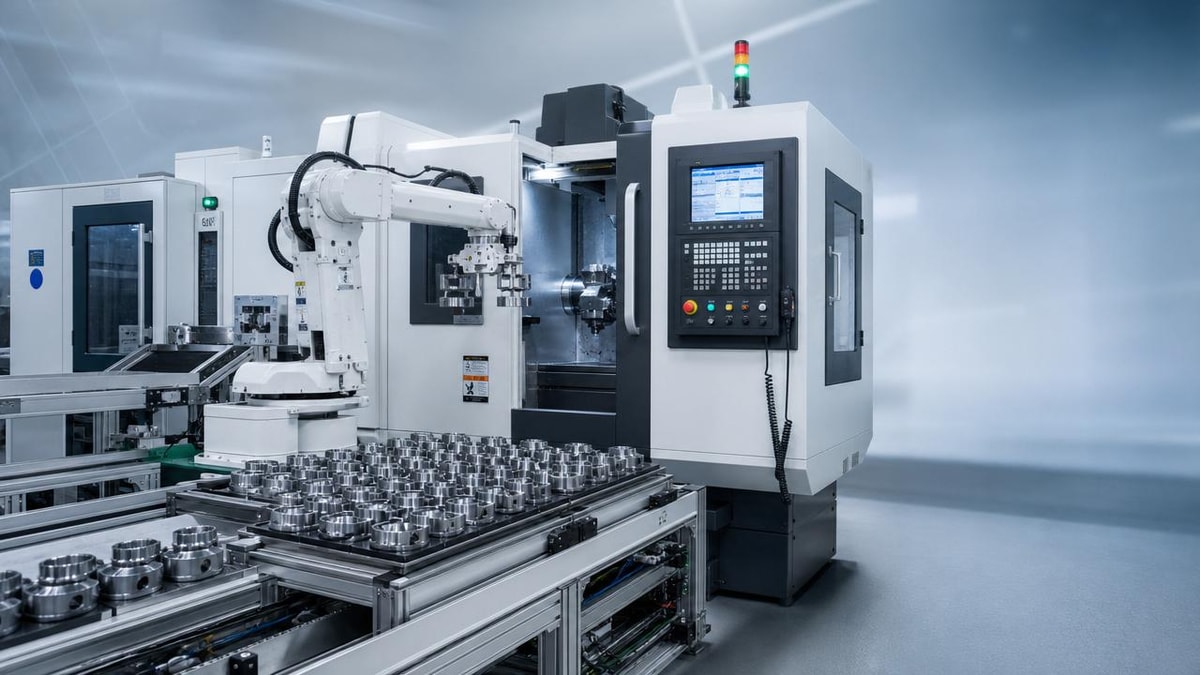
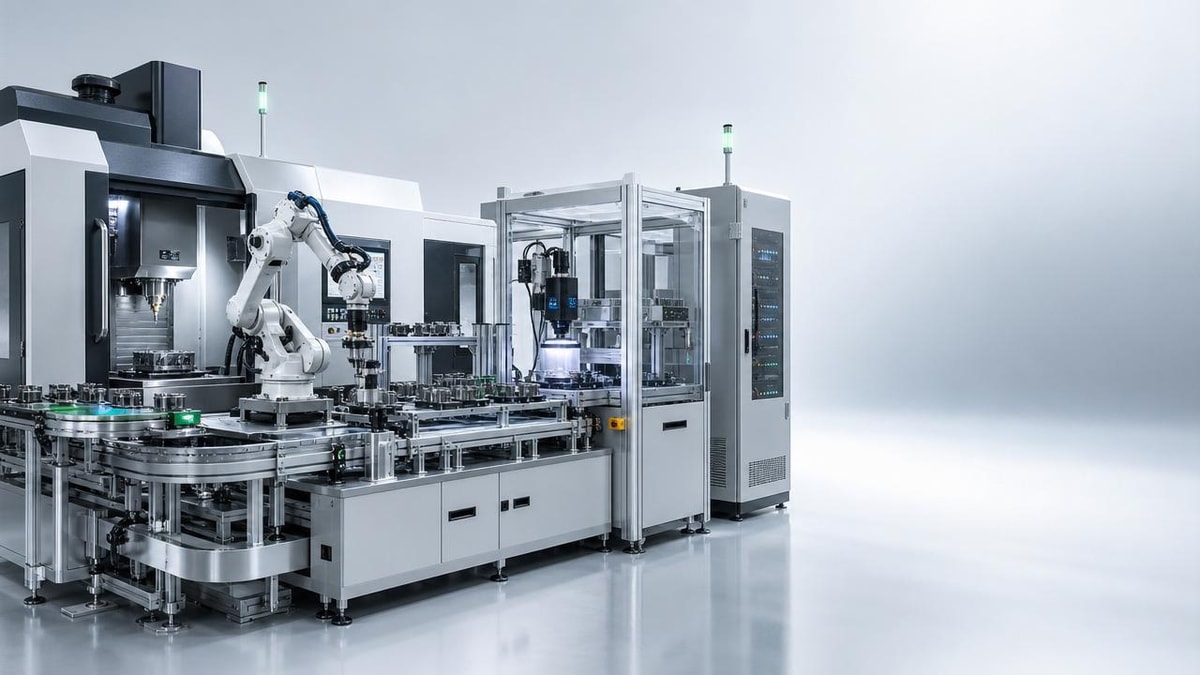
Industrial Robotics investment decisions are rarely justified by labor savings alone. For business evaluators in CNC machining and precision manufacturing, true payback also depends on uptime, throughput, quality consistency, floor-space efficiency, and long-term production flexibility. Understanding these broader value drivers is essential for making smarter automation decisions in a rapidly evolving manufacturing environment.
Why a checklist approach works better for Industrial Robotics payback
For companies in CNC machining, machine tools, and automated production, Industrial Robotics is often discussed as a simple labor replacement tool. That view is incomplete and can produce weak capital decisions. Business evaluators need a structured method because robotic automation affects several linked performance variables at the same time: spindle utilization, machine loading time, scrap rates, maintenance rhythm, operator allocation, and expansion capacity. A checklist helps separate measurable value from assumptions and reduces the risk of approving a project on narrow cost logic.
In precision manufacturing, a robot cell may not cut headcount immediately, yet it may still create a strong return by increasing machine hours, stabilizing part handling, reducing changeover disruption, and supporting unattended shifts. For that reason, the best Industrial Robotics payback review starts with a disciplined set of questions rather than a single ROI number.
First-screen checklist: what to confirm before building the business case
Before estimating payback, evaluators should confirm whether the production environment is suitable for Industrial Robotics and whether the value opportunity is large enough to justify detailed engineering.
- Verify process stability. If cycle times, part geometry, fixture quality, or upstream material flow change constantly, payback estimates will be unreliable.
- Measure current machine utilization. If expensive CNC assets sit idle because operators are busy loading, unloading, or transferring workpieces, Industrial Robotics may unlock hidden capacity.
- Identify repetitive handling tasks. The strongest early applications often involve tending lathes, machining centers, deburring stations, washing units, or inspection transfer points.
- Check volume and mix balance. High volume supports faster returns, but medium-volume and high-mix lines can also benefit if tooling and programming are designed for flexibility.
- Review labor constraints. The issue may be not only wage cost, but also shift coverage, turnover, training time, safety exposure, and difficulty staffing night production.
- Confirm data availability. A realistic Industrial Robotics evaluation requires baseline data on downtime, throughput, scrap, OEE trends, and changeover frequency.
If three or more of these items show clear improvement potential, the project usually deserves a deeper financial and technical review.
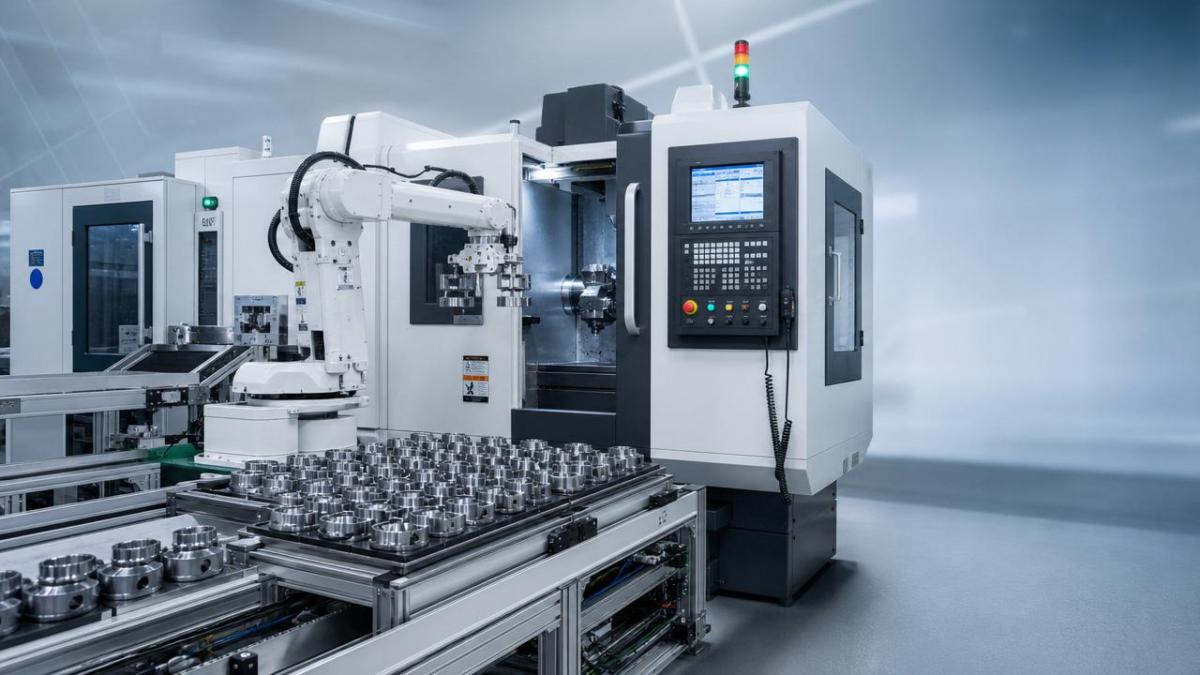
Core payback checklist: the value drivers beyond labor savings
The most important step in evaluating Industrial Robotics is expanding the definition of return. In CNC and precision manufacturing, true payback is typically the combined result of several smaller gains rather than one dramatic reduction in labor cost.
1. Uptime improvement
Robots can reduce delays between cycles, keep loading consistent, and support production during breaks or labor gaps. Even a modest improvement in machine uptime can produce significant value when the protected asset is a high-value machining center or multi-axis system. Evaluators should compare current stoppage patterns with projected automated cell availability, including maintenance windows and gripper replacement cycles.
2. Throughput increase
Industrial Robotics often shortens non-cutting time. In machine tending, a few seconds saved per cycle can compound into major annual output gains. The key check is whether the bottleneck sits at handling, loading precision, or operator response time. If yes, throughput gains may be a more important return driver than wage reduction.
3. Quality consistency and scrap reduction
Part orientation errors, inconsistent loading force, surface damage during transfer, and contamination between stages can all erode margin. Industrial Robotics can improve repeatability, especially in precision components for automotive, aerospace, electronics, and energy equipment. The payback model should include reduced scrap, lower rework, and fewer customer quality incidents where data supports it.
4. Unattended or extended-hour production
A robot that supports lights-out production or partial unattended shifts can transform asset economics. Evaluators should test whether the process truly supports autonomous running: tool life predictability, chip evacuation, part buffer design, in-process inspection, and alarm response procedures all matter. This is one of the strongest Industrial Robotics payback factors in mature CNC environments.
5. Floor-space and layout efficiency
In factories where expansion space is limited, automation may avoid the cost of additional lines or external capacity. Compact robotic cells can improve material flow and reduce work-in-progress congestion. That operational value should be recognized, particularly in high-density machining workshops.
6. Production flexibility over the equipment life cycle
The best Industrial Robotics projects are not designed only for today’s part number. Evaluators should ask how quickly the cell can adapt to new fixtures, different workpiece families, future software integration, or added inspection tasks. Flexibility lowers long-term risk and improves capital resilience.
A practical scoring guide for business evaluators
To compare opportunities, many firms use a simple weighted score before moving to full quotation or simulation. The table below shows a practical framework for Industrial Robotics evaluation in manufacturing settings.
Scenario-based checks: where Industrial Robotics payback differs
High-volume CNC production
In long-run production, Industrial Robotics payback is usually driven by cycle consistency, lower handling labor per part, and maximum spindle utilization. Evaluators should focus on takt stability, feeder design, preventive maintenance, and how many hours per week the cell can run without interruption.
High-mix precision manufacturing
In flexible machining environments, the key issue is not only speed but changeover efficiency. Quick gripper swaps, standardized fixtures, recipe-based programming, and integration with MES or part identification systems become essential. Here, Industrial Robotics must be judged on adaptability as much as direct productivity.
Quality-sensitive industries
For aerospace, electronics, and advanced automotive components, even small handling defects can be costly. Business evaluators should consider traceability, inspection handoff accuracy, contamination control, and part presentation quality. A robot that reduces variability may deliver value disproportionate to its labor impact.
Common blind spots that weaken the Industrial Robotics business case
- Ignoring upstream and downstream constraints. A robot cannot create full payback if material supply, chip removal, washing, or inspection remains the real bottleneck.
- Using unrealistic utilization assumptions. Planned lights-out operation is valuable only if tooling, fixturing, and fault recovery are mature enough.
- Underestimating integration cost. End-of-arm tooling, guarding, software interfaces, and commissioning time can materially change return calculations.
- Treating all labor as removable. In many cases, staff are redeployed to higher-value tasks rather than eliminated, so the benefit should be recorded as productivity leverage, not pure payroll reduction.
- Failing to plan for future part variation. A low-cost system with poor flexibility may look attractive initially but age badly as product mix changes.
Execution checklist: what to prepare before requesting proposals
If a company wants reliable quotations and stronger supplier discussions, it should organize key information in advance. This step improves both budgeting accuracy and implementation speed.
- Collect baseline metrics: cycle time, machine idle time, scrap rate, labor allocation, and current shift pattern.
- Define the target application clearly: machine tending, transfer, assembly, palletizing, inspection loading, or mixed use.
- List part families, dimensions, tolerances, surface sensitivity, and gripping constraints.
- Map utility and interface requirements: machine signals, safety standards, floor layout, compressed air, and network connectivity.
- Set financial criteria: target payback period, acceptable capex range, planned depreciation approach, and expected capacity value.
- Clarify internal ownership: engineering, production, quality, maintenance, and finance must all support the same assumptions.
How to make the final decision with fewer surprises
A strong Industrial Robotics decision is rarely based on one spreadsheet line. The most reliable approvals combine technical fit, operational readiness, and conservative financial modeling. Business evaluators should stress-test the project under three scenarios: expected case, ramp-up delay case, and mixed-product case. If the return still holds when assumptions become less favorable, the project is more likely to succeed in real factory conditions.
It is also wise to compare automation alternatives, such as a standard robot cell, a collaborative configuration, or a semi-automated handling solution. In some CNC operations, the highest-value answer is not the most complex system but the one that fits current throughput, staffing reality, and future expansion plans with the lowest execution risk.
FAQ: key questions evaluators often ask
Is labor saving still important in Industrial Robotics ROI?
Yes, but it should be treated as only one part of the value equation. In many manufacturing environments, uptime, output growth, and quality stability create equal or greater financial impact.
What is the most overlooked payback factor?
For CNC operations, hidden capacity recovery is often underestimated. When Industrial Robotics reduces waiting time around expensive machine tools, the productivity gain can be more valuable than direct headcount reduction.
When should a company delay the project?
If the process is unstable, fixtures are not standardized, or there is no reliable baseline data, it is better to stabilize the line first. Automation works best when the underlying process is already disciplined.
Next-step guidance for companies evaluating Industrial Robotics
For business evaluators in the CNC machine tool and precision manufacturing sector, the smartest next step is to build a short decision file around one target application. Prioritize current machine utilization data, part-handling challenges, quality loss points, expected production growth, and flexibility needs over the next three to five years. Then compare those findings against integration cost, supplier capability, and realistic startup timing.
If further validation is needed, the most useful topics to discuss first are application parameters, compatible part ranges, automation scope, cycle assumptions, required interfaces, maintenance expectations, budget range, and project timeline. That conversation will quickly show whether Industrial Robotics can deliver a durable payback based on total manufacturing performance rather than labor savings alone.
PREVIOUS ARTICLE
NEXT ARTICLE
Recommended for You
 Industrial Robotics payback depends on more than labor savingsManufacturing Market Research Center
 Shaft Parts machining problems that show up after final inspectionCNC Machining Technology Center
 Which Production Process changes bring the fastest output gains?CNC Machining Technology Center
 Industrial Automation projects fail when integration is underestimatedCNC Machining Technology Center
 CNC metal cutting costs rise fast when material data is wrongCNC Machining Technology Center
 High precision lathe claims to verify before accepting deliveryMachine Tool Industry Editorial Team

Aris Katos
Future of Carbide Coatings
15+ years in precision manufacturing systems. Specialized in high-speed milling and aerospace grade alloy processing.
▶
Industrial Robotics payback depends on more than labor savingsManufacturing Market Research Center▶
Where the Manufacturing Industry is cutting equipment budgets firstManufacturing Market Research Center▶
Is an industrial lathe upgrade worth it for aging workshops?Manufacturing Market Research Center▶
Where the Manufacturing Industry Is Seeing Faster Automation PaybackManufacturing Market Research Center▶
Precision Equipment ROI Depends on More Than ToleranceManufacturing Market Research Center
Mastering 5-Axis Workholding Strategies
Join our technical panel on Nov 15th to learn about reducing vibrations in thin-wall components.

Providing you with integrated sanding solutions
Before-sales and after-sales services
Comprehensive technical support