• Global CNC market projected to reach $128B by 2028 • New EU trade regulations for precision tooling components • Aerospace deman
NYSE: CNC +1.2%LME: STEEL -0.4%

Where the Machine Tool Market is slowing and where it is not
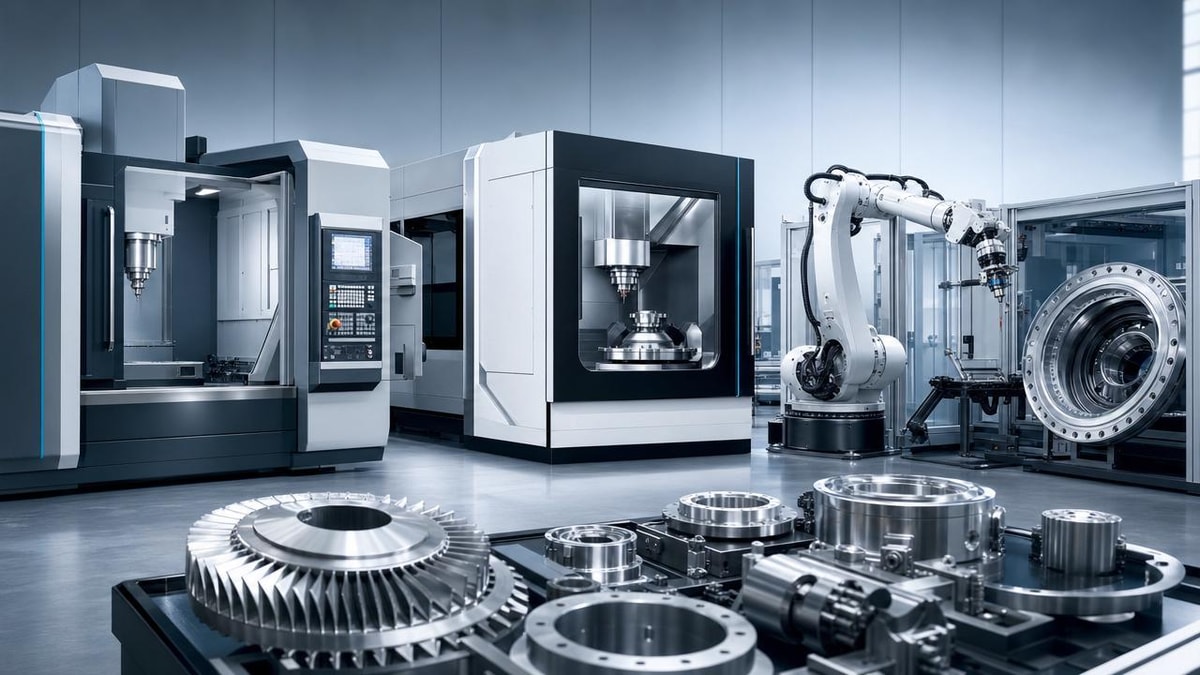
The Machine Tool Market is entering a more selective phase, with demand cooling in some regions and end-use sectors while remaining resilient in others driven by automation, aerospace, energy, and high-precision manufacturing. For distributors, agents, and channel partners, understanding where growth is slowing—and where investment continues—is essential for aligning product strategy, inventory planning, and market expansion.
The Machine Tool Market is no longer moving in one direction
One of the clearest signals in the current Machine Tool Market is divergence. Instead of broad-based momentum across all regions and customer groups, activity is splitting between slower replacement demand and stronger strategic investment. In practical terms, this means some buyers are delaying standard equipment purchases, while others are accelerating spending on CNC machine tools, multi-axis systems, automated cells, and precision machining capacity tied to high-value production.
For distributors and agents, this is an important shift. A uniform sales approach worked better when machine tool demand was lifted by general industrial expansion. Today, the market rewards sharper segmentation. Customers serving consumer goods, low-margin fabrication, or export-sensitive sectors may become more cautious. Meanwhile, customers in aerospace machining, energy equipment, medical components, defense supply chains, and advanced electronics often continue to invest because precision, traceability, and productivity remain business-critical.
This selective environment is also changing what buyers ask for. They are not simply comparing machine prices. They are evaluating automation readiness, software compatibility, service support, spindle stability, tooling integration, energy efficiency, and long-term uptime. That means the Machine Tool Market is increasingly shaped by application value rather than by volume alone.
Where demand is slowing and why the cooling is visible
The slowdown in parts of the Machine Tool Market is linked to several overlapping factors. First, some general manufacturing segments are facing softer export orders, tighter capital budgets, and uncertainty around inventory levels. When end-user production schedules become less predictable, many workshops prefer to extend the life of existing equipment rather than place immediate orders for new standard lathes or machining centers.
Second, interest rates, financing costs, and exchange-rate volatility continue to affect purchasing decisions in many countries. This does not eliminate machine tool demand, but it often delays approval cycles. Distributors may notice that customers still request quotations and technical consultations, yet take longer to convert those discussions into contracts.
Third, lower-complexity production environments are under more pressure to justify upgrades. If a factory mainly produces standard components with stable tolerances and moderate throughput, management may postpone replacement unless existing machines create a bottleneck. This especially affects entry-level or mid-range equipment that does not clearly improve labor efficiency, process reliability, or part quality.
The key takeaway is not that the Machine Tool Market is weak overall. It is that broad market averages can hide strong differences between end uses, machine categories, and customer priorities.

Where the Machine Tool Market remains resilient
Even as some areas cool, several demand pockets remain durable. Aerospace is a leading example because production standards are strict, material costs are high, and machining performance directly affects profitability. Shops supplying structural parts, turbine-related components, and precision assemblies continue to value machine rigidity, repeatability, and advanced control capability.
Energy is another important source of resilience in the Machine Tool Market. Whether tied to conventional power equipment, grid-related hardware, oil and gas components, or renewable energy systems, many projects require heavy-duty machining, large work envelopes, and reliable cycle performance. These customers are less likely to buy on price alone because machine downtime can disrupt expensive project schedules.
Automation-driven sectors also continue to support demand. Manufacturers facing labor shortages, quality consistency issues, or rising throughput requirements are still investing in CNC machining centers linked to robotic loading, pallet systems, digital monitoring, and flexible production setups. In this segment, the machine tool purchase is part of a larger productivity strategy rather than a standalone equipment transaction.
High-precision electronics and specialized component production likewise remain active in many markets. The reason is simple: miniaturization, surface quality, and tolerance control are becoming more demanding. As a result, machine tools that support better thermal stability, faster setup, and better process repeatability continue to attract interest even during cautious investment periods.
Technology upgrades are changing buying behavior faster than volume trends
A notable shift in the Machine Tool Market is that technology requirements are evolving faster than total unit demand. Buyers now place more emphasis on process integration. A machine that can connect smoothly with tooling systems, probing, software, automation modules, and maintenance monitoring often has an advantage over a lower-priced alternative with weaker digital readiness.
This matters to channel partners because value creation increasingly depends on technical guidance. End users want to know whether a machine can reduce setup time, stabilize part quality, support lights-out machining, or improve overall equipment effectiveness. In many cases, the distributor who can translate machine specifications into measurable operational outcomes is better positioned than one competing only on availability.
Another trend is the growing importance of complete process packages. Customers often prefer bundled solutions that include fixtures, toolholders, cutting tools, coolant systems, training, and after-sales service. In a slower purchasing environment, these packages can reduce customer uncertainty and strengthen differentiation in the Machine Tool Market.
Regional differences are becoming more important for channel strategy
The global Machine Tool Market is influenced by industrial structure, government policy, export conditions, and local manufacturing maturity. In countries with strong aerospace, automotive, electronics, and industrial equipment ecosystems, demand may remain comparatively healthier because machine tool investment is linked to strategic production capabilities. In other regions, general workshop demand may soften if construction, consumer manufacturing, or trade-sensitive sectors slow down.
For dealers and agents, this means regional forecasting should rely less on top-line sentiment and more on sector mapping. A market that appears slow overall may still contain fast-moving clusters such as medical machining, battery-related equipment, industrial valves, or defense subcontracting. Conversely, a region known for strong manufacturing may still experience weakness in lower-value metalworking categories.
This is also why local service capability remains critical. In a more selective Machine Tool Market, customers prefer suppliers who can respond quickly, maintain spare parts access, and support process optimization after installation. Service readiness can be as decisive as the machine brand itself.
What the slowdown and resilience mean for distributors, agents, and dealers
For channel businesses, the current environment creates both pressure and opportunity. The pressure comes from longer decision cycles, more technical comparisons, and increased customer caution around capital spending. The opportunity comes from the fact that not all demand is disappearing. It is becoming more selective, more application-driven, and more dependent on confidence in long-term performance.
This suggests several practical adjustments. First, inventory planning should become more disciplined. Standard machines with uncertain short-term demand may require careful stocking, while fast-response capability for high-specification models or automation-ready options may become more valuable. Second, sales teams should classify accounts by end-use exposure rather than by historical purchase volume alone. Third, after-sales support, retrofit consulting, and process improvement services can help stabilize revenue when new equipment orders become uneven.
Signals worth tracking over the next phase
The next phase of the Machine Tool Market will likely be shaped less by broad optimism and more by a set of specific signals. Channel partners should monitor order patterns in aerospace, energy equipment, industrial automation, and precision subcontracting. They should also watch how customers discuss labor shortages, production flexibility, and quality traceability, because these topics often lead to machine tool upgrades even when budgets are tight.
Another useful signal is the balance between retrofit demand and new machine inquiries. If customers are investing in controls upgrades, spindle repair, automation add-ons, or fixture improvements, it may indicate that demand is not collapsing but pausing until confidence improves. That can help suppliers prepare for a later rebound in capital equipment purchases.
Finally, pay attention to how procurement teams define return on investment. In today’s Machine Tool Market, faster cycle time alone may not be enough. Buyers increasingly want reduced labor dependency, stronger process consistency, easier digital reporting, and better machine utilization across mixed production runs.
How to make better judgments in a selective Machine Tool Market
A useful framework is to judge opportunities through three lenses: end-market resilience, application complexity, and service intensity. End-market resilience shows whether the customer’s sector still has strategic investment momentum. Application complexity shows whether the customer needs higher precision, automation, or multi-process capability. Service intensity shows whether your business can defend value through installation, training, maintenance, and process support.
If all three factors are strong, the opportunity is usually more attractive even if sales cycles are longer. If all three are weak, aggressive discounting may not produce sustainable business. This approach helps distributors and agents avoid treating the entire Machine Tool Market as either “good” or “bad.” The reality is more nuanced, and strategy should reflect that nuance.
Final perspective and action points
The Machine Tool Market is slowing in some standard, price-sensitive, and delayed-replacement segments, but it is not slowing everywhere. Demand remains more resilient where precision, automation, reliability, and strategic manufacturing capability matter most. For channel partners, the winning response is not broad caution alone. It is sharper segmentation, stronger technical selling, closer customer mapping, and a clearer connection between machine investment and production outcomes.
If your business wants to judge how these trends affect its own position, focus on a few practical questions: Which customer sectors in your territory are still investing? Which machine categories are tied to automation or high-precision demand? Where are longer sales cycles creating inventory risk? And where can service capability help you protect margins even when new equipment ordering becomes uneven?
Those answers will do more than describe the current Machine Tool Market. They will help determine where your next growth opportunities are most likely to come from.
PREVIOUS ARTICLE
NEXT ARTICLE
Recommended for You
![]() ANVISA New Rule: Portuguese Biocompatibility Labels for Medical CNC Machines in BrazilManufacturing Policy Research Center
ANVISA New Rule: Portuguese Biocompatibility Labels for Medical CNC Machines in BrazilManufacturing Policy Research Center![]() EMO Hannover 2027 Booth Booking Opens: China AI-Machining Pavilion LaunchesGlobal Machine Tool Trade Research Center
EMO Hannover 2027 Booth Booking Opens: China AI-Machining Pavilion LaunchesGlobal Machine Tool Trade Research Center![]() KATS Updates KC Rules: CNC Cybersecurity Modules Must Meet IEC 62443-4-2Manufacturing Policy Research Center
KATS Updates KC Rules: CNC Cybersecurity Modules Must Meet IEC 62443-4-2Manufacturing Policy Research Center![]() Shanghai Port Launches Green Clearance Channel for CNC EquipmentManufacturing Market Research Center
Shanghai Port Launches Green Clearance Channel for CNC EquipmentManufacturing Market Research Center![]() ISO 23218-3:2026 Published: CNC Digital Twin Interoperability StandardCNC Machining Technology Center
ISO 23218-3:2026 Published: CNC Digital Twin Interoperability StandardCNC Machining Technology Center![]() Vietnam Cuts CNC Equipment Import Tariff to 3.8% from June 2026Global Machine Tool Trade Research Center
Vietnam Cuts CNC Equipment Import Tariff to 3.8% from June 2026Global Machine Tool Trade Research Center


Aris Katos
Future of Carbide Coatings
15+ years in precision manufacturing systems. Specialized in high-speed milling and aerospace grade alloy processing.
▶
Where the Machine Tool Market is slowing and where it is notManufacturing Market Research Center▶
Where the Machine Tool Market Is Finding New DemandManufacturing Market Research Center▶
Machine Tool Market signals that point to slower replacement cyclesManufacturing Market Research Center▶
Machine Tool Market Signals Worth Watching Before New InvestmentManufacturing Market Research Center▶
Machine Tool Market signals to watch before expanding capacityManufacturing Market Research Center
Mastering 5-Axis Workholding Strategies
Join our technical panel on Nov 15th to learn about reducing vibrations in thin-wall components.

Providing you with integrated sanding solutions
Before-sales and after-sales services
Comprehensive technical support