• Global CNC market projected to reach $128B by 2028 • New EU trade regulations for precision tooling components • Aerospace deman
NYSE: CNC +1.2%LME: STEEL -0.4%

Machine Tool Market Signals Worth Watching Before New Investment
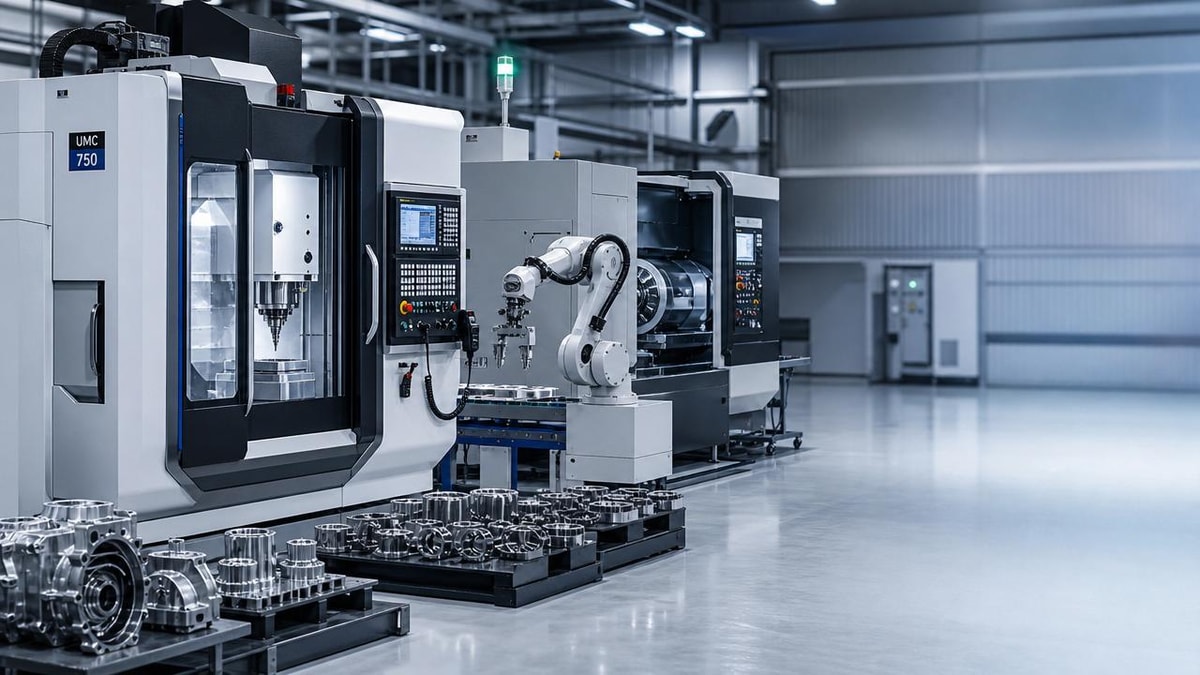
The Machine Tool Market is sending mixed but valuable signals for business leaders planning their next capital move. From automation upgrades and precision demand to shifting global supply chains and regional manufacturing investment, the industry is entering a more strategic phase. Understanding these market indicators can help decision-makers reduce risk, identify growth opportunities, and time new investment more effectively in an increasingly competitive manufacturing landscape.
What is the Machine Tool Market really telling investors today?
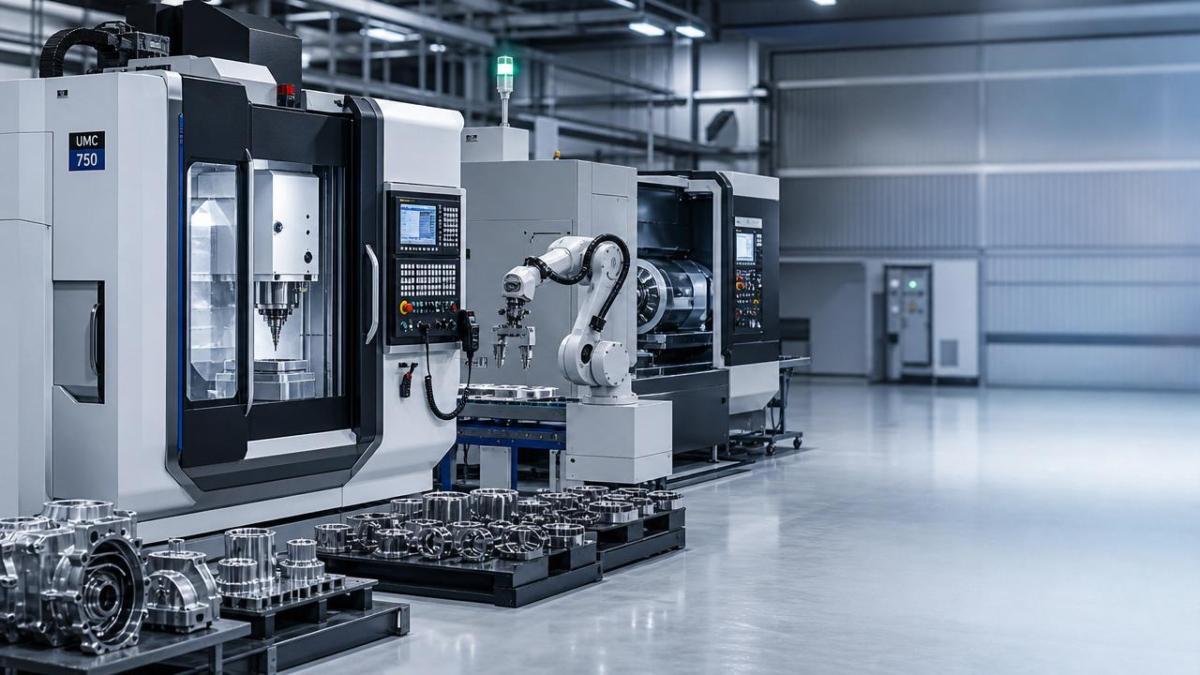
For enterprise decision-makers, the Machine Tool Market is no longer just a reflection of equipment demand. It has become a forward-looking indicator of manufacturing confidence, capital discipline, supply chain realignment, and digital production readiness. In practical terms, machine tool orders often rise before broader factory expansion becomes visible, which is why this market deserves close attention before any new investment approval.
This matters across automotive, aerospace, electronics, energy equipment, and general precision manufacturing. CNC lathes, machining centers, multi-axis systems, fixtures, and automated cells sit at the center of throughput, tolerance control, and labor efficiency. When the Machine Tool Market shifts, it usually signals changes in part complexity, production mix, delivery expectations, and the willingness of manufacturers to commit to higher-value assets.
The current market is not defined by a single global trend. Some regions are increasing local production capacity, while others are delaying purchases and focusing on machine upgrades, retrofit programs, or outsourcing. This split creates both risk and opportunity. Leaders who read the right indicators can avoid overbuying in uncertain cycles and move faster where structural demand is clearly strengthening.
- Automation demand is rising because manufacturers need stable output despite labor shortages and wage pressure.
- Precision requirements are tightening as components become lighter, smaller, and more complex.
- Regional sourcing strategies are shifting, influencing where machine tools, components, and service support are most valuable.
- Digital integration is moving from optional to necessary, especially for traceability, predictive maintenance, and production planning.
Which market signals deserve the closest attention before new investment?
Not every positive headline in the Machine Tool Market should trigger immediate spending. Decision-makers should separate short-term order spikes from structural demand. A useful way to do that is to track indicators tied directly to operating performance, project pipelines, and supply resilience rather than relying only on general market sentiment.
The table below highlights key signals that often shape machine tool purchasing decisions in global manufacturing operations.
These signals should not be read in isolation. A rise in demand for machining centers may be attractive, but if service coverage is weak and delivery windows are unpredictable, the business case changes. The best reading of the Machine Tool Market always combines commercial momentum with execution risk.
Signals that usually support a stronger investment case
- Backlog growth from end-user sectors that require high repeatability, such as aerospace components, EV parts, and precision electronics housings.
- Persistent bottlenecks caused by setup time, manual loading, or inconsistent dimensional control.
- Clear customer requirements for traceability, statistical quality records, or unattended production windows.
Signals that call for caution
- Orders depend on a single customer or a temporary policy-driven project cycle.
- Factory layout, operator skills, or electrical infrastructure cannot support the new machine configuration.
- Management focuses on purchase price while underestimating tooling, integration, training, and maintenance costs.
How do application scenarios change the meaning of the Machine Tool Market?
The Machine Tool Market behaves differently depending on the manufacturing segment. A strong outlook in consumer electronics may not justify the same machine strategy as one in heavy energy equipment. Decision-makers should match market signals to application realities such as material type, batch size, tolerance demands, and production continuity.
The following comparison helps connect machine tool demand with sector-specific investment logic.
This comparison shows why executives should avoid generic investment assumptions. In one factory, automation may bring the fastest return. In another, spindle accuracy, thermal stability, or software integration may matter more than raw speed. The Machine Tool Market only becomes useful when interpreted through the lens of actual production tasks.
Scenario-based reading for executives
If your business depends on high-mix, low-volume work, flexibility is usually worth more than maximum throughput. If your contracts require long runs of stable parts, automation and tool life consistency often drive better returns. If your customers are redesigning products more frequently, machines that support faster changeover and digital simulation gain value even in uncertain market cycles.
What should buyers compare before approving a machine tool purchase?
In the Machine Tool Market, poor buying decisions rarely come from choosing obviously bad equipment. They usually come from comparing incomplete information. A machine that looks competitive on paper may become expensive after installation delays, fixture redesign, software limitations, or weak local support. Procurement teams need a broader decision model.
Core comparison dimensions
- Process fit: Check whether the machine suits your materials, geometry, tolerance band, and target takt time rather than evaluating only spindle speed or axis count.
- Automation compatibility: Confirm interfaces for robots, pallet systems, probes, tool management, and production monitoring.
- Total cost of ownership: Include tooling, energy, maintenance, downtime risk, operator training, and software license requirements.
- Service network: Assess local spare part availability, technical response time, installation competence, and remote diagnostics ability.
- Upgrade path: Review whether the machine can support future part programs, added automation, or quality control expansion.
The strongest purchasing teams use a weighted scorecard rather than informal vendor comparison. That approach is especially valuable when the Machine Tool Market is volatile and budget pressure is high.
Below is a practical evaluation structure that can support internal review meetings and cross-functional approval.
A structured comparison also improves alignment between production, engineering, finance, and procurement. That is important because many investment projects fail not at purchase, but during installation and ramp-up, when hidden assumptions become expensive.
How should companies balance cost, timing, and alternatives?
A rising Machine Tool Market does not always mean a company should buy new equipment immediately. In some cases, retrofitting an existing machine, adding automation to a stable platform, outsourcing overflow work, or leasing equipment may be more rational. The right answer depends on bottleneck type, forecast visibility, quality risk, and cash discipline.
When new equipment usually makes sense
- Current machines cannot meet required tolerances or process new materials reliably.
- Frequent downtime or obsolete controls create serious delivery risk.
- Customers require traceability, automation compatibility, or digital reporting that older assets cannot support.
When alternatives may be better first
- Demand visibility is too short to justify a full capital commitment.
- The main issue is labor loading or tool presetting rather than machine capability itself.
- Factory utilities, layout, or quality systems are not yet ready for a larger machine upgrade.
For many manufacturers, the best strategy is phased investment. That might start with one machining cell, a fixture redesign, or an upgraded control system, followed by additional machines after process data confirms the return. In a mixed Machine Tool Market, phased action often preserves flexibility without losing momentum.
What compliance and implementation issues are often underestimated?
Executives tend to focus on capacity and unit cost, but machine tool investment also depends on implementation discipline. Safety requirements, electrical conformity, operator training, process validation, and maintenance planning can affect both launch timing and operating results. In export-oriented sectors, documentation quality and inspection consistency may matter as much as hardware capability.
Common implementation checkpoints
- Verify applicable safety and machinery regulations for the destination market and plant environment.
- Confirm utility requirements, including power supply stability, compressed air, coolant handling, and floor load conditions.
- Prepare process documentation for first article inspection, tool offset control, and operator qualification.
- Plan spare parts and preventive maintenance before production ramp-up starts.
Where relevant, companies may also review common frameworks such as ISO-based quality systems, calibration routines, and production traceability expectations from major industrial customers. The goal is not paperwork for its own sake. It is to ensure that the new asset performs consistently in a real operating environment.
FAQ: what do decision-makers ask most about the Machine Tool Market?
How can we tell if the Machine Tool Market supports expansion or just temporary replacement demand?
Look for a combination of indicators: sustained customer forecasts, rising complexity in part requirements, repeated capacity bottlenecks, and stronger demand for automation rather than only basic replacement machines. If orders are growing mainly in high-value configurations such as multi-axis systems, integrated cells, or digitally connected platforms, that often suggests structural upgrading rather than simple asset renewal.
What is the most common mistake in machine tool procurement?
The most common mistake is choosing based on purchase price or name recognition without validating process fit. Many companies underestimate setup losses, fixture redesign needs, software limits, or service response gaps. In the Machine Tool Market, a slightly higher initial investment can be more economical if it reduces scrap, stabilizes output, and supports future automation.
Should we invest in standalone CNC machines or automated production cells?
That depends on labor availability, batch profile, and uptime targets. Standalone machines can be effective for flexible low-volume work or where operators handle frequent engineering changes. Automated cells make more sense when labor cost is rising, shift coverage is difficult, and throughput consistency is critical. The Machine Tool Market increasingly favors solutions that leave room for staged automation even if full automation is not installed on day one.
How long should we plan for delivery and ramp-up?
Timing varies by machine type, configuration complexity, and component availability. Standard machines may move faster than custom lines or highly integrated systems. However, internal preparation often causes more delay than the machine itself. Layout readiness, fixture development, tooling validation, and staff training should be planned in parallel with supplier lead time, not after the machine ships.
Why the next phase of the Machine Tool Market favors strategic buyers
The Machine Tool Market is becoming more selective, not less attractive. Capital still flows into precision, automation, and digital manufacturing, but buyers are making tougher trade-offs. This environment rewards companies that can connect market timing with technical selection, implementation readiness, and long-term production strategy.
For business leaders, the question is not simply whether to invest. It is where capacity should be added, which processes should be upgraded first, and how to protect return on capital under changing demand conditions. The most successful organizations use the Machine Tool Market as a decision framework, not just a news topic.
Why choose us for machine tool market insight and project planning?
We focus on the global CNC machining and precision manufacturing industry, with close attention to machine tools, automation, production lines, supply trends, and cross-border industrial updates. That perspective helps enterprise buyers move beyond generic equipment discussions and evaluate real manufacturing fit across automotive, aerospace, electronics, energy equipment, and broader precision production environments.
If you are reviewing a new investment, you can contact us to discuss concrete decision points, including machine configuration comparison, application matching, delivery cycle planning, automation compatibility, sourcing options, certification-related considerations, and quotation alignment for different production scenarios.
- Parameter confirmation for CNC lathes, machining centers, and multi-axis systems
- Product selection support based on tolerance, material, batch size, and takt time
- Delivery lead time review and procurement scheduling suggestions
- Custom solution discussion for fixtures, tooling, automation cells, and line integration
- Compliance and documentation guidance for export-oriented manufacturing projects
- Quote comparison support to help balance cost, productivity, and long-term value
If your team is weighing expansion, replacement, or phased automation, a targeted discussion can clarify which Machine Tool Market signals matter most for your plant, product mix, and investment horizon.
PREVIOUS ARTICLE
NEXT ARTICLE
Recommended for You
 Industrial Machining Equipment Lead Times Are Changing AgainManufacturing Market Research Center
 Where Industrial Robotics Adds Value Beyond Simple Labor SavingsMachine Tool Industry Editorial Team
 Shaft Parts Machining Problems That Show Up After Final InspectionCNC Machining Technology Center
 Production Process Variations That Quietly Raise Scrap RatesCNC Machining Technology Center
 Industrial Automation Projects Fail When Data Is Added Too LateCNC Machining Technology Center
 CNC Metal Cutting Quality Drops Often Start With ClampingMachine Tool Industry Editorial Team




Aris Katos
Future of Carbide Coatings
15+ years in precision manufacturing systems. Specialized in high-speed milling and aerospace grade alloy processing.
▶
Machine Tool Market Signals Worth Watching Before New InvestmentManufacturing Market Research Center▶
Machine Tool Market signals to watch before expanding capacityManufacturing Market Research Center▶
Where the Machine Tool Market is slowing in 2026Manufacturing Market Research Center▶
Machine Tool Market Signals Worth Watching This YearManufacturing Market Research Center▶
How to Read Machine Tool Price Quotes Without OverpayingManufacturing Market Research Center
Mastering 5-Axis Workholding Strategies
Join our technical panel on Nov 15th to learn about reducing vibrations in thin-wall components.

Providing you with integrated sanding solutions
Before-sales and after-sales services
Comprehensive technical support