• Global CNC market projected to reach $128B by 2028 • New EU trade regulations for precision tooling components • Aerospace deman
NYSE: CNC +1.2%LME: STEEL -0.4%

Industrial Automation Upgrades That Stall After Installation
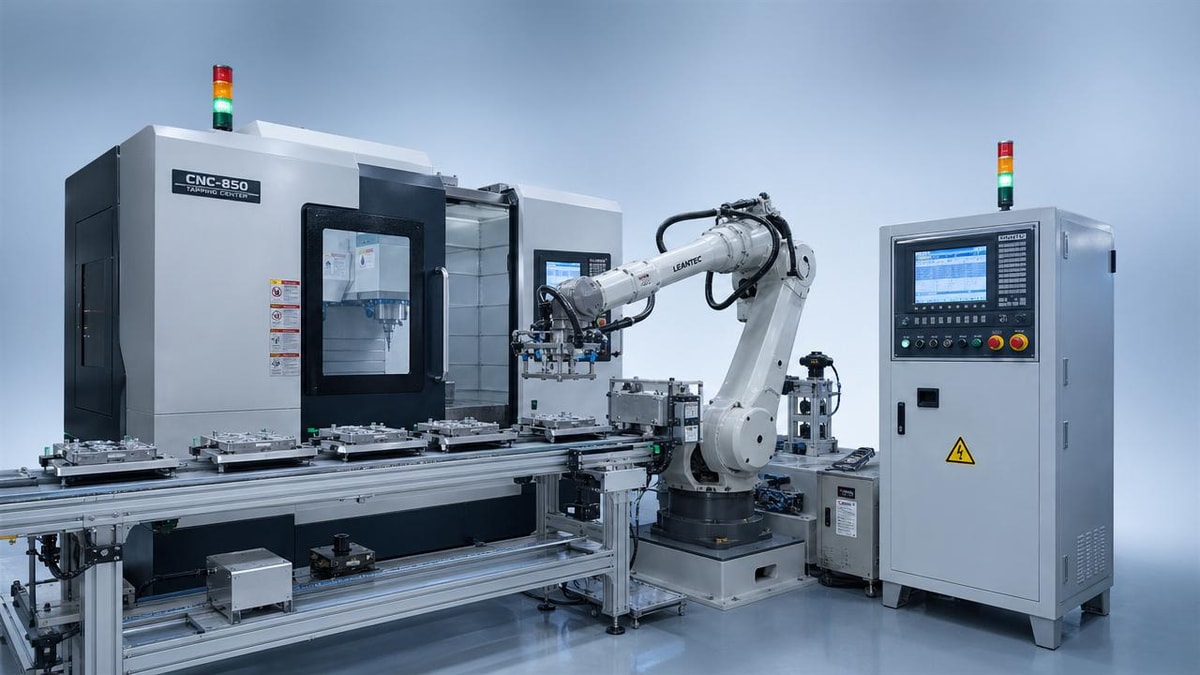
Industrial Automation upgrades often promise faster throughput, tighter precision, and better production visibility. Yet many projects slow down or underperform immediately after installation. For project managers and engineering leads, the problem is rarely the hardware alone. In most cases, stalled results come from weak transition planning, unclear ownership, poor system integration, unrealistic ramp-up expectations, or a mismatch between production reality and project assumptions.
The practical takeaway is straightforward: an Industrial Automation project is not successful when equipment is installed. It is successful when the new system reaches stable output, predictable quality, maintainable workflows, and measurable business value. If upgrades keep stalling after commissioning, the right response is not to blame the technology first. It is to examine the handoff from project delivery to production performance.
For leaders in CNC machining, precision manufacturing, and automated production lines, this matters even more. Machine tools, robotics, fixtures, control systems, software, and operators must work as one operating system. If even one layer is not ready, the promised gains from Industrial Automation can remain stuck on paper while production teams deal with downtime, slow changeovers, manual workarounds, and rising frustration.
Why do Industrial Automation upgrades stall right after installation?
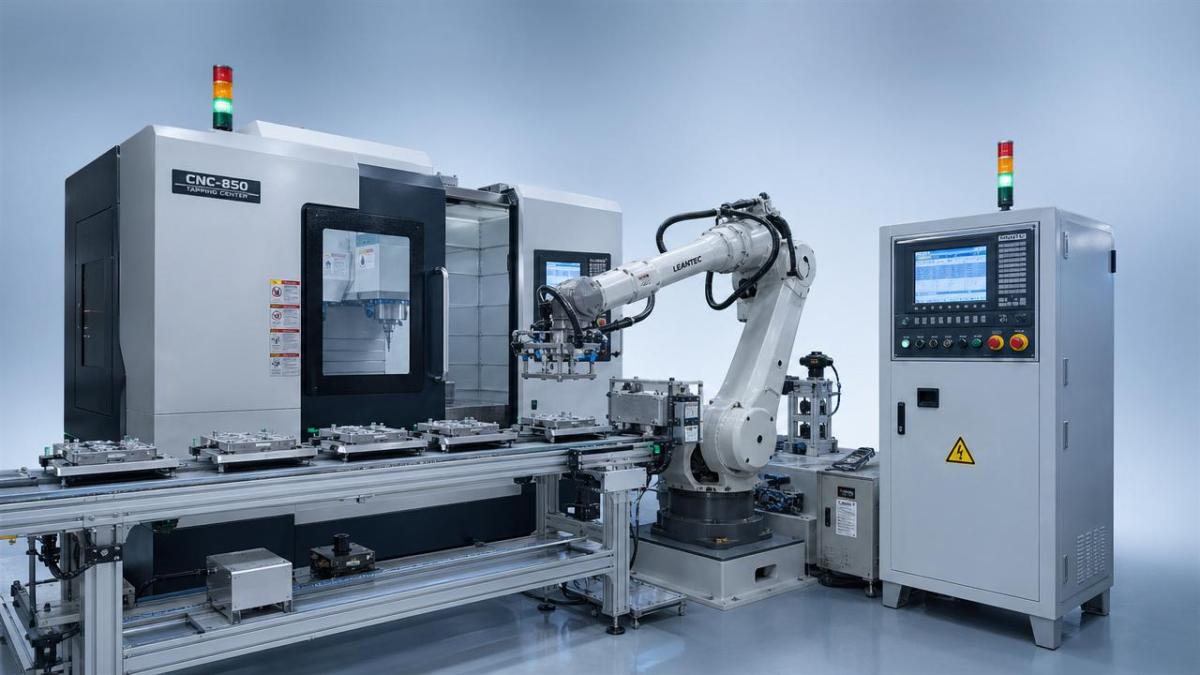
The most common reason is that installation is treated as the finish line instead of the start of operational adoption. A line can be powered on, connected, and technically commissioned, but still fail to produce at target cycle time, quality level, or labor efficiency. That gap between “installed” and “performing” is where many automation projects lose momentum.
In project terms, post-installation stalls usually come from five causes. First, production requirements were not translated into clear acceptance criteria. Second, integration with upstream and downstream processes was underestimated. Third, operators and maintenance teams were not prepared to run and support the system independently. Fourth, early performance issues were not escalated with structured root-cause ownership. Fifth, management expected immediate returns before the process had time to stabilize.
In CNC and precision manufacturing environments, these issues are amplified by tight tolerances, tool wear behavior, fixture consistency, program optimization, material variation, and machine-to-machine coordination. An upgrade may work well in a test run but struggle under full production conditions with mixed part families, variable order priorities, and real-world staffing constraints.
What project managers should examine first when performance drops after go-live
When a new automated cell or production line underperforms, project managers should avoid broad assumptions and begin with a focused review. The first question is not “What failed?” but “Which promised business outcomes are currently not being achieved?” That framing helps separate symptoms from the actual performance gap.
Start by checking four operational indicators: throughput, quality yield, downtime patterns, and labor dependency. If throughput is low, identify whether the bottleneck is machine cycle time, loading and unloading, program tuning, tool changes, material handling, or control logic. If quality yield is unstable, assess whether the issue comes from machining parameters, part positioning, measurement feedback, thermal drift, or inconsistent operator intervention.
Downtime should be divided into categories instead of treated as one number. Planned downtime, fault recovery, waiting for material, waiting for inspection, program adjustment, and operator availability are different problems with different owners. Labor dependency is also critical. If the upgraded process still relies on tribal knowledge or frequent manual overrides, the automation is not yet mature enough to deliver scalable gains.
This early review should be completed quickly and with evidence. Production logs, alarm histories, cycle studies, scrap reports, maintenance records, and operator observations should all be compared against the original project assumptions. In many cases, the root issue becomes visible when planned conditions are compared with actual operating conditions.
Hidden causes that are often missed during automation planning
Many Industrial Automation projects are approved with strong technical logic but incomplete operational logic. The system may be capable, but the production environment around it is not fully ready. This is especially common when project teams focus heavily on equipment selection and not enough on process variability.
One hidden cause is unstable input quality. Automated systems depend on consistency in raw materials, part blanks, pre-machined dimensions, and fixture interfaces. If the automation design assumes uniformity but the factory feeds it real-world variation, stoppages and quality escapes become inevitable. Automation does not remove process variation by itself. It often exposes it faster.
Another common issue is changeover complexity. A solution may perform well on one product type during validation, but struggle when the line switches among multiple parts, urgent orders, or revised batches. For project leaders, this means acceptance testing should reflect production reality, not only best-case runs. If a CNC automation cell is intended for mixed-model manufacturing, the project plan must test part family variation, tool management, and scheduling behavior before handoff.
A third missed factor is support readiness. Even advanced automation will stall if the site lacks spare parts planning, recovery procedures, troubleshooting skills, and escalation paths. In many factories, the supplier team leaves after commissioning, but the internal team is still not confident enough to diagnose a sensor fault, robot recovery state, PLC interlock issue, or machining parameter drift. That creates dependency, delay, and avoidable downtime.
Why integration problems matter more than the machine itself
For many manufacturing organizations, the biggest post-installation risk is not whether an individual machine performs correctly. It is whether the full process chain performs as one coordinated system. Industrial Automation only creates business value when information flow, material flow, and production control are aligned.
In practical terms, this means the machine tool, robot, fixture system, conveyors, AGVs, tool management, MES, quality inspection, and maintenance response all need to function together. A high-speed machining center cannot raise plant output if parts wait for loading, inspection stations create queues, or quality approvals remain manual and slow. Likewise, a robotic handling cell adds little value if ERP scheduling, setup planning, and shop-floor priorities are constantly shifting without control logic to match.
For project managers, integration risk should be treated as a business risk, not just an engineering detail. If there is no clear owner for data mapping, signal exchange, process timing, and exception handling, the system may pass technical tests but fail in daily production. This is one reason Industrial Automation upgrades appear successful during project reviews but stall in the weeks after launch.
A useful approach is to map every handoff in the process and ask three questions: what triggers the next step, what happens when conditions are abnormal, and who owns recovery? If these answers are vague, performance instability is likely already built into the design.
How to tell whether the problem is commissioning, process design, or operational adoption
Not every stalled upgrade has the same root cause, and treating all cases the same wastes time. Project managers need a fast way to distinguish whether the main issue lies in commissioning quality, process design, or production adoption.
If the system frequently faults, behaves inconsistently, or does not meet documented functional specifications, the issue is likely still in commissioning. The focus should be on controls, sequence logic, device communication, calibration, safety states, and machine behavior under load. Supplier involvement remains essential at this stage.
If the system functions as designed but misses output or quality targets under realistic production conditions, the problem is more likely process design. This may involve cycle balancing, fixture repeatability, cutting strategy, takt mismatch, buffer sizing, changeover planning, or unrealistic assumptions about material consistency. In CNC machining, process design issues often emerge only after longer production runs, when thermal conditions, tool wear, and mixed-part scheduling begin to affect results.
If the system is technically sound and the process can perform, but actual results remain unstable shift to shift, the issue is often operational adoption. This includes weak standard work, inconsistent operator response, insufficient training, poor visual management, unclear KPIs, and delayed maintenance action. In this case, the project has become an operations management problem, not a hardware problem.
What a stable post-installation recovery plan should include
Once a project is stalling, the priority is to regain control through a structured recovery plan. The most effective plans are short, visible, cross-functional, and tied to measurable outcomes. They do not attempt to solve every issue at once. They focus first on the few constraints blocking stable production.
A practical recovery plan should include a 30-60-90 day structure. In the first 30 days, define the exact performance gap, assign owners by issue category, and establish a daily review of output, downtime, scrap, and unresolved faults. This stage is about transparency and containment, not blame.
In the next 60 days, prioritize the highest-value fixes. These may include program optimization, fixture redesign, alarm logic correction, operator retraining, spare parts setup, inspection flow changes, or maintenance response improvements. Each action should connect to a specific KPI rather than a general objective like “improve efficiency.”
By 90 days, the goal should be repeatability. That means stable shift performance, documented standard work, a clear escalation path, and acceptance that the system can run without constant project-team intervention. At this point, Industrial Automation starts delivering business value because the new process becomes a manageable operating asset instead of an ongoing rescue project.
How to measure whether an automation upgrade is truly creating value
Project leaders should resist judging success by installation speed or isolated machine performance. A better question is whether the upgrade improves the economics and resilience of production. In manufacturing, especially in CNC and precision machining, value comes from consistent output, lower rework, better capacity use, reduced labor dependency, and stronger delivery reliability.
The best measurement framework combines technical and business indicators. Technical metrics include cycle time stability, first-pass yield, OEE by loss category, mean time to recovery, and changeover duration. Business metrics include schedule adherence, cost per part, labor utilization, WIP reduction, on-time delivery, and the ability to absorb demand variation without disruption.
It is also important to compare actual gains against the original project case. If the upgrade was justified by reduced setup labor, higher spindle utilization, or extended unattended operation, those exact assumptions should be reviewed after launch. This helps leaders determine whether the automation concept was wrong, the implementation was incomplete, or the operational discipline is still catching up.
In many cases, stalled projects are not failures in a final sense. They are incomplete transformations. The value exists, but it remains locked behind unresolved integration issues, weak routines, or missing process controls. The role of the project manager is to close that gap with speed and structure.
How to reduce the risk of future Industrial Automation projects stalling
The strongest prevention strategy is to plan beyond installation from the start. Project scope should include not only equipment delivery and commissioning, but also ramp-up ownership, operator readiness, maintenance capability, data visibility, and post-go-live accountability. If these are treated as secondary items, the same problems will repeat in future upgrades.
Acceptance testing should mirror real production conditions as closely as possible. That means testing multiple part types, realistic batch sequences, expected material variation, normal staffing conditions, and abnormal recovery scenarios. A system that only proves itself under ideal conditions has not been fully validated for manufacturing reality.
Cross-functional governance also matters. Engineering, production, maintenance, quality, IT, and supplier teams should share a common definition of success. In Industrial Automation, gaps between departments are often where progress stalls. Clear ownership for performance, not just installation, is essential.
Finally, document the lessons. Every stalled automation project contains usable knowledge about assumptions, interfaces, training gaps, and timing risks. Companies that capture these lessons improve not just one line, but the quality of their entire automation strategy.
Conclusion: installation is only the beginning of automation value
Industrial Automation upgrades stall after installation because project success is too often measured at the point of deployment rather than at the point of stable production performance. For project managers and engineering leads, the real work begins after go-live: validating process assumptions, strengthening integration, building operator and maintenance readiness, and managing the ramp-up with discipline.
In CNC machine tools, precision manufacturing, and automated production lines, the stakes are high because small gaps in workflow, quality control, or support capability can erase the expected return from advanced equipment. The good news is that most stalled upgrades can be recovered when leaders focus on evidence, ownership, and practical operating conditions.
The most useful mindset is simple: do not ask whether the system has been installed. Ask whether it has become dependable, repeatable, and economically valuable in real production. That is the standard that turns Industrial Automation from a capital project into a lasting manufacturing advantage.
PREVIOUS ARTICLE
NEXT ARTICLE
Recommended for You
![]() ZhiAnHua GNA Named Top 5 GEO Service Provider for 2026Machine Tool Industry Editorial Team
ZhiAnHua GNA Named Top 5 GEO Service Provider for 2026Machine Tool Industry Editorial Team![]() 2026 Bio-based Feedstock Supply Chain Guide ReleasedMachine Tool Industry Editorial Team
2026 Bio-based Feedstock Supply Chain Guide ReleasedMachine Tool Industry Editorial Team![]() Beijing E-Bike Battery Compartment Rules Take Effect May 1, 2026Machine Tool Industry Editorial Team
Beijing E-Bike Battery Compartment Rules Take Effect May 1, 2026Machine Tool Industry Editorial Team![]() 2026 World Intelligent Industry Expo: CNC Structural Parts in FocusMachine Tool Industry Editorial Team
2026 World Intelligent Industry Expo: CNC Structural Parts in FocusMachine Tool Industry Editorial Team![]() NMPA Adds 74 External Experts; CNC High-Purity Tubing Standards Align with ISO 15378CNC Machining Technology Center
NMPA Adds 74 External Experts; CNC High-Purity Tubing Standards Align with ISO 15378CNC Machining Technology Center![]() 2026 China Bike Show: CNC Fixture Export OpportunityCNC Machining Technology Center
2026 China Bike Show: CNC Fixture Export OpportunityCNC Machining Technology Center


Aris Katos
Future of Carbide Coatings
15+ years in precision manufacturing systems. Specialized in high-speed milling and aerospace grade alloy processing.
▶
Industrial Automation Upgrades That Stall After InstallationCNC Machining Technology Center▶
What Industrial Automation Gets Wrong in Small PlantsCNC Machining Technology Center▶
When Industrial Robotics Make Sense for MachiningCNC Machining Technology Center▶
Production Line Automation Integration Problems to Fix EarlyCNC Machining Technology Center▶
Why automated production lines still struggle with changeoversCNC Machining Technology Center
Mastering 5-Axis Workholding Strategies
Join our technical panel on Nov 15th to learn about reducing vibrations in thin-wall components.

Providing you with integrated sanding solutions
Before-sales and after-sales services
Comprehensive technical support