• Global CNC market projected to reach $128B by 2028 • New EU trade regulations for precision tooling components • Aerospace deman
NYSE: CNC +1.2%LME: STEEL -0.4%

Production Line Automation Integration Problems to Fix Early
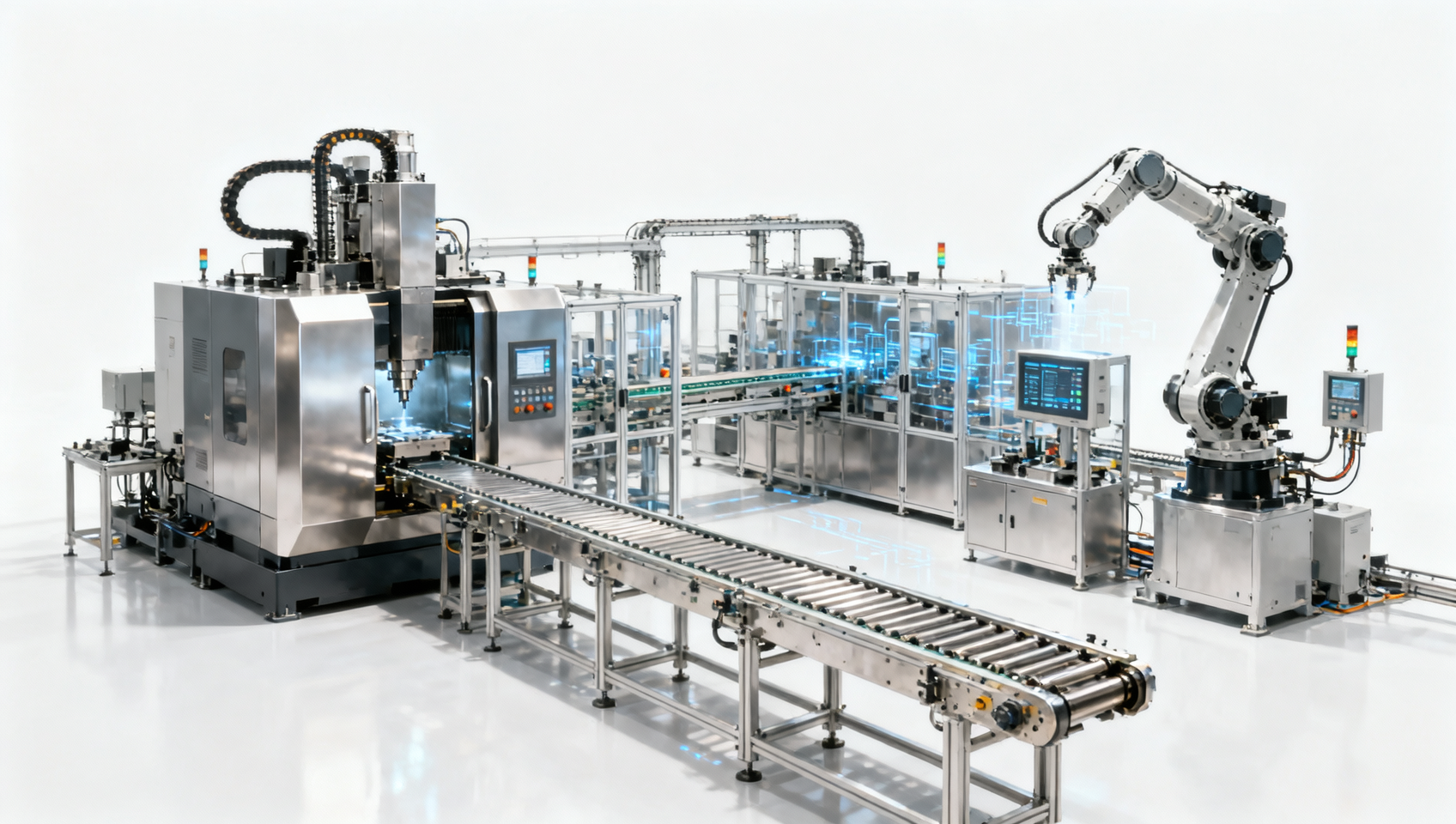
Production line automation projects often fail not because of hardware, but because Industrial Automation integration for production line issues are ignored too late. From control logic conflicts to data gaps, safety risks, and maintenance planning, early fixes protect uptime, cost, and scalability. This guide highlights the most common integration problems manufacturers should solve first to build a smarter, more reliable automated system.
For CNC machining, precision machine tools, robotic handling, and automated assembly environments, integration quality directly affects throughput, scrap rate, delivery reliability, and future expansion. This matters to plant engineers, line operators, sourcing teams, and business leaders alike, because a mismatch between machines, controls, software, and safety systems can turn a high-value automation project into a slow, expensive bottleneck.
In practice, most production line automation problems appear during commissioning or within the first 3 to 6 months of operation. By then, corrective work is more disruptive and often 20% to 40% more expensive than solving the same issue during design review. The earlier integration risks are identified, the easier it becomes to protect OEE, maintain part quality, and support scalable smart manufacturing.
Control Architecture Problems That Disrupt Automated Production
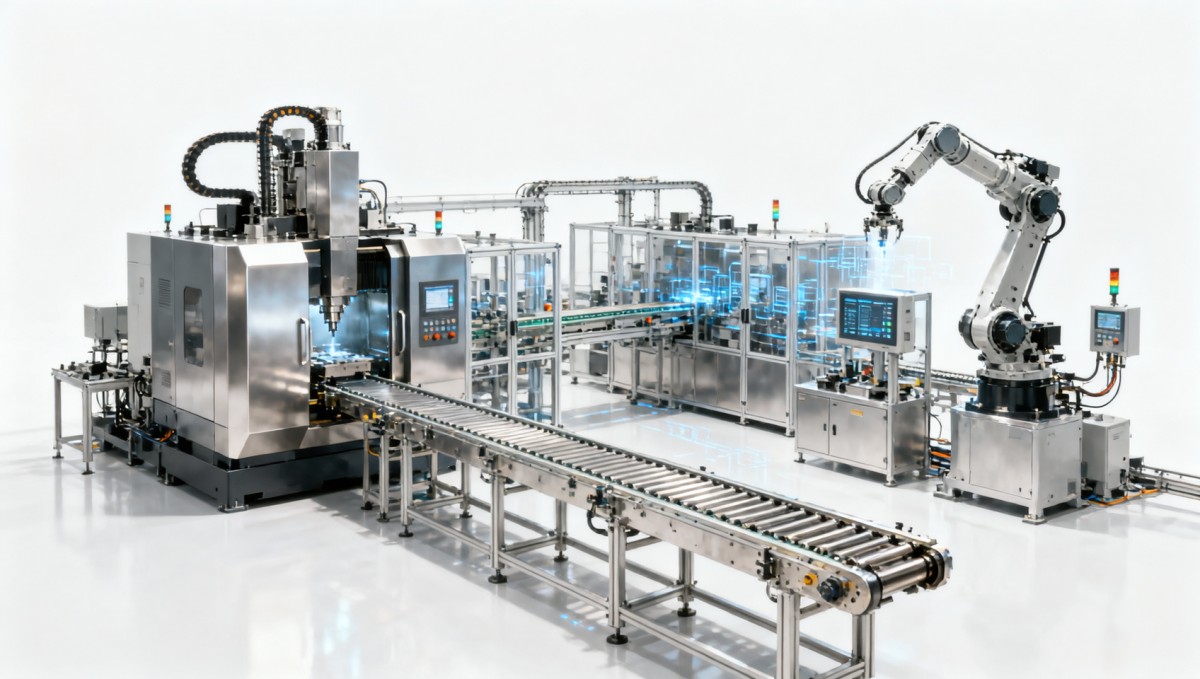
A production line can include CNC lathes, machining centers, conveyors, robot cells, inspection stations, tool management units, and MES or SCADA connections. When each subsystem is designed in isolation, control conflicts become one of the first integration failures. The most common examples are duplicated command priorities, inconsistent signal naming, and unclear handshakes between PLCs, robot controllers, and machine interfaces.
In high-mix manufacturing, even a 1 to 2 second delay in machine-ready signals can create queue accumulation across multiple stations. If a 10-station line loses only 12 seconds per cycle because of poor interlock logic, the lost capacity can become significant over 2 or 3 shifts. For operators, the result is frequent reset activity. For managers, it shows up as unstable takt time and lower output per labor hour.
A robust automation integration plan should define command ownership before hardware installation begins. This includes start, stop, alarm reset, fault recovery, part present confirmation, recipe transfer, tool life signals, and emergency stop behavior. In CNC production lines, the handoff between machine tool cycle completion and robot pick-and-place logic deserves special attention because even small timing errors can damage fixtures, parts, or end effectors.
Key control design checks before commissioning
Before FAT or SAT, manufacturers should verify not only whether each machine runs alone, but whether the line behaves correctly under abnormal conditions. A line that works for 50 cycles in ideal conditions may still fail when a buffer fills up, a tool reaches life limit, or an upstream robot pauses for recovery. These edge cases should be tested in a structured sequence.
- Define 4 basic state models for every station: idle, running, blocked, and faulted.
- Map all I/O signals with naming rules, ownership, timeout limits, and restart conditions.
- Set handshake timers, typically within 300 ms to 2 s depending on process type and safety logic.
- Test at least 3 abnormal scenarios per station, such as part missing, clamp failure, or communication timeout.
The table below outlines common control integration gaps and their operational impact in CNC and automated production environments.
The practical lesson is simple: line-level control architecture should be treated as a core design task, not a final programming step. Companies that document state logic, timing, and fault handling early are far more likely to achieve stable ramp-up within the first 2 to 4 weeks after installation.
Data Flow, Software Compatibility, and Traceability Gaps
Many automated production lines perform well mechanically but fail digitally. CNC machines may generate machining data, robots may store cycle counts, and inspection systems may capture dimensional results, yet none of these systems share information in a useful way. Without structured data integration, production teams lose traceability, maintenance teams miss early warnings, and managers struggle to measure performance accurately.
A typical problem is protocol mismatch. One machine may support OPC UA, another may rely on Modbus TCP, while older equipment may only provide discrete I/O or vendor-specific drivers. If this is not addressed during project planning, integration teams often build temporary bridges late in the project. These patches can work at first, but they usually increase troubleshooting complexity and cybersecurity risk over time.
Traceability is especially important in precision manufacturing. When producing aerospace parts, automotive components, or energy equipment, it is often necessary to connect part ID, machine program version, tool usage, inspection result, and operator event history. If one data link fails, root cause analysis becomes slow and expensive. In some plants, investigating a single recurring defect can take 6 to 12 hours longer when line data is fragmented.
What data should be connected first
Not every automation project needs a full smart factory stack on day one. A phased approach usually works better. Start with the data points that directly support uptime, quality control, and scheduling accuracy. This gives both technical and procurement teams a realistic scope and a cleaner return-on-investment path.
- Machine status data: run, idle, alarm, setup, maintenance.
- Part and batch traceability: barcode, RFID, or work order linkage.
- Quality checkpoints: pass/fail, measurement values, rework flag.
- Tooling and consumables: tool life count, replacement threshold, usage trend.
- Production scheduling signals: job release, completion, WIP movement.
The following table helps compare common integration priorities for automated CNC and precision manufacturing lines.
The best early fix is to create a line-wide data map before selecting gateways, software layers, or dashboards. This should define data owner, update frequency, storage purpose, and response action. For example, a spindle overload event should not only be logged, but also linked to maintenance review within 24 hours if it occurs more than 3 times in a shift.
Safety Integration and Human-Machine Interaction Risks
Safety problems in automation integration are rarely limited to emergency stops. The real challenge is how guards, light curtains, access doors, collaborative zones, robot speed limits, and machine states work together during production, setup, recovery, and maintenance. A line may meet basic hardware safety requirements and still expose operators to avoidable risk if the overall safety logic is incomplete.
In CNC and robotic cells, the most frequent weak point is mode transition. A line behaves differently during automatic operation, manual jog, setup, tool change, and fault reset. If operators can enter a guarded zone while one subsystem still has stored motion or delayed restart logic, the result can be dangerous. This is why safety integration should be reviewed across the full operating sequence, not only during normal cycle conditions.
Human-machine interface design also matters. If alarm messages are vague, operators may use repeated bypasses or informal workarounds just to keep the line running. That is a warning sign. A safe, efficient HMI should tell the operator what happened, where it happened, and what action is allowed next. In many plants, clear alarm hierarchy can reduce fault recovery time by 15% to 30%.
Early-stage safety review checklist
Focus on operating reality, not only design drawings
- Review 5 operating modes separately: automatic, manual, setup, maintenance, and restart after fault.
- Confirm that every protective device has a defined action on machine tools, robots, conveyors, and auxiliary systems.
- Set safe restart conditions so the line cannot resume motion until all stations confirm reset status.
- Make HMI alarms readable within 3 to 5 seconds, with location, cause, and permitted response.
Procurement teams should also check whether suppliers define safety boundaries in writing. A line with 4 vendors and no single integration authority often creates responsibility gaps. One builder may assume the robot integrator handles interlocks, while the robot integrator assumes the machine OEM does. That ambiguity should be removed before PO release and again before SAT.
For decision-makers, the goal is not excessive restriction but controlled productivity. Good safety integration allows fast operation, predictable recovery, and operator confidence. Plants that treat safety as part of usability usually see better adoption, fewer forced stops, and smoother onboarding for new operators within the first 30 to 60 days.
Maintenance Planning, Spare Parts Strategy, and Support Readiness
An automated production line is only as reliable as the maintenance structure behind it. Many companies focus heavily on capex selection but leave preventive maintenance, spare parts availability, lubrication routines, and troubleshooting ownership undefined until after start-up. By then, every unexpected stop becomes more expensive because technicians are reacting without a prepared support model.
For CNC machine tools and automation cells, maintenance planning should begin during the integration phase. This includes identifying critical wear items, recommended inspection intervals, backup component strategy, and software version control. If a line depends on one servo drive, one robot wrist cable, or one spindle cooling module with an 8 to 12 week lead time, that risk should be visible long before production launch.
Another early problem is maintenance accessibility. A robot cell may be compact and efficient on the drawing, yet difficult to service in reality. If technicians need 45 minutes to access a sensor or remove a guarded panel, mean time to repair increases quickly. Integration reviews should therefore include physical access, cable routing, labeling clarity, and spare part replacement path, not just cycle time optimization.
Minimum support framework before go-live
The most reliable plants usually establish a maintenance package before commissioning is complete. This package does not need to be complex, but it should define responsibilities, stock rules, escalation paths, and response targets. The table below summarizes a practical baseline.
A strong maintenance plan should also include training depth. Operators need basic fault recognition and safe reset skills. Maintenance technicians need diagnostic access, backup files, and control architecture documentation. For most automated lines, 2 training layers are the minimum, while more complex multi-machine systems may need 3 to 4 role-based training modules before stable operation is achieved.
Procurement and Implementation Decisions That Prevent Late Integration Failure
Many integration problems begin with purchasing decisions that focus too narrowly on unit price, machine specification, or cycle time claims. In automated production lines, the better procurement question is not only “Can this machine perform the process?” but also “Can this equipment integrate cleanly with the rest of the line over the next 5 to 10 years?” That shift in evaluation criteria can prevent major cost and delay later.
A good sourcing process should compare suppliers across interface openness, documentation quality, spare part lead time, remote support capability, software compatibility, and willingness to participate in line-level testing. This is especially relevant in global CNC and machine tool supply chains where machines may come from different regions, standards, and control ecosystems. A low-cost machine can become the most expensive asset if it requires custom interface work at every expansion step.
Implementation planning should be staged. A typical automation line benefits from 3 structured checkpoints: design review, FAT, and SAT. Each checkpoint should have measurable pass criteria. For example, FAT may require successful recipe changeover, communication testing, and 100 consecutive simulated cycles. SAT may require a defined uptime target over 2 to 5 production days, depending on line complexity and part criticality.
Procurement questions to ask before contract award
- Does the supplier provide interface documentation, signal lists, and alarm mapping before installation?
- What communication methods are supported today, and what upgrades are possible later?
- How long are standard spare part lead times: 48 hours, 2 weeks, or 10 weeks?
- Who owns line-level debugging when equipment from 3 or more vendors interacts?
- Is operator and maintenance training included, and how many hours are covered?
A practical early-fix roadmap
- Map every machine, robot, sensor, buffer, and software touchpoint in one integration diagram.
- Define control ownership, signal timing, data exchange, and safety actions before coding starts.
- Review maintainability, spare strategy, and access paths during mechanical layout approval.
- Run abnormal scenario testing, not only nominal cycle tests, before site acceptance.
- Set a 30-day and 90-day post-launch review to capture recurring issues and fine-tune logic.
For manufacturers expanding into flexible production, mixed-model machining, or smart factory integration, early procurement discipline is often the difference between a line that merely runs and a line that scales. The companies that fix integration risks early typically gain faster ramp-up, cleaner traceability, lower service friction, and more predictable ROI.
FAQ: Common Questions About Production Line Automation Integration
How early should integration planning start in an automation project?
Ideally, integration planning begins at concept stage, before equipment is fully specified. Waiting until mechanical design or installation often creates rework. At minimum, control architecture, safety boundaries, and data requirements should be defined 6 to 12 weeks before FAT for medium-complexity lines.
Which issue causes the most hidden cost after launch?
Poor fault recovery design is one of the most expensive hidden issues. A line may achieve target cycle time, but if operators need 10 to 20 minutes to recover from a blocked station or communication drop, actual output falls quickly. Clear alarm logic, guided restart steps, and better signal ownership usually provide fast returns.
What should buyers prioritize when sourcing mixed-vendor automation equipment?
Prioritize integration openness, documentation, and support responsiveness. Buyers should examine at least 4 areas: interface protocol, spare part lead time, training scope, and line-level debugging responsibility. These items often matter more than small differences in purchase price, especially for CNC and precision manufacturing lines with demanding uptime targets.
How long does it usually take to stabilize a newly integrated production line?
For a well-prepared project, initial stabilization often takes 2 to 4 weeks after SAT. More complex lines with robotics, traceability, and multi-machine synchronization may need 6 to 12 weeks to reach consistent output, especially if operators are still building experience or product mix changes frequently.
Production line automation succeeds when integration is treated as a strategic engineering task from the beginning. Control logic, data connectivity, safety behavior, maintenance support, and procurement discipline all shape whether a CNC or precision manufacturing line delivers stable productivity or ongoing disruption. Fixing these issues early protects uptime, quality, serviceability, and long-term expansion value.
If you are evaluating CNC machines, automated production lines, robotic cells, or precision manufacturing solutions, a structured integration review can reduce project risk before purchase and speed up implementation after delivery. Contact us to discuss your production goals, compare solution paths, and get a tailored automation plan for your manufacturing environment.
PREVIOUS ARTICLE
NEXT ARTICLE
Recommended for You
![]() Iranian LNG Vessels Breach U.S. Strait Blockade; Shanghai Crude Surges 4%Manufacturing Market Research Center
Iranian LNG Vessels Breach U.S. Strait Blockade; Shanghai Crude Surges 4%Manufacturing Market Research Center![]() Pakistan Launches CNC Localization Tender for CPEC II Smart Manufacturing ParkGlobal Machine Tool Trade Research Center
Pakistan Launches CNC Localization Tender for CPEC II Smart Manufacturing ParkGlobal Machine Tool Trade Research Center![]() NVIDIA Joins $1T Club; AI-Driven CNC Digital Twin Gains Global TractionCNC Machining Technology Center
NVIDIA Joins $1T Club; AI-Driven CNC Digital Twin Gains Global TractionCNC Machining Technology Center![]() World's First 5-Axis Middle-Grade Wire EDM Machine Enters Mass ProductionMachine Tool Industry Editorial Team
World's First 5-Axis Middle-Grade Wire EDM Machine Enters Mass ProductionMachine Tool Industry Editorial Team![]() China’s CNC Machine Tool Export Prices Up 11.3% in Q1 2026Global Machine Tool Trade Research Center
China’s CNC Machine Tool Export Prices Up 11.3% in Q1 2026Global Machine Tool Trade Research Center![]() Saudi Energy Security Boosts CNC Import Efficiency in Middle EastGlobal Machine Tool Trade Research Center
Saudi Energy Security Boosts CNC Import Efficiency in Middle EastGlobal Machine Tool Trade Research Center


Aris Katos
Future of Carbide Coatings
15+ years in precision manufacturing systems. Specialized in high-speed milling and aerospace grade alloy processing.
▶
Production Line Automation Integration Problems to Fix EarlyCNC Machining Technology Center▶
Why automated production lines still struggle with changeoversCNC Machining Technology Center▶
When does an Automated Production Line become too rigid?CNC Machining Technology Center▶
Industrial Robotics integration costs more in low mix productionCNC Machining Technology Center▶
Industrial robotics integration slowing down CNC lathe throughput in mixed-part batchesCNC Machining Technology Center
Mastering 5-Axis Workholding Strategies
Join our technical panel on Nov 15th to learn about reducing vibrations in thin-wall components.

Providing you with integrated sanding solutions
Before-sales and after-sales services
Comprehensive technical support