• Global CNC market projected to reach $128B by 2028 • New EU trade regulations for precision tooling components • Aerospace deman
NYSE: CNC +1.2%LME: STEEL -0.4%

When Industrial Robotics Make Sense for Machining
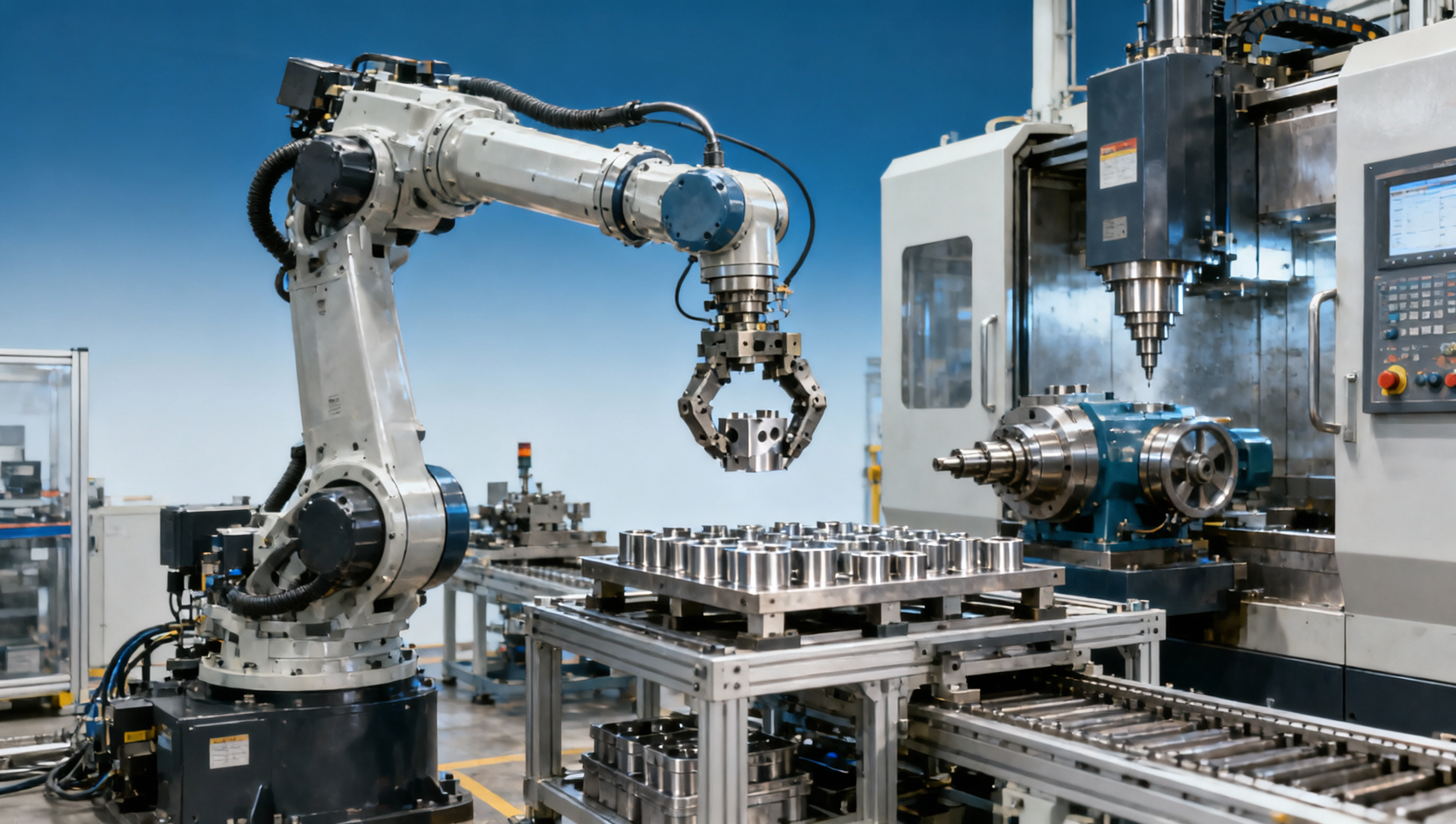
As Global Manufacturing faces rising demands for precision, speed, and flexibility, many manufacturers are asking when Industrial Robotics truly add value to metal machining. From industrial CNC and CNC milling to automated lathe systems and full Automated Production Line integration, the right investment depends on part complexity, production volume, labor constraints, and the overall Production Process.
When do industrial robots actually make sense in machining?
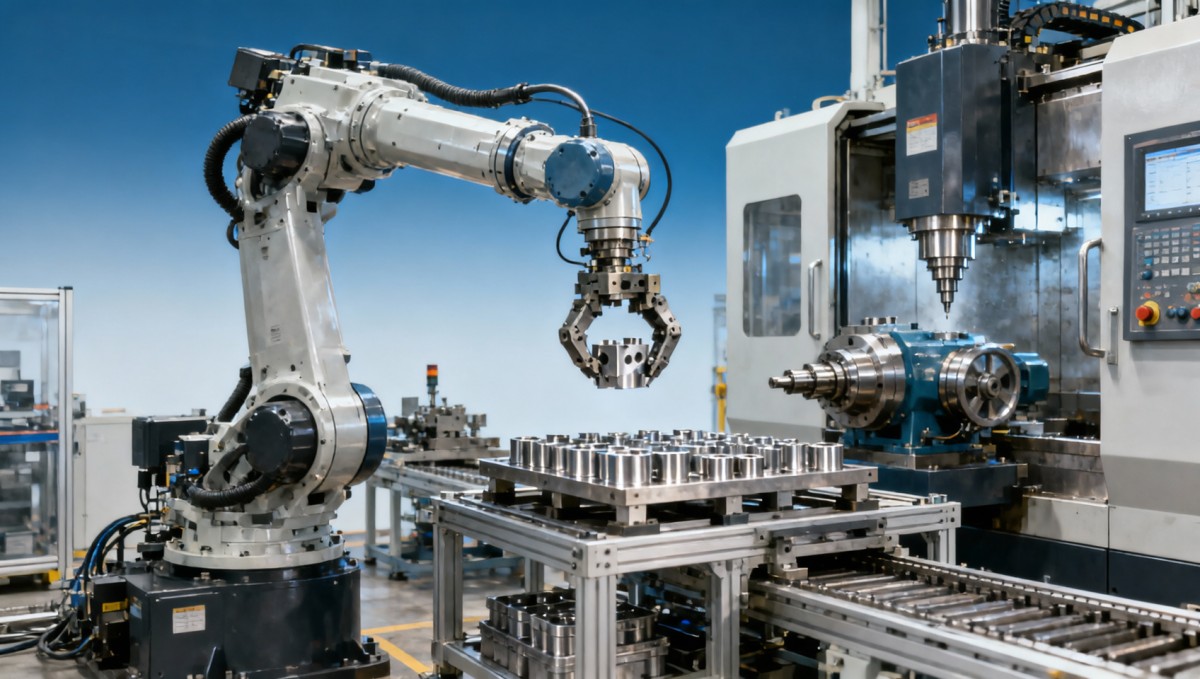
Industrial robotics in machining are most effective when handling repetitive, predictable, and physically demanding tasks around CNC machine tools. In many factories, the robot does not replace the cutting process itself. Instead, it supports loading, unloading, part transfer, deburring support, inspection handoff, palletizing, and machine tending across industrial CNC, CNC milling, and CNC lathe cells.
For information researchers and business evaluators, the key question is not whether robotics are advanced, but whether they improve throughput, consistency, and labor utilization in a measurable way. In typical machining environments, a robot cell becomes easier to justify when production runs extend beyond one shift, when the same part family repeats for 3–12 months, or when operators spend a large share of their time on non-cutting handling tasks.
For operators and users, the practical benefit is process stability. A robot can present raw stock to the chuck or fixture with repeatable orientation, reduce manual lifting, and keep spindle uptime more consistent. This is especially useful in shops running medium-volume batches, mixed day and night shifts, or lights-out production windows of 4–8 hours.
For procurement teams, the decision should start with bottleneck mapping. If a machining center already runs at high spindle utilization but waits 20–60 seconds between cycles for manual loading, robotics may unlock capacity without adding another machine. If the bottleneck is unstable tooling, poor fixturing, or long programming delays, a robot alone will not solve the problem.
Signals that robotic machine tending is worth evaluating
A practical evaluation often begins with 4 core indicators rather than a broad automation slogan. These indicators help separate high-value use cases from expensive but underused installations.
- Cycle time repetition: part loading and unloading follow a stable sequence, often within a repeatable 30-second to 5-minute machine cycle range.
- Volume consistency: the shop runs recurring part families in small-to-medium or medium-to-high volume rather than one-off prototypes every day.
- Labor pressure: skilled operators are hard to recruit, night shifts are thinly staffed, or manual handling creates ergonomic risk for parts above 5–10 kg.
- Integration readiness: the CNC machine, gripper, fixture, safety layout, and infeed or outfeed logic can be linked within a realistic 2–6 week implementation window.
If at least 3 of these 4 conditions are present, an industrial robot deserves serious technical and financial review. If only 1 condition applies, improving fixtures, tooling, or work scheduling may produce faster returns.
Which machining scenarios benefit most from robotics?
Not every machining process gains equally from automation. The best applications usually combine consistent part geometry, controlled loading orientation, and a clear handoff between machine operations. In precision manufacturing, this often includes shaft parts on CNC lathes, prismatic parts on machining centers, and repeatable transfer steps between washing, inspection, and packing stations.
Automotive and electronics suppliers often see value early because their programs involve repeated production over several months, with tight takt expectations and documented quality requirements. Aerospace and energy equipment manufacturers can also benefit, but only when part families are stable enough and fixtures are designed for robotic access rather than manual improvisation.
A common mistake is to judge suitability only by annual volume. Volume matters, but part presentation, chip conditions, coolant exposure, orientation tolerance, and machine door timing matter just as much. A low-to-medium volume program can still justify robotics if parts are heavy, shifts are extended, and the machine cycle is long enough to absorb safe robot motion.
The table below helps compare typical machining scenarios where industrial robotics are often considered. It focuses on application fit, not on one universal answer.
The highest-value projects usually sit in the first, second, and fourth categories. In these cases, robotics support machine utilization, reduce labor variability, and make automated production lines more predictable from raw material input to finished part output.
Application details buyers often overlook
Part characteristics
Parts with stable outer geometry, manageable chip carryover, and defined gripping surfaces are easier to automate. Thin-wall parts, oily irregular castings, or delicate cosmetic surfaces may require custom grippers, compliant handling, or intermediate nests.
Changeover frequency
If product changeovers happen several times per shift, robotics can still work, but only if gripper changes, recipe selection, and fixture location are planned into the cell design. Shops with weekly or biweekly changeovers usually see fewer implementation obstacles.
Shift structure
A robot’s value grows when production extends to 2 shifts, 3 shifts, or unattended evening operation. In single-shift shops with short runs, labor flexibility may still beat fixed automation.
Robot vs manual tending: what should procurement compare?
Procurement decisions should compare process models, not just equipment prices. A robot cell may reduce direct handling labor, but it also introduces integration cost, safety requirements, programming time, spare parts planning, and maintenance routines. A manual cell appears cheaper upfront, yet may carry hidden costs in overtime, inconsistent staffing, injury exposure, and lower machine utilization.
For B2B buyers, the most useful framework is a 5-point comparison: cycle impact, labor dependence, changeover effort, quality risk, and scalability. This approach helps align technical teams, plant managers, and commercial reviewers before a capital expenditure decision is made.
The table below compares manual tending and industrial robotics in machining under typical factory conditions. The exact result varies by part family, but these dimensions are widely relevant for CNC milling, CNC turning, and automated lathe systems.
This comparison shows why many companies adopt a hybrid model. They keep manual flexibility for development jobs and high-mix urgent work, while assigning robots to stable, repeatable machining programs. That blended strategy often delivers better capacity balance than trying to automate every machine at once.
A simple decision checklist for buyers
- Check whether spindle idle time caused by loading exceeds a meaningful share of the cycle, especially in recurring jobs.
- Review whether the cell can run unattended for at least 2–4 hours with stable tooling, chip evacuation, and part presentation.
- Confirm whether part families can be grouped into 2–3 gripper and fixture standards instead of requiring a new setup every day.
- Estimate whether labor savings, extra available machine hours, and quality stability justify the added integration scope.
If these points are favorable, a robot project moves from a technical idea to a valid procurement option. If they remain unclear, request a layout and process study before budget approval.
How should companies evaluate cost, risk, and implementation?
In machining automation, cost should be viewed across the full production process rather than only as equipment purchase price. A robot project typically includes the robot arm, end-of-arm tooling, safety fencing or guarding, electrical integration, CNC interface, part infeed and outfeed, commissioning, and operator training. Depending on complexity, implementation may take 2–8 weeks after all peripherals are available.
The return case usually depends on 3 financial drivers: labor substitution or redeployment, increased machine uptime, and reduced variability. For example, if a machining center gains several extra production hours per day because loading becomes automated, the benefit may be stronger than direct labor reduction alone. In contrast, low-utilization machines rarely justify a robotic cell.
Risk assessment is equally important. A technically impressive robot cell can fail commercially if chip management is poor, grippers are not tolerant to variation, or part buffers are undersized for night operation. Many problems blamed on robotics are actually failures in fixturing discipline, machine condition, or process planning.
Before investment approval, procurement and engineering teams should align on the following implementation sequence. It keeps the project grounded in production reality instead of presentation slides.
- Define the part family, cycle range, payload, gripping surfaces, and expected shift pattern.
- Verify CNC interface compatibility, door automation, fixture repeatability, and safety layout requirements.
- Run a trial logic review for chip evacuation, raw material staging, finished part buffering, and fault recovery.
- Plan commissioning, operator training, spare grippers, and acceptance criteria over the first 30–90 days.
Common cost alternatives when a full robot cell is not ideal
If full industrial robotics are not justified, manufacturers still have automation options. Bar feeders for turning, gantry loaders, pallet changers, collaborative handling for lighter parts, and simple conveyorized loading systems may offer a lower-complexity path. These alternatives can support output growth without the same integration depth as a multi-function robot cell.
When simpler automation may be better
For long-run shaft turning, a bar feeder may outperform a robot in simplicity. For horizontal machining with stable fixtures, a pallet pool may increase productive hours more directly. For small components under light payload ranges, simpler pick-and-place devices may reduce cost and training burden.
When robotics remain the stronger option
Robotics become stronger when a single cell must handle several part types, transfer between multiple stations, or operate across CNC, inspection, washing, and packing interfaces. Their flexibility is valuable when production complexity is structured, not chaotic.
What technical and compliance points should not be missed?
A machining robot project succeeds only when technical fit and compliance are addressed together. Buyers should examine payload, reach, gripper design, ingress protection suitability, machine interface logic, and safety architecture. In oily, chip-heavy environments, these details matter just as much as cycle time calculations.
From a compliance perspective, requirements vary by region and machine configuration, but general good practice includes proper guarding, emergency stop logic, interlocks, risk assessment documentation, and clear operator procedures. For exported equipment or multinational factories, teams should also review applicable electrical, machinery, and workplace safety requirements early in the project.
Acceptance criteria should cover more than motion. A useful commissioning plan often includes 6 checks: repeatable loading position, safe recovery after alarms, stable cycle timing, part traceability method, gripper wear monitoring, and operator handover training. These items reduce surprises after installation.
The table below summarizes several technical and compliance checkpoints that procurement teams can ask suppliers to clarify before comparing quotations.
This checklist is useful because robot quotations can look similar on paper while differing significantly in integration scope and long-term support. Asking for these details early improves quote comparability and reduces downstream project risk.
FAQ: common questions before investing in machining robotics
Are industrial robots only suitable for high-volume production?
No. High volume helps, but it is not the only trigger. Medium-volume programs can also justify robotics when parts are heavy, labor is constrained, or the cell can run unattended for several hours. What matters most is repeatability across the production process, not volume alone.
How long does a typical robot integration take?
A straightforward machine tending project may take roughly 2–6 weeks for integration and commissioning once the machine interface, gripper concept, and safety plan are confirmed. More complex automated production line projects involving multiple machines, washing, inspection, and traceability often take longer.
What is the most common reason a robot cell underperforms?
The most common issue is not the robot itself. It is unstable upstream or downstream conditions such as inconsistent raw part presentation, unreliable fixturing, chip buildup, or poor alarm recovery logic. A stable CNC process must exist before automation can scale it effectively.
Should buyers choose a robot first or define the process first?
Define the process first. Start with part family, spindle cycle, loading orientation, fixture concept, buffer logic, and target shift pattern. Once those are clear, the right robot payload, reach, and gripper style become easier to specify. Reversing that order often leads to rework.
For research teams, operators, and procurement managers, the core takeaway is simple: industrial robotics make sense for machining when they remove a real production constraint. That constraint may be labor shortage, inconsistent tending, limited night operation, or poor flow between CNC machines and adjacent processes. If the true bottleneck lies elsewhere, robotics should wait.
Why work with us when evaluating CNC machining automation?
We focus on the global CNC machining and precision manufacturing industry, with attention to machine tools, automated production lines, machining process planning, and practical procurement evaluation. That means the discussion can start from your actual application: shaft parts, precision discs, structural components, CNC milling cells, automated lathe systems, or multi-station production flow.
If you are comparing whether industrial robotics fit your project, we can help structure the decision around real factors instead of generic automation claims. You can consult on part handling logic, machine compatibility, cycle range, changeover frequency, deployment steps, and the tradeoff between robot cells and alternative automation such as bar feeders, pallet systems, or gantry loading.
For procurement and business evaluation, we can help clarify 6 practical topics before quotation approval: parameter confirmation, solution selection, estimated delivery cycle, customization scope, compliance considerations, and sample or trial discussion. This is especially useful when comparing multiple suppliers across China, Germany, Japan, South Korea, or other manufacturing regions.
If you are planning a new machining cell or upgrading an existing production process, contact us with your part type, machine model, batch range, and target output. We can help you review whether robotics are appropriate, what configuration questions should be asked first, and which implementation path is more commercially realistic for your factory.
PREVIOUS ARTICLE
Recommended for You
![]() China Releases First Eastern Sea Seabed Elemental MapGlobal Machine Tool Trade Research Center
China Releases First Eastern Sea Seabed Elemental MapGlobal Machine Tool Trade Research Center![]() AIMM National Standard Advances for CNC Smart Factory CertificationManufacturing Policy Research Center
AIMM National Standard Advances for CNC Smart Factory CertificationManufacturing Policy Research Center![]() eVTOL Mass Production Drives CNC Export GrowthGlobal Machine Tool Trade Research Center
eVTOL Mass Production Drives CNC Export GrowthGlobal Machine Tool Trade Research Center![]() China Launches World's Largest Agri-Meteorological Observation NetworkManufacturing Market Research Center
China Launches World's Largest Agri-Meteorological Observation NetworkManufacturing Market Research Center![]() Robotics ToB Scaling Hits Data Bottleneck in CNC AI InspectionCNC Machining Technology Center
Robotics ToB Scaling Hits Data Bottleneck in CNC AI InspectionCNC Machining Technology Center![]() SAMR to Complete 1,800+ Standards Revisions in 2026Manufacturing Policy Research Center
SAMR to Complete 1,800+ Standards Revisions in 2026Manufacturing Policy Research Center


Aris Katos
Future of Carbide Coatings
15+ years in precision manufacturing systems. Specialized in high-speed milling and aerospace grade alloy processing.
▶
What Industrial Automation Gets Wrong in Small PlantsCNC Machining Technology Center▶
When Industrial Robotics Make Sense for MachiningCNC Machining Technology Center▶
Production Line Automation Integration Problems to Fix EarlyCNC Machining Technology Center▶
Why automated production lines still struggle with changeoversCNC Machining Technology Center▶
When does an Automated Production Line become too rigid?CNC Machining Technology Center
Mastering 5-Axis Workholding Strategies
Join our technical panel on Nov 15th to learn about reducing vibrations in thin-wall components.

Providing you with integrated sanding solutions
Before-sales and after-sales services
Comprehensive technical support