• Global CNC market projected to reach $128B by 2028 • New EU trade regulations for precision tooling components • Aerospace deman
NYSE: CNC +1.2%LME: STEEL -0.4%

Why automated production lines still struggle with changeovers
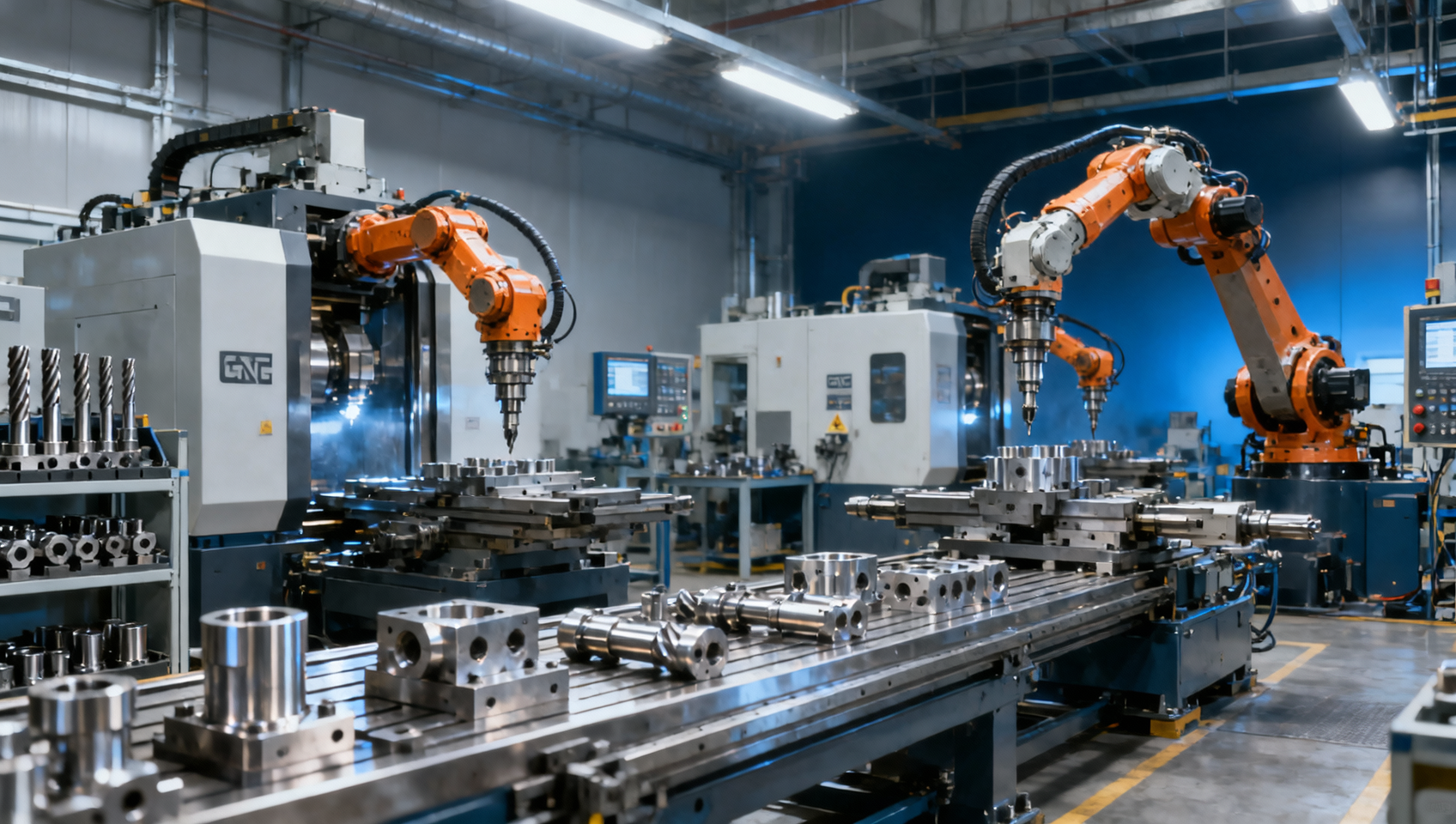
Automated production lines promise speed and consistency, yet changeovers still disrupt many metal machining and CNC industrial operations. From automated lathe setups to CNC milling and CNC cutting workflows, every switch in parts, tools, and programs can slow the production process. This article explores why flexible manufacturing remains difficult and what manufacturers can do to improve automated production efficiency.
For researchers, operators, buyers, and manufacturing decision-makers, the issue is not whether automation works. The real question is why highly automated CNC production lines can still lose 20 minutes, 2 hours, or even an entire shift when moving from one part family to another. In industries such as automotive, aerospace, electronics, and energy equipment, these delays directly affect utilization, delivery reliability, labor planning, and return on capital.
In metal machining, changeovers involve more than replacing a fixture or loading a new program. They often include tool verification, offset correction, pallet setup, inspection updates, robot path checks, material handling changes, and quality approval. As part complexity rises and batch sizes shrink, even advanced automated production lines face practical limits. Understanding those limits is essential for selecting, designing, and improving CNC automation systems.
Why changeovers remain a bottleneck in automated CNC production
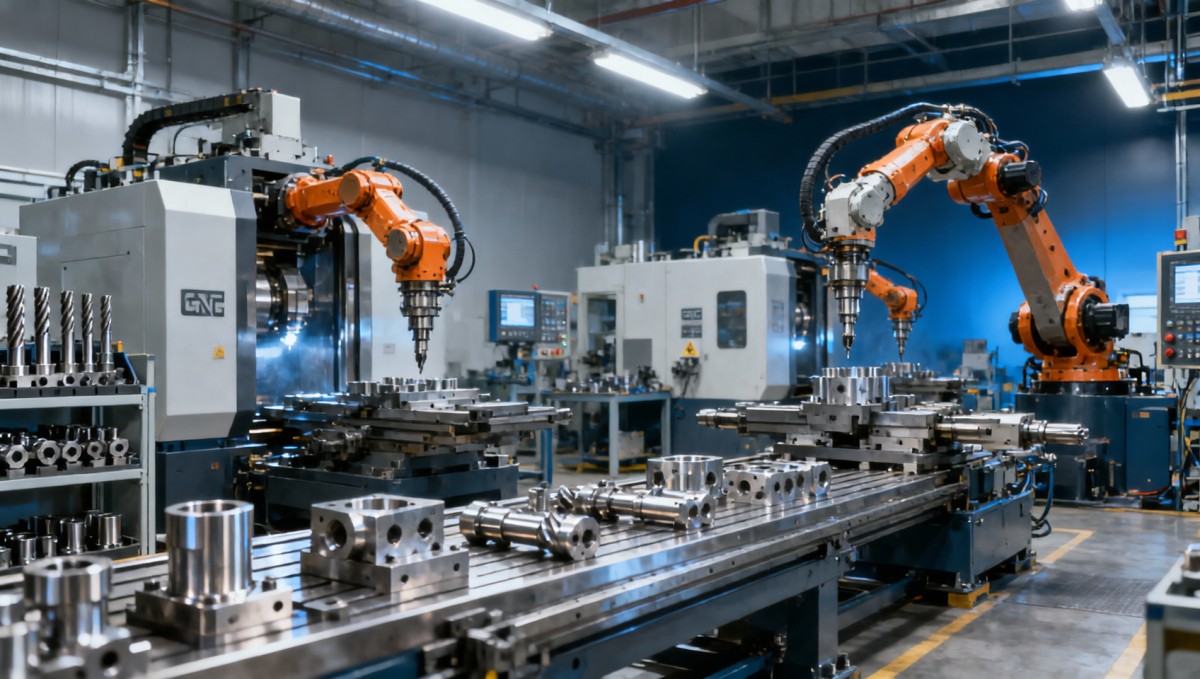
Many automated production lines are optimized for repeatability, not variability. A line that performs well on a stable production run of 5,000 identical parts may struggle when batch sizes drop to 100–300 units and product mix increases. In CNC turning, milling, and cutting, every new part can require a different tool sequence, clamp position, datum strategy, cycle time, and inspection routine.
The bottleneck usually comes from the interaction of several subsystems. A robot can swap raw material quickly, but if the fixture needs 25 minutes of manual adjustment, the line still stops. A CNC machine may load a new program in seconds, yet first-piece approval can take 30–60 minutes when tolerances are within ±0.01 mm to ±0.02 mm. In other words, automation speeds motion, but not all preparation work.
Another problem is hidden dependency. Automated production lines often rely on a fixed relationship between machine tools, tool magazines, workholding devices, sensors, conveyors, and inspection stations. Once one variable changes, multiple downstream tasks may need to be updated. That is why a seemingly simple product switch can trigger 8–12 verification points before production resumes safely.
This is especially common in global CNC manufacturing environments where plants serve mixed orders: export components, urgent replacement parts, and pilot batches. When customer requirements shift weekly rather than quarterly, the line needs flexible manufacturing capability, not just automation density. Buyers should therefore evaluate changeover performance separately from nominal hourly output.
The gap between theoretical automation and shop-floor reality
Machine builders often present automated production lines using ideal process assumptions: stable material quality, standard tool life, repeat part geometry, and trained personnel available on every shift. In real plants, operators deal with tool wear variation, chip control issues, fixture contamination, and different raw stock tolerances. These factors extend setup time far beyond software estimates.
A practical line can be highly automated and still require 3 levels of human intervention during changeover: mechanical setup, program confirmation, and quality release. If even one of those stages is not standardized, the line becomes vulnerable to delays, scrap, and overtime costs.
Typical sources of delay
- Fixture and jaw changes that require re-indication or torque verification.
- Tool replacement and offset updates across 20–80 tool positions.
- Robot gripper adjustments for different diameters, lengths, or surface sensitivity.
- Probe, gauge, or vision system recalibration after part family changes.
- First-article inspection and sign-off, especially in high-precision industries.
The table below summarizes why changeovers often consume more time than line planners expect in CNC machining environments.
The key conclusion is that changeover losses are usually distributed across several small activities rather than one dramatic failure point. For procurement teams, this means line flexibility should be measured by total restart readiness, not just by the advertised automation level of the machine tool or robot cell.
The technical reasons flexible manufacturing is harder than expected
Flexible manufacturing sounds simple in concept: one automated production line, many parts, minimal downtime. In practice, flexibility creates engineering complexity. A CNC machining center or automated lathe can process multiple part families only if workholding, tooling, programming, material flow, and inspection systems are all designed around variation from the beginning. Retrofitting flexibility later is usually more expensive and less stable.
Workholding is one of the largest technical barriers. In low-mix lines, a dedicated fixture supports speed and repeatability. In high-mix lines, modular or quick-change fixtures reduce setup time, but they may lower rigidity or require more precise maintenance. For parts with thin walls, complex surfaces, or concentricity requirements below 0.015 mm, fixture flexibility and machining stability can conflict directly.
Tool management introduces another layer of difficulty. A production line serving 10 part numbers may need 40–120 unique tools, depending on material and process route. Tool magazine capacity, sister tool logic, presetting accuracy, and wear tracking must all be coordinated. If a single required tool is missing or outside life limits, the line may stop even when machines, robots, and raw materials are ready.
Software integration is often underestimated. CNC controls, PLC systems, MES platforms, robot controllers, tool management software, and quality systems may come from different suppliers. Unless data naming, revision control, and process ownership are clear, a changeover can become a digital coordination problem. A wrong program version or outdated inspection plan can cost more than the mechanical setup itself.
Where line design often goes wrong
Many lines are purchased based on output per hour under one benchmark part. That is useful, but incomplete. For mixed manufacturing, the more relevant metrics are setup labor hours per switch, number of manual confirmation points, average first-pass yield after changeover, and restart time to stable production. A line with 85% uptime on one product may fall below 60% effective utilization when three or four product families are introduced.
Another design weakness is over-automation of low-value steps while leaving high-risk steps manual. For example, automated loading may save 10 seconds per cycle, but manual datum adjustment may still consume 35 minutes every batch. Decision-makers should target the highest downtime drivers first, not the most visible automation features.
Core engineering checkpoints
- Verify whether fixtures can be exchanged in under 10 minutes without re-alignment.
- Confirm tool magazine capacity versus the real part mix, not just current orders.
- Check whether robot grippers support diameter or geometry variation without manual shimming.
- Review software revision control for CNC programs, probing cycles, and inspection plans.
- Measure first-piece approval time as part of the total changeover cycle.
The following comparison helps buyers and engineers distinguish between lines optimized for throughput and lines designed for frequent product switches.
For most manufacturers, the right answer is not maximum flexibility everywhere. It is targeted flexibility at the specific points where part variation creates the most downtime or quality risk. That often delivers a better payback within 12–24 months than a more expensive full-line redesign.
Operational and organizational factors that slow changeovers
Even when hardware is capable, changeovers often fail because production management is not synchronized. A CNC automated production line depends on preparation before the machine stops. If tools are not preset, fixtures are not staged, programs are not verified, and inspection resources are not available, a 15-minute target can become a 90-minute reality. In many factories, the root problem is not machine limitation but process discipline.
Skill distribution matters as much as equipment specification. A line may rely on one senior setup technician who understands offsets, clamping logic, probing macros, and robot recovery. If that person is absent, the line slows down significantly. For plants running 2 or 3 shifts, this creates uneven performance. A robust changeover system should be executable by trained teams using standard work instructions, not only by a few experts.
Scheduling also affects line flexibility. Frequent order insertion, urgent customer requests, and poor batch sequencing can multiply changeovers. If 6 part numbers are scheduled in random order instead of grouped by shared fixtures, tool families, or material type, total lost time rises quickly. In many workshops, smarter sequencing can reduce daily setup events by 20%–40% without any new equipment investment.
Quality procedures are another major factor. For industries with strict traceability, the first production batch after a changeover may require dimensional reports, surface checks, or process sign-off from inspection staff. Without aligned workflows, the machine waits while paperwork, measurement capacity, or approval authority catches up. That delay is often invisible in machine specifications but very visible in plant performance.
Common management errors during product switches
- Starting changeover before the next job kit, tools, and fixtures are physically ready at the cell.
- Using incomplete digital instructions that do not reflect the latest engineering revision.
- Assuming robot and CNC alarms can be recovered equally by all shifts without escalation rules.
- Measuring output volume but not tracking average changeover duration or first-pass yield.
- Separating production, tooling, and quality teams instead of treating changeover as one workflow.
A practical 5-step preparation model
- Freeze the next production order 4–8 hours before the switch.
- Preset tools offline and confirm remaining life, wear limits, and required spares.
- Stage fixtures, grippers, jaws, and gauging equipment at the cell.
- Validate CNC program, robot routine, and inspection plan revision numbers.
- Assign release responsibility for first-piece approval before the line stops.
Manufacturers that apply these controls usually see improvements first in consistency rather than headline speed. That matters because a stable 25-minute changeover is easier to plan than a changeover that varies between 15 and 70 minutes. For procurement leaders, consistency supports on-time delivery and more accurate costing across multiple product families.
How manufacturers can reduce changeover time without sacrificing precision
Reducing changeover time in CNC automation requires a combination of mechanical, digital, and procedural improvements. The most effective projects usually target 3 areas at once: faster physical exchange, fewer manual decisions, and shorter quality release time. Focusing on only one area often shifts the bottleneck rather than removing it.
On the mechanical side, quick-change workholding can significantly reduce downtime when properly engineered. Zero-point clamping systems, modular jaws, and prequalified fixture plates can cut fixture exchange from 30–45 minutes to less than 10 minutes in suitable applications. However, they should be evaluated against clamping rigidity, contamination control, and maintenance frequency, especially in heavy cutting conditions.
Digitally, offline programming and standardized setup libraries are powerful tools. If operators can pull approved parameter sets, probe routines, and robot handling recipes from a controlled database, setup variation drops. Plants also benefit from digital checklists that require confirmation of critical items such as tool length offsets, chuck pressure, datum selection, and inspection route before cycle start.
Quality acceleration is equally important. In some plants, in-machine probing or automated gauging reduces the first-piece approval loop from 45 minutes to 10–20 minutes, provided the process is validated. This does not eliminate metrology requirements, but it helps operators identify alignment or offset errors earlier, before a full batch is at risk.
Improvement options by investment level
Not every factory needs a major automation rebuild. Some improvements are low-cost and procedural, while others require tooling, software, or line redesign. The right level depends on batch frequency, part complexity, tolerance level, and current downtime losses.
The best results usually come from combining at least one measure from each category. A plant that adds quick-change fixturing but keeps manual document control may still suffer from program confusion. Likewise, digital control without physical setup improvement may reduce errors but not downtime.
Selection criteria for buyers and plant managers
- How many part families will run on the line within the next 12 months, not just today?
- Can the supplier define total changeover time by task, including quality release?
- What setup elements can be prepared offline while production is still running?
- What level of operator training is required across all shifts?
- How easily can the line absorb engineering changes, urgent orders, or small-lot production?
For many manufacturers, a realistic target is to reduce average changeover time by 25%–50% over 6–12 months through phased improvement. That is often more achievable and more economical than pursuing a fully lights-out flexible line before processes are stable.
What buyers, operators, and decision-makers should ask before investing in automation
A purchase decision should not focus only on spindle speed, robot payload, or line takt time. In mixed CNC manufacturing, a strong automated production line must also perform during transitions. Buyers should ask suppliers for changeover logic, fixture strategy, tool capacity planning, software integration scope, and startup support. These areas often determine whether the line delivers value after installation.
Operators and production engineers should be involved early. They understand where alarms occur, which setup steps require judgment, and how long first-piece inspection really takes. A line that looks efficient in a demonstration may become difficult to run if local part mix, maintenance capability, and shift staffing were not considered during specification review.
Executives should also compare strategic fit. If the business model depends on frequent engineering changes, export customization, and volatile demand, then flexibility may deserve more weight than top-speed output. If demand is stable and product range is narrow, a more dedicated automated line may produce better economics. Capital equipment should reflect order structure, not just technical ambition.
In global CNC and precision manufacturing, successful automation projects usually share one trait: they treat changeovers as a core design parameter from day one. That means specifying measurable targets such as fewer than 20 manual setup actions, fixture exchange below 10 minutes where feasible, and documented restart approval steps within one standard workflow.
FAQ: practical questions about changeovers on automated production lines
How long should a CNC automated line changeover take?
There is no single number. Simple part-family changes may take 10–20 minutes, while complex switches involving fixtures, tools, robot grippers, and inspection plans can take 60–120 minutes. The better question is whether the time is repeatable, documented, and suitable for your batch size and delivery model.
Which industries are most affected by changeover losses?
Automotive suppliers, aerospace machining shops, electronics component producers, and energy equipment manufacturers are all affected, but in different ways. High-volume sectors lose utilization quickly when schedules fragment, while high-precision sectors lose time during validation and inspection after each switch.
What is the biggest mistake when buying a flexible automated line?
The most common mistake is evaluating the line on one demonstration part and assuming that performance will transfer to a mixed production environment. Buyers should review at least 3 realistic part scenarios, including one high-precision part, one short-batch order, and one product requiring tooling or fixture variation.
Can software alone solve changeover problems?
Usually not. Software improves control, traceability, and standardization, but physical setup time, fixture rigidity, tool access, and inspection workflow still matter. Sustainable gains come from matching software tools with practical shop-floor engineering and operator readiness.
Automated production lines still struggle with changeovers because CNC manufacturing is a system problem, not a single-machine problem. Fixtures, tools, programs, robots, inspection, staffing, and scheduling all influence whether a line can switch quickly without losing quality. Manufacturers that break changeover into measurable tasks, invest in targeted flexibility, and standardize preparation usually gain better uptime, more stable output, and lower operational risk.
If you are evaluating CNC machine tools, flexible production lines, or precision manufacturing upgrades, the most effective next step is a structured review of your current changeover losses, part mix, and line constraints. Contact us to discuss your application, request a tailored solution, or learn more about practical automation strategies for high-mix, high-precision production.
PREVIOUS ARTICLE
NEXT ARTICLE
Recommended for You
 Heavy-duty Machining Center for mold making: Why coolant filtration standards evolve faster than OEM manualsMachine Tool Industry Editorial Team
 Quick-change Fixture Design for CNC turning: Why clamping force consistency drops after 200 cyclesCNC Machining Technology Center
 5 Axis Machining for impeller manufacturing: Why toolpath smoothing affects surface fatigue lifeCNC Machining Technology Center
 Lean Production Process implementation: Where value stream mapping fails to expose hidden machine downtimeManufacturing Market Research Center
 Modular Tooling System for flexible manufacturing: Why interface repeatability degrades faster than expectedMachine Tool Industry Editorial Team
 Industrial Automation control system for CNC machines: When cybersecurity updates disrupt scheduled maintenanceMachine Tool Industry Editorial Team

Aris Katos
Future of Carbide Coatings
15+ years in precision manufacturing systems. Specialized in high-speed milling and aerospace grade alloy processing.
▶
Why automated production lines still struggle with changeoversCNC Machining Technology Center▶
Industrial Robotics integration costs more in low mix productionCNC Machining Technology Center▶
Industrial robotics integration slowing down CNC lathe throughput in mixed-part batchesCNC Machining Technology Center▶
Automated production lines show diminishing returns beyond 87% utilization—new data from German automotive suppliersCNC Machining Technology Center▶
Automated production lines now trigger more downtime alerts than manual ones—due to sensor overloadCNC Machining Technology Center
Mastering 5-Axis Workholding Strategies
Join our technical panel on Nov 15th to learn about reducing vibrations in thin-wall components.

Providing you with integrated sanding solutions
Before-sales and after-sales services
Comprehensive technical support