• Global CNC market projected to reach $128B by 2028 • New EU trade regulations for precision tooling components • Aerospace deman
NYSE: CNC +1.2%LME: STEEL -0.4%

What Industrial Automation Gets Wrong in Small Plants
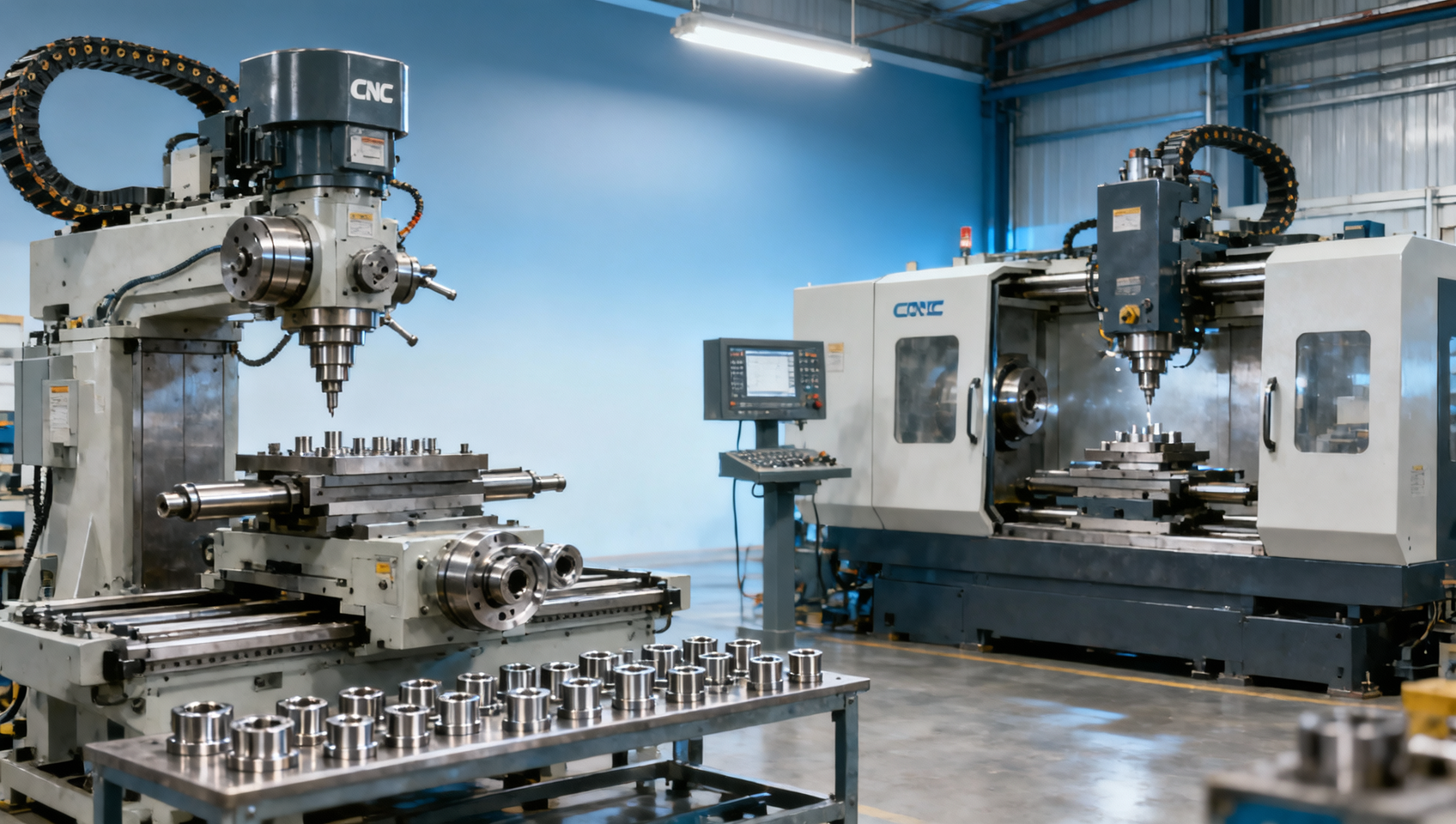
Industrial automation is often sold as a direct path to higher output, better quality, and lower labor dependence. In large factories with stable volumes, that promise can be real. In small plants, however, automated production and CNC industrial systems often underperform expectations because the bottleneck is not always labor alone. It is usually a mix of changeovers, programming time, maintenance capacity, part variation, operator skill, and capital pressure. For many small manufacturers, the real issue is not whether automation works, but whether the chosen level of automation fits the actual production process, staffing model, and business goals.
That distinction matters for shop owners, operators, buyers, and business evaluators alike. A CNC lathe, machining center, automated lathe, or industrial lathe can absolutely improve consistency and throughput, but only when matched to the right part mix, process stability, and operational discipline. This article looks at what industrial automation often gets wrong in small plants, where CNC production delivers real value, and how to make smarter investment decisions before new equipment creates new constraints.
Why automation disappoints in small plants more often than expected
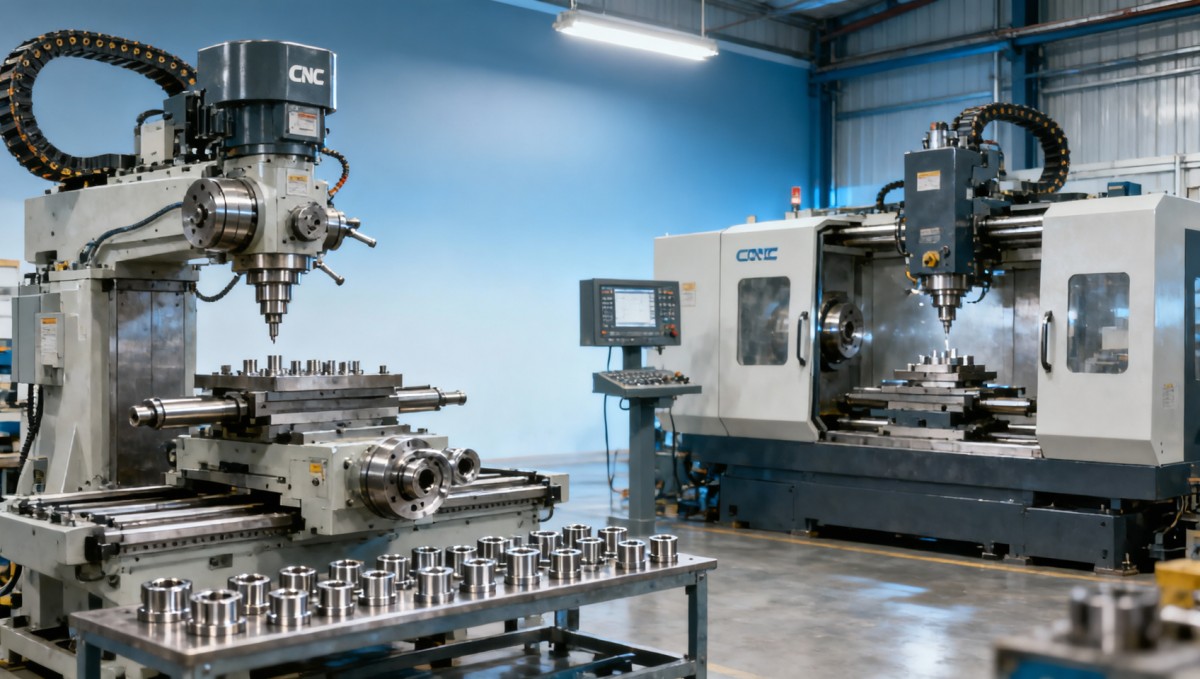
Small plants usually do not fail with automation because the technology is weak. They struggle because the implementation assumptions are borrowed from larger factories. Vendors, consultants, and even internal decision-makers often assume that if a process can be automated, it should be automated. In practice, small manufacturers face very different realities:
- Lower and less predictable production volumes
- Frequent job changes and short production runs
- Greater part variety in metal machining and CNC milling
- Limited maintenance staff and fewer process engineers
- Tighter cash flow and longer sensitivity to payback periods
In this environment, a highly automated system can become too rigid. A production line designed for speed may lose value if setup time, fixturing changes, tool management, and programming revisions absorb most of the available shift time. What looks efficient on paper can turn into a new source of downtime on the shop floor.
The core mistake is simple: small plants are often told to automate the machine before they stabilize the process.
The biggest things industrial automation gets wrong in small manufacturing environments
There are several recurring mismatches between automation strategy and small-plant reality.
1. It overvalues machine uptime and undervalues changeover flexibility
For a small plant, the ability to switch quickly between jobs may be more valuable than maximum spindle utilization. A highly automated CNC production cell can be impressive during long runs, but if orders change daily, a simpler CNC machine tool setup may create more practical output across the week.
2. It assumes part flow is already stable
Automation performs best when upstream and downstream processes are predictable. If raw material handling, inspection, tooling supply, deburring, or secondary operations are inconsistent, automation only accelerates imbalance. A fast machining center does not solve a weak production process around it.
3. It treats labor reduction as the main ROI driver
Many small plants do not actually remove headcount after automation. Instead, labor shifts into programming, setup verification, maintenance, troubleshooting, and quality control. That is not necessarily bad, but it means the savings model is often misunderstood. The gain may come more from repeatability and scheduling confidence than direct labor cuts.
4. It ignores the cost of operational complexity
An automated lathe system, robotic load/unload unit, or integrated CNC industrial cell adds software, sensors, interfaces, training demands, and service dependencies. Complexity has a cost. If a plant lacks internal technical support, every small issue can trigger expensive delays.
5. It assumes demand will justify the investment consistently
Automation economics depend heavily on utilization. Large plants can spread equipment cost across stable, high-volume output. Small plants often live with demand swings. If order flow drops, the financial burden of advanced automation becomes much harder to justify.
What small plants actually need from CNC automation
Most small manufacturers do not need the most advanced automation package. They need the right balance of precision, repeatability, flexibility, and manageable operating complexity.
In many cases, the best-performing setup is not a fully automated production line, but a semi-automated CNC machine arrangement with strong process control. That may include:
- Quick-change fixturing for fast setup reduction
- Tool presetting and standardized tooling libraries
- Bar feeders or compact loading systems for repetitive shaft work
- In-process probing for quality consistency
- Simple part handling automation on a CNC lathe or industrial lathe
- Shop-floor data visibility for cycle time, alarms, and stoppage tracking
These improvements often produce better returns than jumping immediately into full robotic integration. For a small plant, practical automation usually beats ambitious automation.
Where automation does create real value in metal machining and CNC milling
Industrial automation is not the problem by itself. Poor fit is the problem. In the right applications, even small manufacturers can gain significant benefits.
Automation tends to work well when:
- Part families are stable and geometries repeat frequently
- Tolerances are tight and consistency matters more than manual flexibility
- Shifts are hard to staff reliably
- Cycle times are long enough to benefit from unattended machining
- Material loading is repetitive and physically demanding
- Scrap reduction has meaningful financial impact
For example, if a shop produces medium-volume shaft components on a CNC lathe, an automated lathe setup with bar feeding and standardized tooling can improve output without making the operation unmanageably complex. Likewise, a machining center handling repeat aluminum or steel parts in CNC milling may benefit from pallet management or probing before it needs full robotic tending.
The lesson is not to reject automation. It is to automate where process repeatability already exists.
Questions buyers and evaluators should ask before approving automation investment
For procurement teams and business evaluators, the decision should go beyond brochure claims about smart manufacturing. The most useful questions are operational, not promotional.
Can the current process hold tolerance consistently before automation?
If quality variation is already high, automation may only produce defects faster.
How often do setups change?
If setup frequency is high, flexibility may matter more than raw automation level.
What percentage of machine stoppage is caused by non-machining issues?
If most downtime comes from tooling delays, drawings, inspections, or material shortages, new equipment will not fix the main bottleneck.
Does the plant have the people to support the system?
Buying advanced CNC industrial equipment without training, maintenance planning, and programming support creates hidden risk.
What is the real payback model?
Calculate not only machine output gains, but also service cost, tooling changes, programming time, downtime risk, training, and spare parts.
Is modular expansion possible?
Small plants benefit from systems that can scale gradually rather than forcing all-at-once investment.
These questions help distinguish useful automation from expensive overreach.
What operators and shop-floor teams usually know that strategy discussions miss
Operators often see the gap between automation theory and real execution first. They know which jobs run smoothly, which fixtures are unreliable, where chip evacuation becomes a problem, and which alarms interrupt unattended cycles. Their input is essential, especially in small plants where one unstable process can affect overall output quickly.
In many cases, operators identify improvements that cost far less than a new automated production system, such as:
- Better tool life tracking
- More reliable workholding
- Cleaner program revision control
- Improved preventive maintenance schedules
- Setup documentation for repeat jobs
- Smarter sequencing of high-mix orders
These are not glamorous automation topics, but they often have a larger effect on the production process than a major capital purchase. A plant that cannot repeat a setup reliably will not suddenly become efficient just because a robot is added.
A smarter automation strategy for small plants
The strongest strategy for small manufacturers is usually phased automation. Instead of aiming for a fully integrated smart factory model from the start, they should build capability in steps.
- Stabilize the process: reduce variation, document setup standards, improve tooling discipline.
- Measure the real bottleneck: identify whether time is lost in machining, loading, setup, inspection, or scheduling.
- Automate the most repetitive constraint: start with one area that has clear, repeatable ROI.
- Train people before scaling technology: equipment performance depends on user competence.
- Choose flexible systems: favor CNC machine tool solutions that support mixed production needs.
- Review actual results: compare expected gains with real cycle time, uptime, scrap, and order lead time.
This approach lowers risk and aligns automation with the realities of a small operation. It is especially relevant in precision manufacturing, where throughput, quality, and adaptability all matter at the same time.
Conclusion: small plants do not need less automation, they need better-fit automation
What industrial automation gets wrong in small plants is not the technology itself, but the assumption that more automation automatically means better performance. In small-scale manufacturing, success depends on fit. A CNC lathe, machining center, automated lathe, or broader CNC industrial system only creates value when matched to stable processes, realistic production volumes, available technical support, and actual business priorities.
For information researchers, operators, purchasers, and business decision-makers, the practical takeaway is clear: do not judge automation by its headline features alone. Judge it by how well it improves the production process you actually have. In many cases, the best results come from simpler, flexible CNC production upgrades that reduce bottlenecks without adding unnecessary complexity. For small plants, smart automation is rarely the biggest system. It is the one that solves the right problem.
PREVIOUS ARTICLE
NEXT ARTICLE
Recommended for You
![]() China Releases First Eastern Sea Seabed Elemental MapGlobal Machine Tool Trade Research Center
China Releases First Eastern Sea Seabed Elemental MapGlobal Machine Tool Trade Research Center![]() AIMM National Standard Advances for CNC Smart Factory CertificationManufacturing Policy Research Center
AIMM National Standard Advances for CNC Smart Factory CertificationManufacturing Policy Research Center![]() eVTOL Mass Production Drives CNC Export GrowthGlobal Machine Tool Trade Research Center
eVTOL Mass Production Drives CNC Export GrowthGlobal Machine Tool Trade Research Center![]() China Launches World's Largest Agri-Meteorological Observation NetworkManufacturing Market Research Center
China Launches World's Largest Agri-Meteorological Observation NetworkManufacturing Market Research Center![]() Robotics ToB Scaling Hits Data Bottleneck in CNC AI InspectionCNC Machining Technology Center
Robotics ToB Scaling Hits Data Bottleneck in CNC AI InspectionCNC Machining Technology Center![]() SAMR to Complete 1,800+ Standards Revisions in 2026Manufacturing Policy Research Center
SAMR to Complete 1,800+ Standards Revisions in 2026Manufacturing Policy Research Center


Aris Katos
Future of Carbide Coatings
15+ years in precision manufacturing systems. Specialized in high-speed milling and aerospace grade alloy processing.
▶
What Industrial Automation Gets Wrong in Small PlantsCNC Machining Technology Center▶
When Industrial Robotics Make Sense for MachiningCNC Machining Technology Center▶
Production Line Automation Integration Problems to Fix EarlyCNC Machining Technology Center▶
Why automated production lines still struggle with changeoversCNC Machining Technology Center▶
When does an Automated Production Line become too rigid?CNC Machining Technology Center
Mastering 5-Axis Workholding Strategies
Join our technical panel on Nov 15th to learn about reducing vibrations in thin-wall components.

Providing you with integrated sanding solutions
Before-sales and after-sales services
Comprehensive technical support