• Global CNC market projected to reach $128B by 2028 • New EU trade regulations for precision tooling components • Aerospace deman
NYSE: CNC +1.2%LME: STEEL -0.4%

Industrial Automation projects stall when integration is underestimated
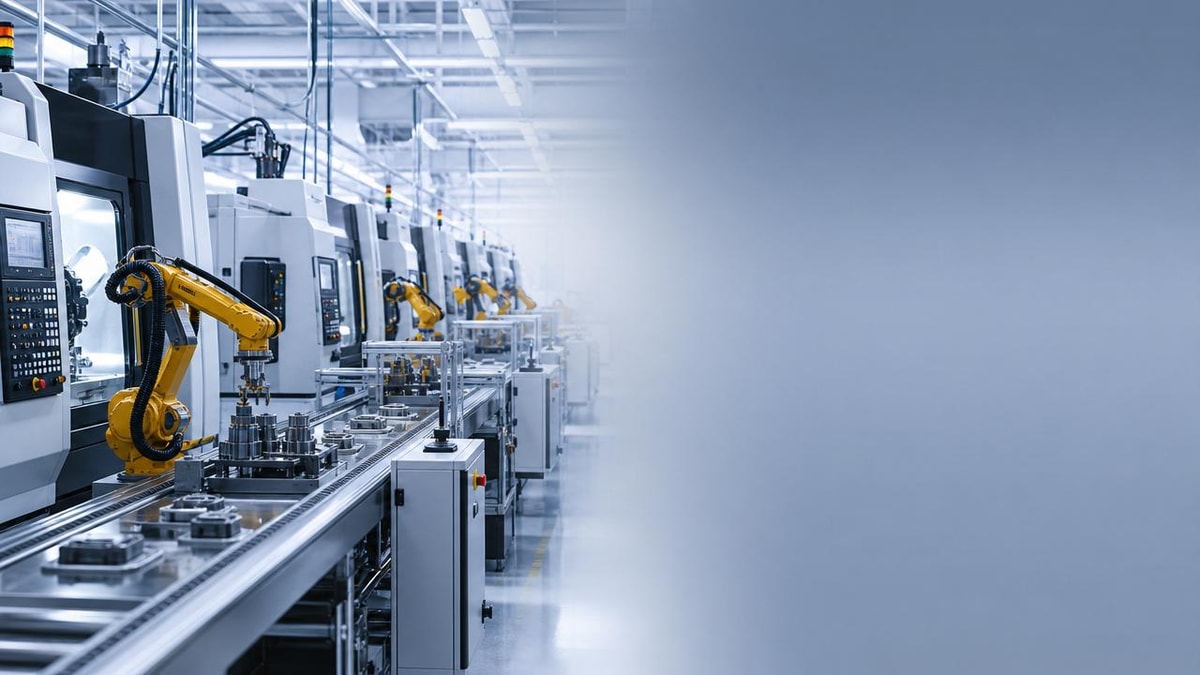
Industrial Automation projects often lose momentum not because the technology is weak, but because integration is treated as a late-stage detail. For project managers and engineering leads, underestimated integration can trigger delays, cost overruns, and performance gaps across CNC machines, robotics, and production lines. Understanding this risk early is essential to keeping complex manufacturing initiatives on schedule, aligned, and scalable.
Integration has become the defining risk in modern Industrial Automation
Across global manufacturing, the center of gravity in Industrial Automation is shifting. A few years ago, many projects were evaluated mainly by equipment selection: which CNC machine, which robot, which controller, which vision system. Today, the real question is whether these assets can operate as one coordinated production environment. As machine tools become more precise, production lines more flexible, and smart factory expectations more ambitious, integration is no longer a technical appendix. It is now one of the main determinants of project success.
This change is especially visible in CNC machining, precision manufacturing, and automated lines serving automotive, aerospace, electronics, and energy equipment. In these sectors, production depends on synchronized data flows, stable communication between machines, reliable tooling and fixture feedback, and consistent handoffs between machining, inspection, loading, unloading, and assembly. When integration is underestimated, even high-quality equipment can perform below expectation.
For project leaders, the trend is clear: Industrial Automation complexity is rising faster than many project plans acknowledge. The gap between what was purchased and what can actually be commissioned is becoming a strategic issue, not just an engineering inconvenience.
Why this shift is accelerating now
Several forces are pushing integration to the front of Industrial Automation planning. First, manufacturers are pursuing higher output with lower labor dependency. That means more robotics, more machine connectivity, and more software layers in daily production. Second, product mix is changing. Shorter runs, more variants, and tighter tolerance requirements make isolated automation less effective than connected automation. Third, management increasingly expects traceability, real-time visibility, and performance reporting from the shop floor.
In the CNC machine tool industry, this is especially important because machining cells are no longer judged only by spindle speed or positional accuracy. They are judged by how well they fit into broader workflows: upstream material handling, downstream measurement, tool life monitoring, scheduling systems, and quality data feedback. A machining center may be technically excellent, yet still create bottlenecks if the surrounding integration architecture is weak.
Another driver is the international nature of equipment sourcing. A single line may include machine tools from one country, robots from another, sensors from a third, and plant software developed elsewhere. This creates opportunity, but it also raises interface risk. Different data protocols, safety standards, commissioning methods, and supplier assumptions can slow progress unless integration ownership is defined early.
Key trend signals project teams should not ignore
These signals suggest that Industrial Automation projects are no longer failing at the level of machine capability alone. They often struggle at the level of orchestration.
What underestimated integration looks like on real projects
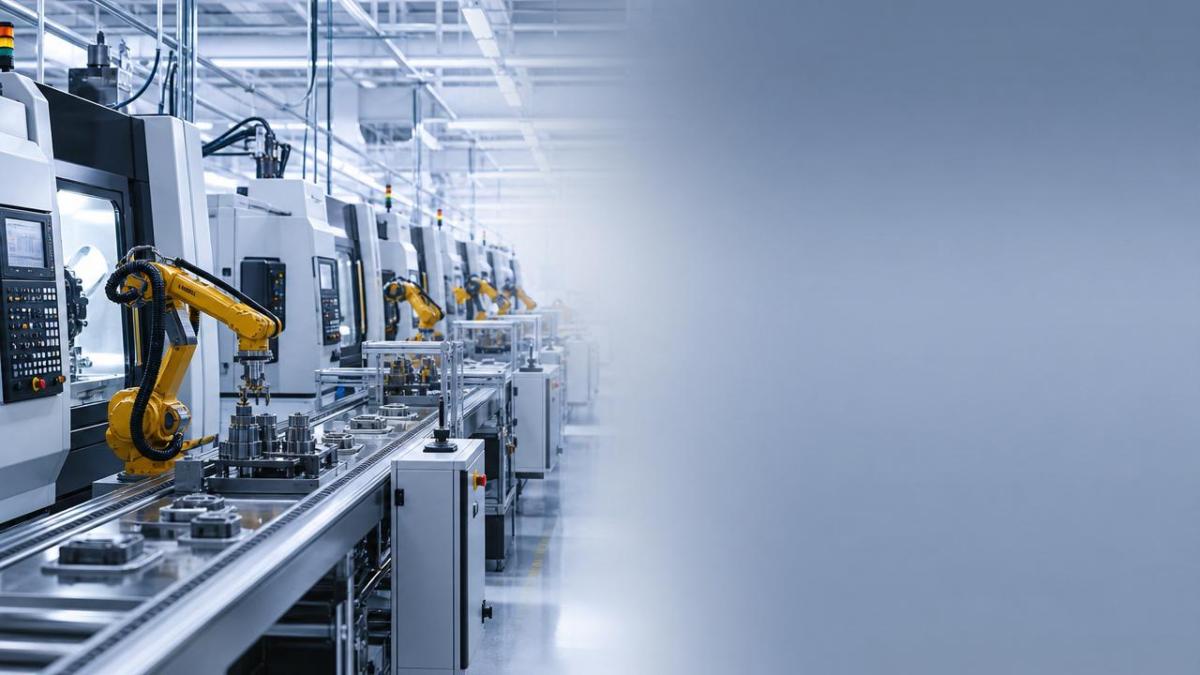
Underestimated integration rarely appears as one dramatic mistake. More often, it emerges as a chain of small assumptions. The CNC supplier assumes the robot integrator will handle part orientation logic. The robot integrator assumes the plant controls team will provide final signal definitions. The MES provider assumes machine status tags will already be standardized. Procurement assumes all vendors are “compatible” because they have worked in automated environments before. None of these assumptions are unusual, but together they create hidden risk.
In practical terms, this can lead to communication mismatches, unclear ownership of interlocks, inconsistent alarm handling, unstable cycle timing, or manual interventions that were never part of the business case. In precision manufacturing, where tolerance, repeatability, and uptime directly affect profitability, these gaps can erase the expected return from Industrial Automation investments.
The most concerning trend is that many of these problems are discovered late. By the time the line reaches FAT, SAT, or ramp-up, schedule pressure is already high. At that stage, solving integration issues is far more expensive than identifying them during early design.
Why CNC and precision manufacturing projects feel this risk more intensely
Not every sector experiences Industrial Automation in the same way. CNC and precision manufacturing environments are particularly exposed because the process chain is tightly coupled. Tool wear influences dimensional results. Fixture stability affects repeatability. Robot handling affects orientation and cycle rhythm. Inspection feedback may trigger offsets or process adjustments. If one layer is disconnected, the rest of the system may continue running, but not at the desired quality or throughput level.
There is also a capability gap developing in the market. Many plants can buy advanced equipment, but fewer have enough internal resources with cross-domain experience in machining, controls, software, robotics, and production data. As a result, project managers are being asked to coordinate broader technical ecosystems than before. This is one reason integration risk is becoming a management issue, not merely an engineering task.
For global suppliers and manufacturers expanding across regions, the challenge grows further. Different sites may have different legacy systems, maintenance standards, operator skill levels, and preferred automation platforms. A solution that worked in one factory may not transfer smoothly to another without redesigning the integration layer.
Who is most affected by this Industrial Automation trend
The impact of underestimated integration is uneven. Some functions feel it earlier, while others absorb the cost later.
For engineering project leaders, the lesson is not simply to “communicate more.” The stronger response is to treat integration as a visible workstream with defined milestones, risks, and acceptance criteria from the start.
A new planning mindset is emerging
One important industry change is that leading manufacturers are moving away from equipment-first planning toward system-first planning. Instead of asking only whether each component meets its own specification, they ask whether the complete production environment can deliver business outcomes under realistic conditions. That includes cycle stability, product changeover, recoverability after faults, data continuity, maintainability, and future expansion.
This mindset is becoming more relevant as smart factory initiatives mature. Early digital transformation efforts sometimes focused heavily on dashboards and connectivity claims. The more practical phase now centers on whether data originates from integrated, trustworthy shop-floor behavior. In other words, digital visibility depends on physical and logical integration being sound.
For Industrial Automation projects in CNC machining and automated production lines, this means project scope should include not just machine installation, but also signal responsibility, protocol alignment, sequence ownership, recovery logic, operator interaction, and data use cases. These are no longer optional refinements.
How integration maturity changes by project stage
What project managers should watch in the next wave of Industrial Automation
Looking ahead, several signals deserve close attention. First is the growing link between automation and software governance. As more production lines rely on connected controls, machine data, and cross-system decisions, version control and change management will become more important. Second is the rise of modular production concepts. While modularity can improve flexibility, it only helps when modules integrate smoothly at the control and data levels.
Third is the increasing expectation for scalable deployment. A pilot cell is no longer enough. Many organizations want to repeat successful automation designs across plants, regions, or product families. This makes standard integration frameworks more valuable than custom solutions that only work in one installation. Fourth is the pressure to align Industrial Automation with quality, energy, and maintenance objectives, not only output targets. Integration quality influences all of these areas.
In the CNC machine tool sector, especially where global supply chains and precision requirements intersect, the winners are likely to be companies that shorten the distance between machine capability and production system capability. That distance is largely managed through integration discipline.
Practical judgment points before your next project moves forward
For teams evaluating a new Industrial Automation investment, a few judgment questions can reveal whether integration risk is being handled realistically. Has the project defined who owns machine-to-machine communication, safety coordination, and production data mapping? Are suppliers being assessed for interoperability as well as equipment performance? Has the commissioning schedule included time for multi-vendor testing rather than only individual equipment validation? Are there clear success criteria for both output and information flow?
It is also wise to examine whether the project is being justified by ideal-state assumptions. If expected efficiency depends on flawless robotic loading, uninterrupted CNC feedback, and real-time quality response, then those assumptions must be engineered into the integration plan, not left to be solved during launch. The more advanced the production line, the less safe it is to treat Industrial Automation integration as informal coordination.
FAQ for engineering leaders evaluating integration risk
Is integration still a major issue if all suppliers are experienced?
Yes. Experience helps, but experienced suppliers still work from different assumptions, standards, and scope boundaries. Industrial Automation projects fail when these differences are not translated into a shared execution model.
Should integration planning start before final equipment selection?
In most complex projects, yes. Early integration planning helps procurement avoid choices that create unnecessary downstream constraints in CNC machining cells, robots, inspection systems, and plant software.
What is the clearest early warning sign?
If no one can clearly explain how data, control signals, fault recovery, and handoff logic will work across the full line, integration is probably being underestimated.
The strategic takeaway
The broader trend in Industrial Automation is not just more machines, more robots, or more software. It is more dependency between them. That dependency is where project risk now concentrates. For project managers and engineering leads in CNC machining, precision manufacturing, and automated production lines, the most important shift is to treat integration as a strategic design decision from day one.
If your organization wants to judge how this trend affects upcoming projects, focus on a few practical questions: where are the cross-system dependencies, who owns them, when will they be tested, and which assumptions are still unverified? Those answers will do more to protect schedule, cost, and performance than another round of equipment comparison alone.
PREVIOUS ARTICLE
NEXT ARTICLE
Recommended for You
![]() Beijing’s New E-Bike Lock Regulation Spurs CNC Housing DemandGlobal Machine Tool Trade Research Center
Beijing’s New E-Bike Lock Regulation Spurs CNC Housing DemandGlobal Machine Tool Trade Research Center![]() New Drone Standard GB/T 44723–2026 Takes Effect May 2026Manufacturing Policy Research Center
New Drone Standard GB/T 44723–2026 Takes Effect May 2026Manufacturing Policy Research Center![]() New Maritime Code Takes Effect May 1, 2026: CNC Equipment Shipping Rules UpdatedManufacturing Market Research Center
New Maritime Code Takes Effect May 1, 2026: CNC Equipment Shipping Rules UpdatedManufacturing Market Research Center![]() 2026 China Cycle Shanghai: CNC E-Bike Frame Capacity Draws ODM FocusManufacturing Market Research Center
2026 China Cycle Shanghai: CNC E-Bike Frame Capacity Draws ODM FocusManufacturing Market Research Center![]() 2026 Foshan Tanzhou Auto Expo: EV Parts Sourcing FocusGlobal Machine Tool Trade Research Center
2026 Foshan Tanzhou Auto Expo: EV Parts Sourcing FocusGlobal Machine Tool Trade Research Center![]() New Hazardous Chemicals Safety Law Takes Effect May 2026Manufacturing Policy Research Center
New Hazardous Chemicals Safety Law Takes Effect May 2026Manufacturing Policy Research Center


Aris Katos
Future of Carbide Coatings
15+ years in precision manufacturing systems. Specialized in high-speed milling and aerospace grade alloy processing.
▶
Industrial Automation projects stall when integration is underestimatedCNC Machining Technology Center▶
Industrial Automation projects stall without process mappingCNC Machining Technology Center▶
Industrial Automation Upgrades That Stall After InstallationCNC Machining Technology Center▶
What Industrial Automation Gets Wrong in Small PlantsCNC Machining Technology Center▶
When Industrial Robotics Make Sense for MachiningCNC Machining Technology Center
Mastering 5-Axis Workholding Strategies
Join our technical panel on Nov 15th to learn about reducing vibrations in thin-wall components.

Providing you with integrated sanding solutions
Before-sales and after-sales services
Comprehensive technical support