• Global CNC market projected to reach $128B by 2028 • New EU trade regulations for precision tooling components • Aerospace deman
NYSE: CNC +1.2%LME: STEEL -0.4%

Industrial Automation projects that underperform after launch
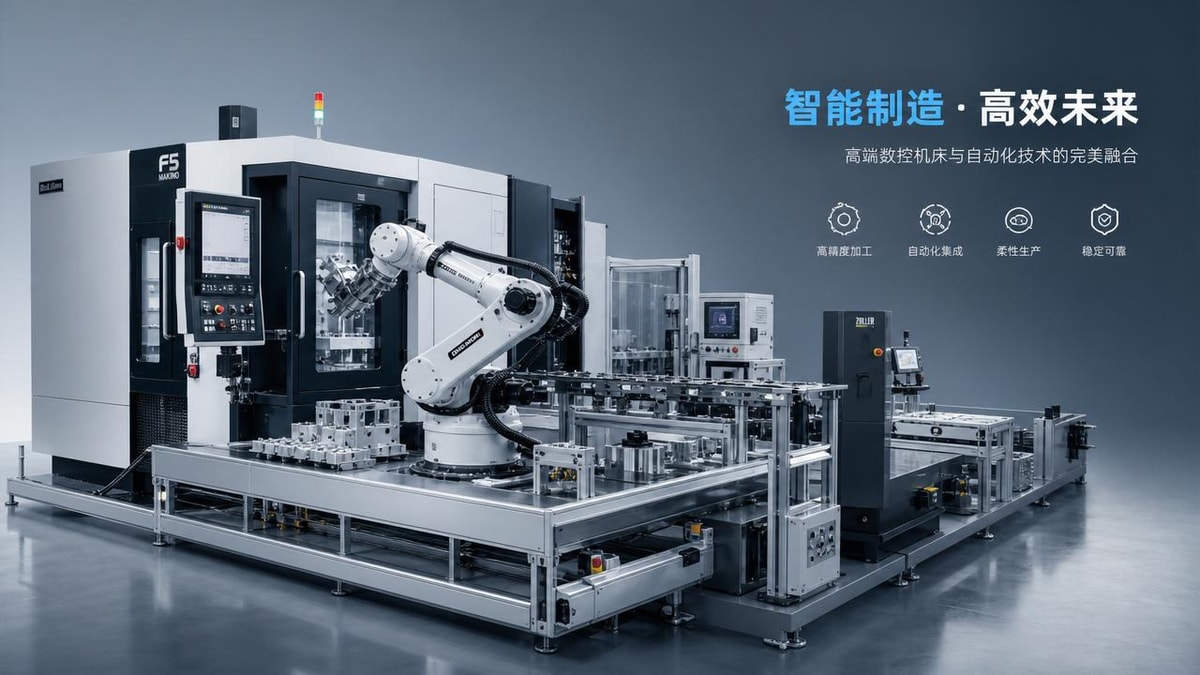
Many Industrial Automation projects promise higher output, better quality, and faster ROI, yet underperform after launch due to poor integration, unclear goals, and limited scalability. For business decision-makers in manufacturing, understanding these hidden risks is essential to protecting investment and improving production outcomes. This article explores why automation initiatives fall short and how to build more resilient, high-performing systems.
In CNC machining, precision manufacturing, and automated production lines, underperformance rarely comes from one dramatic failure. More often, it appears as a 6% drop in expected throughput, a 10–15% increase in changeover time, recurring manual intervention, or a production cell that cannot scale beyond its initial volume. For executives responsible for capital allocation, these gaps directly affect margin, delivery reliability, and future expansion plans.
Whether the application involves CNC lathes, machining centers, robotic loading systems, automated inspection, or flexible production cells, Industrial Automation must be evaluated as an operational system rather than a standalone equipment purchase. The difference between a line that performs for 3 months and one that delivers value for 3–5 years usually lies in planning discipline, integration quality, and lifecycle management.
Why Industrial Automation Projects Underperform After Launch
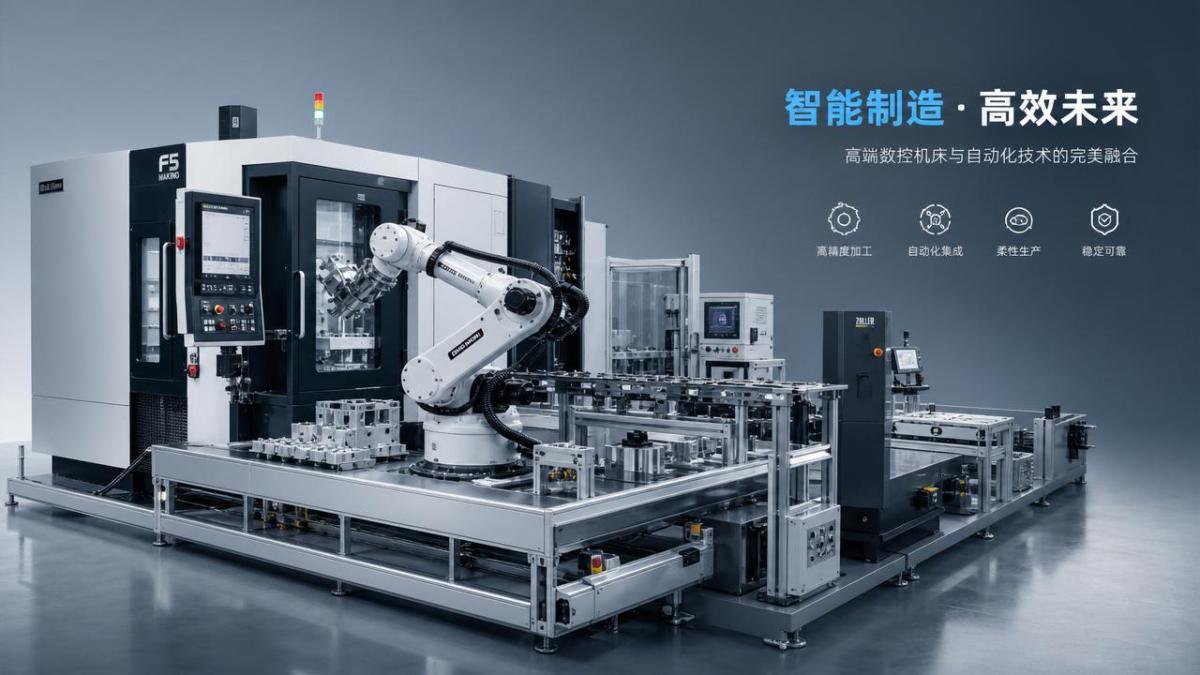
The launch phase often creates a false sense of success. A system may pass FAT or SAT, run trial parts within tolerance, and still miss business targets within 8–12 weeks. In machine tool environments, the problem is not only whether the automation works, but whether it works consistently across shifts, product variants, maintenance cycles, and operator skill levels.
1. Automation goals are defined too broadly
Many projects start with goals like “improve efficiency” or “reduce labor dependency.” These are directionally correct, but they are not implementation targets. A stronger target framework includes at least 4 measurable indicators: cycle time reduction, OEE improvement, scrap rate control, and payback period. For example, reducing part handling time from 90 seconds to 35 seconds is actionable; “higher efficiency” is not.
In CNC and precision machining lines, unclear targets often lead to over-engineering in one area and under-investment in another. A company may install robotic tending but ignore fixture repeatability within ±0.02 mm, tool life monitoring intervals, or upstream material consistency. The result is an automated bottleneck rather than an automated advantage.
2. Equipment integration is weaker than expected
Industrial Automation rarely fails because a robot, CNC machine, or conveyor is defective on its own. Performance drops when communication between systems is incomplete. Common weak points include PLC-CNC signal delays, incompatible I/O logic, unstable part presence detection, and poor synchronization between machine cycle completion and robotic loading sequences.
A line that looks smooth during a 2-hour acceptance run can become unstable over a 16-hour production day. Small signal timing issues of 0.5–2.0 seconds per cycle may appear minor, but across 1,200 parts per day they create meaningful output loss. The same applies to chip evacuation, coolant carryover, and pallet transfer accuracy in multi-machine cells.
Typical hidden integration gaps
- Robot gripper design does not match all part variants in a family of 6–12 SKUs.
- Machine door, chuck, and probe sequences are not optimized for unattended operation.
- MES, ERP, or traceability systems are added late, causing data blind spots.
- Inspection feedback is not connected to offset adjustment or tool wear compensation.
3. The production mix is more variable than the design assumed
Automation cells built around one ideal part often struggle when the product mix changes. In real-world manufacturing, variation is normal: batch sizes can shift from 500 pieces to 50, part dimensions may change within a family, and customer schedules can compress lead times from 3 weeks to 5 days. If the automation architecture cannot absorb these shifts, utilization declines quickly.
This issue is especially common in aerospace, energy equipment, and high-mix precision machining where tolerance demands remain tight but order structures are less predictable. A rigid line may perform well at 85% capacity on one part type, then fall below 60% when changeovers increase or fixture swaps become more frequent.
The table below shows common causes of underperformance in Industrial Automation projects and how they typically appear on the shop floor in CNC-based manufacturing.
For decision-makers, the key point is that underperformance often starts in specification, not operation. If business goals, process boundaries, and variation ranges are not defined early, the automation system will likely meet installation requirements while still missing production expectations.
How to Build Industrial Automation That Delivers Reliable ROI
A stronger automation strategy begins with system architecture and commercial discipline. In precision manufacturing, reliable ROI usually comes from three things: process stability, practical flexibility, and measurable control of ongoing operating costs. Companies that treat Industrial Automation as a phased production capability rather than a one-time purchase typically make better capital decisions.
Start with process mapping before equipment selection
Before comparing robot brands, machine interfaces, or fixture concepts, map the current process in 5 stages: material input, machine loading, machining cycle, in-process inspection, and finished part output. At each stage, identify cycle time, manual touches, failure modes, and variation limits. This reveals whether the real constraint is labor, machine idle time, tool management, quality drift, or internal logistics.
In many CNC workshops, the highest-value automation opportunity is not the most visible one. For example, robotic part loading may save 25–40 seconds per cycle, but automated gauging with offset feedback may reduce scrap by 1–3% on tight-tolerance parts. For a line producing high-value aerospace or energy components, that quality gain can matter more than labor savings alone.
Design for realistic flexibility, not theoretical flexibility
Flexibility should be tied to actual business scenarios. If a plant runs 8 core part families and 2 seasonal variants, the automation cell should be validated for those combinations, not for an abstract “future-proof” promise. Decision-makers should ask how long a changeover takes, how many gripper or fixture changes are required, and whether program switching can be completed within 10–20 minutes without expert intervention.
This matters in machine tool clusters serving automotive, electronics, and subcontract machining markets, where customer schedules can change weekly. An automation design that supports quick fixture exchange, recipe-driven machine settings, and consistent datum control will usually outperform a more complex system that appears advanced but is difficult to run under normal shop conditions.
Practical evaluation checklist
- Confirm target part range, tolerance level, and annual volume range.
- Measure current cycle time, setup time, and operator intervention frequency.
- Review interface compatibility across CNC, robot, vision, and traceability layers.
- Define acceptance criteria for 1 shift, 2 shifts, and unattended operation periods.
- Plan spare parts, remote support, and response windows such as 24–48 hours.
The following table can help procurement teams compare automation proposals beyond headline pricing. It is especially useful for CNC machine tool investments where hidden lifecycle costs often exceed initial integration differences.
This comparison framework shifts the discussion from purchase price to operating value. In many Industrial Automation projects, the lower-cost proposal becomes more expensive within 12–18 months if downtime recovery, changeover efficiency, and data transparency were not properly assessed.
Plan commissioning and ramp-up as a controlled phase
Commissioning should not end when the line runs the first qualified part. A better approach is to set a 3-phase ramp-up plan: acceptance, stabilization, and optimization. Phase 1 confirms functionality. Phase 2 measures actual performance over 2–4 weeks under real scheduling conditions. Phase 3 fine-tunes alarms, tool strategies, and material handling logic based on production data.
This phased model is critical for smart factory and automated production line environments, where one unstable node can affect multiple downstream processes. For instance, if a robotic cell feeding two machining centers suffers 4 short stops per shift, the issue is not isolated; it affects spindle utilization, labor allocation, and on-time shipment across the line.
What Decision-Makers Should Ask Before Approving the Next Project
Executives and plant leaders do not need to manage every technical detail, but they do need a sharper approval framework. In the CNC machine tool industry, successful Industrial Automation decisions are usually based on 4 filters: operational fit, integration readiness, lifecycle support, and expansion potential. If one of these filters is weak, the investment risk rises quickly.
Questions that improve project quality
First, ask what problem the project solves in financial terms. Does it reduce labor per shift, increase spindle utilization by 8–15%, lower scrap on precision parts, or support lights-out production for 4–6 hours? Second, ask how success will be measured after 30, 90, and 180 days. Third, ask what assumptions are most likely to fail, especially around product mix, maintenance skills, and upstream material consistency.
It is also important to confirm who owns the full integration outcome. In multi-vendor projects involving CNC machines, robots, tooling, vision, and software, accountability often becomes fragmented. A clear lead integrator or well-defined project governance model reduces handoff risk and shortens problem resolution time during launch.
Common approval mistakes
- Approving automation based mainly on labor savings while ignoring quality and uptime variables.
- Using best-case cycle time in ROI calculations instead of average shift performance.
- Assuming internal teams can maintain advanced systems without structured training.
- Skipping data integration because it appears non-essential during initial budgeting.
Why lifecycle support matters as much as launch performance
A line that performs well at commissioning can still underperform over the next 12 months if support is weak. Spare part availability, software backup, parameter control, preventive maintenance intervals, and operator refresh training all influence long-term output. In high-precision production, even a small drift in clamping force, probing repeatability, or tool offset discipline can erode automation benefits over time.
For global manufacturers and export-oriented machine tool suppliers, this is especially relevant. Plants operating across different regions may need support structures that account for local technician availability, remote diagnostics, and service coordination across time zones. A support model that works in one country may not be sufficient for a distributed production network.
A stronger path forward for Industrial Automation investments
The most successful companies do not ask whether Industrial Automation is necessary; they ask how to deploy it with fewer assumptions and better control. In modern CNC machining and precision manufacturing, value comes from repeatability, traceability, and flexible output. That means choosing solutions that match the real production environment, not just a demonstration scenario.
If your organization is evaluating robotic tending, flexible machining cells, automated assembly, or digital integration for machine tools, the priority should be a system plan that connects equipment, process logic, quality control, and long-term support. A well-scoped project can improve capacity and resilience at the same time, while a poorly scoped one can lock in hidden costs for years.
For decision-makers seeking more reliable production outcomes, now is the right time to review project assumptions, KPI definitions, and integration risks before the next investment moves forward. Contact us to discuss your application, get a tailored automation strategy, and explore more solutions for CNC machining and precision manufacturing environments.
Recommended for You
![]() ANVISA New Rule: Portuguese Biocompatibility Labels for Medical CNC Machines in BrazilManufacturing Policy Research Center
ANVISA New Rule: Portuguese Biocompatibility Labels for Medical CNC Machines in BrazilManufacturing Policy Research Center![]() EMO Hannover 2027 Booth Booking Opens: China AI-Machining Pavilion LaunchesGlobal Machine Tool Trade Research Center
EMO Hannover 2027 Booth Booking Opens: China AI-Machining Pavilion LaunchesGlobal Machine Tool Trade Research Center![]() KATS Updates KC Rules: CNC Cybersecurity Modules Must Meet IEC 62443-4-2Manufacturing Policy Research Center
KATS Updates KC Rules: CNC Cybersecurity Modules Must Meet IEC 62443-4-2Manufacturing Policy Research Center![]() Shanghai Port Launches Green Clearance Channel for CNC EquipmentManufacturing Market Research Center
Shanghai Port Launches Green Clearance Channel for CNC EquipmentManufacturing Market Research Center![]() ISO 23218-3:2026 Published: CNC Digital Twin Interoperability StandardCNC Machining Technology Center
ISO 23218-3:2026 Published: CNC Digital Twin Interoperability StandardCNC Machining Technology Center![]() Vietnam Cuts CNC Equipment Import Tariff to 3.8% from June 2026Global Machine Tool Trade Research Center
Vietnam Cuts CNC Equipment Import Tariff to 3.8% from June 2026Global Machine Tool Trade Research Center


Aris Katos
Future of Carbide Coatings
15+ years in precision manufacturing systems. Specialized in high-speed milling and aerospace grade alloy processing.
▶
Industrial Robotics adoption problems hidden in early planningCNC Machining Technology Center▶
Industrial Automation projects that underperform after launchCNC Machining Technology Center▶
Industrial Automation Projects Often Miss This Integration StepCNC Machining Technology Center▶
Industrial Automation projects fail when integration is underestimatedCNC Machining Technology Center▶
Industrial Automation Projects Fail When Data Is Added Too LateCNC Machining Technology Center
Mastering 5-Axis Workholding Strategies
Join our technical panel on Nov 15th to learn about reducing vibrations in thin-wall components.

Providing you with integrated sanding solutions
Before-sales and after-sales services
Comprehensive technical support