• Global CNC market projected to reach $128B by 2028 • New EU trade regulations for precision tooling components • Aerospace deman
NYSE: CNC +1.2%LME: STEEL -0.4%

Industrial Robotics adoption problems hidden in early planning
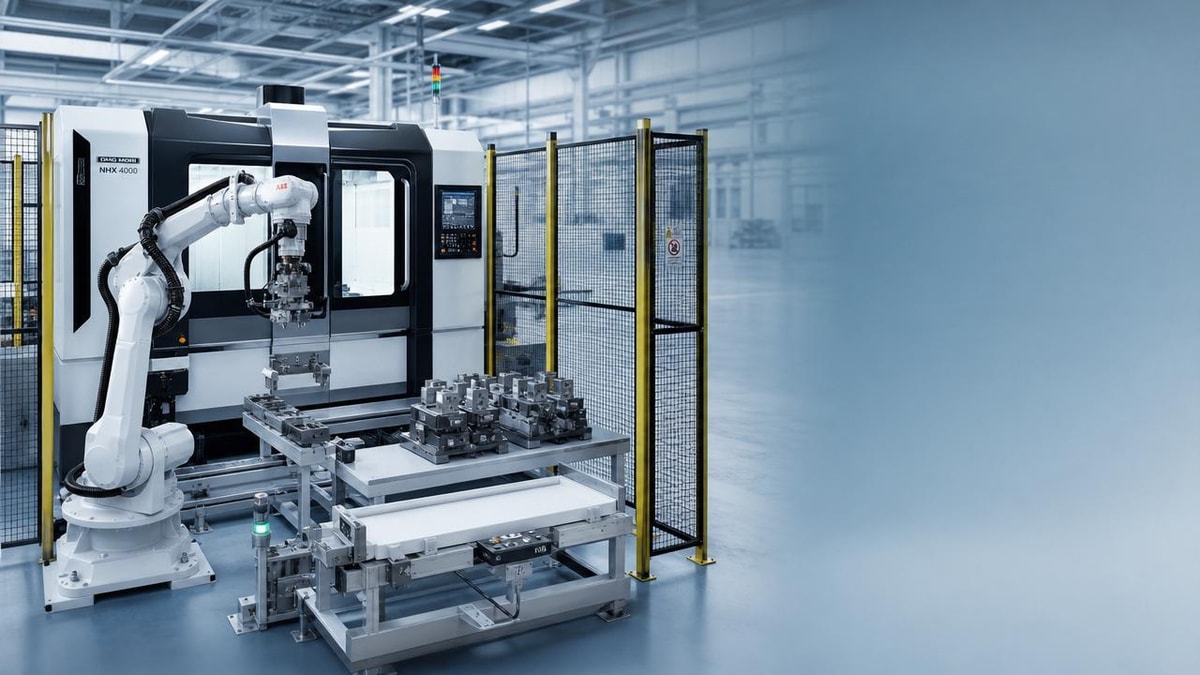
Industrial Robotics can transform CNC manufacturing, but many adoption problems begin long before installation. In early planning, unclear production goals, underestimated integration costs, workforce readiness gaps, and weak data strategies often create hidden risks. For decision-makers in precision manufacturing, identifying these issues early is essential to avoid costly delays, protect ROI, and build automation projects that truly support long-term growth.
Why early planning has become the real battleground for Industrial Robotics
Across the global CNC machine tool sector, the conversation around Industrial Robotics has shifted. A few years ago, many companies focused mainly on robot payload, speed, repeatability, and vendor selection. Today, the stronger signal is different: the success or failure of automation is increasingly decided before equipment is purchased. In automotive, aerospace, electronics, and general precision manufacturing, companies are no longer asking whether robotics matters. They are asking whether their organization is truly ready to absorb it.
This change is being driven by a broader manufacturing transition. CNC shops and precision production plants face rising labor pressure, tighter quality expectations, shorter delivery windows, and stronger demand for digital traceability. At the same time, management teams are under pressure to justify every capital investment with faster payback and lower operational risk. As a result, Industrial Robotics projects are being examined less as standalone equipment purchases and more as strategic production system decisions.
That is why hidden adoption problems in early planning matter so much. When leadership teams move too quickly from interest to procurement, they often discover that the real barriers were never technical alone. They were structural: poor process selection, unrealistic cycle-time assumptions, weak data foundations, unclear ownership, and insufficient change management.
The market signals behind this shift in Industrial Robotics adoption
Several trend signals explain why early-stage planning has become more important for Industrial Robotics adoption in CNC and precision manufacturing environments. These signals are visible across both large industrial groups and mid-sized suppliers.
These shifts have made Industrial Robotics planning less about buying a machine and more about designing an operational change program. For decision-makers, that means the quality of front-end assumptions now has a direct effect on deployment speed, profitability, and long-term scalability.
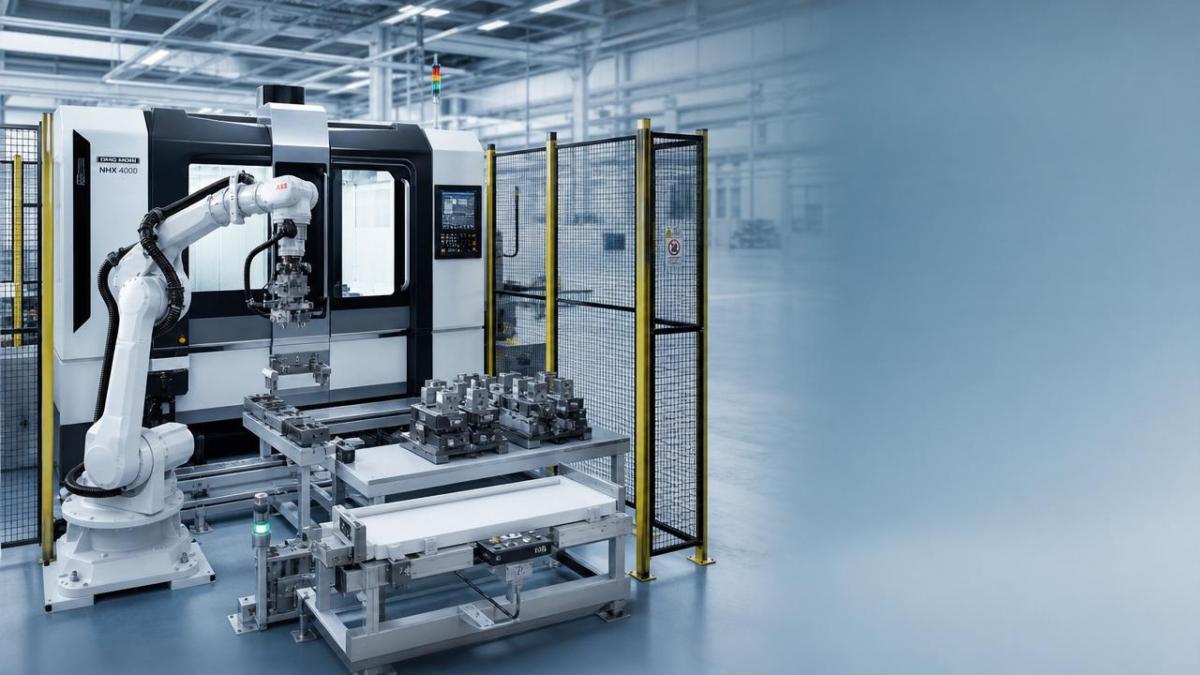
Four hidden problems often start before the robot arrives
1. The production objective is too vague
Many Industrial Robotics initiatives begin with a broad goal such as “improve automation” or “reduce labor dependence.” Those goals sound reasonable, but they are often too vague to guide investment. In CNC manufacturing, the right question is more specific: is the robot meant to reduce spindle idle time, stabilize handling quality, support lights-out production, improve loading consistency, or shorten changeover between part families?
Without a sharply defined objective, project teams may automate the wrong bottleneck. A robot can be installed successfully while overall throughput barely improves because fixture design, tool life variation, inspection delays, or programming bottlenecks were the true constraints. This is one of the most common early planning errors in Industrial Robotics adoption.
2. Integration costs are underestimated
The robot itself is rarely the full investment story. In CNC and precision manufacturing, integration often includes end-of-arm tooling, guarding, sensors, machine interface adaptation, workholding changes, conveyors, part presentation systems, safety validation, software connectivity, and process testing. If management approves a project using equipment-only assumptions, cost overruns become likely.
What has changed in recent years is that customers expect more flexible, data-aware, and quality-controlled automation. That raises the importance of peripheral systems. As Industrial Robotics moves deeper into mixed-model and high-precision applications, hidden engineering complexity tends to increase rather than decrease.
3. Workforce readiness is treated as a later issue
Another planning risk is assuming that operators, technicians, programmers, and supervisors will adapt after commissioning. In reality, Industrial Robotics changes daily work structure. Operators may shift from direct handling to exception management. Maintenance teams may need stronger electrical, control, and diagnostic skills. Production managers may have to lead with new KPIs and new downtime disciplines.
In the CNC machine tool industry, where process know-how is often concentrated in experienced people, automation success depends on how that knowledge is transferred into standardized robot-supported workflows. If the workforce is not involved early, resistance, anxiety, and operational confusion can delay the return on investment.
4. The data strategy is too weak for modern automation
Industrial Robotics now sits inside a larger smart manufacturing environment. Yet many companies still plan robot projects as isolated cells. If machine status, cycle data, alarm history, part traceability, and quality feedback are not captured in a usable way, leadership loses visibility into actual performance. The result is a familiar problem: the automation looks advanced, but decision-making remains reactive.
For businesses expanding across multiple CNC lines or global sites, this weakness becomes more serious. A robotics project that cannot generate reliable operational data is harder to benchmark, optimize, or replicate.
Why these planning mistakes are becoming more expensive
The cost of poor planning has risen because manufacturing systems are more interconnected than before. In a traditional setup, a weak automation decision might affect one workstation. In today’s production environment, a poorly planned Industrial Robotics cell can influence machine utilization, scheduling logic, quality escape risk, maintenance workload, labor allocation, and customer delivery confidence.
This is especially important in sectors such as aerospace components, automotive parts, energy equipment, and electronics housings, where CNC workflows must support tight tolerances and stable takt requirements. When robotics planning fails in such settings, the problem is not only technical downtime. It can also disrupt customer commitments, increase rework exposure, and weaken confidence in future automation phases.
Who feels the impact of weak Industrial Robotics planning most directly
The hidden costs of weak front-end planning do not fall on one department alone. They spread across the organization.
What stronger planning looks like in the next phase of automation
As Industrial Robotics adoption matures, leading manufacturers are changing how they prepare projects. They are spending more time on process selection, simulation logic, operational baseline analysis, and cross-functional ownership. This does not mean moving slowly. It means reducing expensive uncertainty before installation begins.
A more resilient planning approach usually includes five decisions. First, identify the exact production loss the robot is expected to solve. Second, test whether upstream and downstream processes can support the automation without creating new bottlenecks. Third, map the full cost structure, including safety, tooling, integration, training, and ramp-up. Fourth, define what data the cell must produce for management and continuous improvement. Fifth, assign clear ownership across operations, engineering, IT, quality, and maintenance.
This is where Industrial Robotics becomes a business system decision rather than a technology experiment. For CNC manufacturers, that distinction is increasingly important as competition moves toward flexible automation, consistent precision, and scalable digital operations.
Signals decision-makers should monitor before approving the next robotics project
For enterprise leaders, the key question is not simply whether robotics adoption is on trend. It clearly is. The more useful question is whether internal conditions support successful adoption now. Several signals deserve close attention.
- Part families are stable enough, or flexible enough by design, to justify the selected robot workflow.
- Current machine utilization data is trustworthy enough to identify the true bottleneck.
- The organization can support cross-functional implementation, not just equipment purchasing.
- Training plans exist for operators, maintenance personnel, and supervisors before launch.
- The project includes measurable operational outcomes such as uptime, cycle reduction, scrap control, or labor redeployment.
If these signals are weak, the business may still invest in Industrial Robotics, but it should do so with a narrower pilot scope, stronger governance, and more realistic expectations about ramp-up.
How the CNC machine tool industry should respond to the next wave of Industrial Robotics
The wider trend is clear: Industrial Robotics will continue expanding across loading, unloading, tending, handling, inspection support, and linked automated cells. But the competitive edge will increasingly belong to manufacturers that plan for adaptability rather than only capacity. In a world of tighter margins and more variable demand, the best automation strategy is not always the largest one. It is the one aligned with process reality, digital visibility, and workforce capability.
For decision-makers in precision manufacturing, the practical lesson is simple. Do not treat early planning as paperwork before procurement. Treat it as the stage where value is either protected or lost. Industrial Robotics can absolutely strengthen CNC operations, but only when the hidden assumptions are surfaced early enough to be challenged.
Final judgment and action priorities
The current direction of Industrial Robotics adoption is not just about more robots entering factories. It is about a more disciplined automation mindset taking shape across manufacturing. Companies that respond well are likely to gain stronger throughput stability, better quality consistency, and more scalable digital production. Companies that skip the planning discipline may still buy advanced systems, yet struggle to convert them into business results.
If your business wants to judge how these trends affect its own CNC or precision manufacturing roadmap, focus on a few questions: Which production loss are we truly solving? What hidden integration costs are still unclear? Are our people ready for new operating roles? And will our Industrial Robotics investment generate decision-quality data, not just motion? Those answers usually reveal whether the next automation step is ready to move from interest to execution.
PREVIOUS ARTICLE
NEXT ARTICLE
Recommended for You
![]() ANVISA New Rule: Portuguese Biocompatibility Labels for Medical CNC Machines in BrazilManufacturing Policy Research Center
ANVISA New Rule: Portuguese Biocompatibility Labels for Medical CNC Machines in BrazilManufacturing Policy Research Center![]() EMO Hannover 2027 Booth Booking Opens: China AI-Machining Pavilion LaunchesGlobal Machine Tool Trade Research Center
EMO Hannover 2027 Booth Booking Opens: China AI-Machining Pavilion LaunchesGlobal Machine Tool Trade Research Center![]() KATS Updates KC Rules: CNC Cybersecurity Modules Must Meet IEC 62443-4-2Manufacturing Policy Research Center
KATS Updates KC Rules: CNC Cybersecurity Modules Must Meet IEC 62443-4-2Manufacturing Policy Research Center![]() Shanghai Port Launches Green Clearance Channel for CNC EquipmentManufacturing Market Research Center
Shanghai Port Launches Green Clearance Channel for CNC EquipmentManufacturing Market Research Center![]() ISO 23218-3:2026 Published: CNC Digital Twin Interoperability StandardCNC Machining Technology Center
ISO 23218-3:2026 Published: CNC Digital Twin Interoperability StandardCNC Machining Technology Center![]() Vietnam Cuts CNC Equipment Import Tariff to 3.8% from June 2026Global Machine Tool Trade Research Center
Vietnam Cuts CNC Equipment Import Tariff to 3.8% from June 2026Global Machine Tool Trade Research Center


Aris Katos
Future of Carbide Coatings
15+ years in precision manufacturing systems. Specialized in high-speed milling and aerospace grade alloy processing.
▶
Industrial Robotics adoption problems hidden in early planningCNC Machining Technology Center▶
Industrial Automation projects that underperform after launchCNC Machining Technology Center▶
Industrial Automation Projects Often Miss This Integration StepCNC Machining Technology Center▶
Industrial Automation projects fail when integration is underestimatedCNC Machining Technology Center▶
Industrial Automation Projects Fail When Data Is Added Too LateCNC Machining Technology Center
Mastering 5-Axis Workholding Strategies
Join our technical panel on Nov 15th to learn about reducing vibrations in thin-wall components.

Providing you with integrated sanding solutions
Before-sales and after-sales services
Comprehensive technical support