• Global CNC market projected to reach $128B by 2028 • New EU trade regulations for precision tooling components • Aerospace deman
NYSE: CNC +1.2%LME: STEEL -0.4%

Industrial Automation Projects Fail When Data Is Added Too Late
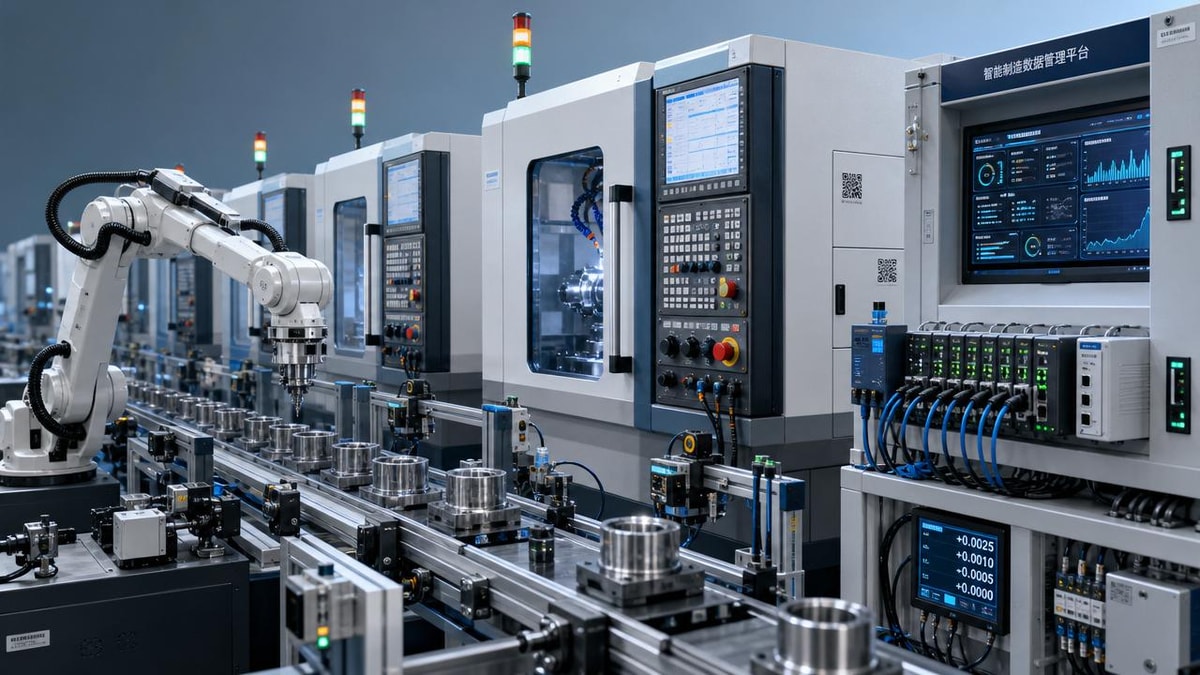
Industrial Automation projects often fail not because of hardware or controls, but because data strategy is introduced too late. For project managers and engineering leaders, delayed data planning can create integration gaps, cost overruns, and weak decision-making across CNC machines, production lines, and smart manufacturing systems. Understanding this risk early is essential to delivering scalable, efficient, and future-ready automation results.
Why a checklist approach works better than a late-stage data discussion
For project leaders in Industrial Automation, the biggest mistake is treating data as a reporting layer that can be added after equipment selection, PLC programming, or commissioning. In reality, data affects architecture, interoperability, traceability, maintenance planning, production visibility, and even operator workflow. A checklist-based review helps teams identify critical dependencies before they become expensive redesigns.
This is especially important in the CNC machine tool industry, where machining centers, CNC lathes, robotic cells, tool management systems, and quality inspection stations must work together. If data points, communication standards, naming conventions, and ownership rules are not defined early, even technically successful automation cells can underperform at plant level.
Project managers need a practical method to judge readiness. The right question is not simply, “Do we have data?” but rather, “Do we know what data must be captured, why it matters, who will use it, and how it will move across the system?”
First review: the early warning signs that data is being added too late
Before approving scope, timeline, or supplier coordination plans, use the following warning list. If several items are true, your Industrial Automation project is already at risk.
- Equipment specifications define cycle time and mechanical performance, but not data tags, event logs, machine states, or quality traceability requirements.
- Different vendors are selected for CNC machines, robots, sensors, MES, and SCADA without a shared data model or interface responsibility matrix.
- The team assumes integration will be solved during commissioning rather than during design review.
- Production KPIs such as OEE, tool life, scrap cause, and downtime reason codes are discussed only after installation.
- There is no agreement on who owns historian setup, edge connectivity, cybersecurity boundaries, or cloud transmission rules.
- Maintenance, quality, IT, and operations are not involved in front-end engineering decisions.
When these signs appear, the project may still go live, but it often fails to deliver the expected business value from Industrial Automation. Teams then spend months creating manual exports, patching interfaces, or building spreadsheets to compensate for poor digital design.
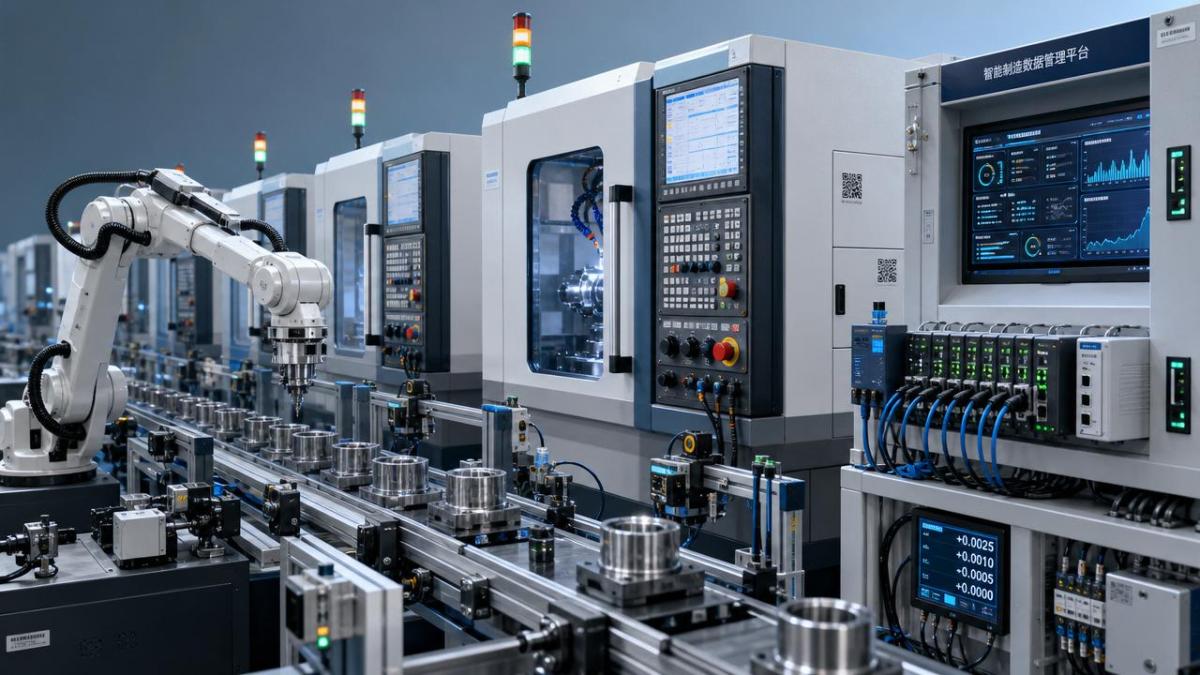
Core checklist: what must be confirmed before equipment design is frozen
1. Define business decisions before defining dashboards
A strong data plan starts with decisions, not screens. Project managers should identify which decisions the future system must support: scheduling, quality release, tool replacement, predictive maintenance, energy optimization, batch traceability, or capacity planning. If the decision is unclear, the data scope will become vague and expensive.
2. Confirm the minimum critical data set
Every Industrial Automation project should define a minimum viable data package. In CNC and precision manufacturing environments, this typically includes machine state, spindle load, alarm history, part count, recipe or program version, tool usage, measurement results, downtime reasons, and operator actions. The goal is not to collect everything, but to collect what supports control and accountability.
3. Assign source, owner, and consumer for each data group
Data confusion often comes from missing ownership. For each important signal or event, document three things: where it originates, who is responsible for data quality, and which team consumes it. A machine builder, controls integrator, MES provider, and factory IT team may all touch the same data, but without clear ownership, nobody resolves mismatches fast enough.
4. Validate interface standards early
Industrial Automation depends on communication reliability. Whether the project uses OPC UA, MTConnect, Modbus TCP, Profinet, EtherNet/IP, MQTT, or proprietary machine interfaces, compatibility should be validated before purchase orders are finalized. For CNC machine tools, legacy controls and newer digital platforms often coexist, creating hidden integration constraints.
5. Align timestamp, naming, and event logic
This looks minor but causes major reporting errors. If one machine records local time, another reports UTC, and a third logs only state changes, the plant will never trust downtime analysis or throughput history. Naming conventions for assets, part programs, alarms, and process stages must be standardized before the system is expanded.
A practical evaluation table for project managers
Use this quick reference during design reviews, supplier meetings, and factory acceptance preparation.
Scenario-based checks: where Industrial Automation projects differ
Standalone CNC equipment upgrades
When retrofitting a single CNC machine or machining cell, teams often assume data planning is simple. Yet retrofit projects are where hidden protocol limitations, controller access issues, and inconsistent signal quality appear most often. Confirm what can be extracted natively, what requires an edge device, and what must be inferred from machine behavior.
Automated production lines
In linked lines, the key issue is event continuity across stations. If the robot, CNC machine, washer, inspection station, and pallet system all define part completion differently, line analytics will be unreliable. Industrial Automation success here depends on synchronized state logic and a common production context.
Multi-site smart manufacturing programs
For companies scaling across plants, late data planning creates a bigger problem: each site develops local naming, local reporting, and local workaround logic. That makes benchmarking impossible. Project leaders should create a standard data template that defines core assets, KPI formulas, event categories, and escalation rules before rollout begins.
Commonly overlooked items that damage project results
Many Industrial Automation teams focus on visible components such as robots, machine tools, conveyors, and HMIs. The hidden losses usually come from details that seem administrative but directly affect performance.
- No agreed downtime reason hierarchy, leading to unusable OEE reports.
- No process for program version traceability in CNC environments.
- Tool life data captured in one system but not linked to part history or scrap events.
- Quality inspection data stored separately from machine cycle records.
- Insufficient network segmentation, causing IT approval delays near startup.
- Assuming suppliers will define data semantics without explicit contract scope.
For engineering leaders, these are not side issues. They are direct drivers of timeline risk, budget creep, and poor return on investment.
Execution guide: how to bring data planning into the project early
- Start the project with a data requirement workshop that includes operations, maintenance, quality, IT, controls, and supplier representatives.
- Create a data map that links each asset, signal, event, and KPI to a specific business use case.
- Add interface and data deliverables into RFQs, technical agreements, and acceptance criteria.
- Run a digital FAT review, not only a mechanical and controls FAT, to validate tags, events, alarm structures, and historian flow.
- Plan post-startup governance so the data model remains stable when programs, tooling, or line configurations change.
This sequence helps Industrial Automation projects move from equipment-centric delivery to information-enabled production. That shift is what supports predictive maintenance, production optimization, and future smart factory integration.
FAQ for project managers and engineering leads
Is collecting more data always better?
No. Better Industrial Automation outcomes come from collecting the right data with clear use cases. Excess data without ownership creates noise, storage cost, and confusion.
Can data architecture wait until after machine installation?
Only if the project accepts rework, interface gaps, and limited scalability. In most CNC and automated line projects, waiting increases integration complexity and reduces long-term value.
Who should own data strategy in Industrial Automation?
Ownership should be shared structurally, but coordinated by project leadership. Operations defines business need, engineering defines functional logic, IT defines architecture and security, and suppliers define implementation details. Without one accountable coordination point, gaps multiply quickly.
Final takeaways and next-step questions to discuss early
Industrial Automation projects fail when data is added too late because data is not an accessory to automation; it is part of the system design. For project managers in CNC machining, precision manufacturing, and automated production, the practical priority is to confirm decision use cases, interface standards, traceability scope, ownership rules, and validation steps before equipment design is locked.
If your team is preparing a new automation project, equipment upgrade, or smart manufacturing rollout, the most useful early discussions are not only about machine capacity or controls logic. They should also cover what data must be captured, how different suppliers will exchange it, which KPIs the business will trust, what cybersecurity boundaries apply, how future expansion will be supported, and what acceptance criteria define a successful digital handover.
Before moving forward, prioritize a clear conversation around parameters, system compatibility, implementation timeline, integration responsibilities, budget boundaries, and long-term support. That is often the difference between an Industrial Automation project that merely runs and one that continues delivering measurable value.
NEXT ARTICLE
Recommended for You
 Industrial Machining Equipment Lead Times Are Changing AgainManufacturing Market Research Center
 Where Industrial Robotics Adds Value Beyond Simple Labor SavingsMachine Tool Industry Editorial Team
 Shaft Parts Machining Problems That Show Up After Final InspectionCNC Machining Technology Center
 Production Process Variations That Quietly Raise Scrap RatesCNC Machining Technology Center
 Industrial Automation Projects Fail When Data Is Added Too LateCNC Machining Technology Center
 CNC Metal Cutting Quality Drops Often Start With ClampingMachine Tool Industry Editorial Team


Aris Katos
Future of Carbide Coatings
15+ years in precision manufacturing systems. Specialized in high-speed milling and aerospace grade alloy processing.
▶
Industrial Automation Projects Fail When Data Is Added Too LateCNC Machining Technology Center▶
Industrial Automation projects stall when integration is underestimatedCNC Machining Technology Center▶
Industrial Automation projects stall without process mappingCNC Machining Technology Center▶
Industrial Automation Upgrades That Stall After InstallationCNC Machining Technology Center▶
What Industrial Automation Gets Wrong in Small PlantsCNC Machining Technology Center
Mastering 5-Axis Workholding Strategies
Join our technical panel on Nov 15th to learn about reducing vibrations in thin-wall components.

Providing you with integrated sanding solutions
Before-sales and after-sales services
Comprehensive technical support