• Global CNC market projected to reach $128B by 2028 • New EU trade regulations for precision tooling components • Aerospace deman
NYSE: CNC +1.2%LME: STEEL -0.4%

Industrial Automation Projects Often Miss This Integration Step
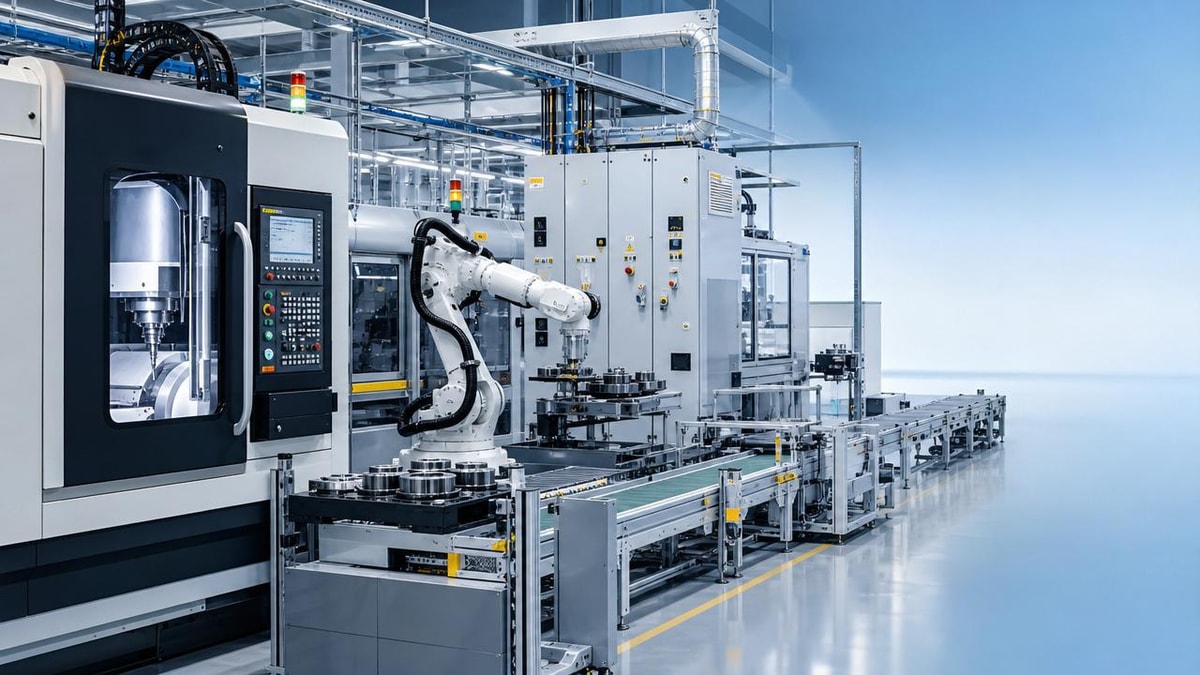
Many Industrial Automation projects fall short not because of hardware or software limits, but because one critical integration step is overlooked early in planning. For project managers and engineering leaders, aligning CNC machines, control systems, data flow, and production goals from the start is essential to avoid delays, rework, and rising costs. This article explores the integration gap that often determines whether an automation project scales efficiently or struggles under real production demands.
Why scenario differences matter before any Industrial Automation rollout
In real manufacturing environments, Industrial Automation is never deployed in a vacuum. A machining cell for aerospace components has very different requirements from a flexible line producing automotive parts, and both differ again from an electronics workshop focused on high-mix, low-volume output. Yet many projects begin with a technology-first mindset: select the robot, choose the CNC platform, connect the PLC, and assume the rest can be solved during commissioning.
The missed step is integration planning at the workflow level. This means defining how machines, tooling, operators, MES or ERP systems, quality checkpoints, and production targets interact under daily operating conditions. When this is skipped, Industrial Automation may look complete on paper but underperform in cycle time, traceability, changeover speed, or maintenance efficiency once production starts.
For project leaders in CNC machining and precision manufacturing, the key question is not simply whether automation is needed. The better question is which integration approach fits the production scenario, where the data bottlenecks are likely to emerge, and which dependencies must be locked in before equipment arrives on site.
The integration step that projects often miss
The overlooked step is end-to-end production integration mapping. It sits between concept design and detailed equipment procurement, and it should answer five practical questions: what triggers each process step, what data must move with the part, who responds when an exception occurs, how upstream and downstream systems stay synchronized, and how performance will be measured after launch.
In Industrial Automation projects involving CNC lathes, machining centers, multi-axis systems, and automated loading or assembly, this mapping is especially important because mechanical accuracy alone does not guarantee production stability. A machine may meet tolerance requirements, but if tool-life data is disconnected from scheduling logic, or if fixture status is invisible to the line controller, the entire automated flow becomes fragile.
This is where many teams underestimate integration. They validate machine capability, but not operational dependency. They specify network connections, but not decision logic. They budget for robotics, sensors, and software, but not for the engineering work required to make those components behave as one production system.
Typical application scenarios where the gap shows up first
Different Industrial Automation scenarios expose different integration weaknesses. Understanding those patterns helps project managers prioritize the right planning actions early.
High-volume automotive machining lines
In automotive manufacturing, the pressure is on takt time, repeatability, and downtime reduction. Here, the integration step often fails when CNC machines, transfer systems, gauging stations, and central production control are commissioned as separate packages. If the line cannot automatically respond to tool wear, part variation, or queue imbalance, output losses appear quickly. This scenario requires tightly coordinated machine status data, buffer logic, and predictive maintenance signals.
Aerospace and energy equipment production
For aerospace structures or energy components, quality traceability and process control matter more than sheer line speed. Industrial Automation in this setting often includes multi-axis machining, in-process inspection, and strict documentation requirements. The missed integration step is usually between machine execution data and quality records. If parameter history, tool usage, inspection results, and part genealogy are not linked from the beginning, compliance becomes manual, expensive, and risky.
High-mix electronics and precision parts workshops
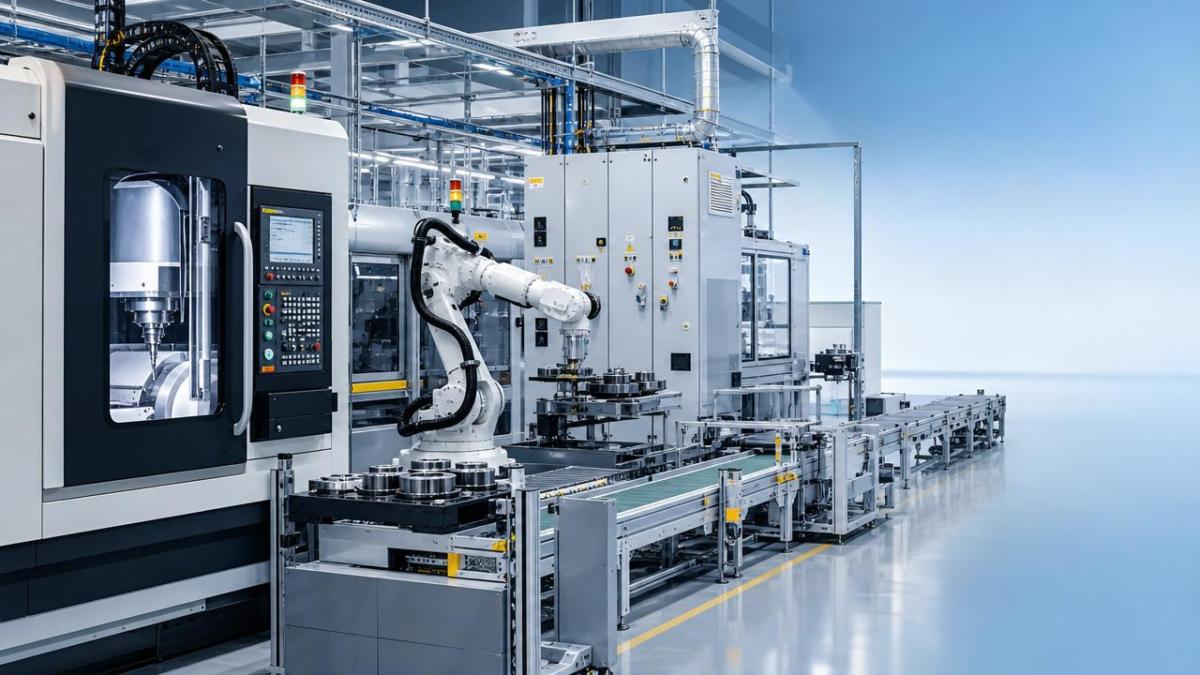
Electronics production and precision manufacturing often face frequent product changes, short runs, and varying fixture or program requirements. In these environments, Industrial Automation succeeds only when recipe management, work order sequencing, and changeover procedures are integrated into the control architecture. Without this, automation may reduce labor in one area but increase stoppages and setup confusion elsewhere.
Supplier plants upgrading legacy equipment
Many suppliers in global machine tool clusters are not building greenfield factories. They are trying to connect existing CNC assets, older PLCs, manual stations, and new robotics into one practical system. In this scenario, the integration gap appears in protocol compatibility, uneven data quality, and unrealistic assumptions about retrofit effort. A strong Industrial Automation plan here must include interface audits, fallback operating modes, and staged migration logic.
Scenario comparison: what each environment must confirm first
Before approving equipment lists or final budgets, project teams should compare scenarios through the lens of integration readiness rather than technology preference alone.
How needs change by project type and company maturity
Not every Industrial Automation project should be integrated to the same depth on day one. The right level depends on plant maturity, product mix, quality demands, and expansion plans.
A large enterprise running global production programs usually needs standardized data models, multi-site reporting, and supplier-compatible interfaces. In contrast, a medium-sized precision manufacturer may benefit more from local visibility, simple dashboarding, and reliable machine connectivity before moving into advanced orchestration. The mistake is copying the architecture of a much larger plant without matching the business case.
For project managers, this means judging Industrial Automation by operational fit. If the plant changes jobs daily, schedule integration and digital setup validation may produce more value than a complex analytics layer. If the plant produces safety-critical parts, then controlled data capture and audit readiness should take priority over cosmetic dashboard features.
A practical framework for scenario-based integration planning
A useful Industrial Automation roadmap should begin with process reality, not equipment brochures. The following sequence works well across CNC machining, automated production lines, and smart factory initiatives.
1. Start with part flow and exception flow
Map the normal process path first, then document what happens when a tool reaches end of life, a measurement fails, a robot cannot pick a part, or a program revision is released. Most integration failures appear in exception handling rather than standard operation.
2. Define critical data at source
Decide which system owns which data: machine controller, PLC, SCADA, MES, ERP, or quality software. Industrial Automation becomes unstable when the same status or identifier is maintained in multiple places without clear ownership.
3. Align automation goals with production KPIs
If management wants OEE improvement, engineering should define which integration points affect availability, performance, and quality. If the target is labor efficiency, then unattended operation, alarm routing, and material handling reliability deserve stronger design attention.
4. Lock interface responsibilities before procurement
Many Industrial Automation delays come from unclear responsibility between machine builders, robot integrators, software providers, and plant IT teams. Interface ownership should be written into the project scope before purchase orders are finalized.
5. Test the integrated workflow, not only the equipment
Factory acceptance tests and site acceptance tests should simulate realistic production cases, including rework paths, changeovers, tool replacement, and data transfer to business systems. A machine passing standalone tests does not prove the Industrial Automation project is truly production-ready.
Common misjudgments in CNC and precision manufacturing projects
Several recurring assumptions lead teams away from the integration step they most need to manage.
- Assuming machine connectivity equals usable production integration. Data visibility is not the same as process coordination.
- Treating software as a late-stage add-on. In Industrial Automation, software logic shapes how the plant actually behaves under pressure.
- Ignoring operator and maintenance workflows. If alarms, setup instructions, and recovery steps are not integrated, downtime expands fast.
- Overlooking product mix volatility. A line designed for one part family may struggle when customer demand shifts.
- Underestimating retrofit constraints. Legacy CNC assets often require more engineering time than new equipment, especially when documentation is incomplete.
When to move fast, and when to be cautious
Industrial Automation can move quickly when the process is repetitive, product families are stable, machine interfaces are known, and production KPIs are clearly defined. In these cases, the integration step is still necessary, but execution can be streamlined because the workflow is predictable.
Caution is needed when a project mixes new and old equipment, must serve multiple product types, or has strict quality documentation requirements across different markets. These conditions increase integration complexity more than they increase equipment complexity. For project owners, this is a crucial distinction. The visible hardware may look manageable while the hidden coordination logic becomes the true risk driver.
FAQ for project managers evaluating Industrial Automation integration
How early should integration mapping begin?
Before final equipment selection. If done later, the project may inherit avoidable interface conflicts, extra software work, and layout compromises.
Is full MES integration always required?
No. The right Industrial Automation architecture depends on the scenario. Some plants need deep MES control, while others gain more from machine data standardization and reliable scheduling links first.
What is the biggest warning sign during planning?
If suppliers describe equipment performance clearly but cannot explain exception handling, data ownership, and cross-system responsibility, the integration plan is not mature enough.
Turning the right scenario into the right next step
The most successful Industrial Automation projects in CNC machining and precision manufacturing are not always the ones with the newest machines or the most software modules. They are the ones that match integration depth to real production scenarios. For automotive lines, that may mean tighter machine-to-line logic. For aerospace, it may mean stronger traceability architecture. For high-mix workshops, it often means disciplined digital changeover control. For retrofit plants, it starts with honest interface assessment.
If you are leading an automation initiative, begin by reviewing the scenario you actually run, not the one the proposal assumes. Confirm how parts, data, alarms, quality records, and operator decisions will connect across the full workflow. That integration step is where Industrial Automation stops being a collection of equipment and becomes a scalable production system.
NEXT ARTICLE
Recommended for You
 CNC Milling Capacity Gaps Can Hurt Small Batch ProfitabilityManufacturing Market Research Center
 Industrial Robotics Payback Is Changing in Mid-Size PlantsManufacturing Market Research Center
 Shaft Parts Machining Problems That Show Up at Final InspectionCNC Machining Technology Center
 Production Process Delays Usually Start Before Machining BeginsCNC Machining Technology Center
 Industrial Automation Projects Often Miss This Integration StepCNC Machining Technology Center
 CNC Metal Cutting Tool Wear Is Costing More Than You ThinkCNC Machining Technology Center

Aris Katos
Future of Carbide Coatings
15+ years in precision manufacturing systems. Specialized in high-speed milling and aerospace grade alloy processing.
▶
Industrial Automation Projects Often Miss This Integration StepCNC Machining Technology Center▶
Industrial Automation projects fail when integration is underestimatedCNC Machining Technology Center▶
Industrial Automation Projects Fail When Data Is Added Too LateCNC Machining Technology Center▶
Industrial Automation projects stall when integration is underestimatedCNC Machining Technology Center▶
Industrial Automation projects stall without process mappingCNC Machining Technology Center
Mastering 5-Axis Workholding Strategies
Join our technical panel on Nov 15th to learn about reducing vibrations in thin-wall components.

Providing you with integrated sanding solutions
Before-sales and after-sales services
Comprehensive technical support