• Global CNC market projected to reach $128B by 2028 • New EU trade regulations for precision tooling components • Aerospace deman
NYSE: CNC +1.2%LME: STEEL -0.4%

Industrial Automation projects fail when integration is underestimated
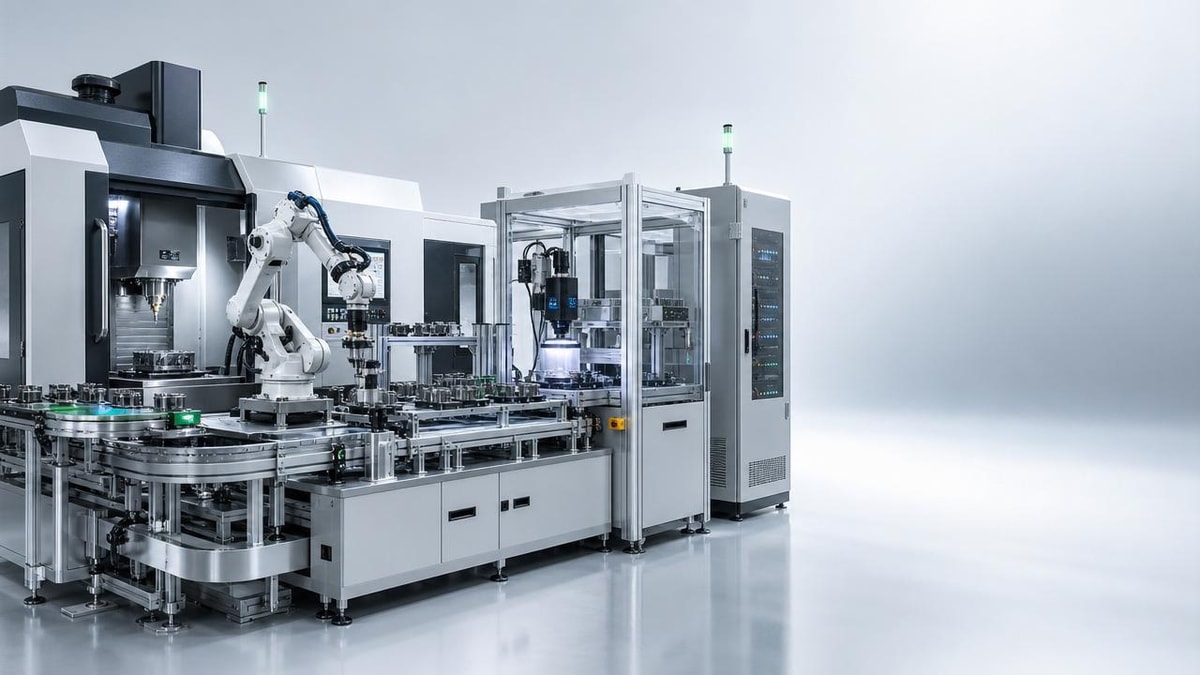
Industrial Automation projects often fail not because of weak technology, but because integration is treated as a late-stage task rather than a strategic priority. For project managers and engineering leaders, underestimated integration can trigger delays, budget overruns, compatibility issues, and lost productivity. Understanding this risk early is essential to delivering reliable, scalable automation in modern manufacturing environments.
Why integration risk looks different across manufacturing scenarios
In Industrial Automation, integration is not a single technical step. It is the point where machines, software, control logic, safety systems, material flow, data standards, and human operations must work as one. That is why the same automation concept can succeed in one plant and fail in another. A CNC machining workshop adding robotic loading has different integration demands from an aerospace line requiring full traceability, or an electronics plant connecting vision inspection with MES and ERP systems.
For project managers, the core mistake is assuming that equipment selection equals project readiness. In reality, the hard part begins after procurement: PLC communication, sensor reliability, fixture compatibility, cycle-time balancing, machine guarding, network architecture, data mapping, and operator handover. When these factors are underestimated, Industrial Automation turns from a productivity investment into a disruption source.
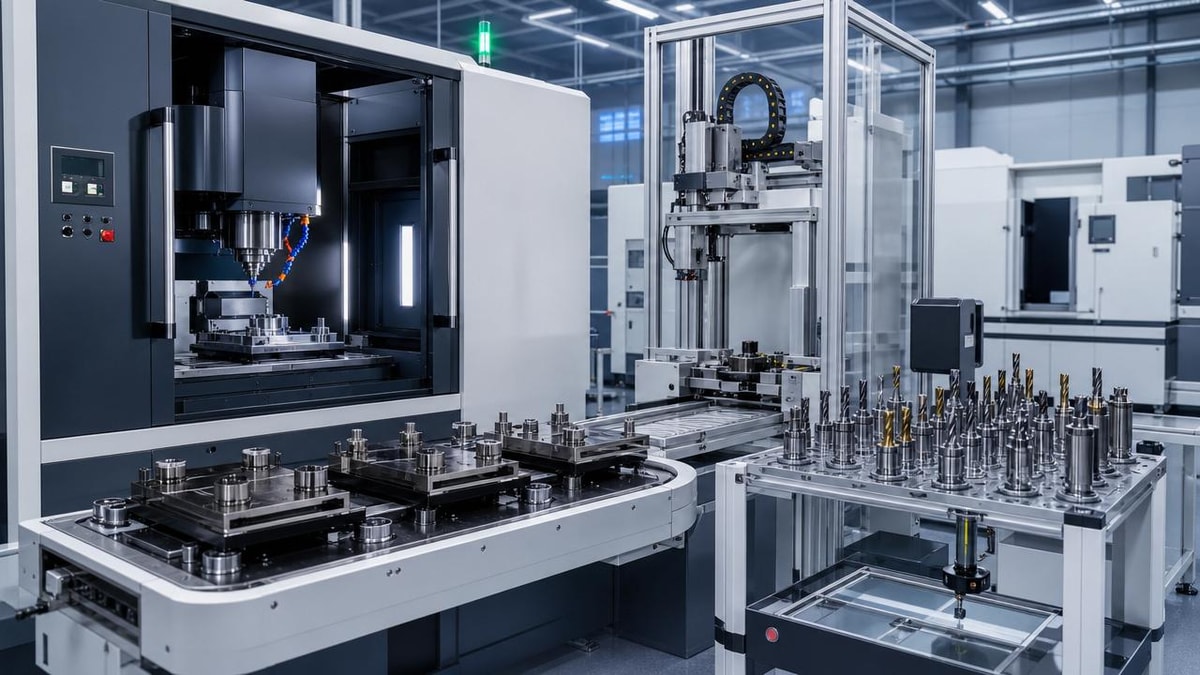
This matters especially in the CNC machine tool and precision manufacturing sector, where uptime, accuracy, and repeatability directly affect output quality. A machining center, CNC lathe, automated pallet system, or flexible robot cell may all perform well individually. Yet if integration planning is weak, the entire line can still miss OEE targets, create bottlenecks, or produce unstable quality.
Typical Industrial Automation scenarios where integration is often underestimated
Project leaders should assess integration risk by scenario, not by vendor promise. The most common failure patterns appear in several recurring applications across modern manufacturing.
1. Standalone machine automation upgrades
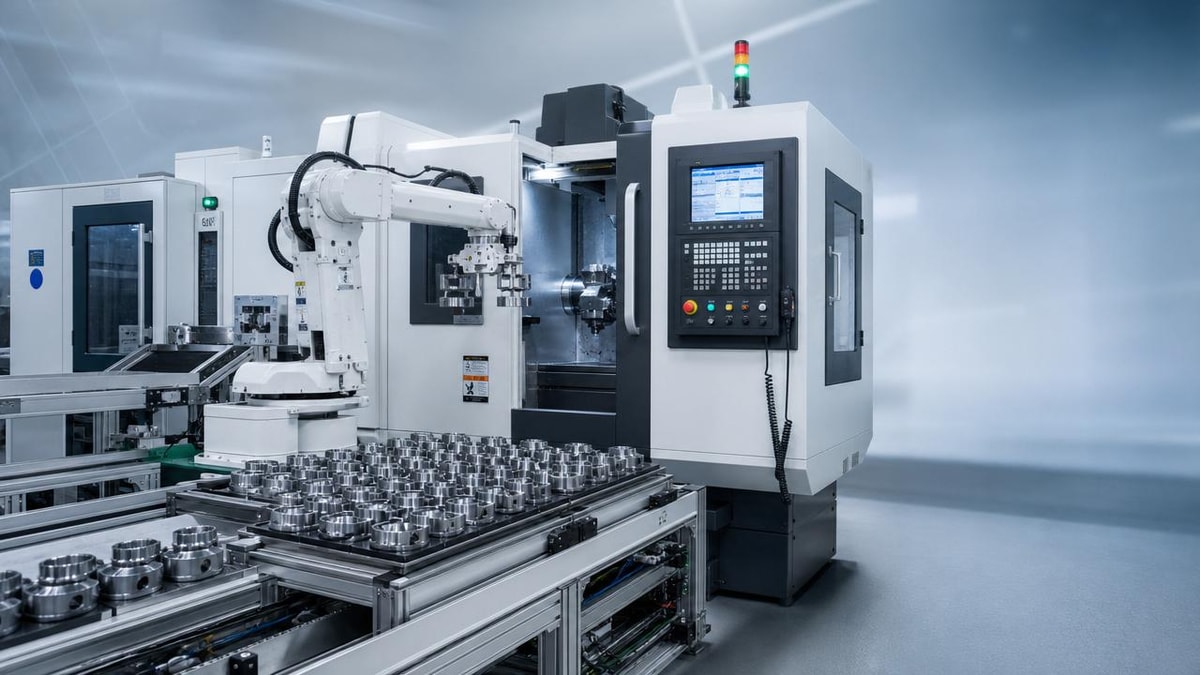
A factory may add automatic loading, tool monitoring, chip handling, or in-machine gauging to an existing CNC machine. This looks simple because the scope seems limited. However, retrofit scenarios are often difficult because the machine generation, controller brand, interface availability, and physical layout were not designed for new automation. Integration problems here usually involve signal limitations, mechanical interference, unstable cycle synchronization, and inconsistent safety logic.
2. Multi-machine flexible cells
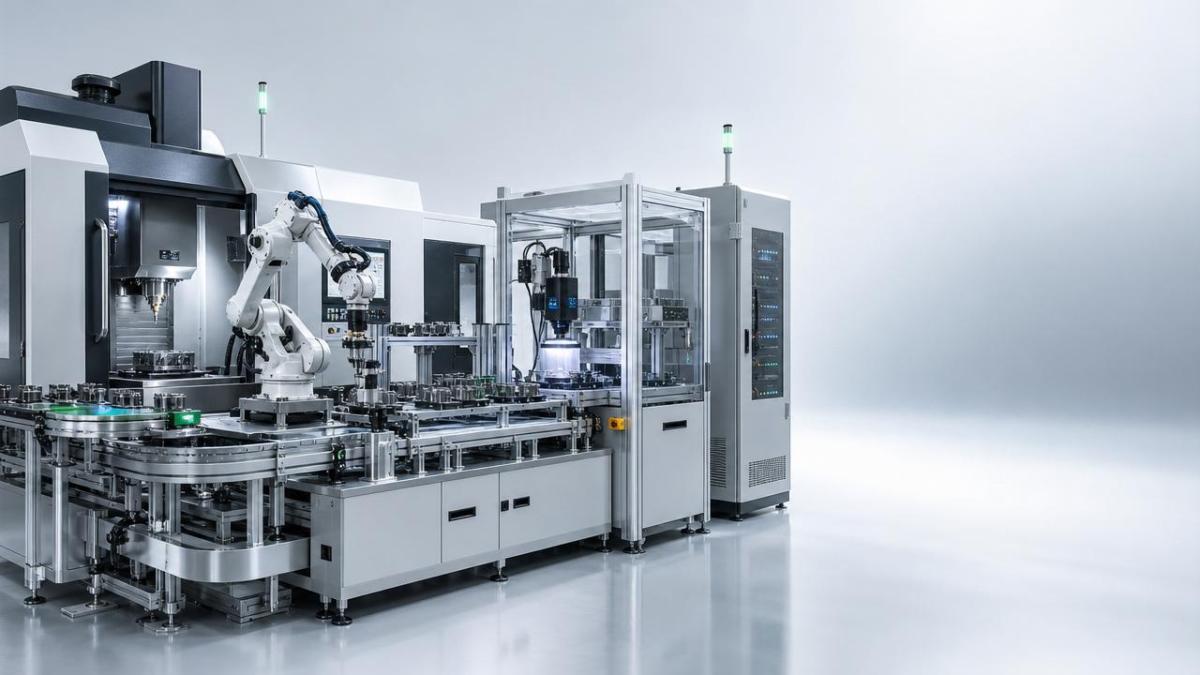
In flexible manufacturing cells, robots, conveyors, CNC machining centers, storage units, and inspection stations must coordinate dynamically. This is a common Industrial Automation goal for automotive parts, shafts, housings, and mixed-batch precision components. The challenge is not only communication, but also production logic: part routing, priority scheduling, queue management, alarm recovery, and changeover control. When integration is underestimated, flexible cells become rigid, with frequent manual intervention.
3. Smart factory data integration projects
Many manufacturers invest in dashboards, MES connectivity, machine monitoring, and predictive maintenance. These Industrial Automation projects often fail because data integration is treated as an IT add-on instead of a production reality issue. Different equipment may output inconsistent signals, lack timestamp alignment, or use incompatible protocols. If the plant does not define what data matters for decisions, the result is expensive visibility with little operational value.
4. High-precision and regulated production lines
Aerospace, medical components, and high-end energy equipment require more than automation speed. These environments demand traceability, process consistency, tolerance control, and strict quality records. Industrial Automation integration in these scenarios must include inspection logic, revision control, calibration workflows, part genealogy, and exception handling. If project teams focus only on hardware movement, they miss the deeper integration layer that protects compliance and product integrity.
Scenario comparison: what changes from one automation environment to another
The table below helps project managers judge where integration effort should increase. It highlights how different Industrial Automation environments create different risk profiles and planning priorities.
Different business needs create different integration priorities
Not every Industrial Automation project aims for the same outcome. Some businesses want labor reduction. Others want stable quality, shorter setup time, or better machine utilization. Integration planning should reflect the business objective, otherwise teams optimize the wrong layer.
Low-volume, high-mix machining
In this scenario, adaptability matters more than pure speed. Integration must support recipe changes, quick fixture swaps, tool offsets, and part identification. Project leaders should focus on whether the Industrial Automation solution can handle frequent product changes without heavy engineering support.
High-volume repetitive production
Here, the biggest risks are small stoppages, imbalance between stations, and weak preventive maintenance logic. Integration should prioritize uptime, spare parts standardization, and fault diagnosis. In these lines, a tiny synchronization issue can cause major production loss over time.
Quality-driven production environments
When the business depends on precision and traceability, Industrial Automation integration must include measurement systems, pass/fail logic, data capture, and nonconformance control. If quality systems are separate from machine logic, errors may be detected too late.
How project managers can judge scenario fit before launch
A practical way to reduce Industrial Automation failure is to screen projects using scenario-fit questions before finalizing scope. This avoids unrealistic assumptions and improves budget accuracy.
- Is the production process already stable, or are teams trying to automate a process that is still changing?
- Do the selected machines, robots, sensors, and software platforms have proven communication compatibility?
- Will quality, maintenance, IT, and operations all use the system differently, and are those needs documented?
- What happens when one station fails? Is there a defined fallback mode or manual bypass?
- Who owns FAT, SAT, commissioning criteria, and post-startup optimization?
These questions are especially important in CNC machining and precision manufacturing, where tolerances, tool life, and workholding conditions can undermine otherwise strong automation design. Good Industrial Automation planning treats these shop-floor details as integration inputs, not late-stage surprises.
Common scenario misjudgments that cause Industrial Automation failure
Across industries, failed automation programs usually share a few repeated judgment errors.
Assuming new equipment removes old process problems
If part variation, upstream instability, or tooling inconsistency already exist, Industrial Automation will expose those weaknesses faster. Integration cannot compensate for a process that has never been standardized.
Treating software and controls as secondary
Many teams invest heavily in mechanical assets while under-scoping PLC logic, HMI design, signal architecture, and data validation. In smart manufacturing, these layers determine whether the system is maintainable and scalable.
Ignoring cross-functional ownership
Industrial Automation is not owned by engineering alone. Maintenance, quality, production, safety, and IT all shape outcomes. If they enter the project late, integration gaps become expensive change orders.
Underestimating commissioning time
In theory, the line is complete when all assets arrive. In reality, true integration begins during testing, tuning, alarm debugging, operator training, and production ramp-up. Compressed commissioning schedules are one of the biggest hidden risks in Industrial Automation.
Best-fit guidance by project type
The right integration strategy depends on project maturity and plant conditions. Project managers can use the following guidance to match Industrial Automation plans to actual readiness.
FAQ for engineering leaders evaluating integration-heavy projects
When should integration planning start in Industrial Automation?
It should start before equipment is finalized. Interface definitions, network architecture, safety philosophy, and data ownership all influence procurement choices.
Which scenario carries the highest integration risk?
Retrofits and multi-vendor systems usually carry the most risk because legacy constraints and inconsistent standards create hidden dependencies.
How can manufacturers reduce Industrial Automation delays?
Use early cross-functional reviews, realistic commissioning plans, interface checklists, and scenario-based FAT/SAT criteria tied to production outcomes rather than only equipment motion.
From underestimated integration to reliable delivery
Industrial Automation succeeds when project teams treat integration as the operating core of the solution, not the last technical phase. For project managers and engineering leaders in CNC machining, precision manufacturing, automated assembly, and smart factory programs, the key is to match integration depth to the real scenario: retrofit, flexible cell, digital platform, or regulated production line. Each environment has different demands, different failure modes, and different readiness signals.
Before moving forward, review your own production scenario, machine interfaces, data needs, quality requirements, and commissioning constraints. The better you define these conditions early, the more likely your Industrial Automation project will deliver stable performance, scalable growth, and measurable business value.
PREVIOUS ARTICLE
NEXT ARTICLE
Recommended for You
 Industrial Robotics payback depends on more than labor savingsManufacturing Market Research Center
 Shaft Parts machining problems that show up after final inspectionCNC Machining Technology Center
 Which Production Process changes bring the fastest output gains?CNC Machining Technology Center
 Industrial Automation projects fail when integration is underestimatedCNC Machining Technology Center
 CNC metal cutting costs rise fast when material data is wrongCNC Machining Technology Center
 High precision lathe claims to verify before accepting deliveryMachine Tool Industry Editorial Team

Aris Katos
Future of Carbide Coatings
15+ years in precision manufacturing systems. Specialized in high-speed milling and aerospace grade alloy processing.
▶
Industrial Automation projects fail when integration is underestimatedCNC Machining Technology Center▶
Industrial Automation Projects Fail When Data Is Added Too LateCNC Machining Technology Center▶
Industrial Automation projects stall when integration is underestimatedCNC Machining Technology Center▶
Industrial Automation projects stall without process mappingCNC Machining Technology Center▶
Industrial Automation Upgrades That Stall After InstallationCNC Machining Technology Center
Mastering 5-Axis Workholding Strategies
Join our technical panel on Nov 15th to learn about reducing vibrations in thin-wall components.

Providing you with integrated sanding solutions
Before-sales and after-sales services
Comprehensive technical support