• Global CNC market projected to reach $128B by 2028 • New EU trade regulations for precision tooling components • Aerospace deman
NYSE: CNC +1.2%LME: STEEL -0.4%

When does an Automated Production Line become too rigid?
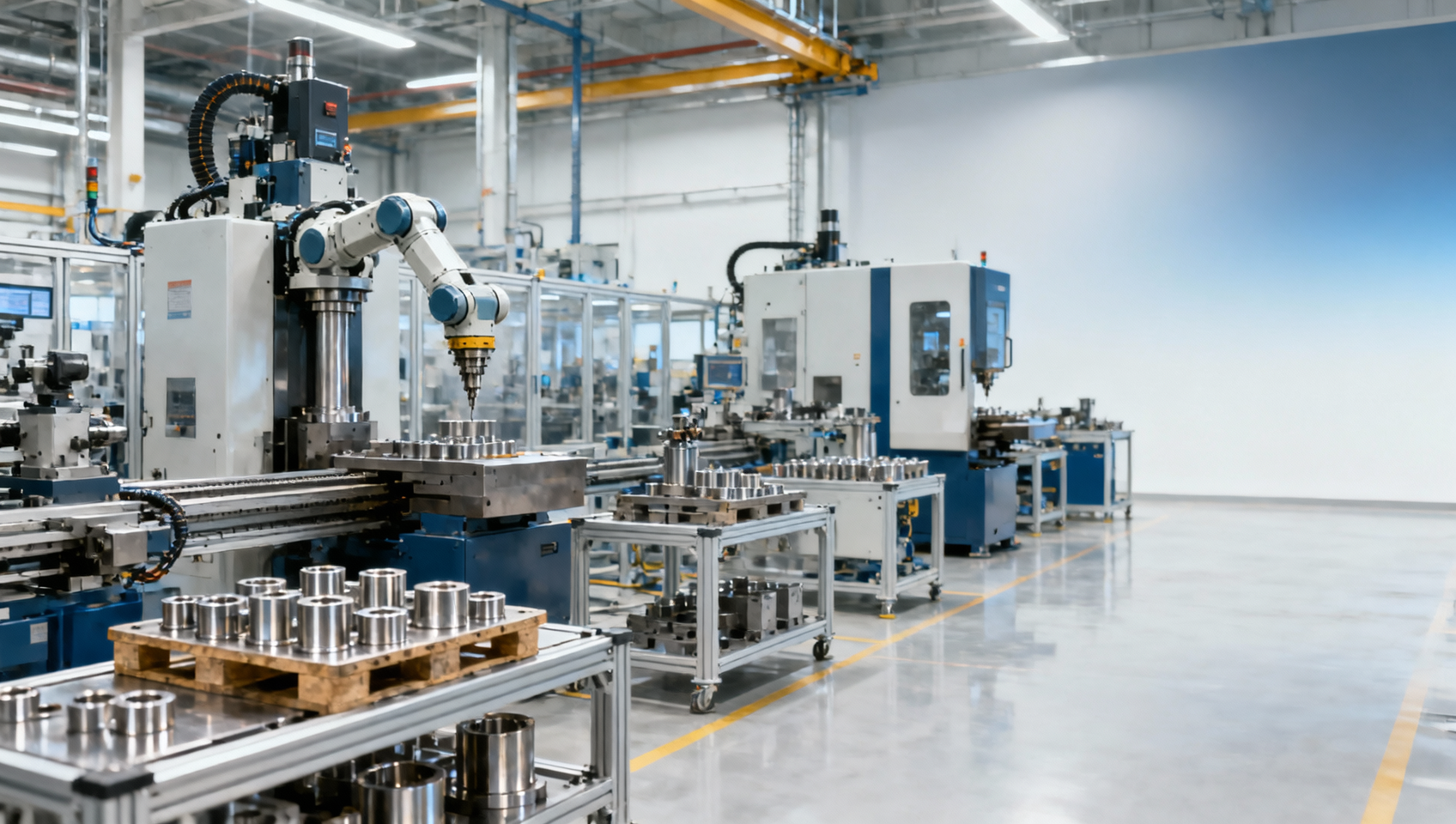
As Global Manufacturing pushes for faster, smarter output, an Automated Production Line can become a constraint when product variation, process changes, or custom machining needs increase. In the Manufacturing Industry, balancing Industrial Automation with flexibility is critical for metal machining, industrial CNC, and CNC production environments seeking both efficiency and long-term competitiveness.
For plant managers, operators, buyers, and executives, the question is no longer whether automation improves throughput. In many CNC machining environments, it clearly does. The more difficult question is when a highly automated setup starts to reduce responsiveness, increase hidden costs, or slow down engineering changes that should take days rather than weeks.
This issue is especially relevant in sectors such as automotive parts, aerospace components, energy equipment, and electronics manufacturing, where batch sizes can shift from 10,000 units to 500 units, and where tolerance, fixture requirements, and material specifications often change across projects. An automated production line that was optimized for one stable workflow may become too rigid when demand patterns change faster than the line can adapt.
In CNC production, rigidity is not only a mechanical issue. It can also appear in software logic, tooling strategy, fixture design, maintenance planning, line balancing, and supplier coordination. Understanding the warning signs helps manufacturers protect utilization, reduce conversion time, and invest in automation that remains useful over a 5–10 year planning horizon.
What rigidity means in an automated production line
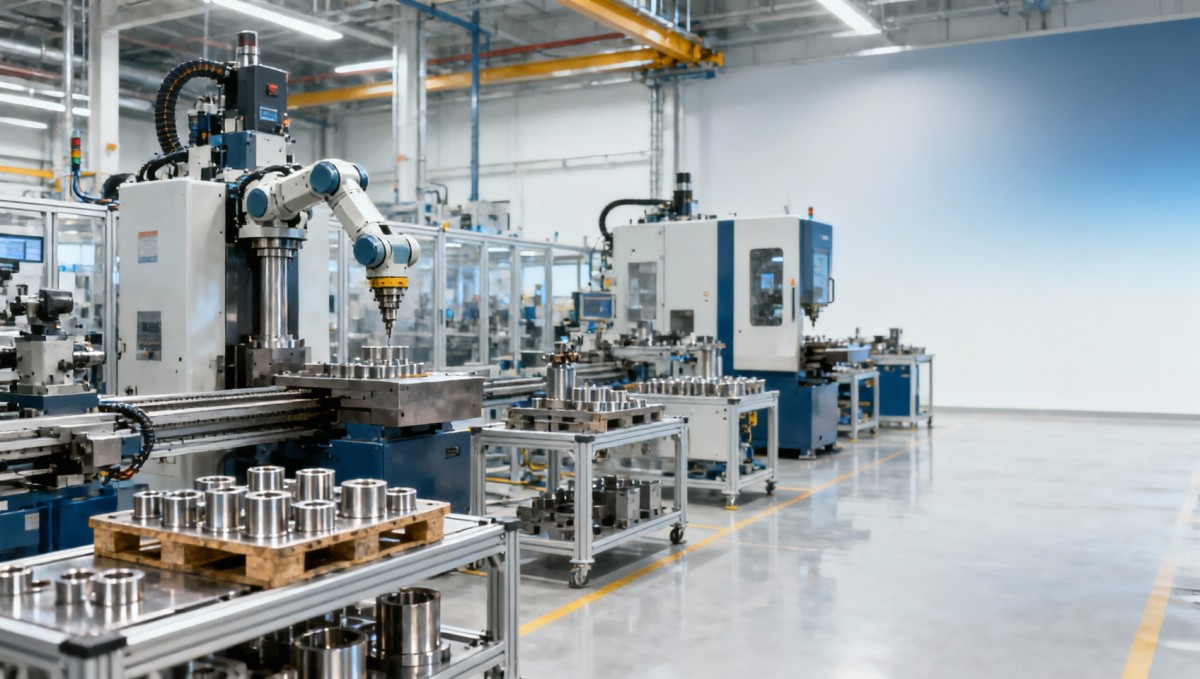
An automated production line becomes too rigid when it performs very efficiently under one fixed set of assumptions but loses efficiency sharply once product mix, cycle time, part geometry, or routing changes. In a CNC machine tool environment, this often happens when the line is designed around a narrow family of parts, fixed fixtures, and tightly synchronized takt times.
A rigid line is not necessarily poorly engineered. In fact, some of the most productive systems are intentionally specialized. The problem appears when the business requires more variation than the line can absorb. If a line can switch only between 1 or 2 part types without a major stoppage, yet the factory now runs 6 or 8 SKUs each week, automation can turn into a bottleneck instead of an advantage.
In industrial CNC operations, common rigidity points include dedicated loading systems, hard tooling, custom pallets, robot grippers built for one workpiece range, and control logic that requires extensive reprogramming for even minor process changes. A setup with 20-second takt time can still underperform if every changeover takes 4–6 hours and interrupts upstream and downstream processes.
Another form of rigidity is organizational. If only 1 or 2 engineers understand the PLC, robot pathing, and machine interface settings, then technical dependency itself becomes a production risk. In global manufacturing, where lead time pressure and labor turnover are ongoing realities, resilience depends on both hardware flexibility and process accessibility.
Typical signs that flexibility is too low
- Changeover time regularly exceeds 90–120 minutes for routine part family shifts.
- Fixture replacement requires manual alignment or verification beyond 3 process steps.
- Programming updates must be performed offline and validated over 1–2 production shifts.
- Line utilization falls below 70% when product mix increases, even though machine spindle availability remains high.
- Unplanned stoppages spread across multiple stations because one dedicated process cannot be bypassed.
Why this matters for decision-makers
For buyers and executives, rigidity affects capital efficiency. A line purchased to improve labor productivity by 20%–30% can end up delivering weaker returns if forecast assumptions change within 12–24 months. For operators, rigidity creates more troubleshooting, more workarounds, and a higher risk of quality drift during part conversion.
For research-oriented readers, the key takeaway is simple: the strongest automated production line is not always the fastest line under ideal conditions. It is often the line that maintains stable output, acceptable quality, and manageable conversion cost across a realistic production mix.
When high automation starts to hurt CNC production performance
In metal machining and precision manufacturing, over-automation typically becomes visible during three conditions: rising product variety, shorter order windows, and more frequent engineering revisions. A line built for long runs of identical shafts, housings, or discs may perform extremely well at volumes above 5,000 units per month, but become inefficient once order sizes fall into the 100–1,000 unit range.
This is common in industries moving from standard mass production to mixed-model manufacturing. Automotive suppliers, for example, may still run large batches, but EV-related transitions, regional sourcing changes, and platform updates can reduce forecast stability. Aerospace and energy equipment manufacturers often face even greater volatility, where tolerances remain tight but part families change more often.
A rigid automated production line can also create a false sense of capacity. On paper, the line may show high theoretical throughput, such as 180 parts per hour. In practice, actual weekly output may be far lower because of fixture exchange, offset verification, robotic reteaching, first-article inspection, and tool compensation. The gap between theoretical and realized productivity is one of the clearest warning signs.
Procurement teams should also watch the relationship between automation depth and support complexity. If one supplier controls the robot cell, another manages the CNC interface, and a third provides the vision system, troubleshooting can take 24–72 hours longer than expected. That delay matters when every lost shift affects delivery commitments and machine loading plans.
Performance trade-offs by production model
The table below compares how different production environments usually respond to automation rigidity. The values are practical planning ranges rather than universal rules, but they help clarify where fixed automation starts to lose efficiency.
The main conclusion is that automation should match production variability, not just target speed. In many factories, a flexible CNC cell with slightly lower peak output can produce stronger annual performance than a rigid line that needs frequent intervention.
Hidden costs that buyers often underestimate
- Engineering revision cost when a fixture, gripper, and program all need to be updated together.
- Lost output during commissioning of new parts, which can last 2–6 weeks for complex lines.
- Spare parts dependence for unique automation modules with long replacement lead times.
- Training burden when operators need cross-skill coverage across CNC, robot, and inspection systems.
If these costs are not included during sourcing and line design, the investment case can look stronger than it really is. A realistic review should compare not only labor savings, but also conversion effort, service responsiveness, and product roadmap uncertainty.
How to evaluate whether your line is too rigid
Manufacturers do not need to wait for a major failure to judge flexibility. A practical assessment can be done through a 4-part review: product variation, changeover time, process independence, and digital adaptability. This is useful for existing lines as well as for pre-purchase evaluation of new CNC automation projects.
Start with product variation. If more than 30% of your monthly production mix requires special tooling, additional probing, or manual verification, the line may be too specialized. The next step is changeover time. In many industrial CNC environments, a healthy target for same-family conversion is under 30 minutes, while major family conversion should ideally stay under 2 hours.
Then assess process independence. A line becomes fragile when one station controls the pace of every other station and cannot be buffered or bypassed. For example, if a single washing, marking, or in-line inspection unit stops the entire line for 45 minutes, overall equipment effectiveness can decline faster than managers expect.
Finally, evaluate digital adaptability. Can recipes, CNC programs, offsets, and robot paths be switched through version-controlled procedures? Or does every change require manual edits by specialists? In smart manufacturing, flexibility is increasingly determined by software architecture as much as by mechanics.
A practical assessment framework
The following table can be used by procurement teams, production engineers, and plant leaders when reviewing a current or proposed automated production line.
If your line exceeds 2 warning thresholds, it is worth reviewing whether modular fixtures, pallet systems, robot end-effector changes, or independent cell architecture could reduce rigidity. This is not always a full replacement issue; sometimes a targeted retrofit delivers the best return.
Questions to ask before approving new investment
- How many part families can the line support in the first 24 months without major hardware modification?
- What is the validated changeover time for both routine and major part transitions?
- Can the CNC automation system be expanded one cell at a time, or only as one integrated block?
- What spare parts have lead times above 6 weeks, and which stations depend on them?
- Can operators recover from common faults within 10–15 minutes without waiting for an automation engineer?
These questions improve sourcing quality because they move the discussion beyond initial cycle time and purchase price. They reveal whether the system fits the future operating model, not just today’s production plan.
Design strategies that keep automation efficient and flexible
The best way to prevent excessive rigidity is to design flexibility into the automation concept from the start. In CNC production, that often means choosing modularity over complete synchronization. Instead of one long transfer line, many manufacturers now prefer linked cells, palletized systems, or robot-tended machine groups that can be rebalanced as order structure changes.
Modular fixtures are especially important. A fixture system that supports repeatable location across multiple part families can cut conversion effort significantly. Even a reduction from 90 minutes to 25 minutes per changeover can reshape the economics of mixed production. In addition, standardized interfaces for grippers, probes, and tool presetting help reduce engineering dependency.
Digital integration should also be planned carefully. Recipe-based switching, centralized revision control, and traceable process parameters allow a line to support change without losing quality discipline. In smart factory environments, data should support faster adaptation, not create another layer of complexity that only specialists can manage.
Another effective strategy is selective automation. Not every process step needs the same level of automation. In high-mix manufacturing, it may be smarter to automate loading, part identification, and tool life tracking, while keeping some inspection or auxiliary tasks semi-automated. This approach often preserves flexibility without sacrificing the main productivity gains.
Recommended design principles
- Use modular cell architecture so one station upgrade does not require a full line redesign.
- Target under 30 minutes for routine changeovers and under 2 hours for major family changes.
- Apply standardized pallets, common datum strategies, and repeatable fixture interfaces.
- Separate bottleneck-sensitive operations with buffers where practical.
- Train at least 3 roles: operator, maintenance technician, and process engineer, so recovery capability is not concentrated in one person.
Where flexible automation works best
Flexible automation is especially valuable for manufacturers handling aerospace fittings, EV motor parts, hydraulic components, electronic housings, and custom energy equipment. These sectors often combine tight tolerances with medium-volume production, where demand can shift quarterly rather than annually. In such environments, a line that maintains 85% of peak efficiency across multiple variants may outperform a dedicated line that reaches 100% only under one stable SKU profile.
For procurement teams, this means supplier discussions should include not only machine specifications but also reconfiguration logic, support model, operator interface design, and retrofit roadmap. Flexibility should be treated as a technical parameter, not as a vague promise.
Procurement, implementation, and common misconceptions
One of the most common misconceptions is that more automation is always better. In reality, the best solution depends on batch pattern, part complexity, labor availability, quality demands, and capital planning. A factory producing 3 stable part numbers for 5 years may benefit from a dedicated automated production line. A plant with 12 recurring variants and monthly engineering changes may need flexible CNC cells instead.
Another misconception is that flexibility automatically means lower accuracy. That is not necessarily true. With the right machine tool selection, repeatable fixturing, in-process probing, and disciplined digital control, flexible automation can still support demanding tolerance requirements. The real challenge is maintaining process consistency while reducing conversion burden.
Implementation planning also matters. For many CNC automation projects, commissioning takes 4–12 weeks depending on complexity, while stable production ramp-up may require an additional 2–8 weeks. Buyers should account for trial parts, tool validation, operator training, and spare parts planning during that period rather than measuring success only from installation day.
A strong sourcing process typically compares at least 4 dimensions: technical fit, flexibility, service support, and lifecycle cost. Purchase price alone is not enough. Maintenance access, software openness, local support capability, and future product compatibility often determine whether the line remains productive after the first year.
FAQ for buyers and plant teams
How do I know whether to choose a dedicated line or a flexible cell?
If demand is stable, part design changes are rare, and volume stays above roughly 5,000 units per month per family, a dedicated line may be justified. If product mix changes weekly or monthly, or if order sizes often fall below 1,000 units, a flexible cell architecture is usually safer.
What changeover target should we ask suppliers to validate?
A practical target is 10–30 minutes for routine same-family conversion and less than 2 hours for major model changes. Ask suppliers to define exactly what is included: fixture exchange, program loading, offset setting, probing confirmation, and first-piece approval.
Can an existing rigid line be improved without full replacement?
Often yes. Retrofit options may include modular fixtures, robot gripper redesign, buffer addition, recipe management upgrades, and station decoupling. A phased retrofit over 2–3 stages can be more practical than replacing the full line at once.
What should operators monitor after the line goes live?
Track actual changeover time, first-pass yield, fault recovery time, tool life variation, and output loss per stoppage. These indicators often reveal rigidity faster than generic utilization numbers alone.
An automated production line becomes too rigid when it delivers speed only under narrow conditions and struggles with the real variability of CNC production. In today’s manufacturing industry, long-term value comes from balancing throughput with adaptability, especially in metal machining, industrial CNC, and precision manufacturing environments where product mix, batch size, and engineering changes continue to evolve.
Whether you are evaluating new equipment, upgrading an existing line, or comparing suppliers across global markets, the right decision depends on measurable flexibility: changeover time, part-family range, modularity, serviceability, and digital control. If you want to assess your current automation strategy or explore a more flexible CNC production solution, contact us to discuss your application, request a tailored recommendation, or learn more about practical options for scalable smart manufacturing.
Recommended for You
 Heavy-duty Machining Center for mold making: Why coolant filtration standards evolve faster than OEM manualsMachine Tool Industry Editorial Team
 Quick-change Fixture Design for CNC turning: Why clamping force consistency drops after 200 cyclesCNC Machining Technology Center
 5 Axis Machining for impeller manufacturing: Why toolpath smoothing affects surface fatigue lifeCNC Machining Technology Center
 Lean Production Process implementation: Where value stream mapping fails to expose hidden machine downtimeManufacturing Market Research Center
 Modular Tooling System for flexible manufacturing: Why interface repeatability degrades faster than expectedMachine Tool Industry Editorial Team
 Industrial Automation control system for CNC machines: When cybersecurity updates disrupt scheduled maintenanceMachine Tool Industry Editorial Team

Aris Katos
Future of Carbide Coatings
15+ years in precision manufacturing systems. Specialized in high-speed milling and aerospace grade alloy processing.
▶
Why automated production lines still struggle with changeoversCNC Machining Technology Center▶
When does an Automated Production Line become too rigid?CNC Machining Technology Center▶
Industrial Robotics integration costs more in low mix productionCNC Machining Technology Center▶
Industrial robotics integration slowing down CNC lathe throughput in mixed-part batchesCNC Machining Technology Center▶
Automated production lines show diminishing returns beyond 87% utilization—new data from German automotive suppliersCNC Machining Technology Center
Mastering 5-Axis Workholding Strategies
Join our technical panel on Nov 15th to learn about reducing vibrations in thin-wall components.

Providing you with integrated sanding solutions
Before-sales and after-sales services
Comprehensive technical support