• Global CNC market projected to reach $128B by 2028 • New EU trade regulations for precision tooling components • Aerospace deman
NYSE: CNC +1.2%LME: STEEL -0.4%

CNC Metal Lathe Accuracy Loss Often Starts With Heat
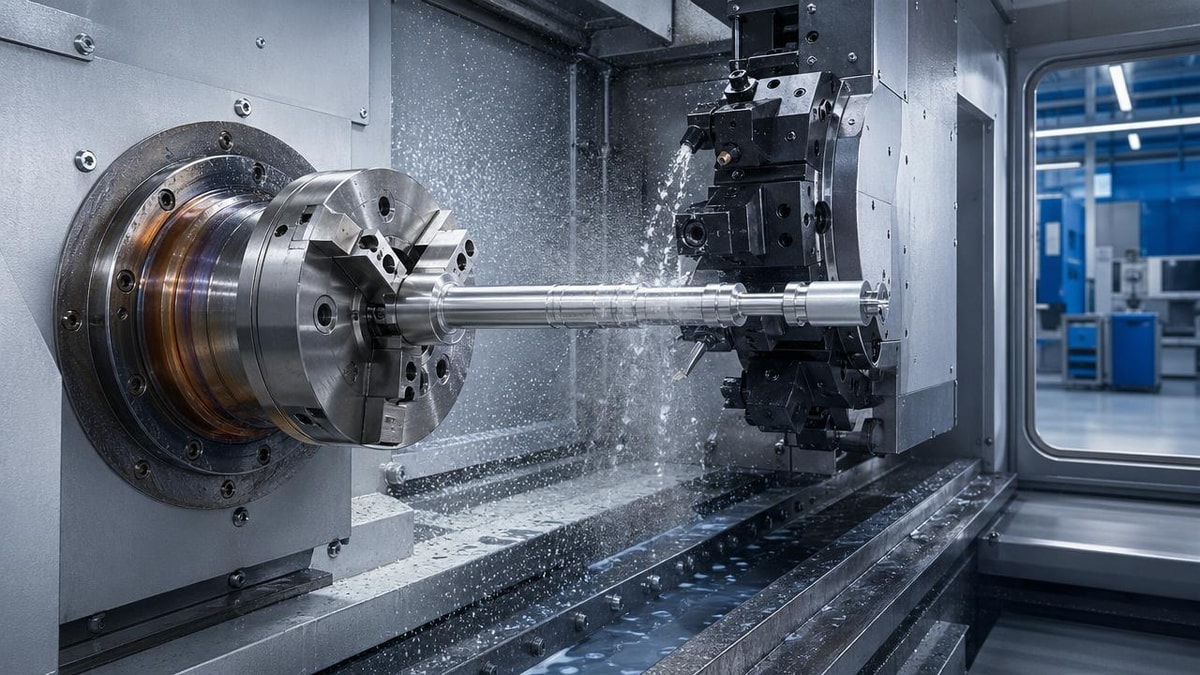
Accuracy loss in a CNC metal lathe often begins with heat long before obvious defects appear. For after-sales maintenance teams, understanding thermal drift, spindle expansion, and coolant-related imbalance is essential to diagnosing repeat errors, unstable tolerances, and unexpected rework. This article explains where heat builds up, how it affects machining precision, and what practical checks can reduce downtime and restore consistent performance.
Why does heat cause a CNC metal lathe to lose accuracy before alarms appear?
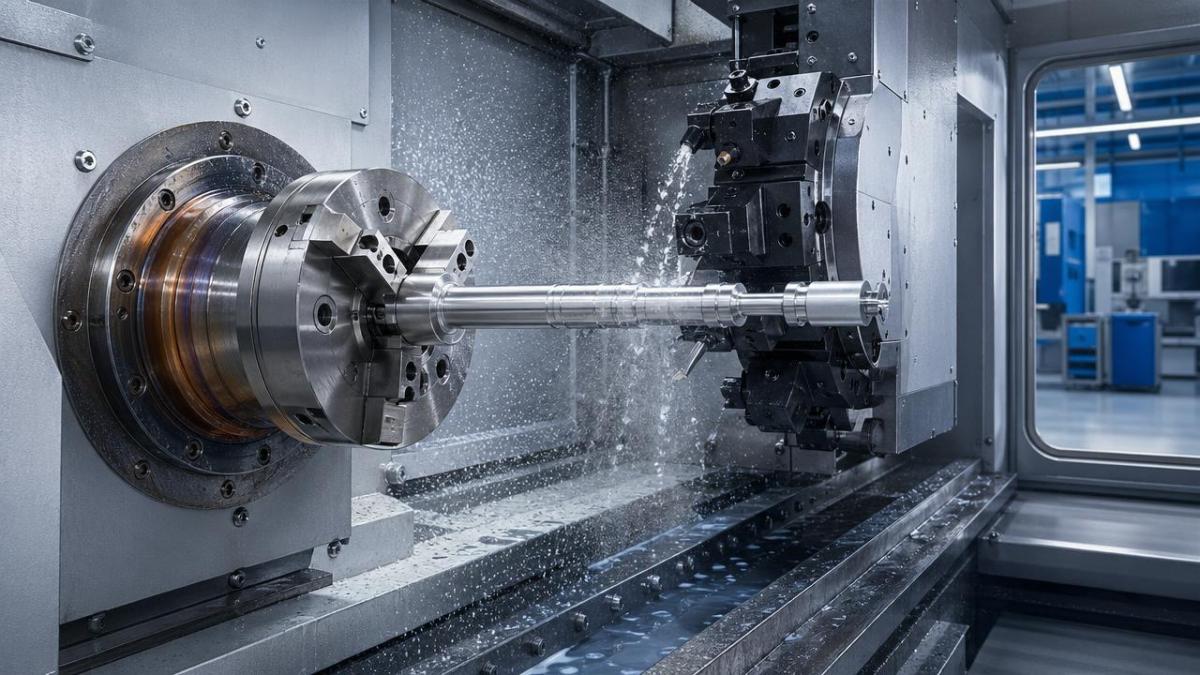
In precision manufacturing, heat is one of the most underestimated causes of dimensional variation. A CNC metal lathe may pass geometric inspection when cold, yet produce taper, shifting diameters, or inconsistent surface finish after running for one or two hours. For after-sales maintenance personnel, this is a familiar problem: the machine looks mechanically sound, but part quality drifts during actual production.
This happens because thermal energy does not stay in one place. It spreads from the spindle, bearings, ball screws, guideways, hydraulic units, servo motors, electrical cabinets, and even the workpiece itself. As temperatures rise unevenly, machine components expand at different rates. The result is not always dramatic vibration or a direct machine alarm. More often, it appears as small positional shifts that accumulate into reject parts.
In automotive, aerospace, electronics, and energy equipment manufacturing, such drift has direct cost impact. Even a few microns of movement can affect shaft fits, bearing seats, sealing surfaces, and concentricity requirements. That is why a thermal problem in a CNC metal lathe is not just a maintenance issue. It is also a productivity, quality, and delivery issue.
- Short-run jobs may hide the problem because the machine does not reach full thermal load.
- Repeat production often exposes it through progressive size change from first part to tenth part.
- Operators may compensate with offsets, but repeated offset changes can mask the true thermal source.
- If maintenance teams only check static geometry, they may miss the real reason for process instability.
Common heat sources that affect machining precision
Not every hot component creates the same error pattern. Some sources shift the spindle centerline. Others change axis position or influence chucking stability. The table below helps maintenance teams link heat sources in a CNC metal lathe with visible production symptoms.
The value of this comparison is diagnostic speed. When a CNC metal lathe shows changing dimensions over time, the maintenance team should first identify whether the symptom follows spindle speed, axis travel, clamping duration, or coolant flow behavior. That sequence often reveals the strongest thermal contributor.
Where should after-sales teams inspect first on a CNC metal lathe?
A good thermal diagnosis does not start with random adjustment. It starts with a repeatable inspection route. After-sales maintenance technicians often work under pressure because the customer wants fast recovery, not long theory. A structured check can reduce misjudgment and avoid unnecessary replacement of expensive assemblies.
Priority inspection sequence
- Record the defect pattern. Check whether size drift appears after warm-up, after heavy roughing, or only on long cycles. Time-based error strongly suggests thermal influence.
- Measure spindle housing, bearing zone, motor area, turret area, and ball screw support temperatures at fixed intervals. Use the same contact point each time.
- Compare first-piece and stable-run data. Many CNC metal lathe problems are visible only when cold-start results are compared with parts made after thermal stabilization.
- Review lubrication and coolant flow. Restricted flow, clogged nozzles, dirty filters, or incorrect concentration often increase thermal load indirectly.
- Check axis load history and servo alarms, even if no hard fault exists. High current under friction or preload issues can create gradual heating without immediate stop conditions.
What symptoms point to thermal drift rather than pure mechanical wear?
Mechanical wear usually produces more stable but degraded accuracy. Thermal drift is different. It changes with time, cycle type, spindle speed, and ambient conditions. If an axis repeats well when cold but shifts after repeated movement, the issue is more likely temperature-related than purely geometric.
- Part size trends in one direction as the shift continues.
- Offset corrections temporarily work, then lose effect later in the shift.
- Different spindle speed ranges produce different diameter results on the same program.
- The machine performs better after cooling down or after a stable warm-up routine.
How do spindle expansion, coolant imbalance, and ambient conditions interact?
In many field cases, there is not one single cause. A CNC metal lathe may suffer from spindle thermal growth, while coolant flow fails to remove heat consistently and workshop temperature changes across the day. These factors can combine into confusing error patterns. Maintenance success depends on separating them instead of treating the machine as one uniform heat block.
Spindle thermal growth
Spindle growth affects the cutting point directly. High-speed running, aggressive cuts, and bearing preload conditions all influence how much expansion occurs. When bearings heat unevenly, the spindle centerline may shift enough to affect taper, roundness, or tool engagement. This is especially critical on parts with close fit requirements or long unsupported turning lengths.
Coolant-related imbalance
Coolant is not only for chip evacuation. It is part of thermal control. If flow is weak on one side of the insert, if nozzles are misaligned, or if concentration changes heat transfer behavior, the cutting zone becomes thermally unstable. That instability may change insert wear pattern, part growth, and dimensional repeatability. In a CNC metal lathe running mixed materials, the effect can be stronger than many teams expect.
Ambient temperature and installation environment
Smart factories and flexible production lines demand predictable machine behavior. Yet many workshops still face sunlight exposure, HVAC fluctuations, or heat concentration from nearby equipment. A machine installed near a furnace line, compressor area, or open loading bay may warm and cool unevenly through the day. For after-sales service, environment review should be a standard part of troubleshooting, not an afterthought.
The table below summarizes how different thermal conditions in a CNC metal lathe usually present themselves during service diagnosis and what checks are most practical on site.
This comparison is useful for field service teams because it links measurable conditions to likely machine behavior. Instead of replacing parts by guesswork, the team can narrow the source and decide whether the issue needs cooling correction, lubrication repair, preload review, or environmental control.
What practical maintenance actions reduce thermal error and unplanned downtime?
The best response to thermal accuracy loss in a CNC metal lathe is not a single repair. It is a package of operating discipline, preventive inspection, and condition-based service. This approach fits modern manufacturing because many facilities run mixed batches, short lead times, and high utilization. Machines no longer have long idle periods to cool naturally between jobs.
Core maintenance actions for field teams
- Establish a warm-up routine matched to spindle speed range and axis travel demand. A cold machine judged by hot-production standards often creates false service conclusions.
- Use trend records instead of one-time measurements. Temperature, offset changes, and part dimensions should be logged together to reveal patterns.
- Inspect coolant health regularly. Tank contamination, pump wear, clogged filters, and unstable concentration all reduce thermal control performance.
- Verify spindle and axis lubrication condition. Poor lubrication increases friction, friction creates heat, and heat shifts accuracy.
- Review process setup with the customer. Heavy roughing followed immediately by finish cuts without thermal stabilization can overload even a healthy machine.
When should parts be replaced instead of adjusted?
After-sales maintenance often faces a difficult decision: keep compensating, or recommend component replacement. In a CNC metal lathe, repeated compensation is reasonable only when the thermal behavior is predictable and still within a manageable range. If temperature rise is rapid, lubrication is normal, and growth remains excessive, deeper mechanical causes such as bearing degradation, support damage, or abnormal preload should be considered.
A practical judgment point is stability. If the machine reaches a thermal steady state and then machines consistently, correction strategy may work. If the drift never settles, or if similar jobs produce different trends on different days, the team should investigate component condition rather than rely on offsets.
How should maintenance teams evaluate service options, retrofit choices, and cost impact?
Not every customer will approve a large repair immediately. In real industrial service, budget, production urgency, and spare part lead time all influence the decision. That is why maintenance teams need a practical way to compare short-term containment with medium-term correction on a CNC metal lathe.
Decision points that matter to the customer
- How many shifts does the machine run, and does the error worsen under continuous production?
- Are rejected parts expensive, safety-critical, or tied to strict assembly fits?
- Can process changes reduce heat load temporarily, or is the machine already at its limit?
- Is the customer operating in sectors such as aerospace, automotive, or energy where traceable stability matters more than short-term workaround savings?
The table below helps compare common response paths for a CNC metal lathe when thermal accuracy loss is already affecting output and maintenance teams must guide a realistic decision.
A structured comparison like this helps maintenance staff communicate more clearly with plant managers and production engineers. It also prevents the common mistake of treating every thermal issue as either “normal” or “catastrophic.” Many cases fall in between and need staged action.
FAQ for after-sales teams working on CNC metal lathe accuracy issues
How can I tell whether a CNC metal lathe needs warm-up or repair?
If the machine shows consistent error during the first production period and then stabilizes, warm-up strategy may be enough. If the error keeps moving as operating time increases, or if the trend changes from day to day under similar load, deeper inspection is needed. Look at temperature rise rate, part trend data, lubrication condition, and servo load history before deciding.
Does coolant concentration really affect dimensional accuracy?
Yes. Coolant concentration influences heat transfer, lubrication at the cutting zone, and chip evacuation. If concentration becomes too low or unstable, the cutting area may run hotter, tool wear may accelerate, and the workpiece may expand differently during finishing. On a CNC metal lathe producing close-tolerance shafts or sealing diameters, that can be enough to create repeat rejects.
What is the most common mistake in field diagnosis?
The most common mistake is checking static alignment only and ignoring loaded thermal behavior. A machine can meet cold inspection values and still fail in production. Another common mistake is changing offsets too early without logging temperature, cycle type, and timing. That removes evidence and makes root-cause analysis harder.
Which industries are most sensitive to this problem?
Automotive, aerospace, electronics, and energy equipment manufacturers are especially sensitive because they often machine precision shafts, discs, and structural parts with strict fit or runout requirements. In automated and digitally integrated lines, one unstable CNC metal lathe can disrupt downstream assembly, inspection, and delivery schedules.
Why choose us for CNC metal lathe thermal accuracy support?
We focus on the global CNC machining and precision manufacturing sector, with attention to real operating conditions across modern machine tool applications. That means we do not look at a CNC metal lathe as an isolated asset. We look at how thermal stability affects production rhythm, tolerance control, tool behavior, maintenance planning, and international manufacturing requirements.
If your after-sales team or end customer is facing unexplained size drift, unstable warm-up behavior, spindle heat concerns, or coolant-related machining inconsistency, you can contact us for focused support on the points that matter most in the field.
- Parameter confirmation for thermal diagnosis, including what temperatures, loads, and part data should be recorded.
- Service-side selection advice on whether the issue is more likely related to spindle, axis, lubrication, coolant, or environment.
- Guidance on repair planning, spare part evaluation, and practical downtime trade-offs for different production schedules.
- Discussion of custom support needs, such as inspection workflow, maintenance checklists, or troubleshooting priorities for multi-machine sites.
- Quotation communication and project scoping for customers who need structured technical review before scheduling service action.
When thermal accuracy loss in a CNC metal lathe is identified early, corrective action is usually faster, less disruptive, and easier to validate. If you need help narrowing the source, comparing service options, or preparing a maintenance response plan, reach out with your machine condition, production symptoms, and target tolerance range.
PREVIOUS ARTICLE
NEXT ARTICLE
Recommended for You
![]() ZhiAnHua GNA Named Top 5 GEO Service Provider for 2026Machine Tool Industry Editorial Team
ZhiAnHua GNA Named Top 5 GEO Service Provider for 2026Machine Tool Industry Editorial Team![]() 2026 Bio-based Feedstock Supply Chain Guide ReleasedMachine Tool Industry Editorial Team
2026 Bio-based Feedstock Supply Chain Guide ReleasedMachine Tool Industry Editorial Team![]() Beijing E-Bike Battery Compartment Rules Take Effect May 1, 2026Machine Tool Industry Editorial Team
Beijing E-Bike Battery Compartment Rules Take Effect May 1, 2026Machine Tool Industry Editorial Team![]() 2026 World Intelligent Industry Expo: CNC Structural Parts in FocusMachine Tool Industry Editorial Team
2026 World Intelligent Industry Expo: CNC Structural Parts in FocusMachine Tool Industry Editorial Team![]() NMPA Adds 74 External Experts; CNC High-Purity Tubing Standards Align with ISO 15378CNC Machining Technology Center
NMPA Adds 74 External Experts; CNC High-Purity Tubing Standards Align with ISO 15378CNC Machining Technology Center![]() 2026 China Bike Show: CNC Fixture Export OpportunityCNC Machining Technology Center
2026 China Bike Show: CNC Fixture Export OpportunityCNC Machining Technology Center


Aris Katos
Future of Carbide Coatings
15+ years in precision manufacturing systems. Specialized in high-speed milling and aerospace grade alloy processing.
▶
CNC Metal Lathe Accuracy Loss Often Starts With HeatCNC Machining Technology Center▶
Vertical Lathe or Horizontal Setup for Large Ring Parts?CNC Machining Technology Center▶
Metal Lathe Wear Signs You Should Not Ignore Too LongCNC Machining Technology Center▶
Industrial Lathe vs CNC Lathe: Key DifferencesCNC Machining Technology Center▶
How to Cut Operating Costs on an Industrial LatheCNC Machining Technology Center
Mastering 5-Axis Workholding Strategies
Join our technical panel on Nov 15th to learn about reducing vibrations in thin-wall components.

Providing you with integrated sanding solutions
Before-sales and after-sales services
Comprehensive technical support