• Global CNC market projected to reach $128B by 2028 • New EU trade regulations for precision tooling components • Aerospace deman
NYSE: CNC +1.2%LME: STEEL -0.4%

How to Cut Operating Costs on an Industrial Lathe
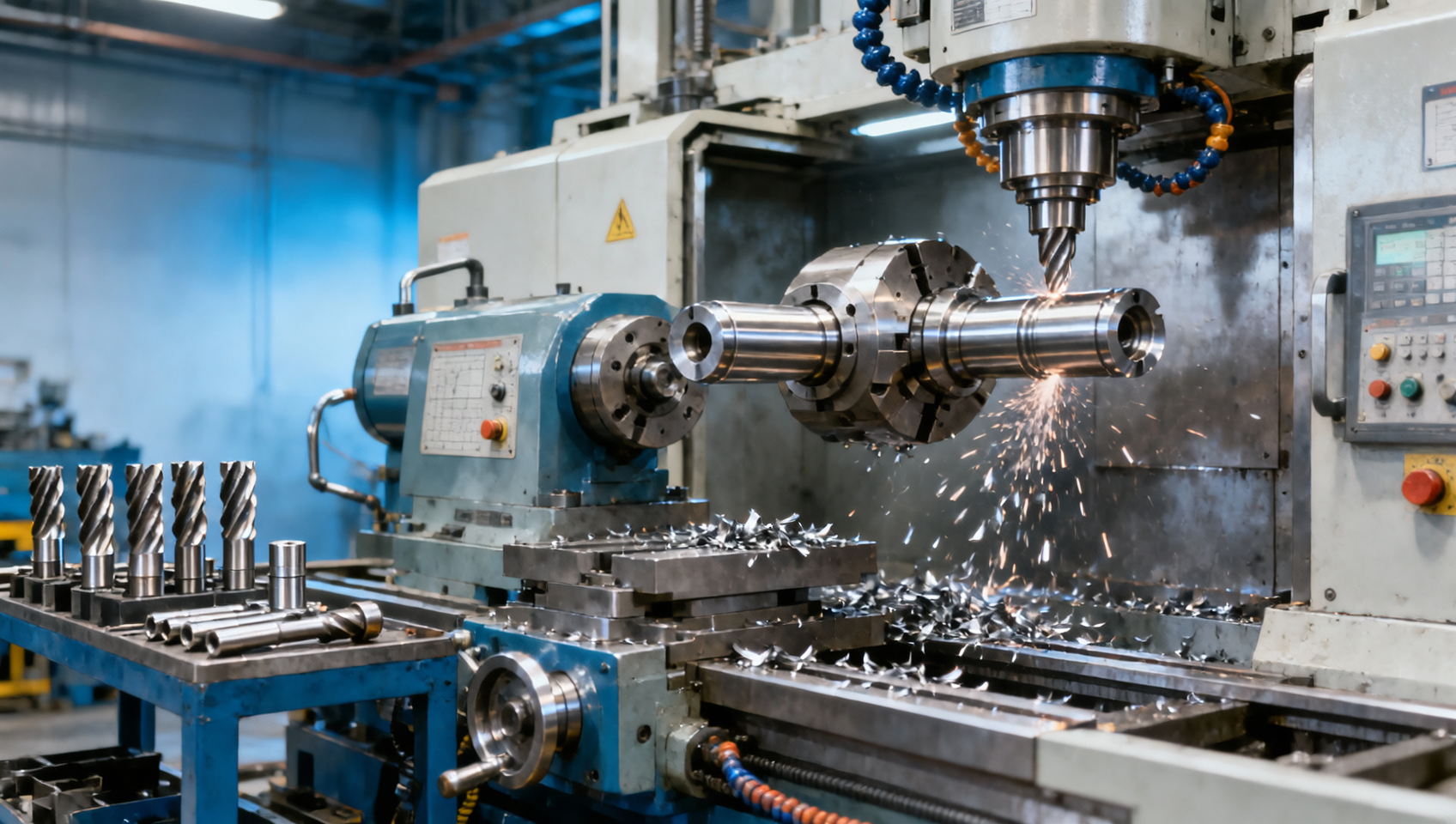
Cutting operating costs on an industrial lathe is no longer just about reducing labor or energy use. In today’s Manufacturing Industry, smarter metal machining strategies, industrial CNC optimization, and automated production upgrades can improve efficiency, extend tool life, and strengthen competitiveness. This guide explores practical ways to lower costs across CNC production, maintenance, programming, and the overall production process.
For machine operators, plant managers, sourcing teams, and business evaluators, the challenge is practical: lower the cost per part without sacrificing dimensional accuracy, surface finish, delivery reliability, or machine availability. In CNC turning environments that support automotive, aerospace, energy, and electronics manufacturing, even a 5% to 10% reduction in scrap, idle time, or tooling consumption can materially improve margins.
Industrial lathe operating cost is usually a combination of six elements: labor, cycle time, tool wear, energy use, unplanned downtime, and quality loss. The best savings rarely come from one dramatic change. More often, they come from coordinated improvements in setup, cutting parameters, preventive maintenance, part flow, and digital monitoring.
Understand Where Industrial Lathe Costs Really Come From
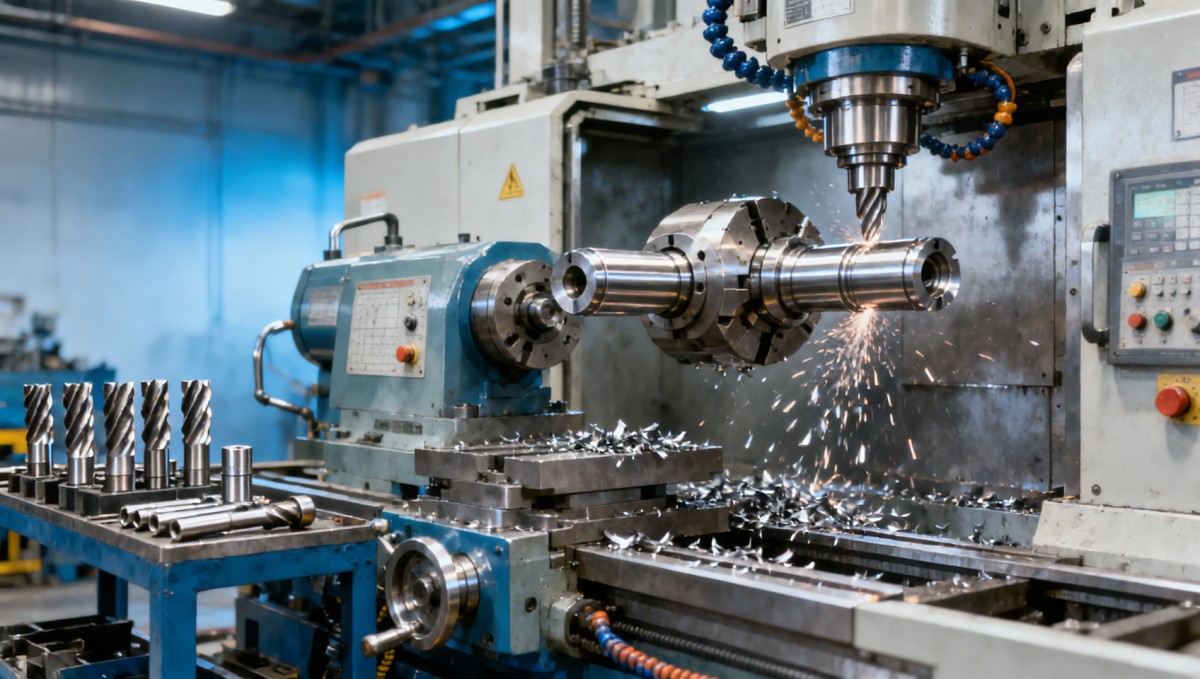
Before making changes, manufacturers should map the full cost structure of each CNC lathe or turning cell. Many workshops focus only on spindle runtime and operator wages, but true operating cost also includes setup losses, insert consumption, coolant management, fixture wear, chip handling, inspection time, and machine stoppages shorter than 10 minutes that often go unrecorded.
A practical benchmark is to review one representative part family over a 30-day period. Measure average cycle time, setup time, scrap rate, insert life, power consumption per shift, and downtime frequency. In many cases, 15% to 25% of available machine hours are lost to waiting, adjustment, rework, or tool change delays rather than actual cutting.
Operators and production engineers should also separate fixed and variable costs. Lease or depreciation remains relatively stable, but tooling, coolant, electricity, and consumables change with workload and process discipline. This distinction helps procurement teams evaluate whether a lower-cost insert, a higher-performance toolholder, or a software upgrade will produce better long-term savings.
Another common blind spot is low-volume complexity. Parts with multiple shoulders, grooves, threads, or tight concentricity tolerances often create hidden handling time. A part that appears profitable on paper may become expensive if it requires 2 extra inspections, 1 manual deburring pass, or frequent offset correction.
Core cost drivers to review first
- Cycle time per part, including rapid traverse, idle positioning, and in-process gauging.
- Setup duration, especially when changeovers happen more than 3 times per shift.
- Tool life consistency, not just maximum tool life under ideal conditions.
- Scrap and rework percentage, especially on tolerance bands tighter than ±0.02 mm.
- Downtime causes such as alarms, coolant interruption, chip congestion, or bar feeder misfeeds.
The table below provides a practical way to classify common industrial lathe cost sources and their likely effect on total production cost.
The main takeaway is simple: the cheapest industrial lathe operation is not the one with the lowest hourly power draw, but the one with stable throughput, predictable tool life, low changeover friction, and minimal quality loss. Cost reduction starts with accurate visibility.
Optimize Cutting Parameters, Tooling, and Setup Discipline
One of the fastest ways to cut industrial lathe operating costs is to improve the relationship between feed rate, spindle speed, depth of cut, insert grade, and setup repeatability. Many facilities run conservative parameters to avoid risk, but overcautious settings can increase cycle time by 8% to 20% without delivering measurable quality benefits.
Tooling strategy should be based on material family and process stability. For carbon steel, stainless steel, cast iron, and heat-resistant alloys, the same insert geometry rarely performs equally well. Using the wrong chipbreaker may not only shorten tool life but also create long chips, unstable evacuation, and spindle interruptions that raise cost per part.
Setup discipline matters just as much as cutting data. If tool offsets, chuck pressure, tailstock alignment, and clamping repeatability vary between operators, a theoretically optimized program will still produce uneven results. In precision turning, even small deviations can affect runout, finish quality, and rework frequency.
For procurement and business reviewers, the key question is not whether a premium tool costs more per insert. The question is whether it reduces the total cost of machining over 500, 1,000, or 5,000 parts by extending life, increasing speed, and reducing unscheduled intervention.
Practical parameter and setup actions
- Standardize feeds and speeds by material group and part family rather than leaving settings to operator preference.
- Track insert life in actual part count, such as 80 parts, 150 parts, or 300 parts per edge, instead of rough time estimates.
- Use preset tooling and setup sheets to reduce offset errors and shorten first-piece approval time.
- Review chucking and fixturing whenever vibration, taper deviation, or repeat scrap appears on slender parts.
- Cut dry or with minimum quantity lubrication only when material, finish target, and chip behavior support it safely.
Typical improvement areas
In many CNC turning lines, reducing setup time from 45 minutes to 25 minutes can create more annual capacity than buying additional overtime. Likewise, increasing insert life stability from a 40-part spread down to a 10-part spread makes production planning more reliable and reduces emergency stoppages.
A good process review should compare current state versus target state across three dimensions: cycle time, cost per edge, and first-pass yield. This gives both technical and purchasing teams a common basis for decision-making.
The following table summarizes typical cost-saving opportunities tied to tooling and process settings.
The strongest savings usually come from combining technical optimization with standard operating practice. Better tooling alone helps, but better tooling plus repeatable setup delivers more durable cost control.
Reduce Downtime Through Preventive Maintenance and Machine Health Monitoring
Unplanned downtime is one of the most expensive hidden costs on an industrial lathe because it interrupts production, creates delivery risk, and often triggers overtime or rescheduling. A 40-minute stoppage on a high-utilization CNC lathe may affect not only one job but an entire downstream process such as grinding, inspection, or automated assembly.
A practical maintenance model divides actions into daily, weekly, and monthly checks. Daily work should include lubrication status, coolant concentration, chip conveyor condition, air pressure stability, and visual leak inspection. Weekly checks can focus on chuck function, turret indexing consistency, and filter cleanliness. Monthly reviews may include spindle vibration trends, backlash observation, and thermal stability under repeated cycles.
For smart manufacturing environments, machine monitoring software and CNC data collection can further reduce cost. Tracking alarm codes, spindle load trends, idle periods, and cycle overruns helps identify chronic issues before they become failures. Even a basic monitoring dashboard can reveal whether downtime is concentrated in 3 recurring causes that are cheaper to solve than repeated emergency response.
Maintenance should also include supporting systems. Coolant contamination, unstable compressed air, poor chip evacuation, and worn hydraulic hoses can shorten tool life and increase quality variation. These are not minor housekeeping issues; they directly affect machining cost and process reliability.
Maintenance priorities that often pay back quickly
- Check coolant concentration at least 2 to 3 times per week when running mixed materials.
- Clean or inspect filters and chip systems on a fixed schedule instead of waiting for alarm conditions.
- Record recurring machine alarms by date, shift, and part number to spot patterns within 2 to 4 weeks.
- Verify turret clamping and indexing repeatability whenever finish quality starts drifting.
- Review spindle and axis loads when new programs or tougher alloys are introduced.
Common maintenance mistake
Many workshops repair only after failure because it seems to save labor in the short term. In practice, reactive maintenance usually costs more. It increases rush spare-part purchases, extends machine outage time, and raises the risk of quality escapes after restart. A disciplined 15-minute daily routine is often less expensive than one 4-hour breakdown in the middle of a delivery window.
For buyers evaluating machine tool suppliers or production partners, service response time, spare-part availability, and remote diagnostic capability should be part of the total-cost assessment. A lower purchase price can be offset quickly if the machine remains idle for 3 to 7 days waiting for support.
Use CNC Programming and Automation to Lower Cost per Part
Programming quality has a direct impact on industrial lathe cost. Poor toolpath logic, unnecessary retract motions, repeated air cutting, and excessive safety margins can add seconds to each part. On low-volume work this may seem minor, but on a batch of 10,000 parts, saving just 6 seconds per cycle can recover more than 16 production hours.
Modern CNC optimization should focus on motion efficiency, stable cutting engagement, and reduced operator intervention. This may include better canned cycle use, optimized tool sequencing, bar feeder integration, automatic part catchers, in-process probing, or robotic loading for repetitive work. Automation does not always mean a full lights-out cell; even a modest upgrade that reduces one manual handling step can cut labor and variability.
Batch size matters when deciding the right level of automation. For batches under 50 pieces, quick setup and flexible fixturing may deliver more savings than robotics. For recurring orders of 500 to 5,000 pieces, however, automatic loading, part separation, and program standardization often produce a stronger return by reducing idle time and operator dependency.
For sourcing teams and business evaluators, the best question is whether an automation step reduces total touched time per part. If one operator can supervise 2 lathes instead of 1 without increasing scrap or safety risk, labor efficiency improves substantially while machine utilization rises.
Where programming and automation create savings
- Remove non-cutting motion and optimize tool order to shorten cycle time.
- Use common program templates for similar shaft, sleeve, or threaded part families.
- Add automatic loading or bar feeding where spindle wait time is frequent and predictable.
- Integrate in-process measurement for high-value parts when it reduces final inspection rework.
- Standardize post-processing and revision control to avoid outdated program use.
The table below compares several cost-reduction methods tied to programming and automation level.
The main point is that automation should be selected by workload pattern, not by trend. The right level of CNC automation is the one that reduces touched time, stabilizes quality, and supports realistic throughput targets.
Control Procurement, Energy, and Production Planning Costs
Operating cost on an industrial lathe is also shaped by decisions outside the machine enclosure. Tool purchasing, spare-part stocking, coolant buying, shift planning, and job scheduling all influence the final cost per component. If procurement chooses consumables only by unit price, the factory may end up paying more through unstable performance, rushed replenishment, or excess inventory.
A better purchasing model uses total cost criteria. Compare not only purchase price but also tool life consistency, supplier lead time, compatibility with existing holders, technical support availability, and minimum order flexibility. For many plants, reducing one emergency order per month can save more administrative and logistics cost than negotiating a small discount on insert price.
Energy cost should be addressed with realistic expectations. CNC lathes do consume power, but the largest savings often come from eliminating idle running, reducing warm-up waste, optimizing compressed air use, and improving scheduling so machines run in balanced blocks rather than frequent start-stop patterns. A machine that idles 90 minutes per shift can waste more money than one cutting at a slightly higher spindle load.
Production planning has similar influence. Grouping similar materials, chuck setups, and tooling requirements can reduce changeovers and stabilize output. If jobs are sequenced randomly, the workshop may lose 1 to 2 hours per day in preventable setup churn.
Procurement and planning checklist
- Evaluate tooling suppliers on service response within 24–72 hours, not just list price.
- Set minimum stock levels for critical consumables with lead times above 2 weeks.
- Bundle jobs by material and fixture family to reduce setup repetition.
- Measure machine idle time by shift and investigate causes above 10% of scheduled hours.
- Review coolant, lubrication, and compressed air consumption every month, not only annually.
Who benefits most from this approach
Small and medium-sized manufacturers often see quick gains because they have less process redundancy and can feel each hour of downtime or scrap more directly. Larger plants benefit as well, especially when several lathes share the same tooling platform and production planning system. In both cases, coordinated sourcing and scheduling can improve cost visibility and shorten decision cycles.
If your facility supports export manufacturing or multi-industry precision components, these controls become even more important. Delivery reliability, traceability, and repeatability are commercial advantages, not just operational details.
FAQ: Practical Questions About Lowering Industrial Lathe Costs
How much cost reduction is realistic without buying a new machine?
In a stable CNC turning operation, a realistic first target is often 5% to 15% total cost improvement within 2 to 6 months. This can come from shorter setup, better tooling control, reduced scrap, and lower downtime. Facilities with weak process discipline may achieve more, but gains should be validated by actual part cost and machine utilization data.
Which metric should operators watch first?
Start with three linked metrics: cycle time, first-pass yield, and tool life by part count. If cycle time falls but scrap rises, the process is not truly cheaper. If tool life improves but setup remains inconsistent, savings may not scale across shifts. These three metrics create a balanced view of machining efficiency.
When does automation make financial sense?
Automation usually makes the most sense when part demand is recurring, manual loading is repetitive, and idle waiting time is measurable. As a rule, if one machine spends a significant portion of each cycle waiting for handling or if one operator repeatedly performs the same low-value loading task across hundreds of parts, automation review is justified.
What is the most common mistake in cost reduction projects?
The most common mistake is optimizing one variable in isolation. For example, reducing insert price while ignoring tool life, or increasing feed aggressively without checking finish and dimensional control. Sustainable cost reduction on an industrial lathe requires coordinated changes across programming, tooling, setup, maintenance, and planning.
Lowering industrial lathe operating costs is a process of disciplined improvement, not a one-time adjustment. The most reliable gains come from understanding real cost drivers, standardizing tooling and setup, preventing downtime, using CNC programming more intelligently, and aligning procurement with production needs.
For manufacturers, operators, buyers, and business evaluators, the goal is not simply to spend less on a machine. It is to produce more qualified parts per shift, with lower interruption, more stable quality, and better delivery performance across the entire manufacturing process.
If you are evaluating CNC lathes, tooling solutions, automation upgrades, or precision manufacturing support, now is the right time to review your current cost structure. Contact us to get a tailored solution, discuss production challenges, or learn more about practical CNC optimization strategies for your operation.
PREVIOUS ARTICLE
NEXT ARTICLE
Recommended for You
 How to Choose the Right Metal Machining ProcessCNC Machining Technology Center
 Metal Machining vs CNC Metalworking: What MattersCNC Machining Technology Center
 What Drives Cost in Industrial CNC ProjectsManufacturing Market Research Center
 Is Industrial CNC Worth Upgrading in 2026Machine Tool Industry Editorial Team
 How CNC Industrial Systems Improve Shop EfficiencyMachine Tool Industry Editorial Team
 CNC Industrial Setup Mistakes to Avoid FirstCNC Machining Technology Center

Aris Katos
Future of Carbide Coatings
15+ years in precision manufacturing systems. Specialized in high-speed milling and aerospace grade alloy processing.
▶
Industrial Lathe vs CNC Lathe: Key DifferencesCNC Machining Technology Center▶
How to Cut Operating Costs on an Industrial LatheCNC Machining Technology Center▶
Automated Lathe Cycle Time Gains Can Hide Quality LossesCNC Machining Technology Center▶
Vertical Lathe or Horizontal Setup for Large Ring Parts?CNC Machining Technology Center▶
Automated Lathe Setup Errors That Lead to Scrap PartsCNC Machining Technology Center
Mastering 5-Axis Workholding Strategies
Join our technical panel on Nov 15th to learn about reducing vibrations in thin-wall components.

Providing you with integrated sanding solutions
Before-sales and after-sales services
Comprehensive technical support