• Global CNC market projected to reach $128B by 2028 • New EU trade regulations for precision tooling components • Aerospace deman
NYSE: CNC +1.2%LME: STEEL -0.4%

Vertical Lathe or Horizontal Setup for Large Ring Parts?
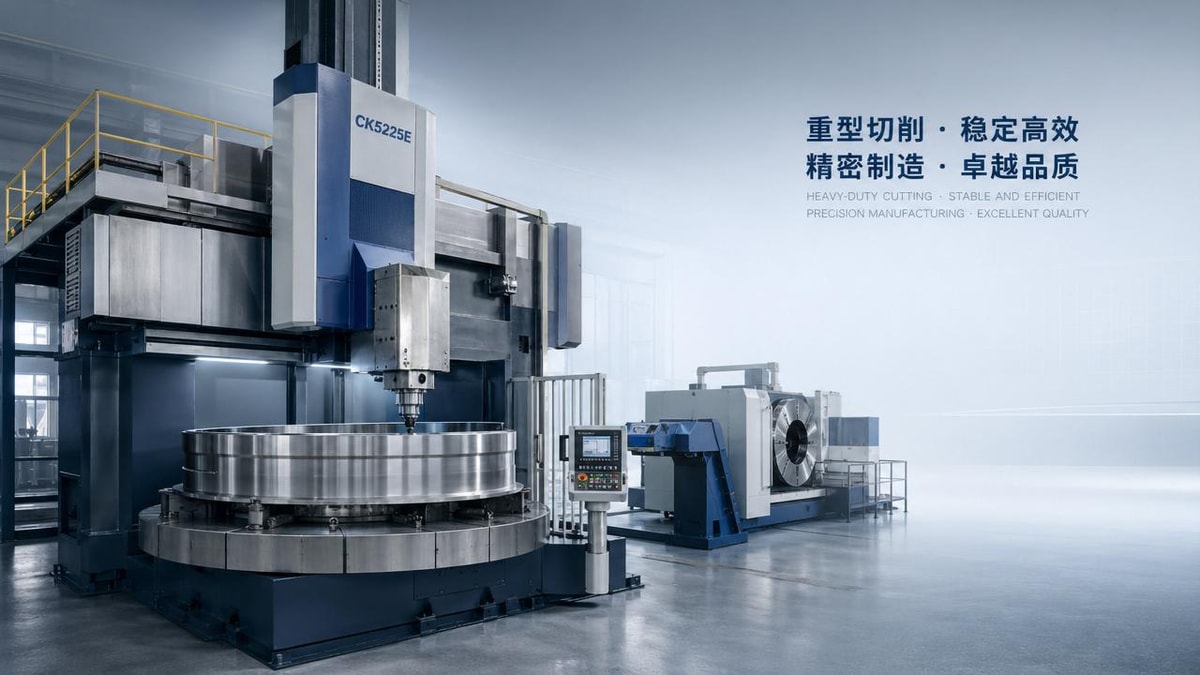
When machining large ring parts, choosing between a vertical lathe and a horizontal setup directly affects stability, accuracy, loading efficiency, and overall production cost. For technical evaluators, understanding where a vertical lathe delivers better support, reduced deformation risk, and more reliable heavy-duty cutting is essential before making equipment or process decisions.
Why the Decision Is Becoming More Important Now
The choice between a vertical lathe and a horizontal arrangement is no longer a simple workshop preference. In recent years, manufacturing demand has shifted toward larger diameters, tighter tolerances, shorter lead times, and more traceable process control. These changes are visible across energy equipment, aerospace structures, heavy transportation, mining systems, and industrial automation components. Large ring parts such as bearing races, flanges, slewing rings, seal carriers, gear blanks, and turbine-related components are increasingly expected to meet both dimensional accuracy and repeatable productivity targets.
This trend matters because the machining platform itself influences deformation behavior, clamping safety, chip evacuation, operator handling, and the ability to integrate automation or in-process measurement. For technical evaluators, the question is not only whether a vertical lathe can machine the part, but whether it offers a stronger process window under current production pressures. As batch sizes, part values, and quality accountability rise, setup architecture has become a strategic decision instead of a basic equipment choice.
A Clear Industry Signal: Large Ring Machining Is Moving Toward More Stable Platforms
One of the clearest signals in precision manufacturing is the growing preference for process stability over theoretical machine flexibility. A horizontal machine may still be suitable for some ring parts, especially when dimensions are moderate, wall sections are robust, or the shop already has standardized horizontal tooling. However, once diameter grows, weight increases, and roundness control becomes more sensitive, the vertical lathe often becomes the safer and more predictable choice.
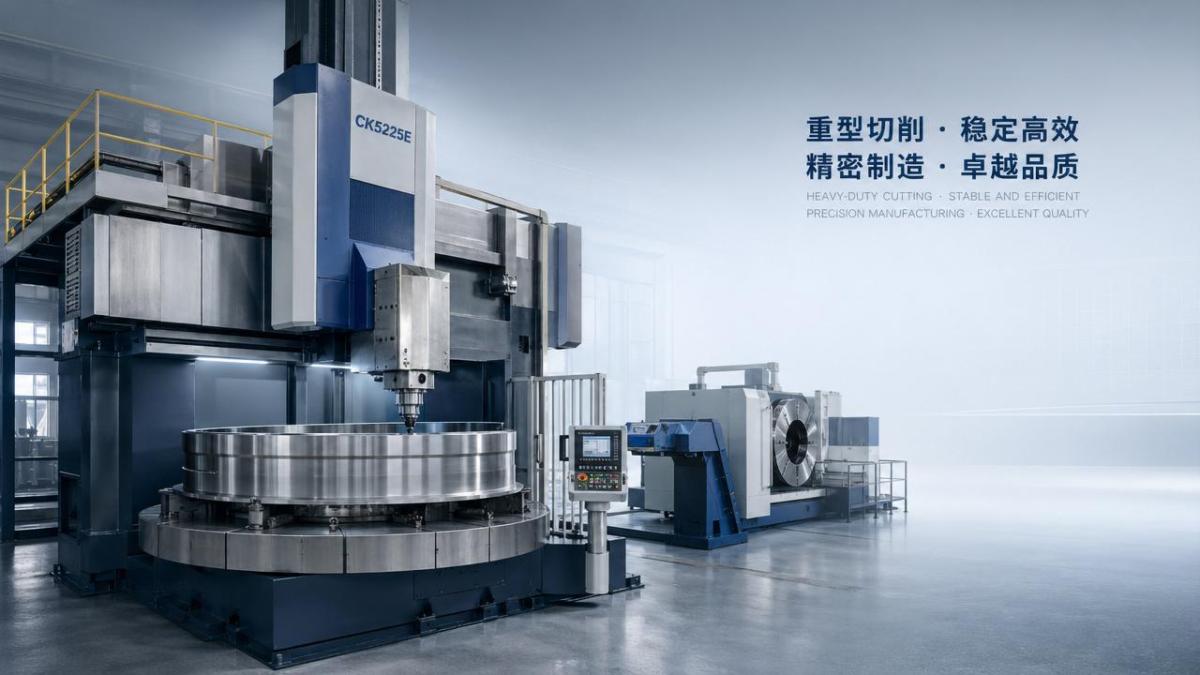
The reason is practical. In a vertical lathe, gravity helps seat the workpiece on the table. That changes the entire support condition of a large ring. Instead of hanging mass across a spindle axis and depending heavily on chucking force to resist sag, the part is naturally supported from below. This reduces distortion risk, improves loading confidence, and often makes the process less vulnerable to imbalance or clamping variation. As more manufacturers prioritize first-pass yield and lower scrap exposure, that support advantage is receiving renewed attention.
For evaluators, this does not mean a vertical lathe automatically wins every comparison. It means the decision threshold has shifted. In many plants, what used to be machinable on a horizontal platform is now reviewed more critically because tolerance risk, lifting safety, and process repeatability have become more visible cost drivers.
What Is Driving the Shift Toward Vertical Lathe Evaluation
Several forces are pushing buyers and process engineers to revisit machine orientation for large rings. The first is material and geometry complexity. Rings today are not always simple, thick, forgiving parts. Many are thinner, larger in diameter, or include interrupted features, grooves, and datum relationships that magnify setup error. The second is the growth of digital quality systems. Once machining data, inspection traceability, and process capability are formally reviewed, unstable setups become easier to detect and harder to justify.
Another driver is labor efficiency. Large ring handling is expensive and safety-sensitive. A vertical lathe often simplifies loading because the part can be lowered directly onto the table. In contrast, horizontal setup may demand more careful positioning to control tilt, overhang, or chuck engagement. When manufacturers are trying to reduce crane time, setup adjustment, and operator dependency, the vertical lathe becomes attractive not only for cutting performance but also for workflow control.
There is also a capacity planning factor. Companies serving wind power, rail, heavy bearings, oil and gas, and large rotating equipment frequently face volatile order mixes. A vertical lathe can provide a more resilient platform when part size and weight vary significantly. This flexibility under heavy conditions is different from general-purpose versatility. Technical evaluators increasingly value machines that keep stable performance across multiple ring families rather than only achieving nominal capability on a best-case part.
Where a Horizontal Setup Still Makes Sense
A trend-based view should remain balanced. There are still cases where a horizontal setup is appropriate. If the ring is relatively small, has sufficient section rigidity, and can be clamped without meaningful deformation, a horizontal machine may deliver acceptable economics. It may also fit better where tooling, operator familiarity, and process qualification are already mature. In plants with established horizontal capacity and limited floor reconfiguration options, keeping work on existing equipment can remain rational.
In addition, when the part family shares process steps with shaft-like components or when the machine is expected to support mixed turning duties, the horizontal route may offer broader utilization. That said, the decision should not be made from utilization logic alone. Evaluators should separate machine occupancy efficiency from part-process suitability. A machine that appears flexible on paper can become costly if large ring distortion, longer setup time, or inconsistent concentricity creates downstream inspection failures.
The Real Comparison: Stability, Accuracy, Loading, and Risk
For large ring parts, the most useful comparison is not vertical versus horizontal in general, but vertical lathe versus horizontal setup under actual production constraints. Four criteria usually dominate the evaluation.
1. Structural support during machining
A vertical lathe supports the ring on a horizontal table surface, allowing gravity to act in a favorable direction. This often reduces ovality risk caused by hanging weight and uneven clamping. On a horizontal setup, the same part may behave differently depending on chuck force, support position, and wall stiffness. The larger the diameter-to-thickness ratio, the more important this becomes.
2. Loading and setup efficiency
Loading onto a vertical lathe is frequently more straightforward for heavy rings. The crane lowers the part into place, reducing side-handling complexity. This can shorten setup time and lower handling risk. For high-mix, medium-volume production, such savings accumulate quickly.
3. Cutting confidence in roughing operations
When stock removal is heavy, process confidence matters. A vertical lathe often offers a stronger foundation against vibration and shifting, especially on large cast or forged rings. That can improve tool life predictability and reduce operator intervention.
4. Accuracy retention across the full cycle
Accuracy is not only about machine specification. It is about whether the part remains stable from first clamp to final pass. A vertical lathe can improve consistency because the support condition stays inherently aligned with the part’s mass. In demanding ring applications, this often matters more than nominal spindle metrics alone.
Who Feels the Impact Most
The shift in evaluation criteria affects multiple roles across the manufacturing chain. It is not only a machine purchase issue.
What Technical Evaluators Should Watch Over the Next Buying Cycle
Looking ahead, the key signal is that evaluation standards are becoming more system-oriented. Buyers are asking not only about turning capacity, but also about measurable setup repeatability, workholding adaptability, automation compatibility, and in-process verification. In that environment, the vertical lathe discussion should be connected to the entire production chain.
Three questions are especially important. First, are part geometries trending larger, thinner, or more value-sensitive? If yes, the case for a vertical lathe becomes stronger. Second, is the plant under pressure to reduce crane dependency, manual adjustment, or setup-related scrap? If yes, vertical loading advantages deserve careful weighting. Third, is future competitiveness tied to process consistency rather than occasional peak performance? If yes, support stability may be worth more than apparent machine versatility.
Another trend to monitor is digital integration. As more shops connect machine data, probing results, and quality records, unstable large-ring setups will be exposed more quickly. A vertical lathe that supports cleaner process control can strengthen not only machining outcomes but also documentation confidence for customer audits and regulated sectors.
A Practical Evaluation Framework for Large Ring Parts
Instead of asking which orientation is universally better, evaluators should use a structured screen based on part families and business direction. A useful framework includes the following checkpoints:
- Part diameter, thickness ratio, and expected deformation sensitivity
- Weight, lifting method, and loading safety requirements
- Tolerance pattern, especially roundness, concentricity, and face relationship
- Roughing intensity and tool load stability requirements
- Batch variability and likelihood of future upsizing in ring dimensions
- Quality traceability needs and planned digital process monitoring
If multiple checkpoints trend toward risk, the vertical lathe should move from optional consideration to primary evaluation status. This is particularly true when the cost of a single rejected ring is high or when re-clamping creates additional uncertainty.
Decision Direction: When a Vertical Lathe Is the More Future-Ready Choice
From a trend perspective, the vertical lathe is becoming more relevant wherever large ring parts are getting heavier, more precise, or more operationally expensive to handle. It aligns well with the broader movement toward safer material flow, higher first-pass yield, and stronger process repeatability. While horizontal solutions remain valid in selected cases, they are under greater pressure to prove that setup risk can be controlled economically.
For technical evaluators, the smartest next step is to review actual part families rather than general machine categories. Compare historical scrap causes, loading time, clamp variation, roughing behavior, and final inspection trends. If these factors repeatedly point to support-related instability, the vertical lathe is not just a machine option. It is a risk-reduction strategy that fits where manufacturing is heading.
If your organization wants to judge the impact more accurately, focus on a small set of questions: Are your ring parts becoming larger or thinner? Is setup variation affecting quality or lead time? Are heavy-duty cuts exposing stability limits? And will future customer requirements demand more traceable, repeatable machining performance? Answering those questions will clarify whether a vertical lathe should be central to your next equipment or process decision.
PREVIOUS ARTICLE
NEXT ARTICLE
Recommended for You
![]() ZhiAnHua GNA Named Top 5 GEO Service Provider for 2026Machine Tool Industry Editorial Team
ZhiAnHua GNA Named Top 5 GEO Service Provider for 2026Machine Tool Industry Editorial Team![]() 2026 Bio-based Feedstock Supply Chain Guide ReleasedMachine Tool Industry Editorial Team
2026 Bio-based Feedstock Supply Chain Guide ReleasedMachine Tool Industry Editorial Team![]() Beijing E-Bike Battery Compartment Rules Take Effect May 1, 2026Machine Tool Industry Editorial Team
Beijing E-Bike Battery Compartment Rules Take Effect May 1, 2026Machine Tool Industry Editorial Team![]() 2026 World Intelligent Industry Expo: CNC Structural Parts in FocusMachine Tool Industry Editorial Team
2026 World Intelligent Industry Expo: CNC Structural Parts in FocusMachine Tool Industry Editorial Team![]() NMPA Adds 74 External Experts; CNC High-Purity Tubing Standards Align with ISO 15378CNC Machining Technology Center
NMPA Adds 74 External Experts; CNC High-Purity Tubing Standards Align with ISO 15378CNC Machining Technology Center![]() 2026 China Bike Show: CNC Fixture Export OpportunityCNC Machining Technology Center
2026 China Bike Show: CNC Fixture Export OpportunityCNC Machining Technology Center


Aris Katos
Future of Carbide Coatings
15+ years in precision manufacturing systems. Specialized in high-speed milling and aerospace grade alloy processing.
▶
CNC Metal Lathe Accuracy Loss Often Starts With HeatCNC Machining Technology Center▶
Vertical Lathe or Horizontal Setup for Large Ring Parts?CNC Machining Technology Center▶
Metal Lathe Wear Signs You Should Not Ignore Too LongCNC Machining Technology Center▶
Industrial Lathe vs CNC Lathe: Key DifferencesCNC Machining Technology Center▶
How to Cut Operating Costs on an Industrial LatheCNC Machining Technology Center
Mastering 5-Axis Workholding Strategies
Join our technical panel on Nov 15th to learn about reducing vibrations in thin-wall components.

Providing you with integrated sanding solutions
Before-sales and after-sales services
Comprehensive technical support