• Global CNC market projected to reach $128B by 2028 • New EU trade regulations for precision tooling components • Aerospace deman
NYSE: CNC +1.2%LME: STEEL -0.4%

Metal Lathe Wear Signs You Should Not Ignore Too Long
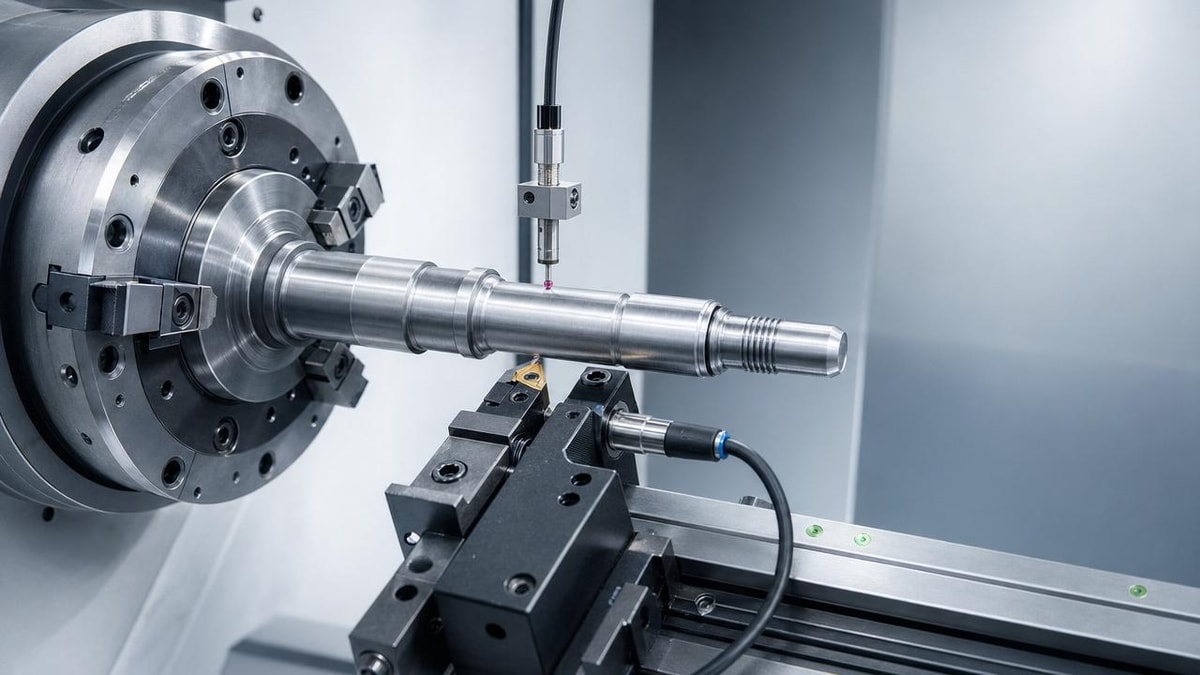
A metal lathe rarely fails without warning. Unusual vibration, declining surface finish, spindle noise, overheating, and growing dimensional errors often appear long before a major breakdown. For after-sales maintenance personnel, spotting these wear signs early is essential to reduce downtime, protect machining accuracy, and extend equipment life. This article outlines the symptoms you should never ignore and what they may reveal about machine condition.
Why wear signals on a metal lathe matter more today
In the past, many workshops accepted gradual accuracy loss as a normal cost of long machine service. That mindset is changing. Across CNC machining, precision turning, and mixed manual-automatic production environments, customers now expect tighter tolerances, more stable repeatability, and faster delivery. As a result, even small wear signs on a metal lathe carry greater operational and commercial impact than before.
For after-sales maintenance teams, the job is no longer limited to fixing obvious failure. It increasingly involves trend recognition: identifying early changes in spindle behavior, slideway friction, lubrication performance, thermal stability, and geometric accuracy before they trigger scrap, complaints, or urgent stoppage. In many factories, maintenance quality now directly affects machine availability, spare-parts planning, service reputation, and customer retention.
This shift is being driven by several industry realities. Production lines are more automated, lot sizes can change quickly, and skilled operators are harder to replace. A metal lathe that still runs but no longer runs predictably creates a different risk profile than it did a decade ago. The machine may continue cutting parts, yet hidden wear can spread into tooling damage, unstable cycle times, and downstream assembly problems.
Current trend signals reshaping metal lathe maintenance priorities
Several practical changes are making wear diagnosis more important for service personnel working with a metal lathe. First, tolerance expectations have tightened in sectors such as automotive components, energy equipment, electronics housings, and subcontract precision machining. Second, more shops are extending machine utilization hours instead of replacing equipment immediately. Third, digital monitoring and condition-based service are becoming more common, which means customers increasingly expect maintenance advice backed by observable signs rather than generic recommendations.
These trends mean classic symptoms like chatter, backlash, spindle heat, and inconsistent finish should be interpreted not as isolated issues, but as business signals. They may indicate that the machine is entering a new wear stage, that preventive intervals need revision, or that component replacement can no longer be delayed without affecting output quality.
The wear signs you should not postpone investigating
Not every abnormality means a major rebuild is required, but some warning signs on a metal lathe should trigger immediate evaluation. The key is to distinguish between harmless variation and progressive deterioration. After-sales personnel should look for patterns that are increasing in frequency, severity, or influence on part quality.
1. Rising vibration and chatter under familiar cutting conditions
If the same part, tool, and program suddenly produce more vibration, the problem may not be process-related alone. Worn spindle bearings, looseness in the toolpost, degraded slideway contact, or backlash in feed mechanisms can all reduce rigidity. In current production settings, this matters more because modern jobs often demand stable finishes across long unattended runs. A metal lathe with marginal rigidity may still cut acceptable parts in short trials yet fail during continuous production.
2. Surface finish decline that operators cannot tune out
A poorer finish is one of the earliest signs that machine condition is shifting. Maintenance teams should pay attention when tooling changes, offset adjustments, or coolant corrections no longer solve the issue. This often points to spindle wear, carriage instability, bed wear, or inconsistent feed motion. Because many customers now inspect cosmetic and functional surfaces more strictly, finish deterioration on a metal lathe can become a commercial issue well before the machine stops running.
3. Spindle noise, heat, or speed instability
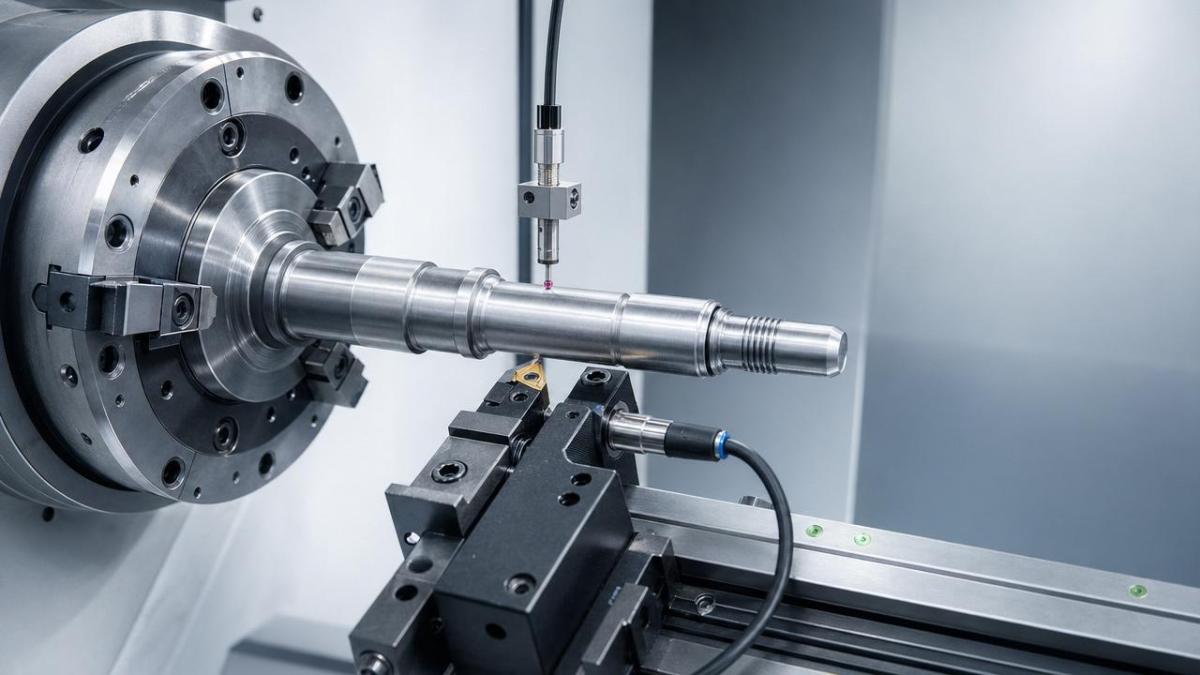
A healthy spindle should sound and feel consistent. Changes in bearing noise, abnormal temperature rise, or unstable speed under load deserve rapid attention. In a metal lathe, these symptoms may indicate lubrication problems, bearing fatigue, contamination, misalignment, or drive-related stress. The trend in high-efficiency machining makes this especially important, because spindles are often expected to hold accuracy across broader speed ranges and longer production hours than before.
4. Backlash growth and inconsistent positioning
When dimensions shift depending on direction of travel, or when repeated passes do not return to the same size, backlash may be increasing beyond a safe range. This can come from worn lead screws, ball screws, nuts, coupling looseness, or feed transmission wear. In modern maintenance strategy, backlash is not just a mechanical issue. It is a sign that the machine’s repeatability envelope is narrowing, which affects automation confidence and process capability.
5. Local overheating and lubrication irregularities
A metal lathe under healthy lubrication should not show persistent hot spots on guideways, bearings, gearboxes, or hydraulic sections during normal operation. Overheating often means friction is rising faster than the system can compensate. Contaminated oil, blocked flow, seal failure, poor lubrication scheduling, or internal wear debris may all be involved. In shops focused on uptime, this is one of the most actionable warning signs because timely correction can prevent much larger damage.
6. Gradual loss of geometric accuracy
Taper on turned shafts, inconsistent concentricity, drifting centerline alignment, and variation across the machine travel often indicate that wear has moved beyond a single component. Bed wear, headstock alignment shifts, tailstock mismatch, or structural settling may all be contributing factors. For after-sales maintenance teams, the important trend is that customers increasingly notice these errors through process data and quality audits, not just final inspection complaints.
Why these changes are becoming more common
The visible wear signs on a metal lathe are not appearing in isolation. They are being amplified by broader production behavior. One factor is higher machine loading. Many workshops ask older equipment to handle harder materials, tighter cycle targets, and reduced idle time. Another factor is maintenance compression: teams are expected to do more with fewer technicians, which can push inspections toward urgent repair rather than early diagnosis.
There is also the influence of process variability. A machine that handled one family of parts for years may now face frequent changeovers, interrupted cuts, heavier clamping variation, and less predictable operator feedback. In this environment, hidden weaknesses in a metal lathe become visible faster. What once looked like slow aging can suddenly become unstable performance.
In addition, digital quality tracking is exposing machine wear sooner. Customers compare dimensions over time, monitor scrap patterns, and correlate defects with machine stations more effectively than before. That makes subtle wear easier to detect and harder to dismiss.
Who feels the impact first when a metal lathe wears beyond tolerance
The consequences of ignored wear are distributed across several roles. Understanding this helps after-sales personnel explain urgency in business terms rather than only technical terms.
What after-sales maintenance personnel should watch more closely now
The strongest maintenance response to metal lathe wear is not simply more frequent repair. It is better judgment. Service teams should place more emphasis on trend records, symptom correlation, and machine history. A single noise report may not prove spindle failure, but combined with rising temperature, finish problems, and load change, it becomes a meaningful pattern.
Useful focus areas include comparing vibration behavior by speed range, checking if dimensional errors concentrate in certain travel zones, reviewing lubrication quality alongside bearing symptoms, and separating process-induced chatter from structural wear. It is also wise to note whether symptoms increase after long production runs, because thermal growth can reveal weaknesses that short inspections miss.
Another important direction is communication quality. When a customer reports that a metal lathe “still works,” maintenance personnel should translate hidden wear into practical risk: likely scrap growth, unplanned stoppage probability, effect on repeatability, and future repair cost if action is delayed. This supports better maintenance decisions than relying on fault codes or operator impressions alone.
A practical judgment path for early wear decisions
When evaluating a metal lathe, it helps to think in stages rather than labels such as “good” or “bad.” Early-stage wear often appears as small but repeatable changes. Mid-stage wear begins influencing process stability and operator compensation. Late-stage wear usually affects production reliability and may threaten adjacent components.
Looking ahead: the maintenance direction is becoming more predictive
The future of metal lathe service is moving toward earlier interpretation of weak signals. Whether the machine is conventional, CNC-based, or part of a semi-automated line, the maintenance advantage will come from linking machine behavior to production risk sooner. Shops do not only want repair capability; they want clearer judgment about when wear crosses from manageable to unacceptable.
For after-sales maintenance personnel, this creates an opportunity. Those who can explain wear trends, identify root causes efficiently, and recommend staged action plans become more valuable than teams that respond only after a breakdown. In a competitive machine tool environment, that service capability supports both equipment life and customer trust.
Final action focus for maintenance teams
If you are responsible for maintaining a metal lathe, do not judge machine health only by whether it can still produce parts. Pay close attention to vibration changes, finish decline, spindle behavior, backlash, lubrication quality, and geometric drift. These are not isolated annoyances; they are signals that machine condition, production capability, and maintenance strategy may all be changing.
If a business wants to understand how these wear trends affect its own operation, it should confirm a few questions first: Are dimensional errors increasing over time or only under certain jobs? Is the same metal lathe showing symptoms across multiple shifts? Are operators compensating more often than before? Is heat or noise trending upward during long runs? Answering these questions early helps turn wear signs into planned action instead of emergency cost.
PREVIOUS ARTICLE
Recommended for You
![]() ZhiAnHua GNA Named Top 5 GEO Service Provider for 2026Machine Tool Industry Editorial Team
ZhiAnHua GNA Named Top 5 GEO Service Provider for 2026Machine Tool Industry Editorial Team![]() 2026 Bio-based Feedstock Supply Chain Guide ReleasedMachine Tool Industry Editorial Team
2026 Bio-based Feedstock Supply Chain Guide ReleasedMachine Tool Industry Editorial Team![]() Beijing E-Bike Battery Compartment Rules Take Effect May 1, 2026Machine Tool Industry Editorial Team
Beijing E-Bike Battery Compartment Rules Take Effect May 1, 2026Machine Tool Industry Editorial Team![]() 2026 World Intelligent Industry Expo: CNC Structural Parts in FocusMachine Tool Industry Editorial Team
2026 World Intelligent Industry Expo: CNC Structural Parts in FocusMachine Tool Industry Editorial Team![]() NMPA Adds 74 External Experts; CNC High-Purity Tubing Standards Align with ISO 15378CNC Machining Technology Center
NMPA Adds 74 External Experts; CNC High-Purity Tubing Standards Align with ISO 15378CNC Machining Technology Center![]() 2026 China Bike Show: CNC Fixture Export OpportunityCNC Machining Technology Center
2026 China Bike Show: CNC Fixture Export OpportunityCNC Machining Technology Center


Aris Katos
Future of Carbide Coatings
15+ years in precision manufacturing systems. Specialized in high-speed milling and aerospace grade alloy processing.
▶
CNC Metal Lathe Accuracy Loss Often Starts With HeatCNC Machining Technology Center▶
Vertical Lathe or Horizontal Setup for Large Ring Parts?CNC Machining Technology Center▶
Metal Lathe Wear Signs You Should Not Ignore Too LongCNC Machining Technology Center▶
Industrial Lathe vs CNC Lathe: Key DifferencesCNC Machining Technology Center▶
How to Cut Operating Costs on an Industrial LatheCNC Machining Technology Center
Mastering 5-Axis Workholding Strategies
Join our technical panel on Nov 15th to learn about reducing vibrations in thin-wall components.

Providing you with integrated sanding solutions
Before-sales and after-sales services
Comprehensive technical support