• Global CNC market projected to reach $128B by 2028 • New EU trade regulations for precision tooling components • Aerospace deman
NYSE: CNC +1.2%LME: STEEL -0.4%

Industrial Lathe vs CNC Lathe: Key Differences
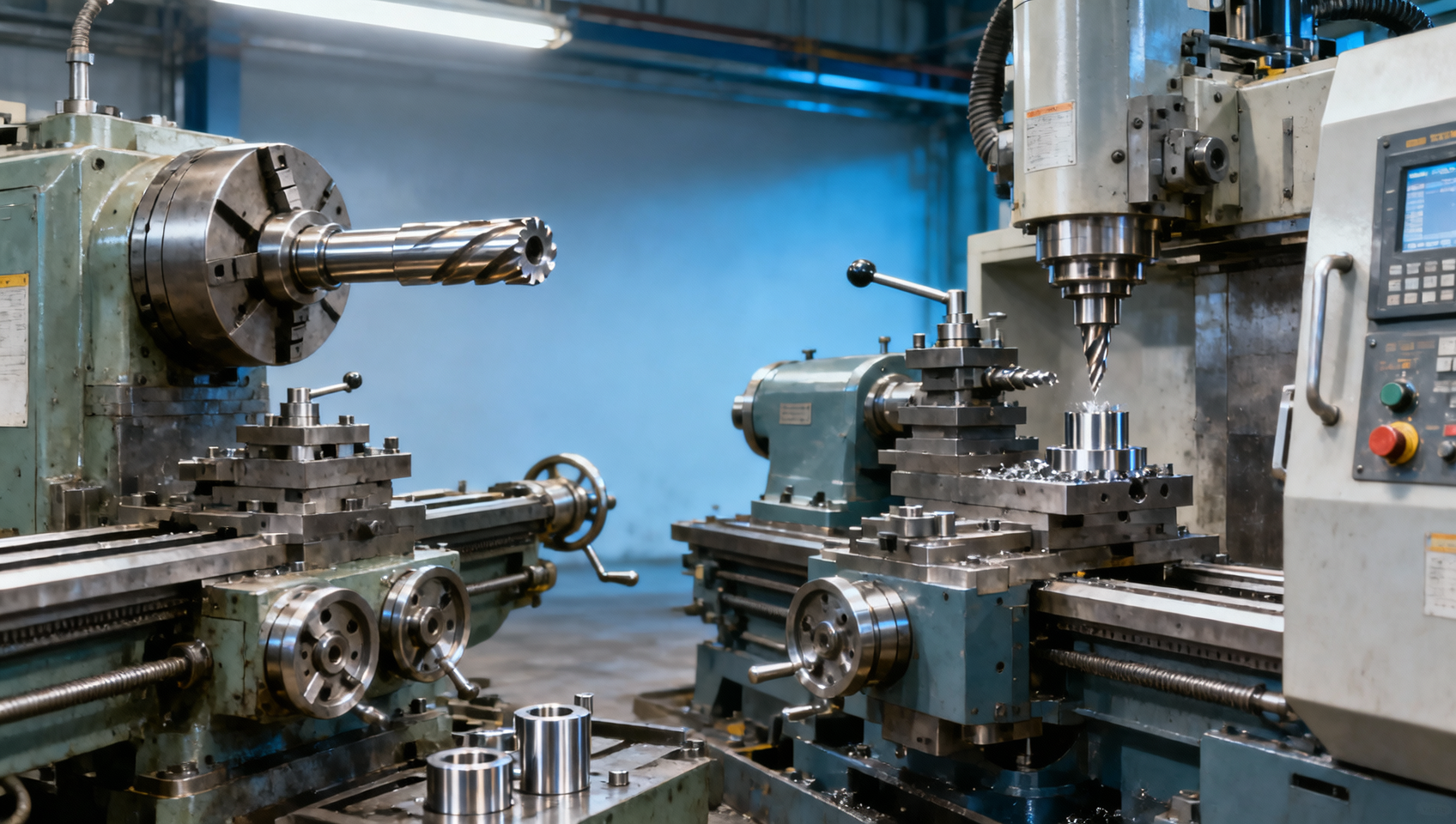
Choosing between an industrial lathe and a CNC lathe affects machining efficiency, achievable precision, labor requirements, and total production cost. In practical terms, the best choice depends less on the machine name and more on your part complexity, batch size, tolerance demands, operator skill availability, and automation goals. For buyers, operators, and market researchers in manufacturing, the key question is simple: do you need the flexibility and lower entry cost of a conventional industrial lathe, or the repeatability, speed, and scalable automation of a CNC lathe? This guide explains the difference in a way that supports real equipment evaluation and production planning.
What is the real difference between an industrial lathe and a CNC lathe?
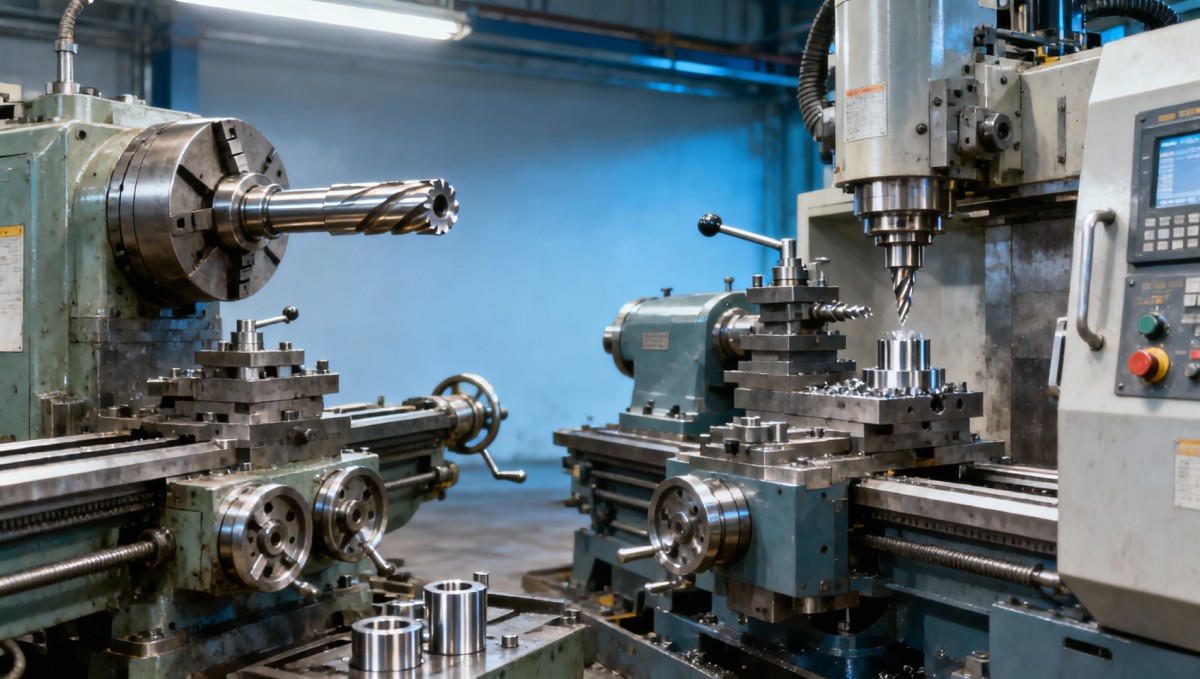
The biggest difference is how the machine is controlled and how consistently it can produce parts.
An industrial lathe usually refers to a conventional or manual lathe used in workshops and production environments for turning, facing, drilling, threading, and repair work. It relies heavily on operator skill. Feed rates, tool positioning, and cutting adjustments are manually controlled or mechanically set.
A CNC lathe uses computer numerical control to automate these same machining actions. Instead of manual handwheel adjustments, operators program the machine to execute precise movements repeatedly. This makes CNC turning especially valuable for high-volume production, tight tolerances, and complex part geometries.
In short:
- Industrial lathe: better suited for manual machining, repair jobs, simple parts, prototyping, and low-volume work
- CNC lathe: better suited for repeatable production, complex components, automated lathe systems, and higher throughput
For most businesses, the comparison is not about which machine is universally better. It is about which machine fits the production process, labor structure, and cost model more effectively.
Which machine is better for precision, consistency, and part complexity?
If precision and consistency are your main priorities, a CNC lathe usually has a clear advantage.
Manual industrial lathes can produce accurate parts, especially in the hands of highly experienced machinists. However, output quality often depends on operator judgment, setup accuracy, and fatigue. This becomes a limitation when producing large numbers of identical parts.
CNC lathes are designed to reduce that variability. Once programmed and properly set up, they can repeatedly machine the same dimensions with minimal deviation. This is especially important in sectors such as automotive manufacturing, aerospace, electronics, and energy equipment, where dimensional stability and repeatability affect final assembly and quality control.
CNC lathes are generally better for:
- Tight tolerances
- Complex contouring and profiles
- Multi-step turning operations
- Repeatable batch production
- Parts requiring documented process control
Industrial lathes are often sufficient for:
- Simple shafts, sleeves, and bushings
- Repair and maintenance work
- One-off components
- Basic training environments
- Low-budget machining tasks
If your production requires complex shaft components, precision discs, or parts that need to match digital drawings exactly across repeated runs, CNC production is usually the safer long-term choice.
How do productivity and labor requirements compare?
For most manufacturers, this is where the decision becomes financially important.
An industrial lathe usually requires a skilled operator to remain directly involved in the machining process. That can work well in custom job shops or low-volume environments, but it limits output scalability. Production speed depends not only on machine capacity, but also on operator pace and consistency.
A CNC lathe reduces manual intervention after setup and programming. This means:
- Shorter cycle times in repeated work
- More stable output between shifts
- Reduced dependence on constant manual control
- Better integration with automated production lines
- Easier scaling for medium- to high-volume manufacturing
That said, CNC does not eliminate labor needs. It shifts them. Instead of relying mainly on manual turning skill, operations rely more on:
- Programming capability
- Setup accuracy
- Tool management
- Preventive maintenance
- Process monitoring
For workshops struggling to recruit experienced manual machinists, CNC equipment can reduce long-term labor pressure. For facilities with strong manual machining teams and low production variability, conventional industrial lathes may still remain practical and cost-effective.
What about investment cost, operating cost, and return on investment?
Buyers often focus first on purchase price, but the better comparison is total cost over the machine’s working life.
Industrial lathes typically offer:
- Lower upfront investment
- Simpler maintenance structure
- Lower programming cost
- Easier adoption for small workshops
CNC lathes typically involve:
- Higher initial purchase cost
- Software and controller considerations
- Programming and training requirements
- Potentially higher maintenance complexity
- Stronger long-term productivity gains
In many real production environments, a CNC lathe delivers better ROI when:
- Production volume is recurring
- Scrap reduction matters
- Part dimensions must stay highly consistent
- Lead times are tight
- Labor costs are rising
- Business growth depends on faster output
An industrial lathe may produce better value when:
- Work is custom and irregular
- Orders are mostly low-volume
- Capital budget is limited
- Complex automation is not required
- The machine is used mainly for support, repair, or toolroom work
For procurement teams and business evaluators, the correct question is not “Which is cheaper?” but “Which machine lowers cost per qualified part under our actual production conditions?”
Which applications are best suited to each type of lathe?
Application fit is often the clearest way to make the decision.
Industrial lathes are commonly used for:
- Maintenance workshops
- Toolrooms
- Repair machining
- Educational and training settings
- Low-volume custom part fabrication
- Simple metal machining tasks
CNC lathes are commonly used for:
- Automotive component production
- Aerospace precision parts
- Electronics hardware manufacturing
- Energy equipment machining
- Mass production of shafts and rotational parts
- Integrated CNC production cells and smart factory systems
If your factory is moving toward digital integration, flexible production lines, or smart manufacturing, CNC lathes align much better with that direction. They can be connected more easily with CAD/CAM workflows, quality systems, and automated loading solutions.
If the goal is workshop versatility for varied one-off tasks, a manual industrial lathe may still be more practical than investing in a more advanced automated lathe system.
What should operators and production teams consider before switching to CNC?
For users and operators, adopting a CNC lathe is not just a machine purchase. It is a process change.
Before switching, teams should evaluate:
- Whether existing staff can be trained in CNC setup and programming
- Whether current part demand justifies automation
- How often part designs change
- Whether tooling and fixture systems need upgrading
- How machine downtime will be supported
- Whether quality inspection methods are ready for higher output rates
Operators who are highly skilled in manual turning often adapt well to CNC when supported with training, because they already understand cutting parameters, tool wear, material behavior, and machining logic. However, CNC success depends on disciplined setup, process verification, and digital workflow control.
For production managers, one common mistake is buying CNC equipment without preparing programming support, tooling strategy, or realistic job planning. Machine capability alone does not guarantee production efficiency.
How should buyers decide between an industrial lathe and a CNC lathe?
A practical buying decision should be based on five factors:
- Part complexity: More complex shapes usually favor CNC.
- Production volume: Repeated batches usually justify CNC better.
- Tolerance requirements: Tighter consistency usually favors CNC.
- Labor structure: Strong manual talent may support conventional equipment, while labor shortages favor automation.
- Growth strategy: Companies targeting smart manufacturing and scalable output should usually prioritize CNC investment.
If your operations involve frequent repeat orders, precision requirements, and pressure to reduce per-unit cost, a CNC lathe is likely the stronger business decision. If your work is varied, low-volume, and highly dependent on flexible manual adjustment, an industrial lathe may still be the right tool.
Final verdict: which one is right for your manufacturing needs?
The key differences between an industrial lathe and a CNC lathe come down to control method, precision consistency, labor dependency, production speed, and scalability. An industrial lathe remains valuable for simple machining, repair work, and low-volume custom production. A CNC lathe is the stronger choice for automated production, repeatability, complex components, and modern manufacturing environments where efficiency and digital integration matter.
For information researchers, operators, procurement teams, and business evaluators, the most useful conclusion is this: choose based on production reality, not just machine category. If your priority is flexibility at low initial cost, an industrial lathe may be enough. If your priority is precision, repeatable output, and long-term CNC production efficiency, investing in a CNC lathe is usually the better strategic move.
PREVIOUS ARTICLE
NEXT ARTICLE
Recommended for You
 How to Choose the Right Metal Machining ProcessCNC Machining Technology Center
 Metal Machining vs CNC Metalworking: What MattersCNC Machining Technology Center
 What Drives Cost in Industrial CNC ProjectsManufacturing Market Research Center
 Is Industrial CNC Worth Upgrading in 2026Machine Tool Industry Editorial Team
 How CNC Industrial Systems Improve Shop EfficiencyMachine Tool Industry Editorial Team
 CNC Industrial Setup Mistakes to Avoid FirstCNC Machining Technology Center

Aris Katos
Future of Carbide Coatings
15+ years in precision manufacturing systems. Specialized in high-speed milling and aerospace grade alloy processing.
▶
Industrial Lathe vs CNC Lathe: Key DifferencesCNC Machining Technology Center▶
How to Cut Operating Costs on an Industrial LatheCNC Machining Technology Center▶
Automated Lathe Cycle Time Gains Can Hide Quality LossesCNC Machining Technology Center▶
Vertical Lathe or Horizontal Setup for Large Ring Parts?CNC Machining Technology Center▶
Automated Lathe Setup Errors That Lead to Scrap PartsCNC Machining Technology Center
Mastering 5-Axis Workholding Strategies
Join our technical panel on Nov 15th to learn about reducing vibrations in thin-wall components.

Providing you with integrated sanding solutions
Before-sales and after-sales services
Comprehensive technical support