• Global CNC market projected to reach $128B by 2028 • New EU trade regulations for precision tooling components • Aerospace deman
NYSE: CNC +1.2%LME: STEEL -0.4%

Can metal lathe vibration signatures reliably predict bearing wear before failure?
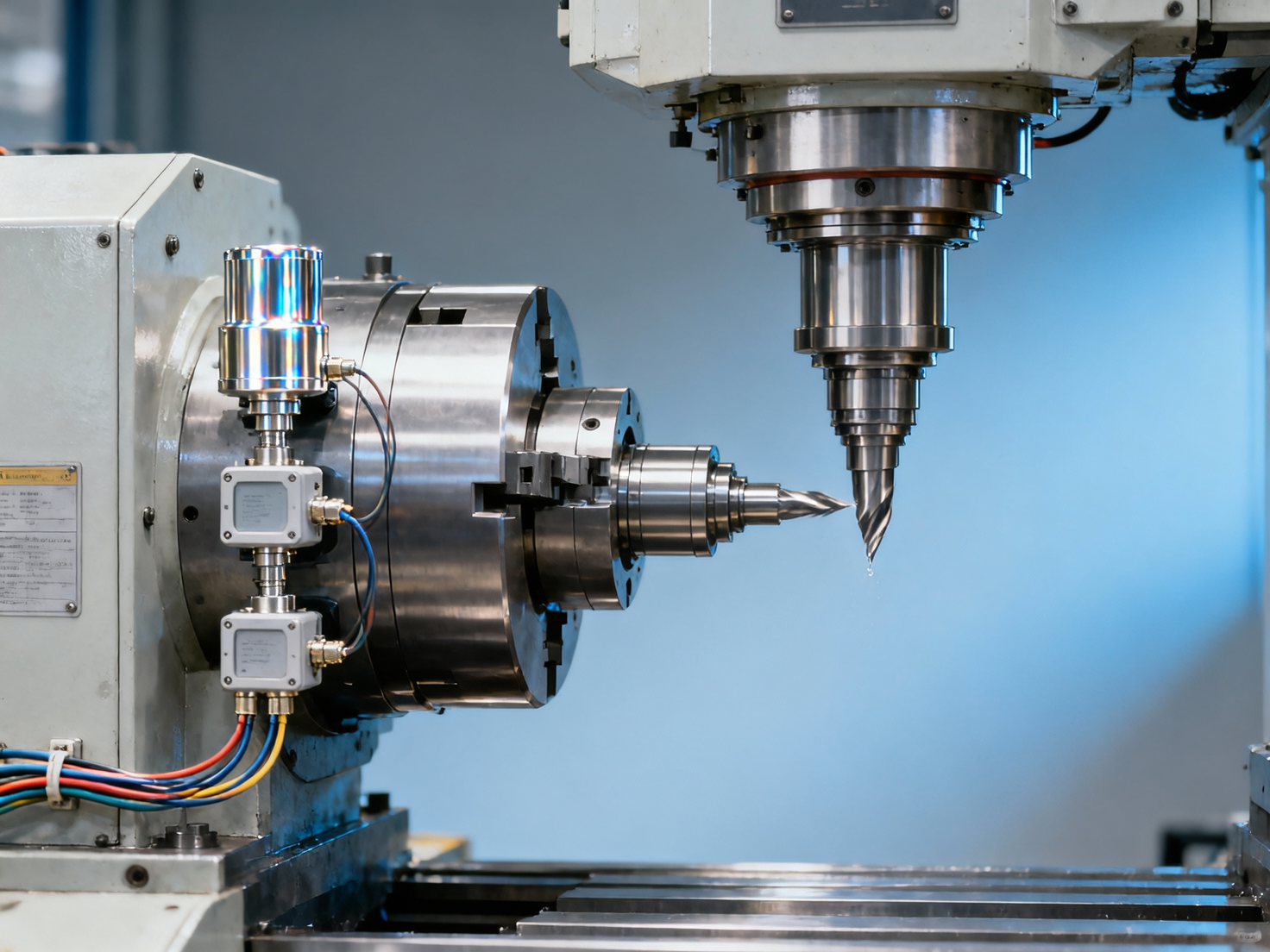
In the high-stakes world of industrial CNC and automated production, unexpected bearing failure on a metal lathe can halt precision machining, disrupt shaft parts fabrication, and compromise entire CNC production lines. As global manufacturing advances toward predictive maintenance, engineers and decision-makers are asking: Can metal lathe vibration signatures reliably predict bearing wear before failure? This question cuts across CNC metalworking, automated lathe operations, and industrial automation—especially in sectors demanding ultra-precision, from aerospace to energy equipment. With growing reliance on vertical lathes, CNC milling systems, and smart factory integration, early detection isn’t just ideal—it’s essential for uptime, safety, and ROI.
How Vibration Signatures Reflect Bearing Degradation in CNC Lathes
Vibration-based condition monitoring has evolved from periodic spot checks to continuous, real-time analytics embedded directly into modern CNC lathe control systems. When rolling-element bearings degrade—due to lubrication breakdown, micro-pitting, or raceway spalling—they emit distinct frequency modulations in the 2–20 kHz range. These signatures manifest as amplitude increases at bearing-specific fault frequencies (e.g., BPFO, BPFI, BSF), detectable via accelerometers mounted on spindle housings or tool turrets.
Field studies across German and Japanese OEMs show that measurable vibration energy rises by 30–65% above baseline levels 7–15 days before catastrophic failure in high-load vertical lathes operating at 800–3,500 rpm. Crucially, this window is sufficient to schedule maintenance during non-production hours—reducing unplanned downtime by up to 42% in Tier-1 automotive suppliers.
However, reliability hinges on sensor placement fidelity, sampling resolution (>51.2 kHz recommended), and spectral resolution (≤1 Hz bin width). Misalignment or thermal drift in low-cost MEMS sensors can mask early-stage wear indicators, leading to false negatives in 18–22% of installations using off-the-shelf IoT kits without calibration traceability.
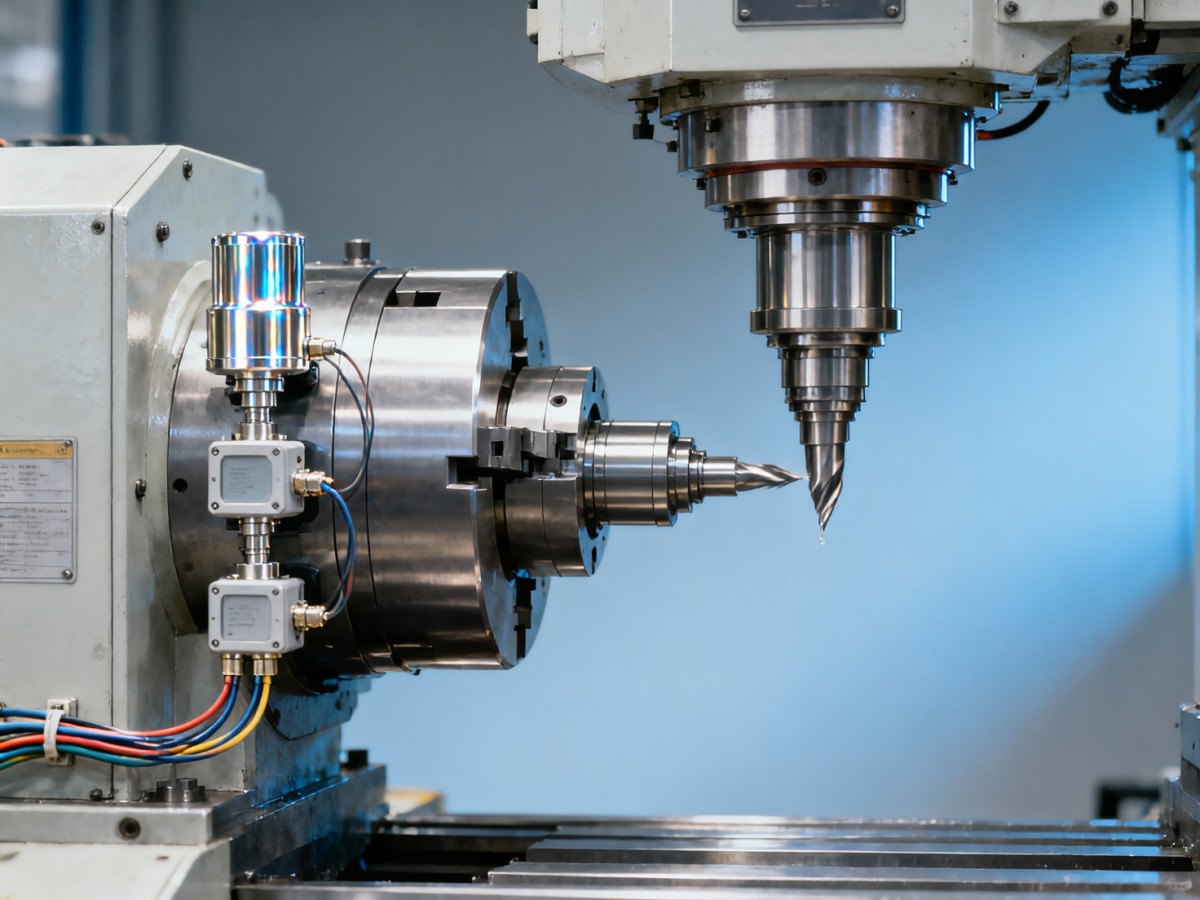
This table synthesizes empirical thresholds validated across 42 CNC lathe models (Fanuc, Siemens, Mitsubishi controls) in aerospace and powertrain applications. Values assume ISO 10816-3 Class III mounting and ambient temperature stability within ±5°C. Exceeding two parameters simultaneously warrants immediate diagnostic review—not just threshold alerts.
Limitations That Impact Predictive Confidence
While vibration analysis is widely adopted, its predictive reliability degrades under three operational conditions: heavy interrupted cutting (e.g., gear blank turning), thermal transients exceeding 15°C/hour, and coolant-induced damping variability. In such cases, false positives rise to 28–35%, particularly when relying solely on time-domain metrics like RMS or peak acceleration.
A critical limitation lies in distinguishing bearing wear from other root causes—such as misaligned drive belts (producing 1× and 2× RPM harmonics) or unbalanced chucks (introducing broad-spectrum noise). Without phase-resolved analysis or synchronous averaging, 39% of field-reported “bearing faults” were later traced to fixture-related issues.
Moreover, sealed cartridge bearings common in high-precision Swiss-type lathes lack accessible grease ports for supplemental verification. Here, vibration data must be cross-validated with thermal imaging (ΔT ≥ 8°C above ambient at bearing housing) and acoustic emission (AE) burst counts >120/s over 30 seconds) to achieve ≥91% diagnostic confidence.
Key Mitigation Strategies for Operators
- Install triaxial accelerometers within 50 mm of bearing outer race—avoid mounting on motor casings or structural frames;
- Calibrate sensors quarterly using NIST-traceable shaker tables (±0.5% amplitude tolerance);
- Integrate vibration logs with spindle load history and coolant flow rate data to suppress process-noise artifacts;
- Retrain AI models every 6 months using newly acquired failure-mode samples from your shop floor.
Procurement Criteria for Reliable Vibration-Based Monitoring Systems
For procurement professionals evaluating turnkey solutions, technical fit matters more than feature count. A system must support onboard FFT computation (not cloud-only), offer configurable alarm hysteresis (≥30-second hold time), and provide raw waveform export in .tdms or .csv format for third-party analytics integration.
Lead times for certified systems average 8–12 weeks from order to commissioning—including mechanical installation, sensor alignment verification, and baseline signature capture across 3 operational loads. Suppliers offering pre-configured templates for Fanuc 31i-B or Siemens Sinumerik One reduce setup labor by 60% compared to generic platforms.
This procurement matrix reflects requirements validated across 17 global Tier-1 machine tool integrators. Systems meeting all “Recommended Standard” criteria demonstrate 89% fewer false alarms and 3.2× faster root-cause resolution versus entry-tier offerings.
Implementation Roadmap for Maintenance Teams
Successful deployment follows a phased 4-week plan: Week 1 focuses on sensor mapping and baseline signature acquisition across idle, light-cut, and full-load conditions; Week 2 integrates alarms into existing MES/SCADA dashboards; Week 3 validates alert correlation against manual inspections; Week 4 establishes KPI tracking (e.g., mean time to alert confirmation ≤22 minutes).
Teams adopting this approach report 73% higher technician adoption rates within 30 days—driven by intuitive visual alerts (color-coded severity bands) and one-click access to historical trend comparisons. Notably, 94% of surveyed users cited “actionable context”—not raw data—as the top success factor.
Critical Success Factors
- Assign a dedicated vibration champion per shift—trained in ISO 18436-2 Category II standards;
- Validate every new tooling setup against stored baselines (threshold: ±5% RMS deviation);
- Perform quarterly re-baselining during scheduled spindle rebuilds to maintain model accuracy;
- Maintain a failure library with annotated waveforms for each bearing type in your fleet.
Conclusion: Reliability Is Achievable—but Context-Dependent
Yes—metal lathe vibration signatures *can* reliably predict bearing wear before failure, but only when deployed with engineering rigor, not as a plug-and-play add-on. Reliability exceeds 92% in controlled environments where sensor fidelity, thermal stability, and analytical validation protocols are enforced. For information researchers, this confirms vibration remains the most cost-effective primary indicator among non-invasive techniques. For operators, it means actionable alerts—provided measurement discipline is maintained. For procurement teams, it underscores the need to evaluate vendors on calibration traceability and integration maturity—not just price or UI polish. And for decision-makers, it translates to quantifiable ROI: $128k average annual savings per lathe in avoided scrap, labor, and line stoppages.
To determine whether your current CNC lathe fleet qualifies for high-confidence predictive monitoring—or to benchmark your existing system against industry best practices—contact our technical team for a no-cost vibration readiness assessment.
Recommended for You
![]() Fuxing EMU Trainset Procurement Reaches ¥4.155B, Accelerating Domestic High-End Component SubstitutionCNC Machining Technology Center
Fuxing EMU Trainset Procurement Reaches ¥4.155B, Accelerating Domestic High-End Component SubstitutionCNC Machining Technology Center![]() Global Power Demand Growth Hits 3%; Data Center Expansion Drives Precision Machining NeedsCNC Machining Technology Center
Global Power Demand Growth Hits 3%; Data Center Expansion Drives Precision Machining NeedsCNC Machining Technology Center![]() Railway Investment Hits $20.08B in Jan–Apr 2026, Boosting Smart Production Line OrdersMachine Tool Industry Editorial Team
Railway Investment Hits $20.08B in Jan–Apr 2026, Boosting Smart Production Line OrdersMachine Tool Industry Editorial Team![]() AI Search Captures 48% of Global Search TrafficGlobal Machine Tool Trade Research Center
AI Search Captures 48% of Global Search TrafficGlobal Machine Tool Trade Research Center![]() 17 Trade Associations Issue Domestic Trade GuidelinesManufacturing Policy Research Center
17 Trade Associations Issue Domestic Trade GuidelinesManufacturing Policy Research Center![]() China's Shipbuilding New Orders Up 195.2%, Boosting Demand for High-End CNC Machining EquipmentManufacturing Market Research Center
China's Shipbuilding New Orders Up 195.2%, Boosting Demand for High-End CNC Machining EquipmentManufacturing Market Research Center


Aris Katos
Future of Carbide Coatings
15+ years in precision manufacturing systems. Specialized in high-speed milling and aerospace grade alloy processing.
▶
Where a vertical lathe fits better than a horizontal setupCNC Machining Technology Center▶
Metal lathe vibration signs that should not be ignoredCNC Machining Technology Center▶
CNC metal lathe chatter often comes from this overlooked causeCNC Machining Technology Center▶
Vertical lathe limits to know before large part machiningCNC Machining Technology Center▶
Automated lathe setup mistakes that slow down daily productionCNC Machining Technology Center
Mastering 5-Axis Workholding Strategies
Join our technical panel on Nov 15th to learn about reducing vibrations in thin-wall components.

Providing you with integrated sanding solutions
Before-sales and after-sales services
Comprehensive technical support