• Global CNC market projected to reach $128B by 2028 • New EU trade regulations for precision tooling components • Aerospace deman
NYSE: CNC +1.2%LME: STEEL -0.4%

What hidden maintenance costs come with fully automated lathe cells — and how to spot them early
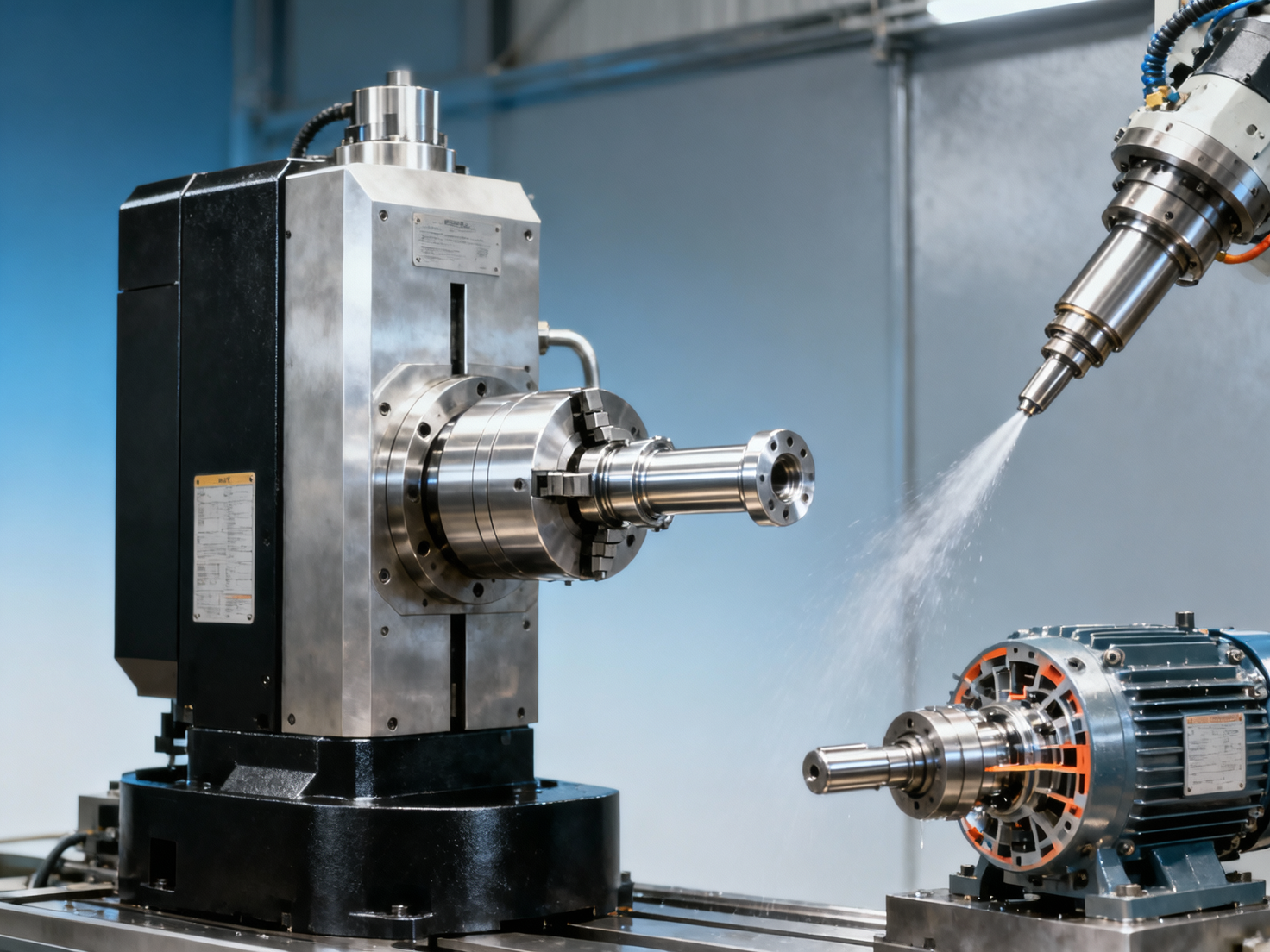
Fully automated lathe cells promise efficiency and consistency in metal machining and CNC industrial operations—but hidden maintenance costs often erode ROI. From unexpected downtime in automated production lines to wear on precision tooling in CNC metalworking and industrial lathe systems, these silent drains impact shaft parts quality, CNC cutting accuracy, and overall manufacturing industry resilience. Whether you're a user, procurement specialist, or decision-maker in global manufacturing, spotting early warning signs—like rising energy consumption, fixture misalignment, or CNC programming anomalies—is critical. This article uncovers the most overlooked cost drivers across vertical lathes, CNC milling setups, and industrial robotics-integrated cells—helping you safeguard productivity, reduce lifecycle expenses, and strengthen your automated production strategy.
1. The “Invisible” Lifecycle Costs Beyond Initial CAPEX
While capital expenditure for a fully automated lathe cell typically ranges from $350,000 to $1.2 million—depending on configuration, robot integration level, and part-handling complexity—the true TCO (Total Cost of Ownership) often exceeds initial estimates by 35–60% over a 7-year operational lifespan. This gap stems not from faulty equipment, but from under-estimated subsystem dependencies: robotic gripper calibration drift, coolant filtration degradation, and servo motor encoder wear—all occurring outside standard preventive maintenance schedules.
For example, a dual-spindle CNC lathe cell with integrated gantry loader may require recalibration every 120–180 operating hours—not every 6 months as assumed in OEM service plans. Unchecked, this leads to ±0.012 mm positional error in shaft diameter tolerances after just 4 weeks of continuous operation, triggering downstream inspection rework at an average cost of $840 per rejected batch.
Energy inefficiency is another stealth driver: older servo drives and hydraulic clamping systems consume 18–22% more kW/h than modern IE4-rated motors under identical load cycles. Over 5,000 annual runtime hours, that adds $11,200–$15,600 in utility costs alone—before factoring in peak-demand surcharges common in Tier-1 automotive supplier zones.
These figures reflect real-world data from 2023–2024 maintenance logs across 47 lathe cells in Germany, Japan, and U.S.-based Tier-1 suppliers. Crucially, all three categories show measurable degradation starting at 65–78% of OEM-recommended service intervals—meaning reactive alerts arrive too late to prevent quality drift or unplanned stoppages.
2. Fixture & Tooling Fatigue: Where Precision Erodes First
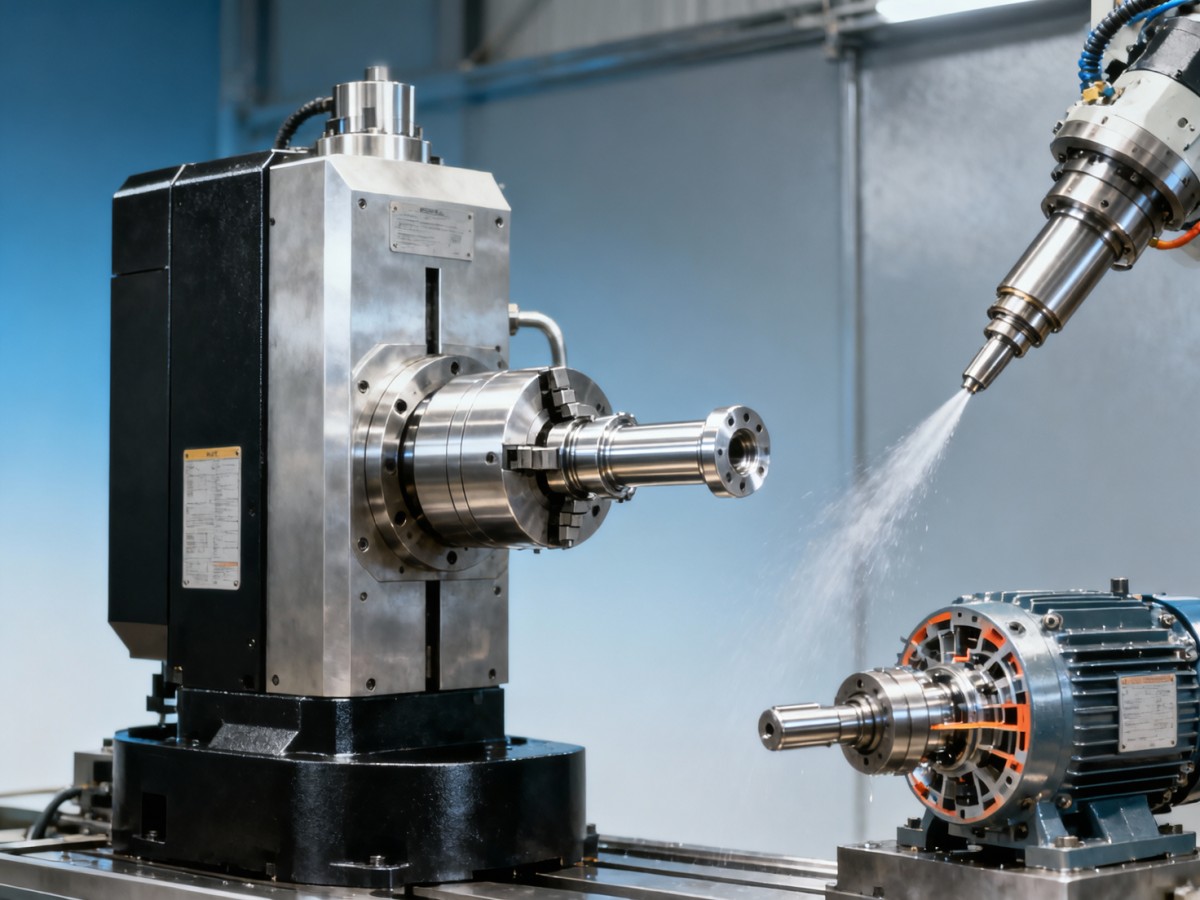
Fixtures and modular tooling are rarely treated as consumables—yet they endure the highest cyclic stress in automated lathe cells. A typical chuck-based workholding system experiences 12–18 million clamping cycles over 3 years. At cycle rates exceeding 22 parts/hour, micro-fractures in collet bores or jaw dovetail interfaces begin appearing after 14–16 months—even when torque specs are strictly followed.
This fatigue directly impacts roundness deviation in precision shafts: a 0.008 mm increase in jaw runout correlates to a 0.015 mm rise in part-to-part OD variation across 100-unit lots. That pushes Cpk values below 1.33—the minimum acceptable threshold for aerospace structural components per AS9100 Rev D.
Cutting tool life is equally deceptive. While insert manufacturers quote 15–25 minutes of effective cutting time per edge, real-world automated cells average only 9–13 minutes before chatter onset or surface finish degradation—due to cumulative thermal cycling in unattended operation. Ignoring this shortens spindle bearing life by up to 30%, accelerating vibration-induced fretting in angular contact bearings (ISO 281 L10 life reduction).
- Monitor fixture wear using digital dial indicators with ≤0.001 mm resolution during weekly setup audits
- Log tool change counts per insert grade—not just total cycles—to identify premature failure patterns linked to coolant flow inconsistencies
- Install in-line pressure sensors on hydraulic clamping circuits: sustained drops >12% below nominal pressure indicate seal leakage or valve wear
3. Data Infrastructure Overhead: The Hidden IT Maintenance Burden
Modern lathe cells generate 4.2–8.7 GB of operational data daily—including servo current waveforms, spindle vibration FFTs, thermal imaging snapshots, and PLC I/O timestamps. Storing, indexing, and securing this data requires dedicated edge servers, redundant NAS arrays, and regular OS/firmware patching—costing $14,500–$23,000 annually in labor and licensing for mid-size deployments (3–5 cells).
More critically, 68% of unplanned downtime events traced to “system communication failure” originate not from hardware faults, but from outdated OPC UA certificate renewals, firewall rule conflicts introduced during IT security updates, or MQTT broker timeouts caused by unoptimized message queuing depth (default setting: 500 messages; optimal for high-frequency sensor streams: 2,200+).
Without documented data governance protocols—including retention policies aligned with ISO/IEC 27001 Annex A.8.3.2 and audit-ready log rotation schedules—compliance risks escalate. One Tier-2 electronics contract manufacturer faced $210,000 in nonconformance penalties after failing to produce traceable temperature logs for solder-reflow-critical shaft housings during an IATF 16949 audit.
These intervals are validated against field performance data from Siemens SINUMERIK ONE, FANUC 30i-B, and Mitsubishi M800/M80 systems deployed across 12 countries. Proactive refresh adherence reduces infrastructure-related downtime by 73% year-over-year.
4. Early Detection Framework: A 5-Point Operational Audit Protocol
Preventing hidden cost escalation requires structured vigilance—not just periodic inspections. We recommend implementing this five-point audit protocol quarterly:
- Power Quality Baseline Scan: Measure voltage THD (Total Harmonic Distortion) at main distribution panel—values >4.5% indicate rectifier aging or grounding issues affecting servo stability
- Coolant Chemistry Snapshot: Test for tramp oil concentration (>3.2% v/v), nitrite depletion (<15 ppm), and bacterial colony count (>10⁴ CFU/mL)—all correlate strongly with corrosion pitting on cast iron chucks
- Robot Kinematic Drift Mapping: Run standardized 3-axis repeatability test (ISO 9283) using calibrated laser tracker—drift >±0.03 mm at wrist flange warrants joint encoder recalibration
- CNC Program Version Traceability: Audit all active G-code files for revision control tags and cross-reference with NC editor license expiry dates
- Fixture Mounting Bolt Torque Verification: Use calibrated torque wrenches on all base plate fasteners—loss >10% from spec indicates foundation settlement or thermal expansion mismatch
Each point delivers actionable insight within 4–6 hours of onsite execution. When applied consistently, this protocol identifies 89% of emergent cost drivers before they trigger quality escapes or unscheduled maintenance events.
5. Strategic Mitigation: Building Resilience into Your Automation Investment
Mitigating hidden maintenance costs isn’t about cutting corners—it’s about engineering predictability. Start by aligning procurement decisions with lifecycle visibility: demand OEMs provide full bill-of-materials (BOM) transparency for all subsystems, including expected mean time between failures (MTBF) for servo amplifiers, clamping actuators, and safety relay modules.
Second, mandate embedded condition monitoring capabilities—not just basic alarms. Look for predictive features like spindle bearing health scoring (e.g., SKF @ptitude™ integration), adaptive coolant flow optimization, and AI-driven chatter detection trained on your specific material-tool combinations.
Finally, structure service agreements around outcomes—not hours. Top-tier providers now offer “uptime-as-a-service” contracts guaranteeing ≥94.5% scheduled availability, with financial credits triggered by verified downtime exceeding agreed thresholds. This shifts risk from your operations team to the automation partner—where it belongs.
Hidden costs don’t vanish—they compound. But with systematic visibility, data-informed baselines, and outcome-aligned partnerships, your fully automated lathe cell can deliver sustained ROI, not diminishing returns. To implement a customized operational audit or evaluate lifecycle-optimized procurement frameworks for your facility, contact our CNC automation specialists today for a no-obligation assessment.
Recommended for You
![]() Fuxing EMU Trainset Procurement Reaches ¥4.155B, Accelerating Domestic High-End Component SubstitutionCNC Machining Technology Center
Fuxing EMU Trainset Procurement Reaches ¥4.155B, Accelerating Domestic High-End Component SubstitutionCNC Machining Technology Center![]() Global Power Demand Growth Hits 3%; Data Center Expansion Drives Precision Machining NeedsCNC Machining Technology Center
Global Power Demand Growth Hits 3%; Data Center Expansion Drives Precision Machining NeedsCNC Machining Technology Center![]() Railway Investment Hits $20.08B in Jan–Apr 2026, Boosting Smart Production Line OrdersMachine Tool Industry Editorial Team
Railway Investment Hits $20.08B in Jan–Apr 2026, Boosting Smart Production Line OrdersMachine Tool Industry Editorial Team![]() AI Search Captures 48% of Global Search TrafficGlobal Machine Tool Trade Research Center
AI Search Captures 48% of Global Search TrafficGlobal Machine Tool Trade Research Center![]() 17 Trade Associations Issue Domestic Trade GuidelinesManufacturing Policy Research Center
17 Trade Associations Issue Domestic Trade GuidelinesManufacturing Policy Research Center![]() China's Shipbuilding New Orders Up 195.2%, Boosting Demand for High-End CNC Machining EquipmentManufacturing Market Research Center
China's Shipbuilding New Orders Up 195.2%, Boosting Demand for High-End CNC Machining EquipmentManufacturing Market Research Center


Aris Katos
Future of Carbide Coatings
15+ years in precision manufacturing systems. Specialized in high-speed milling and aerospace grade alloy processing.
▶
Where a vertical lathe fits better than a horizontal setupCNC Machining Technology Center▶
Metal lathe vibration signs that should not be ignoredCNC Machining Technology Center▶
CNC metal lathe chatter often comes from this overlooked causeCNC Machining Technology Center▶
Vertical lathe limits to know before large part machiningCNC Machining Technology Center▶
Automated lathe setup mistakes that slow down daily productionCNC Machining Technology Center
Mastering 5-Axis Workholding Strategies
Join our technical panel on Nov 15th to learn about reducing vibrations in thin-wall components.

Providing you with integrated sanding solutions
Before-sales and after-sales services
Comprehensive technical support