• Global CNC market projected to reach $128B by 2028 • New EU trade regulations for precision tooling components • Aerospace deman
NYSE: CNC +1.2%LME: STEEL -0.4%

Choosing a metal lathe for repeat jobs without overbuying
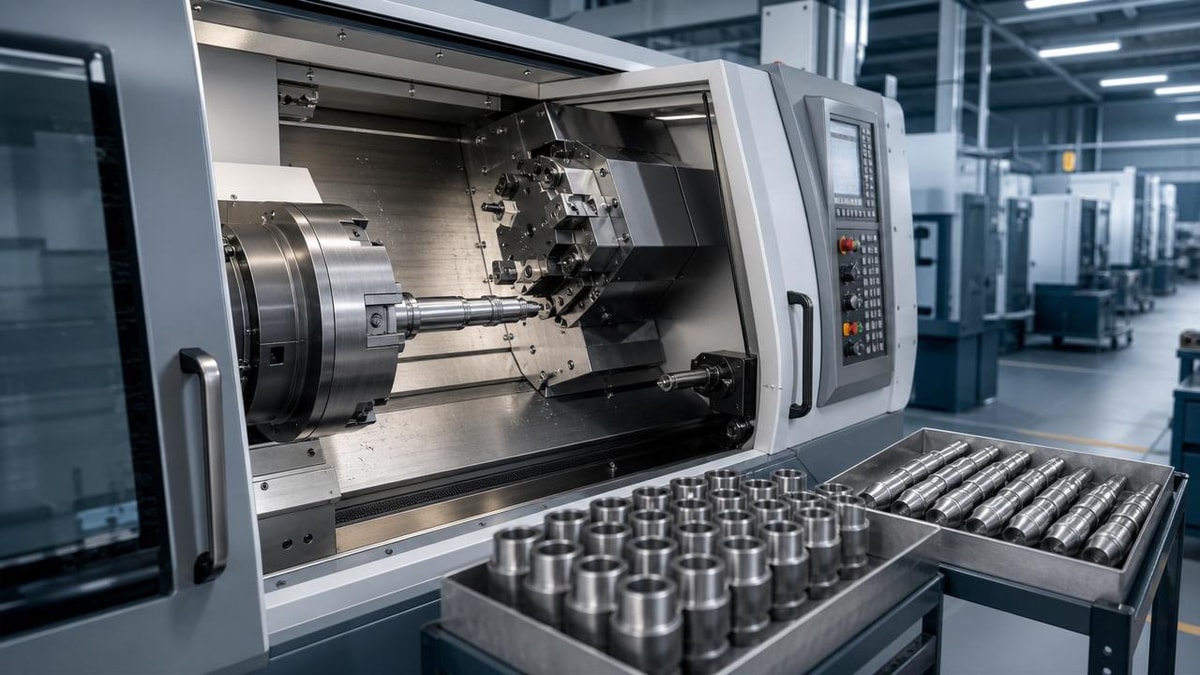
Choosing the right metal lathe for repeat jobs is not about buying the biggest machine—it is about matching capacity, accuracy, cycle stability, and operating cost to your actual production needs. For procurement teams, a smart investment means balancing performance, future flexibility, and total cost of ownership while avoiding unnecessary features that add expense without improving output.
This matters because repeat-job production is not one single scenario. A buyer sourcing a metal lathe for short-batch valve components faces different priorities from a plant purchasing for daily shaft production, repair work, or subcontract precision turning. In the CNC machine tool industry, where automation, uptime, and dimensional consistency directly affect delivery and margin, the wrong machine can create hidden losses for years. A machine that is too small may limit throughput, but one that is too advanced or oversized can burden the operation with higher tooling cost, more floor space, more training, and lower return on investment.
For procurement professionals, the key is to judge the real production scene: part family, repeatability level, material type, tolerance band, shift pattern, labor skill, and expected growth. A metal lathe should fit the job mix you actually run most often, not the exceptional part that appears twice a year. When you evaluate by scenario rather than by brochure claims, it becomes easier to avoid overbuying while still protecting future production needs.
Why repeat-job scenarios deserve a different buying approach
Repeat jobs reward stability more than extreme flexibility. If the same or similar parts run every week, the best metal lathe is usually the one that delivers predictable cycle times, low setup variation, simple tool management, and easy operator handoff. In these cases, procurement should focus less on maximum technical range and more on repeatable output at the lowest practical cost per part.
In contrast, companies with highly mixed orders may justify a more feature-rich CNC lathe, live tooling package, or sub-spindle configuration. But many buyers assume future flexibility is always worth paying for. In reality, advanced features only create value when they reduce secondary operations, shorten setup frequency, or support a profitable expansion plan. If those conditions are not present, a simpler metal lathe often performs better from a purchasing standpoint.
That is why scenario-based evaluation is critical in modern manufacturing procurement. It aligns machine selection with production economics, workforce capability, and actual scheduling patterns rather than with generic assumptions.
Typical application scenarios for a metal lathe in repeat production
A metal lathe used for repeat jobs generally falls into several common business scenarios. Each one changes what “right-sized” really means.
1. Daily production of simple shafts, sleeves, and bushings
This is one of the most common scenarios in automotive supply, general machinery, agricultural equipment, and industrial components. Part geometry is usually stable, tolerances are controlled but not ultra-extreme, and volume matters. Here, the ideal metal lathe emphasizes fast loading, reliable chucking, solid spindle performance, and low maintenance. Buyers often overpay by specifying excessive axis complexity for parts that mainly require turning, facing, drilling, and occasional threading.
2. Medium-batch production of precision components
For suppliers serving aerospace support, fluid systems, medical support hardware, or high-value industrial equipment, repeat jobs may involve tighter tolerances and stronger traceability requirements. In this scene, thermal stability, machine rigidity, repeat positioning, and process documentation become more important than raw speed. A procurement decision here should favor proven accuracy retention over unnecessary size or spindle horsepower.
3. Job shop work with recurring families of parts
Some subcontractors do not run one single part every day, but they repeatedly produce similar diameters, materials, and lengths for long-term customers. For this environment, a metal lathe needs enough flexibility to adapt without causing long setup times. Tool capacity, programmable tailstock options, and controller ease of use may have more value than premium automation that cannot be fully utilized.
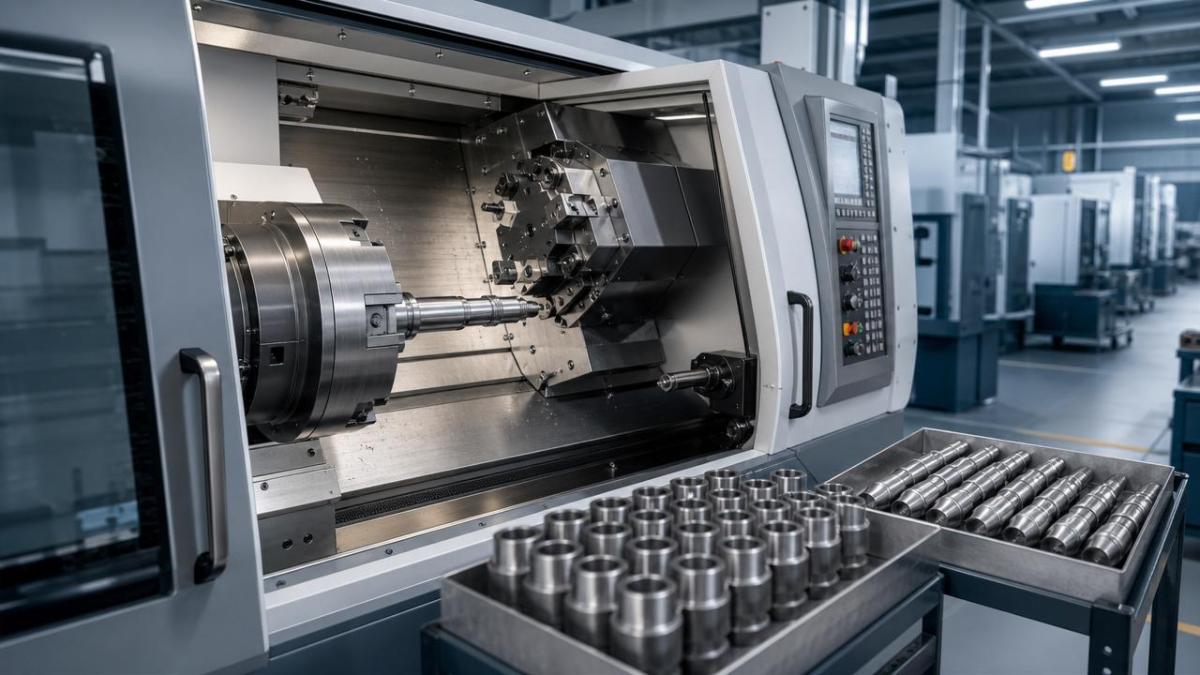
4. Repair, maintenance, and low-volume support with occasional repeats
In plant maintenance departments or energy equipment service centers, jobs may be irregular, but some repair items repeat over time. Here, buying a highly specialized production metal lathe may be a mistake. Operators often need versatility, manual intervention capability, and ease of setup more than advanced unattended capacity. Procurement should be careful not to confuse production lathes with maintenance needs.
5. Cell-based automated production
In smart manufacturing environments, the metal lathe may be part of a larger automated cell with bar feeders, gantry loading, robots, or in-process gauging. In this scenario, machine connectivity, alarm stability, standard interfaces, and unattended run reliability matter more than operator convenience alone. Overbuying can still happen, especially if buyers select a machine with complex cutting functions while the true production value lies in automation integration.
Scenario comparison: what procurement should prioritize
The table below helps compare common repeat-job scenarios and the most important metal lathe buying criteria.
How different part types change the right metal lathe choice
Procurement teams should not evaluate a metal lathe only by machine dimensions. The part family often tells you more than the catalog. Long slender shafts may require support options such as tailstock performance, steady rest compatibility, and vibration control. Short disk-like components may benefit more from chucking efficiency and fast indexing. Harder materials may justify extra rigidity and spindle torque, while aluminum repeat jobs may favor speed and chip evacuation instead.
If threaded features, cross holes, or light milling operations are frequent and recurring, a turning center with live tooling may be justified. But if those features appear on only a small percentage of orders, it may be more cost-effective to keep turning on a simpler metal lathe and move secondary work elsewhere. This is where procurement must separate “possible” from “economically sensible.”
What buyers should confirm before selecting machine size and configuration
Before requesting quotations, buyers should collect a practical production profile. The following checkpoints are more useful than broad wish lists:
- Top 20 repeat parts by annual volume and contribution margin
- Largest and most common bar or chuck diameters actually run
- Tolerance levels that affect acceptance, not just drawing extremes
- Current setup time, cycle time, scrap rate, and changeover frequency
- Operator skill level across all shifts
- Need for bar feeder, robot loading, tailstock, parts catcher, or chip conveyor
- Expected growth in part complexity within the next two to three years
This data keeps the metal lathe decision anchored in real operating conditions. It also helps suppliers recommend a machine based on throughput, spindle utilization, and process stability rather than on generic upselling.
Common overbuying mistakes in repeat-job metal lathe procurement
One frequent mistake is buying for the largest possible workpiece instead of the most profitable recurring workload. If 85% of output fits a moderate-capacity metal lathe, selecting a much larger machine for rare exceptions often increases cost without improving delivery performance. Floor space, tooling, energy use, and idle spindle time all rise.
Another common mistake is paying for advanced multifunction capability when the process plan does not support it. Live tooling, Y-axis, dual spindle, or extensive automation can be excellent investments in the right scene, but poor ones in a stable turning-only environment. The question is not whether a feature is impressive. The question is whether it reduces handling, labor, setups, or lead time enough to pay back.
A third mistake is underestimating support and ease of operation. A technically capable metal lathe can still underperform if spare parts access is weak, service response is slow, or the control system is difficult for operators to use consistently. For repeat jobs, uptime and consistency often matter more than the top-end specification sheet.
Scenario-based recommendations for procurement teams
If your plant mainly produces standard shafts, bushings, and sleeves in recurring batches, prioritize a metal lathe with proven reliability, strong chucking options, and easy integration with simple automation. If your business handles precision industrial parts with tight tolerances, prioritize machine rigidity, thermal behavior, and repeatable inspection workflow. If your operation is a job shop with repeat families, favor flexibility that shortens changeovers rather than expensive full-scale automation.
For maintenance-heavy environments, choose a metal lathe that supports quick intervention and broad workholding versatility. For automated cells, focus on signal compatibility, stable alarms, and unattended process consistency. In every case, ask vendors to map their recommendation to your actual part list and expected annual run pattern. A credible supplier should explain not only what the machine can do, but also why that specific configuration fits your repeat-job scenario.
FAQ: practical questions about choosing a metal lathe
Should we buy extra capacity for future business?
Only if future demand is realistic, near-term, and linked to identified customers or product plans. A metal lathe should include practical growth room, but not so much unused capacity that payback becomes weak.
Is a CNC metal lathe always better than a simpler setup for repeat jobs?
Not always. For many repeat jobs, CNC brings consistency and efficiency, but the right level of CNC complexity depends on part geometry, labor conditions, and required output. More technology is not automatically more value.
What matters most: price or total cost of ownership?
For repeat production, total cost of ownership is usually the smarter metric. A lower-price metal lathe may become more expensive if it causes downtime, scrap, inconsistent cycle times, or excessive maintenance.
Final buying direction: match the metal lathe to the real production scene
The best metal lathe for repeat jobs is rarely the most complex machine on the market. It is the one that fits your dominant part families, operator resources, automation level, and cost targets with the least waste. Procurement teams that evaluate by application scenario make better long-term decisions because they connect machine selection to throughput, quality risk, and business return.
Before moving forward, organize your recurring part data, rank the true production bottlenecks, and compare supplier proposals against those facts. When the machine choice is grounded in real repeat-job conditions, you can buy a metal lathe that supports stable output today while leaving sensible room for tomorrow—without paying for capability your operation does not need.
PREVIOUS ARTICLE
Recommended for You
![]() ANVISA New Rule: Portuguese Biocompatibility Labels for Medical CNC Machines in BrazilManufacturing Policy Research Center
ANVISA New Rule: Portuguese Biocompatibility Labels for Medical CNC Machines in BrazilManufacturing Policy Research Center![]() EMO Hannover 2027 Booth Booking Opens: China AI-Machining Pavilion LaunchesGlobal Machine Tool Trade Research Center
EMO Hannover 2027 Booth Booking Opens: China AI-Machining Pavilion LaunchesGlobal Machine Tool Trade Research Center![]() KATS Updates KC Rules: CNC Cybersecurity Modules Must Meet IEC 62443-4-2Manufacturing Policy Research Center
KATS Updates KC Rules: CNC Cybersecurity Modules Must Meet IEC 62443-4-2Manufacturing Policy Research Center![]() Shanghai Port Launches Green Clearance Channel for CNC EquipmentManufacturing Market Research Center
Shanghai Port Launches Green Clearance Channel for CNC EquipmentManufacturing Market Research Center![]() ISO 23218-3:2026 Published: CNC Digital Twin Interoperability StandardCNC Machining Technology Center
ISO 23218-3:2026 Published: CNC Digital Twin Interoperability StandardCNC Machining Technology Center![]() Vietnam Cuts CNC Equipment Import Tariff to 3.8% from June 2026Global Machine Tool Trade Research Center
Vietnam Cuts CNC Equipment Import Tariff to 3.8% from June 2026Global Machine Tool Trade Research Center


Aris Katos
Future of Carbide Coatings
15+ years in precision manufacturing systems. Specialized in high-speed milling and aerospace grade alloy processing.
▶
How to choose a CNC metal lathe for mixed part sizesCNC Machining Technology Center▶
Industrial turning tolerances that look easy but fail in batchesCNC Machining Technology Center▶
Industrial lathe vibration causes that are not machine wearCNC Machining Technology Center▶
Choosing a metal lathe for repeat jobs without overbuyingCNC Machining Technology Center▶
Automated Lathe Setup Mistakes That Slow Down OutputCNC Machining Technology Center
Mastering 5-Axis Workholding Strategies
Join our technical panel on Nov 15th to learn about reducing vibrations in thin-wall components.

Providing you with integrated sanding solutions
Before-sales and after-sales services
Comprehensive technical support