• Global CNC market projected to reach $128B by 2028 • New EU trade regulations for precision tooling components • Aerospace deman
NYSE: CNC +1.2%LME: STEEL -0.4%

How to choose a CNC metal lathe for mixed part sizes
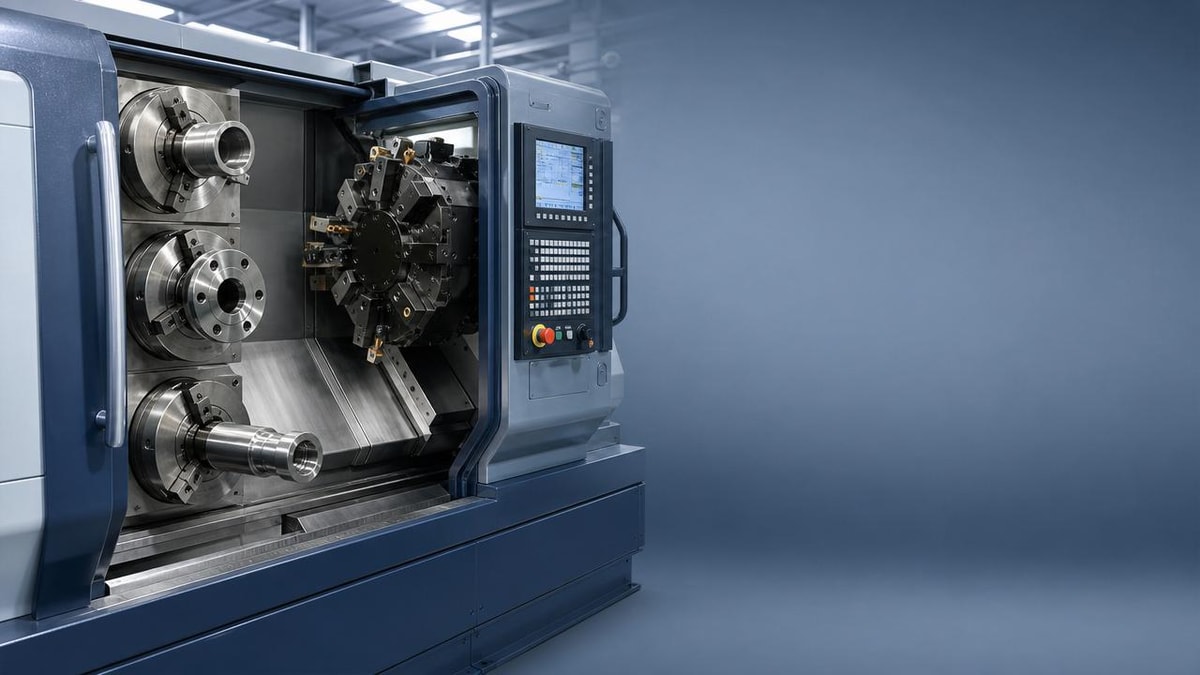
Choosing the right CNC metal lathe for mixed part sizes requires balancing swing capacity, spindle power, tooling flexibility, and automation potential. For technical evaluators, the challenge is not just matching machine specs to current jobs, but ensuring stable precision, efficient changeovers, and future production adaptability across varied components.
In practical sourcing and technical review, a CNC metal lathe that performs well on one part family may become inefficient when diameters, lengths, materials, and batch sizes vary in the same workshop. Mixed production is common in precision manufacturing, especially in automotive supply, energy equipment, electronics, and general industrial machining, where one machine may process short bushings in the morning and long shafts in the afternoon.
For this reason, technical evaluators should look beyond catalog specifications. The right decision depends on a structured comparison of machining envelope, rigidity, spindle performance, turret configuration, control functions, and the machine’s ability to support both current throughput and the next 3 to 5 years of part variation. This guide outlines how to assess a CNC metal lathe for mixed part sizes with a focus on stable precision, production flexibility, and investment value.
Define the Real Part Mix Before Comparing Machines
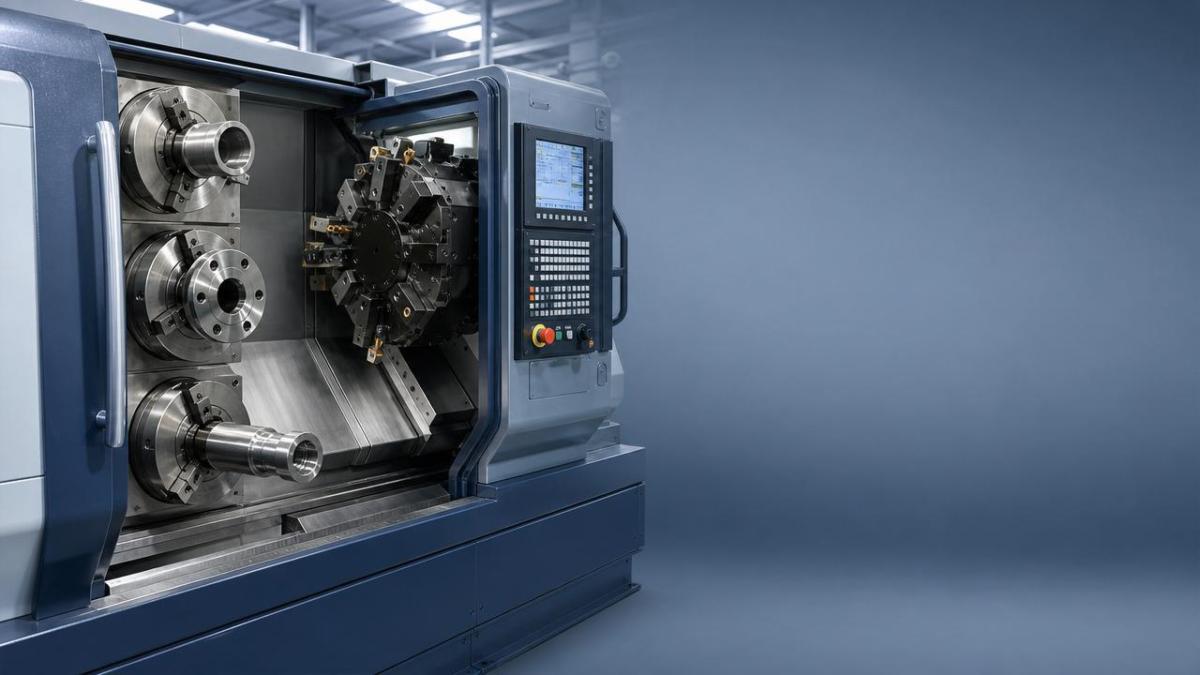
The first mistake in selecting a CNC metal lathe is evaluating machines against only the largest part or only the highest-volume part. In mixed-size production, at least 4 dimensions should be mapped: maximum diameter, maximum turning length, minimum recurring part size, and batch frequency. A machine sized only for occasional large workpieces may create unnecessary idle power consumption and slower cycle times on smaller parts.
A practical review starts with a 6- to 12-month part sample. Technical teams should group workpieces by diameter range, length range, material type, tolerance level, and monthly volume. For many manufacturers, 70% to 80% of jobs fall into a middle size band, while the remaining 20% to 30% create the true specification challenge because they push spindle bore, travel, chuck size, or tailstock requirements.
Key data to collect from the part portfolio
- Maximum outer diameter and minimum clamping diameter
- Maximum part length and unsupported length
- Raw stock form: bar, forging, casting, or cut blanks
- Material mix such as carbon steel, stainless steel, aluminum, and alloy steel
- Tolerance bands, for example ±0.01 mm, ±0.02 mm, or ±0.05 mm
- Average lot size, from prototype runs of 5 pieces to production batches of 500 pieces
This data immediately clarifies whether a standard 2-axis turning machine is enough, or whether the operation needs a CNC metal lathe with live tooling, sub-spindle capability, Y-axis support, or bar feeding. For mixed part sizes, flexibility often matters as much as peak capacity.
Typical part-mix assessment framework
The table below helps technical evaluators translate a broad job mix into machine selection logic. It is especially useful when multiple departments submit different machining requirements during capital equipment planning.
If one CNC metal lathe must cover all three categories, the buyer should expect trade-offs. In many cases, the best solution is not the biggest machine, but the model that covers at least 85% of active jobs efficiently while handling the remaining 15% without excessive setup time or loss of accuracy.
Match Core Machine Parameters to Mixed-Size Production
Once the part mix is clear, the next step is to evaluate machine parameters that directly affect adaptability. For technical review, 5 core areas deserve priority: swing and turning length, spindle bore and power, guideway rigidity, turret configuration, and tailstock or support options. A CNC metal lathe for varied parts must handle both dimensional range and process stability.
Swing, turning diameter, and turning length
Machine catalog values can be misleading if read in isolation. Maximum swing over bed may sound generous, but the effective turning diameter above the carriage can be much smaller. For mixed parts, a safety margin of 15% to 20% above the largest regular workpiece is usually more practical than selecting a machine at absolute limit.
For example, if the largest routine part diameter is 260 mm, a machine with 300 to 320 mm effective turning capacity is often more stable than one rated exactly at 260 mm. The same applies to length. If shafts up to 700 mm appear regularly, choosing a bed configuration around 800 to 1000 mm between centers reduces fixture constraints and improves support options.
Spindle bore, speed, and torque range
Mixed-size machining often involves a compromise between speed and torque. Small aluminum or brass parts benefit from higher spindle speeds, often in the 3000 to 4500 rpm range. Larger steel shafts, however, demand stronger low-end torque and more stable load handling at lower speeds. Evaluators should check not just peak power, but the usable torque curve across the spindle range.
Spindle bore is equally important if bar work is planned. A machine with a 52 mm, 65 mm, or 80 mm spindle bore may open very different production options. If 60% of jobs rely on bar feeding but the bore is undersized by even 5 mm, the shop may be forced into secondary cutting and manual loading, reducing automation value.
Rigidity and thermal stability
For a CNC metal lathe handling both small precision parts and heavier roughing operations, machine rigidity cannot be treated as a premium feature. Box guideways or heavy-duty linear guide configurations influence vibration control, tool life, and surface finish. If the production plan includes interrupted cutting, stainless steel, or long shafts, rigidity becomes a first-level selection criterion rather than a secondary preference.
Thermal behavior also matters in multi-shift use. Over an 8- to 12-hour operating window, thermal growth can influence repeatability, especially where tolerances are below ±0.015 mm. Machines designed for stable thermal compensation, coolant management, and balanced spindle heating usually perform better across varied cycles.
Parameter checkpoints for evaluators
- Effective turning diameter exceeds largest normal part by 15% or more
- Turning length supports longest part with room for tooling and support devices
- Spindle speed matches smallest frequent parts without sacrificing torque for larger components
- Spindle bore aligns with planned bar stock size and future expansion
- Guideway and base structure support heavy cuts without chatter
Evaluate Tooling Flexibility, Changeover Efficiency, and Automation Readiness
For mixed part sizes, machine flexibility is often measured in setup minutes rather than in brochure specifications. A CNC metal lathe that can cut 10 part types but requires 90 minutes of changeover between them may be less productive than a slightly smaller machine with standardized tooling, fast offsets, and integrated automation interfaces.
Turret capacity and live tooling options
A 12-station turret is common, but the ideal configuration depends on process mix. If the workshop handles turning only, 8 to 12 tool positions may be enough. If cross drilling, light milling, or off-center features are required, live tooling and possibly a Y-axis can reduce secondary operations. That matters when part families change often and downstream handling needs to be minimized.
Tool station repeatability is another review point. On short-run work, even a 10- to 15-minute reduction in setup per job can create major annual gains. If a machine changes over 4 times per day, saving 12 minutes per setup recovers nearly 4 hours per week in productive spindle time.
Tailstock, steady rest, and chucking adaptability
Mixed-size parts often mean mixed support requirements. Short discs may run efficiently in a chuck alone, while slender shafts need tailstock or steady rest support to avoid deflection. Technical evaluators should confirm whether these accessories are standard, optional, or difficult to retrofit later. A machine that appears lower-cost initially can become more expensive if support equipment must be custom-integrated after installation.
The comparison below shows how tooling and support decisions affect production flexibility across common precision manufacturing scenarios.
The key takeaway is that flexibility features should be judged by total process savings, not just purchase price. In multi-part production, better tooling architecture often produces a stronger return than adding raw machine capacity that is rarely used.
Automation potential for future scaling
Even if current production is semi-manual, technical evaluators should review automation readiness from the start. A CNC metal lathe prepared for bar feeders, gantry loading, robot interfacing, and automatic part catchers is easier to integrate into flexible production lines later. This is increasingly important in smart manufacturing environments where labor availability, shift extension, and traceability are strategic concerns.
A machine does not need full lights-out capability on day one. However, I/O readiness, guarding layout, chip evacuation efficiency, and control compatibility can significantly affect future deployment cost. For many buyers, spending moderately more during procurement can avoid 2 to 4 weeks of retrofit work later.
Assess Precision, Reliability, and Lifecycle Costs
A technically suitable CNC metal lathe should not only fit the parts; it should hold accuracy consistently under real production conditions. That means technical evaluators must compare more than initial dimensional capability. Repeatability, maintenance burden, spare parts accessibility, and support response time all influence long-term value, especially in plants running 2 shifts or 6 days per week.
Accuracy under varied loads
Mixed-size production puts a machine through uneven thermal and mechanical loads. One cycle may remove heavy stock from alloy steel, while the next machines a small precision aluminum part. Evaluators should review not only stated positioning accuracy, but also repeatability after continuous operation, tool indexing consistency, and finish stability across different materials.
When acceptance testing is possible, it helps to validate performance using at least 3 representative part types rather than a single sample geometry. This reveals whether the CNC metal lathe maintains consistency during different spindle loads, support conditions, and cycle durations.
Maintenance intervals and service accessibility
Maintenance planning is often underestimated during procurement. A lower-cost machine can become disruptive if lubrication points are difficult to access, chip handling is poor, or key spare parts have a lead time of 6 to 10 weeks. Technical teams should ask for maintenance schedules, recommended consumables, and expected service intervals for spindle, turret, guideway lubrication, and coolant systems.
Lifecycle review checklist
- Confirm standard maintenance frequency: daily, weekly, monthly, and annual tasks
- Check local or regional service coverage and expected response time, such as 24 to 72 hours
- Review spare part availability for wear items and electrical components
- Assess control system familiarity for in-house operators and programmers
- Estimate tooling, fixture, coolant, and power consumption over a 3-year period
These factors become decisive in high-mix environments, where a machine stoppage can delay several customer orders at once. A CNC metal lathe with predictable maintenance and accessible support often delivers better production continuity than a nominally higher-spec option with weaker after-sales infrastructure.
Build a Practical Selection Process for Technical Evaluation
The final decision should follow a structured review process rather than a one-time specification meeting. In most manufacturing organizations, the best results come from cross-functional evaluation involving process engineering, production, quality, maintenance, and procurement. This reduces the risk of buying a CNC metal lathe that fits one department’s goals but creates hidden constraints elsewhere.
A 5-step evaluation path
The following framework is useful for companies sourcing a machine for varied part families and uncertain future demand.
This process helps evaluators move from theoretical suitability to production-level fit. It also creates a clearer basis for comparing suppliers when headline specifications appear similar but differ in tooling support, control flexibility, and service readiness.
Common selection mistakes to avoid
- Choosing maximum swing without checking effective cutting space
- Prioritizing spindle speed while ignoring low-speed torque for larger steel parts
- Underestimating the cost of frequent setup changes in mixed production
- Ignoring future automation interfaces because current loading is manual
- Comparing machine price without including tooling, support devices, and service access
For technical evaluators in the CNC machining and precision manufacturing sector, the best CNC metal lathe is usually the one that balances 3 goals at once: stable accuracy across different part sizes, efficient changeover between jobs, and enough upgrade potential to support automation and product expansion. Oversizing can waste budget and floor space, while undersizing can lock the plant into frequent workarounds and reduced throughput.
If you are reviewing CNC metal lathe options for mixed part sizes, a structured technical assessment can shorten the selection cycle and reduce downstream risk. Compare real part data, validate tooling and support needs, and evaluate lifecycle service before finalizing the purchase. To discuss a suitable configuration, get a customized solution, consult product details, or explore more machining options for your production environment.
PREVIOUS ARTICLE
NEXT ARTICLE
Recommended for You
![]() ANVISA New Rule: Portuguese Biocompatibility Labels for Medical CNC Machines in BrazilManufacturing Policy Research Center
ANVISA New Rule: Portuguese Biocompatibility Labels for Medical CNC Machines in BrazilManufacturing Policy Research Center![]() EMO Hannover 2027 Booth Booking Opens: China AI-Machining Pavilion LaunchesGlobal Machine Tool Trade Research Center
EMO Hannover 2027 Booth Booking Opens: China AI-Machining Pavilion LaunchesGlobal Machine Tool Trade Research Center![]() KATS Updates KC Rules: CNC Cybersecurity Modules Must Meet IEC 62443-4-2Manufacturing Policy Research Center
KATS Updates KC Rules: CNC Cybersecurity Modules Must Meet IEC 62443-4-2Manufacturing Policy Research Center![]() Shanghai Port Launches Green Clearance Channel for CNC EquipmentManufacturing Market Research Center
Shanghai Port Launches Green Clearance Channel for CNC EquipmentManufacturing Market Research Center![]() ISO 23218-3:2026 Published: CNC Digital Twin Interoperability StandardCNC Machining Technology Center
ISO 23218-3:2026 Published: CNC Digital Twin Interoperability StandardCNC Machining Technology Center![]() Vietnam Cuts CNC Equipment Import Tariff to 3.8% from June 2026Global Machine Tool Trade Research Center
Vietnam Cuts CNC Equipment Import Tariff to 3.8% from June 2026Global Machine Tool Trade Research Center


Aris Katos
Future of Carbide Coatings
15+ years in precision manufacturing systems. Specialized in high-speed milling and aerospace grade alloy processing.
▶
How to choose a CNC metal lathe for mixed part sizesCNC Machining Technology Center▶
Industrial turning tolerances that look easy but fail in batchesCNC Machining Technology Center▶
Industrial lathe vibration causes that are not machine wearCNC Machining Technology Center▶
Choosing a metal lathe for repeat jobs without overbuyingCNC Machining Technology Center▶
Automated Lathe Setup Mistakes That Slow Down OutputCNC Machining Technology Center
Mastering 5-Axis Workholding Strategies
Join our technical panel on Nov 15th to learn about reducing vibrations in thin-wall components.

Providing you with integrated sanding solutions
Before-sales and after-sales services
Comprehensive technical support