• Global CNC market projected to reach $128B by 2028 • New EU trade regulations for precision tooling components • Aerospace deman
NYSE: CNC +1.2%LME: STEEL -0.4%

Industrial turning tolerances that look easy but fail in batches
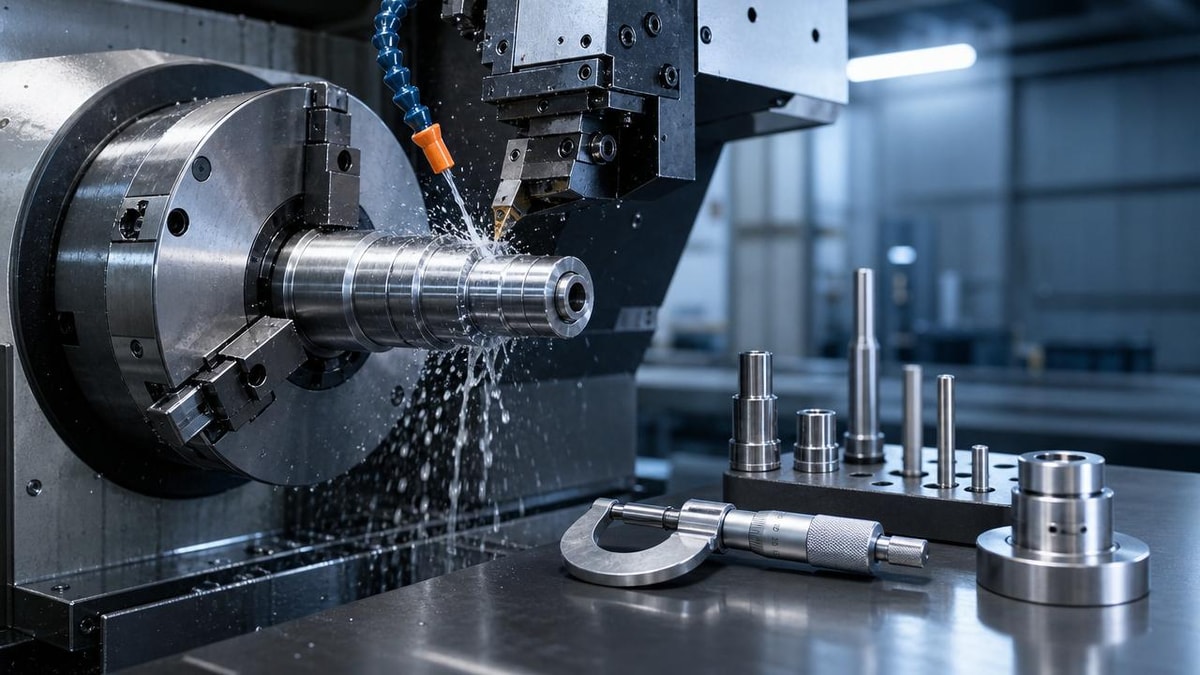
Industrial turning tolerances often seem straightforward on paper, yet batch failures still happen when tool wear, setup drift, and measurement gaps go unnoticed. For quality control and safety managers, understanding why stable first-piece results do not always guarantee consistent mass production is critical. This article explores the hidden causes behind tolerance-related defects and how to reduce risk before small deviations become costly production issues.
In global CNC machining, industrial turning is widely used for shafts, sleeves, hubs, threaded parts, and high-precision cylindrical components. On a drawing, a diameter tolerance such as ±0.02 mm may appear manageable. In production, however, that same tolerance can fail after 80 parts, 300 parts, or a shift change if process capability, inspection timing, and machine stability are not controlled as a system.
For quality teams and safety managers, the risk goes beyond scrap rates. A turning defect can trigger assembly interference, imbalance at high speed, leakage at sealing surfaces, or unsafe machine intervention when operators repeatedly adjust offsets under pressure. That is why tolerance control in industrial turning should be treated as a batch-risk issue, not only a first-article approval task.
Why Industrial Turning Tolerances Fail After a Good First Piece
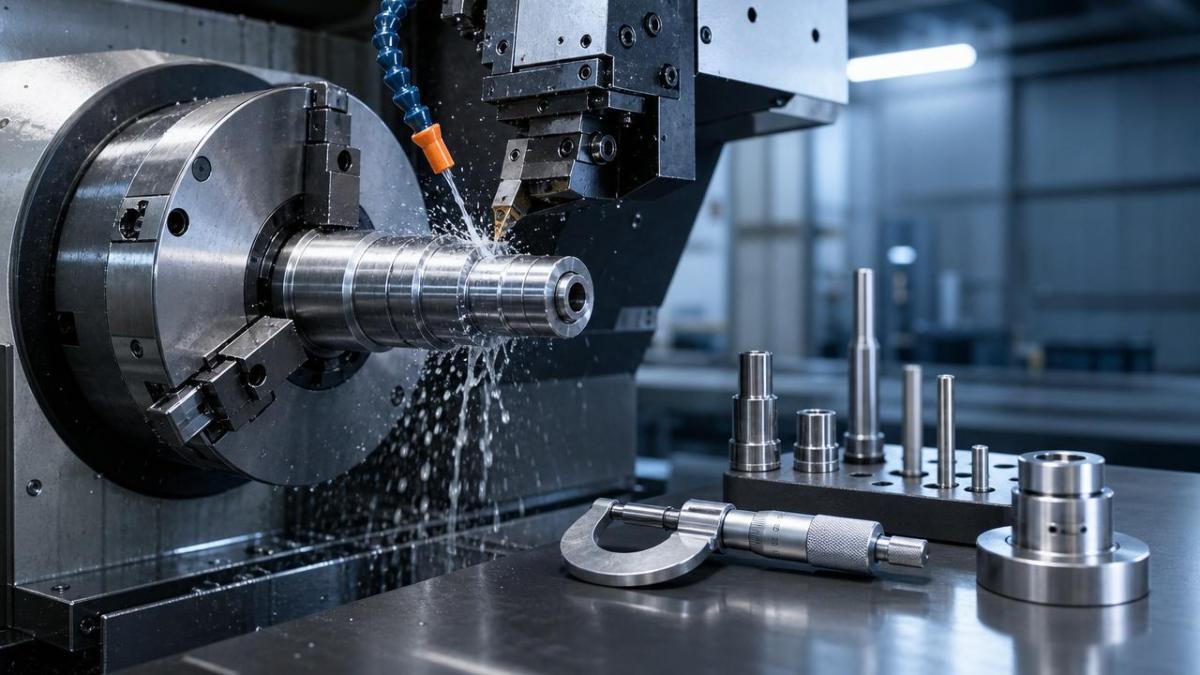
A first-piece inspection often confirms that the program, setup, and tool path are basically correct. What it does not confirm is whether the process can hold the same result for 2 hours, 8 hours, or 3 consecutive batches. In industrial turning, repeatability is influenced by machine condition, thermal growth, insert wear, chuck force variation, coolant performance, and human response time.
Many batch failures begin with small shifts that remain invisible at the start of production. A diameter drift of 0.005 mm every 25 to 40 parts may not be obvious until the process crosses the upper or lower limit. If the inspection interval is too wide, such as once every 100 parts, nonconforming output can accumulate quickly before anyone reacts.
The gap between drawing tolerance and real process capability
A tolerance on paper is a design requirement. Process capability is the machine-and-method ability to stay within that requirement under normal production conditions. A shop may successfully cut a 30.000 mm shaft to 29.998 mm on the first piece, yet still struggle to hold a total variation band of 0.015 mm over 500 parts if the machine, clamping, or cutting condition is unstable.
For quality control, a practical rule is to compare tolerance width with expected process variation. If a feature tolerance is only 0.02 mm and actual in-process spread is already 0.014 mm to 0.018 mm, the available safety margin is narrow. In such cases, any extra shift from tool wear or thermal growth can cause a batch escape.
Common hidden causes in batch turning defects
The most common causes are rarely dramatic machine failures. More often, they are ordinary variables that stack up. An insert edge rounds off slowly. A chuck jaw picks up contamination. Coolant concentration drops from 8% to 5%. A bar feeder pushes slightly different stick-out lengths. None of these alone may create immediate scrap, but together they reduce control margin.
- Tool wear progression that changes cutting force after 50, 100, or 200 parts
- Thermal drift during the first 30 to 90 minutes of machine warm-up
- Inconsistent clamping force on thin-wall or long overhang parts
- Measurement differences between operator gauges and QC instruments
- Offset corrections made without trend analysis or approval logic
- Material lot variation affecting hardness, chip formation, and springback
The table below summarizes failure mechanisms that often make industrial turning tolerances look easy during setup but unstable in production.
The key lesson is that industrial turning failures are often cumulative. Quality managers should look for drift patterns, not only isolated bad parts. Safety managers should also note that repeated manual corrections at the machine increase the chance of rushed intervention, setup mistakes, and unsafe behavior during recovery.
Why inspection frequency matters more than many teams expect
Inspection plans are often based on tradition instead of actual risk. Checking every 50 parts may be enough for a stable feature with a 0.10 mm tolerance, but not for a sealing diameter with a 0.015 mm limit. If average drift rate and tool life are known, sample frequency can be matched to risk more effectively.
For example, if a critical diameter tends to move 0.006 mm over 60 parts and the control limit buffer is only 0.008 mm, waiting 60 parts between checks is too long. A 15-part or 20-part interval provides earlier warning and reduces the size of any suspect lot.
How QC and Safety Teams Can Build a More Stable Turning Process
Improving industrial turning consistency does not always require new equipment. In many cases, the fastest gains come from better control plans, more disciplined offset rules, and clearer communication between production, quality, tooling, and maintenance. The objective is to reduce variation before defects appear, not after a customer return or assembly stop.
Create a control plan around feature risk, not only part count
Not all dimensions need the same level of surveillance. A robust plan separates features into 3 levels: critical, major, and standard. Critical features include bearing fits, sealing diameters, concentric surfaces, and rotating interfaces. These should have tighter monitoring, shorter inspection intervals, and pre-defined escalation steps.
- Identify the 3 to 5 features that drive fit, function, or safety.
- Assign sampling frequency by risk, such as every 10, 20, or 50 parts.
- Set reaction limits before specification limits are reached.
- Require documented approval for offset changes above a set threshold.
- Review trend data by shift, machine, material lot, and tool life stage.
A useful practice is to establish internal warning limits at 60% to 75% of the tolerance band rather than waiting for the full specification edge. If the drawing allows ±0.02 mm, an internal trigger at ±0.012 mm to ±0.015 mm gives time to correct the process while parts are still conforming.
Standardize measurement methods across operators and inspectors
Measurement variation is a hidden source of false confidence in industrial turning. Two people can inspect the same part and report different values if they use different force, different gauge contact locations, or different temperature conditions. A stable machining process cannot be verified with an unstable measurement process.
For high-precision turned parts, even a 0.005 mm difference between shop-floor measurement and QC room measurement can lead to poor decisions. Teams should define where to measure, how many points to take, acceptable instrument resolution, and when to use micrometers, bore gauges, air gauges, or CMM confirmation.
The following table shows a practical framework for aligning inspection strategy with turning tolerance risk.
This type of matrix helps both QC and production teams avoid over-inspecting low-risk features while giving the right attention to dimensions that drive customer complaints, machine vibration, leak paths, or assembly stoppage.
Control tool life before the tool controls the process
In industrial turning, many tolerance losses follow the same pattern: acceptable first pieces, stable middle run, then gradual decline near the end of insert life. If tool changes happen only after defects are found, the process is already too late. Planned replacement based on actual wear behavior is safer than reactive replacement.
Practical tool-life controls
- Track average parts per edge for each critical operation, such as 120, 180, or 250 parts.
- Set preventive change points at 70% to 85% of observed stable life.
- Separate roughing and finishing wear data instead of using one combined estimate.
- Review surface finish, burr formation, and chip shape as early wear indicators.
This discipline reduces the chance of a sudden out-of-tolerance spike at the end of a shift. It also improves safety because operators make fewer urgent interventions near a rotating spindle or chuck.
Address setup drift and machine condition as routine risks
Setup drift is common in high-mix and medium-volume production. A machine that runs one family of parts in the morning and another in the afternoon may show different thermal behavior, jaw contact patterns, and tool overhang conditions. For turned parts with tight coaxiality or runout requirements, these changes matter.
A practical preventive routine includes warm-up cycles of 10 to 20 minutes, spindle runout checks at scheduled intervals, jaw cleaning each setup, and verification after every crash, insert break, or prolonged idle period. Maintenance does not need to be excessive, but it must be regular and documented.
Batch Risk Reduction Strategies for Suppliers, Buyers, and Plant Managers
Industrial turning quality is not only a shop-floor issue. It also affects supplier qualification, incoming inspection strategy, and production continuity for buyers in automotive, aerospace support manufacturing, energy equipment, and electronics hardware. A part that barely passes dimensional checks can still create serious downstream risk if the process behind it is unstable.
What buyers and supplier quality teams should ask
When evaluating a turned component supplier, it is useful to move beyond price and nominal machine capacity. Ask how they monitor critical dimensions during batch production, how often they calibrate measuring tools, and what reaction plan they use when trend data begins to shift. These questions reveal process maturity more effectively than generic quality claims.
- What is the inspection interval for critical turning dimensions?
- How is tool life tracked for features tighter than ±0.02 mm?
- Are offset changes logged by operator, shift, and machine?
- How are mixed material lots or hardness changes handled?
- What containment process is used if a check is missed?
How safety management connects with turning tolerance control
Tolerance failures and safety issues often share the same weak points: rushed setup changes, repeated manual adjustments, poor housekeeping around the chuck area, and unclear escalation authority. If operators are expected to “keep the line running” without a defined reaction plan, they may take unnecessary risks while trying to recover a drifting process.
A better approach is to define 3 response levels. Level 1 can allow standard offset correction within a small range, such as 0.003 mm to 0.005 mm. Level 2 requires supervisor review when drift repeats within 20 to 30 parts. Level 3 stops production for tooling, clamping, or machine-condition investigation. This protects both part quality and operator decision quality.
Common mistakes that make simple tolerances fail in batches
Even experienced plants make avoidable mistakes when industrial turning is treated as routine. One common error is approving the process after only 1 or 2 good parts. Another is using broad average tool life numbers without linking them to specific materials, coatings, or surface finish targets. A third is relying on final inspection instead of in-process trend control.
The result is predictable: defects are detected too late, suspect inventory grows, and root cause analysis becomes difficult because several variables changed before containment began. In high-throughput environments, even a 2% defect rate can become expensive if parts feed automated assembly, balancing stations, or pressure-testing lines.
A short checklist for more reliable batch turning
- Confirm machine warm-up and baseline condition before first article approval.
- Use internal warning limits tighter than customer print limits.
- Match inspection frequency to feature risk and known drift rate.
- Standardize gauges, measuring points, and recording methods.
- Replace tools by controlled life stages, not only after visible failure.
- Escalate repeated offset changes instead of normalizing them.
Industrial turning tolerances may look easy on the drawing, but stable batch performance depends on disciplined process control, not first-piece optimism. For QC personnel, the priority is trend visibility, measurement consistency, and reaction timing. For safety managers, the priority is reducing rushed interventions and building clear escalation steps when the process begins to drift.
If your team is evaluating CNC turning suppliers, upgrading in-process controls, or troubleshooting recurring tolerance failures in mass production, a structured review of tool life, setup stability, and inspection planning can quickly uncover hidden risks. Contact us to discuss your industrial turning challenges, get a tailored quality control approach, and explore more precision manufacturing solutions for stable, safer production.
PREVIOUS ARTICLE
NEXT ARTICLE
Recommended for You
![]() ANVISA New Rule: Portuguese Biocompatibility Labels for Medical CNC Machines in BrazilManufacturing Policy Research Center
ANVISA New Rule: Portuguese Biocompatibility Labels for Medical CNC Machines in BrazilManufacturing Policy Research Center![]() EMO Hannover 2027 Booth Booking Opens: China AI-Machining Pavilion LaunchesGlobal Machine Tool Trade Research Center
EMO Hannover 2027 Booth Booking Opens: China AI-Machining Pavilion LaunchesGlobal Machine Tool Trade Research Center![]() KATS Updates KC Rules: CNC Cybersecurity Modules Must Meet IEC 62443-4-2Manufacturing Policy Research Center
KATS Updates KC Rules: CNC Cybersecurity Modules Must Meet IEC 62443-4-2Manufacturing Policy Research Center![]() Shanghai Port Launches Green Clearance Channel for CNC EquipmentManufacturing Market Research Center
Shanghai Port Launches Green Clearance Channel for CNC EquipmentManufacturing Market Research Center![]() ISO 23218-3:2026 Published: CNC Digital Twin Interoperability StandardCNC Machining Technology Center
ISO 23218-3:2026 Published: CNC Digital Twin Interoperability StandardCNC Machining Technology Center![]() Vietnam Cuts CNC Equipment Import Tariff to 3.8% from June 2026Global Machine Tool Trade Research Center
Vietnam Cuts CNC Equipment Import Tariff to 3.8% from June 2026Global Machine Tool Trade Research Center


Aris Katos
Future of Carbide Coatings
15+ years in precision manufacturing systems. Specialized in high-speed milling and aerospace grade alloy processing.
▶
How to choose a CNC metal lathe for mixed part sizesCNC Machining Technology Center▶
Industrial turning tolerances that look easy but fail in batchesCNC Machining Technology Center▶
Industrial lathe vibration causes that are not machine wearCNC Machining Technology Center▶
Choosing a metal lathe for repeat jobs without overbuyingCNC Machining Technology Center▶
Automated Lathe Setup Mistakes That Slow Down OutputCNC Machining Technology Center
Mastering 5-Axis Workholding Strategies
Join our technical panel on Nov 15th to learn about reducing vibrations in thin-wall components.

Providing you with integrated sanding solutions
Before-sales and after-sales services
Comprehensive technical support